
Pressurized direct contact heat exchange process
a heat exchange process and pressurized technology, applied in heat exchange apparatus, heat transfer modification, steam engine plants, etc., can solve the problems of low thermal efficiency and large energy loss, and achieve the effect of approving 90% of the thermal efficiency of the process and much higher thermal efficiency
- Summary
- Abstract
- Description
- Claims
- Application Information
AI Technical Summary
Benefits of technology
Problems solved by technology
Method used
Image

Examples
Embodiment Construction
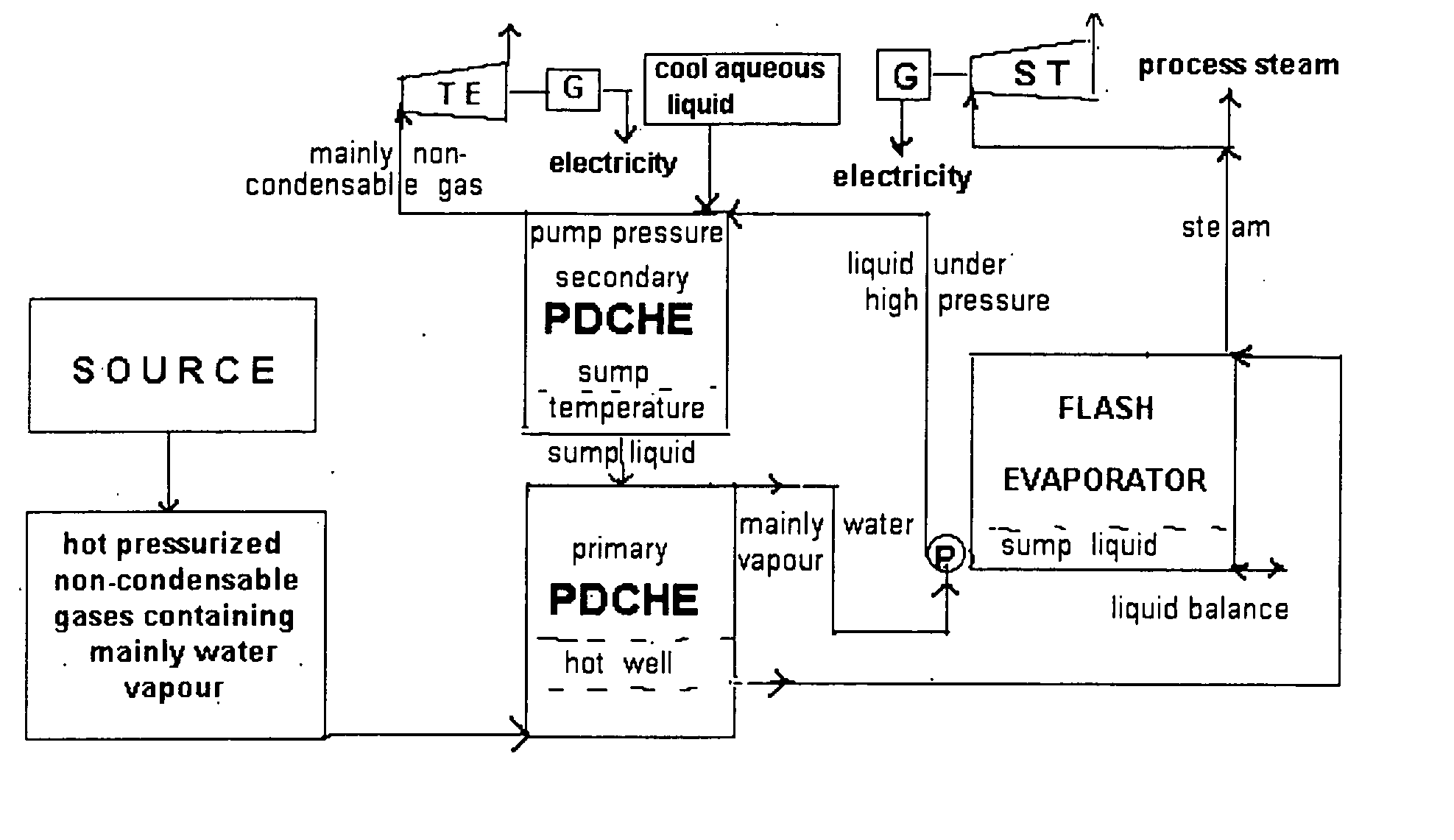
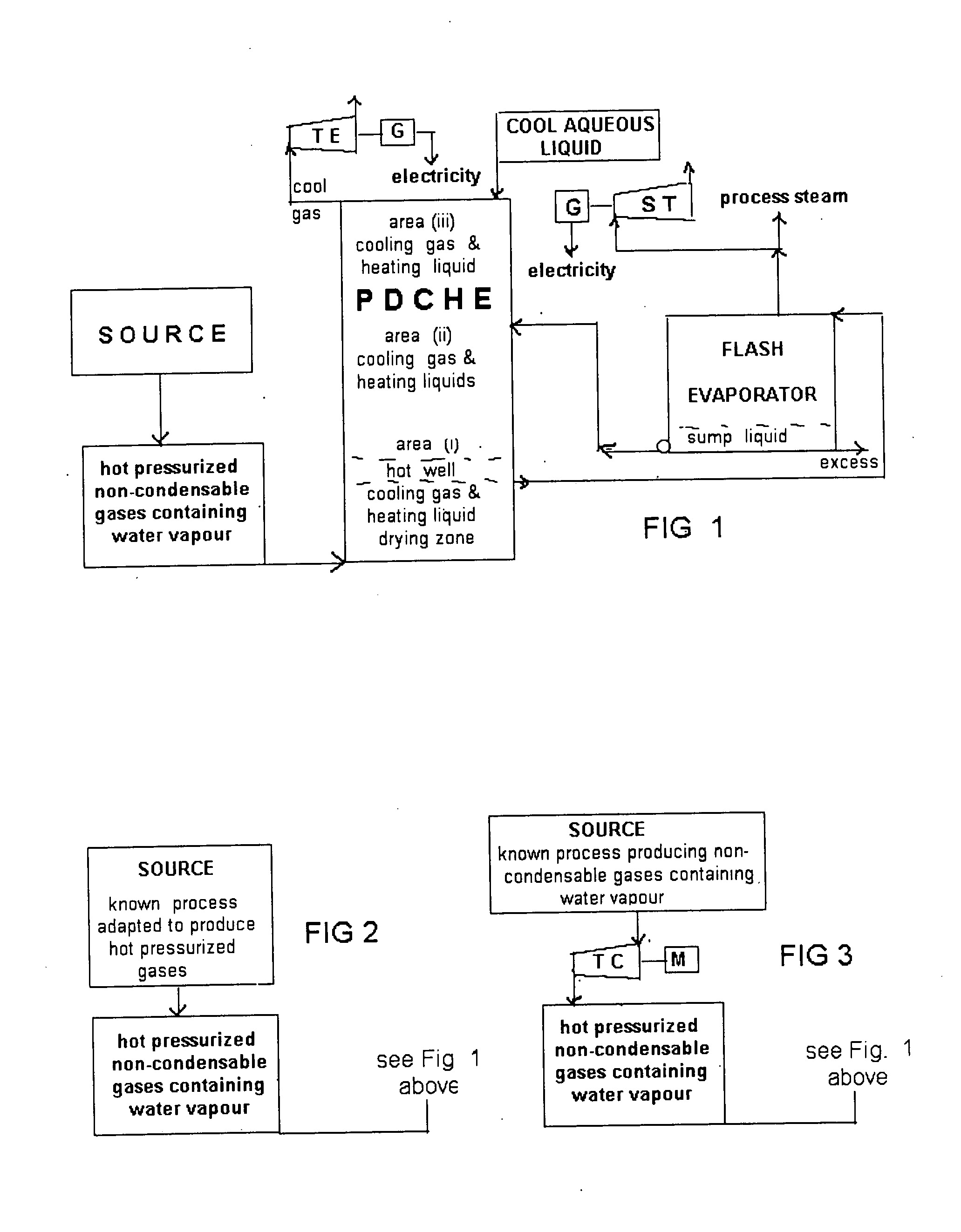
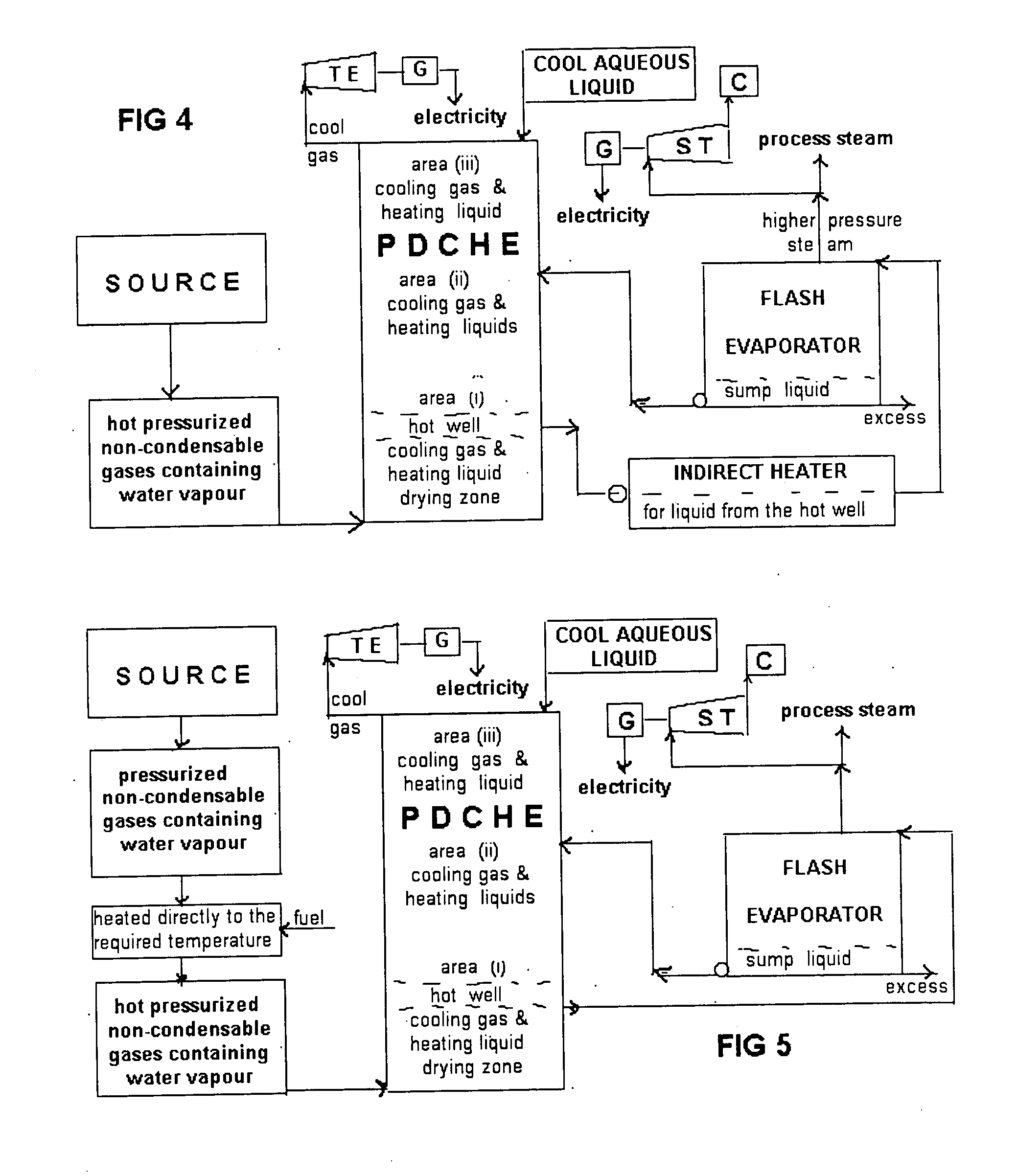
[0028] The following embodiments are process sequences that provide a wide range of choice to fit a wide variety of circumstances, applications and available technologies. Because of the wide range of process variables involved and technologies to choose from it is understood that in most cases, computer simulation would normally be utilized to balance the various variables such as the rate of: recirculation of the hot well liquid; cool liquid supply and excess liquid removal.
[0029] The embodiments as illustrated and described is such as to obtain maximum thermal efficiency, noting that, the higher the pressure and the lower the temperature of the gas leaving the pressurized direct contact heat exchanger the higher the thermal efficiency Embodiments involving lower efficiencies are also included.
[0030] Referring to the accompaning drawings, the symbols used have the following meaning:
GGenerator for electricityGTGas TurbineTCTurbine CompressorTETurbine ExpanderPRParticulate Remov...
PUM
 Login to View More
 Abstract
Description
Claims
Application Information
 Login to View More