
Facet implant
a facet and joint technology, applied in joint implants, internal osteosynthesis, medical science, etc., can solve the problems of severe limitations on a person's functional ability and quality of life, damage to the articulating surface of one or more vertebral bodies, back pain,
- Summary
- Abstract
- Description
- Claims
- Application Information
AI Technical Summary
Benefits of technology
Problems solved by technology
Method used
Image

Examples
Embodiment Construction
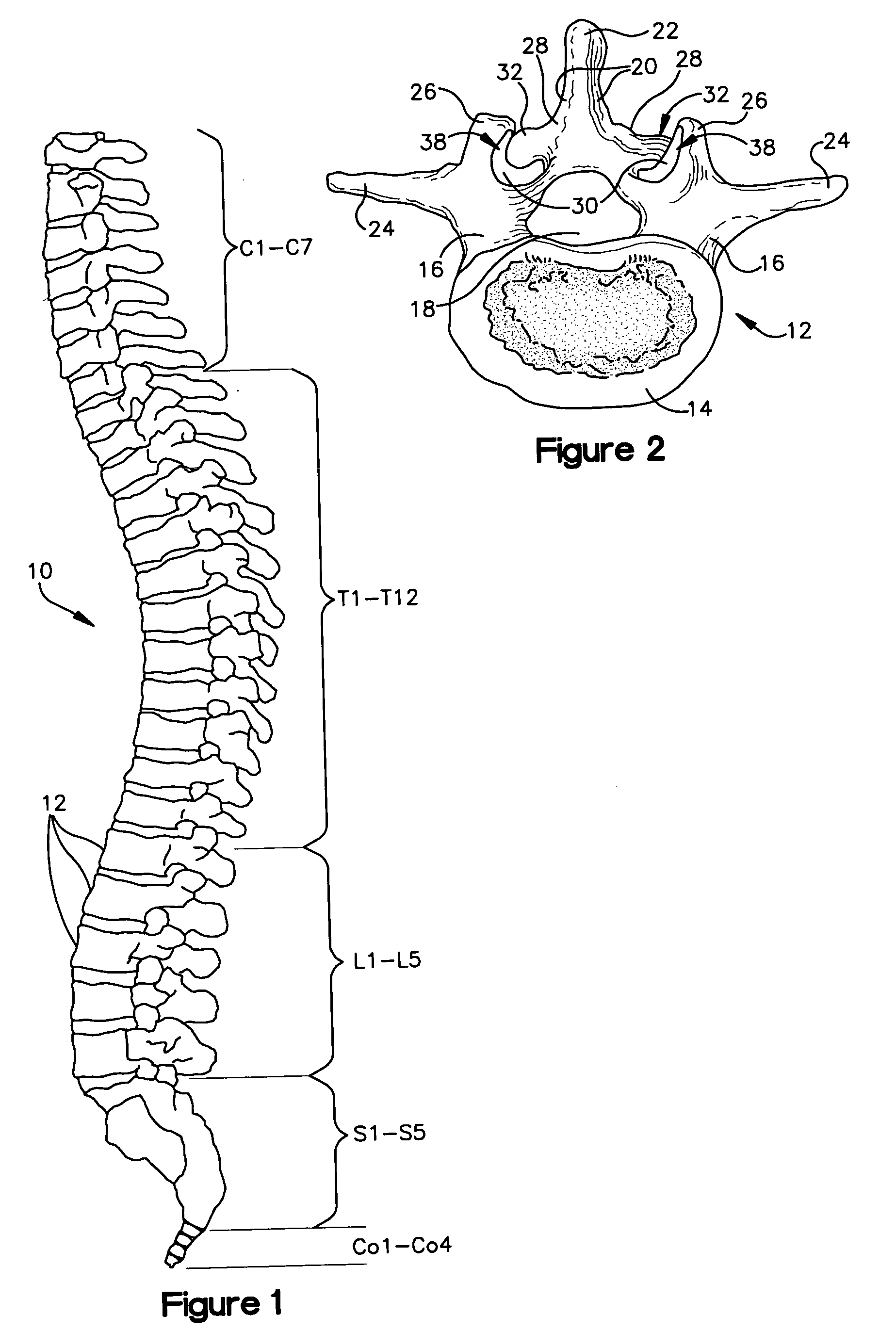
[0022] Referring initially to FIG. 1, the human spinal column 10 is illustrated. The spinal column 10 is comprised of a series of thirty-three stacked vertebrae divided into five regions. The cervical region includes seven vertebrae, known as C1-C7. The thoracic region includes twelve vertebrae, known as T1-T12. The lumbar region contains five vertebrae, known as L1-L5. The sacral region is comprised of five vertebrae, known as S1-S5. The coccygeal region contains four vertebrae 12, known as Co1-Co4.
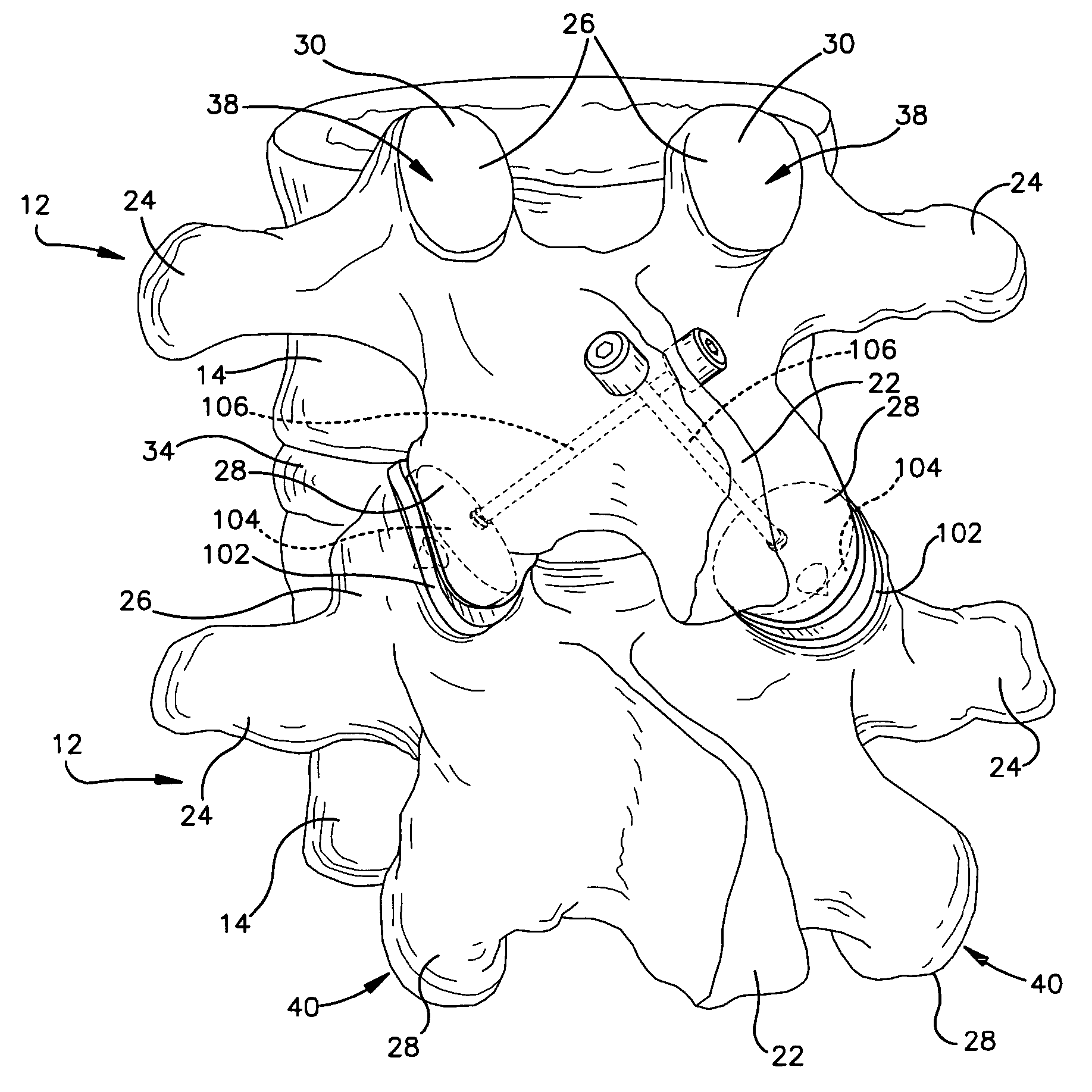
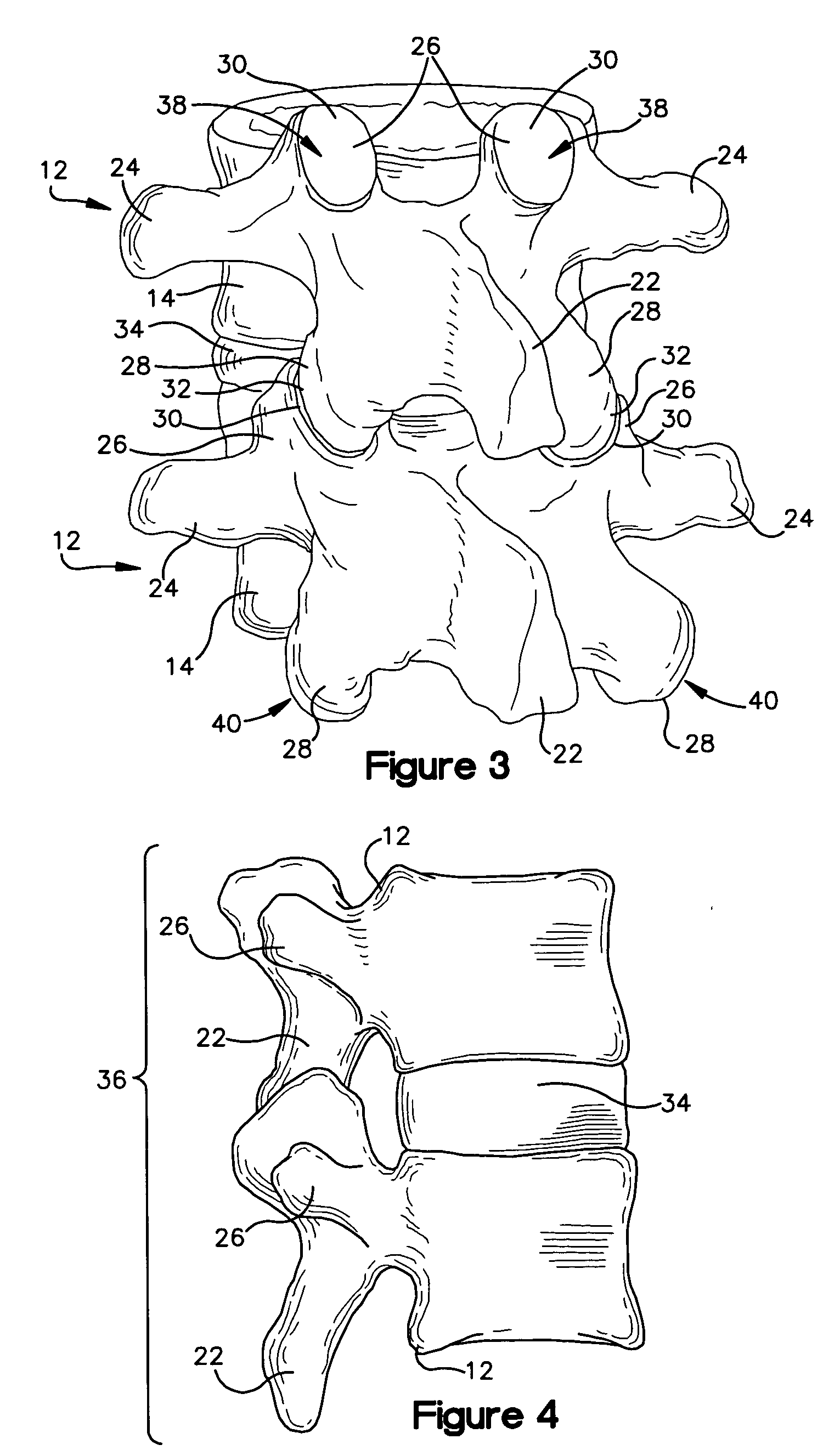
[0023] Turning now to FIGS. 2 and 3, normal human lumbar vertebrae 12 are illustrated. It will be understood by those skilled in the art that while the lumbar vertebrae 12 vary somewhat according to location, they share many features common to most vertebrae 12. Each vertebra 12 includes a vertebral body 14. Two short bones, the pedicles 16, extend backward from each side of the vertebral body 14 to form a vertebral arch 18. At the posterior end of each pedicle 16, the vertebral arch 18...
PUM
 Login to View More
 Abstract
Description
Claims
Application Information
 Login to View More