
Linearly easy-to-rupture thermoplastic resin film, and method and device for manufacturing the resin film
- Summary
- Abstract
- Description
- Claims
- Application Information
AI Technical Summary
Benefits of technology
Problems solved by technology
Method used
Image

Examples
example 1
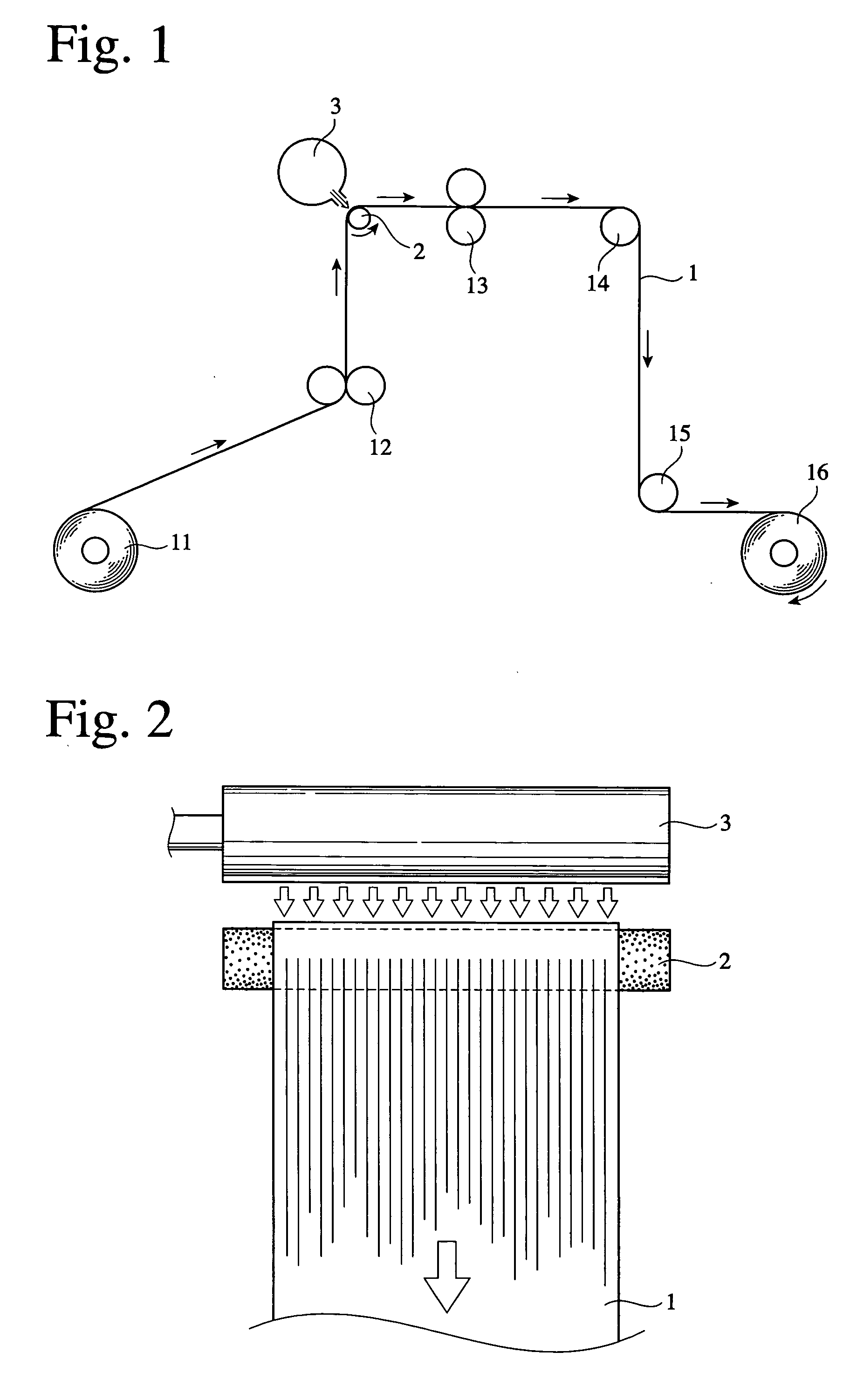
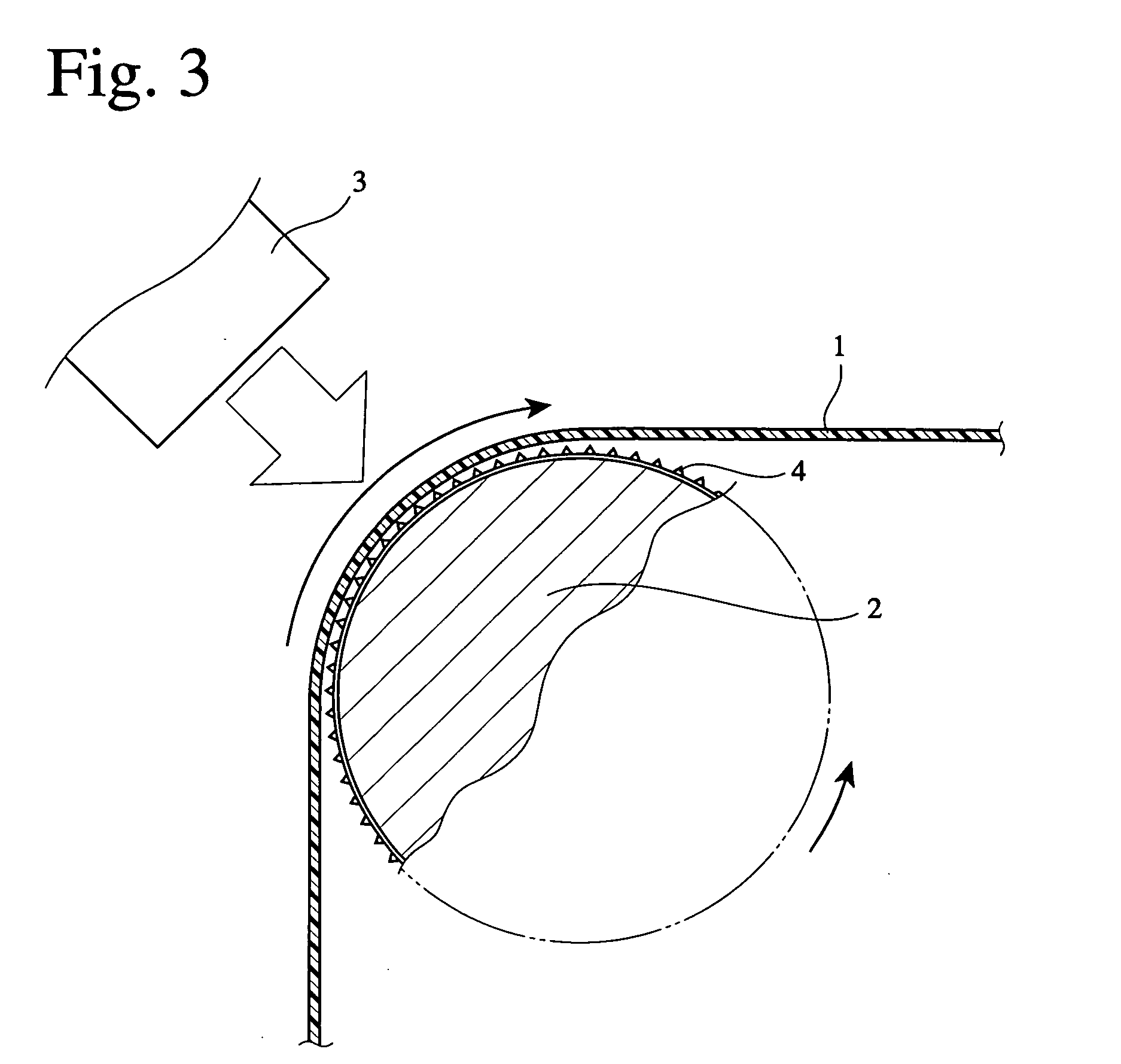
[0110] A polyester (PET) film having a thickness of 12 μm was brought into sliding contact with a 5-cm-diameter pattern roll with fine synthetic diamond particles having a diameter of 100 μm to produce an easy-to-straight-tear polyester film having linear scratches in its moving direction, under the conditions that the film speed was 50 m / minute, that the peripheral speed of the pattern roll rotating in an opposing direction to the film was 10 m / minute, that the pressure of air blown from a nozzle was 1 kgf / cm2, and that a tension given to the film by nip rolls was 0.5 kgf / cm width.
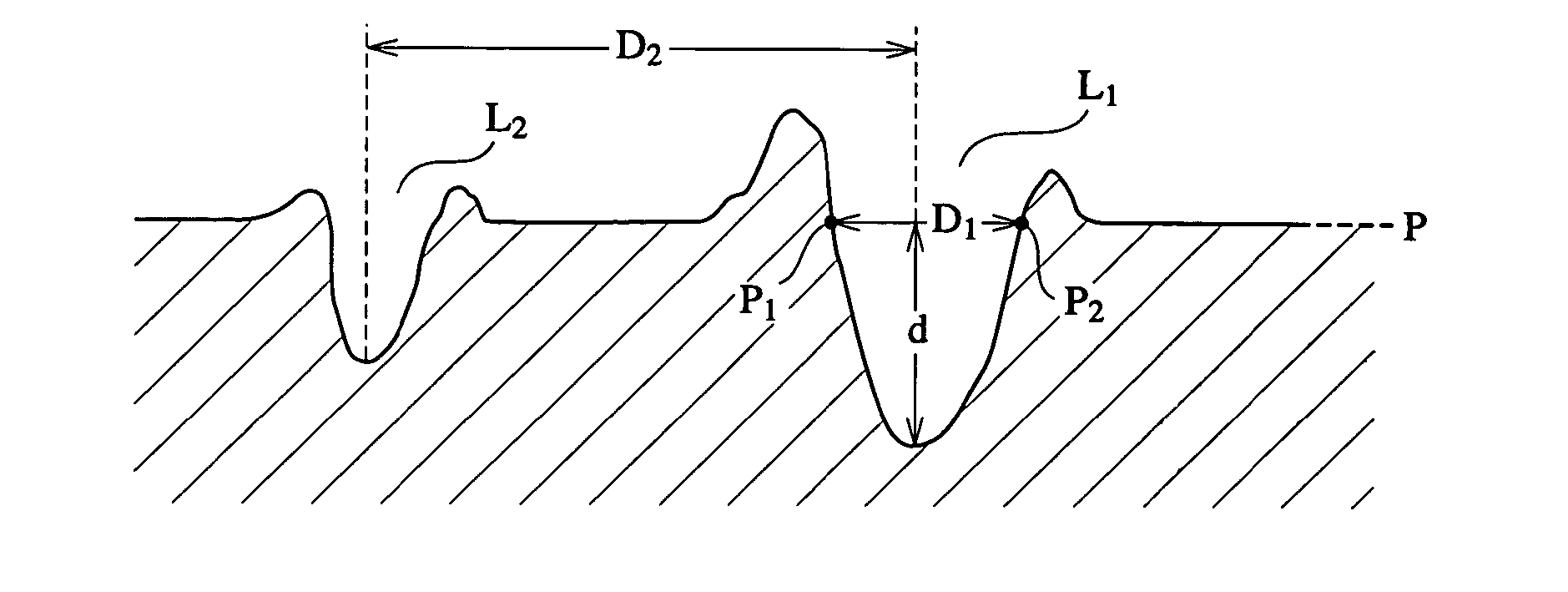
[0111] A surface of the resultant easy-to-straight-tear polyester film was observed by AFM. FIGS. 16 and 17 are the drawings of AFM images. FIGS. 16 and 17 show different portions of the film, and FIG. 17 shows a cross section of the observed portion. As is clear from FIGS. 16 and 17, linear scratches of 0.1 to 1 μm in depth, 0.5 to 5 μm in width and 10 to 50 μm in interval were formed on the polyester f...
PUM
| Property | Measurement | Unit |
|---|---|---|
| Length | aaaaa | aaaaa |
| Length | aaaaa | aaaaa |
| Fraction | aaaaa | aaaaa |
Abstract
Description
Claims
Application Information
 Login to View More