

SDMA system using MU-SIMO for the uplink and MU-MISO for the downlink
a technology of sdma and uplink, applied in data switching networks, frequency-division multiplexes, instruments, etc., can solve problems such as more difficult problems than just resolving m1 sources
- Summary
- Abstract
- Description
- Claims
- Application Information
AI Technical Summary
Problems solved by technology
Method used
Image

Examples
Embodiment Construction
[0012] The following detailed description is made with reference to the figures. Preferred embodiments are described to illustrate the present invention, not to limit its scope, which is defined by the claims. Those of ordinary skill in the art will recognize a variety of equivalent variations on the description that follows.
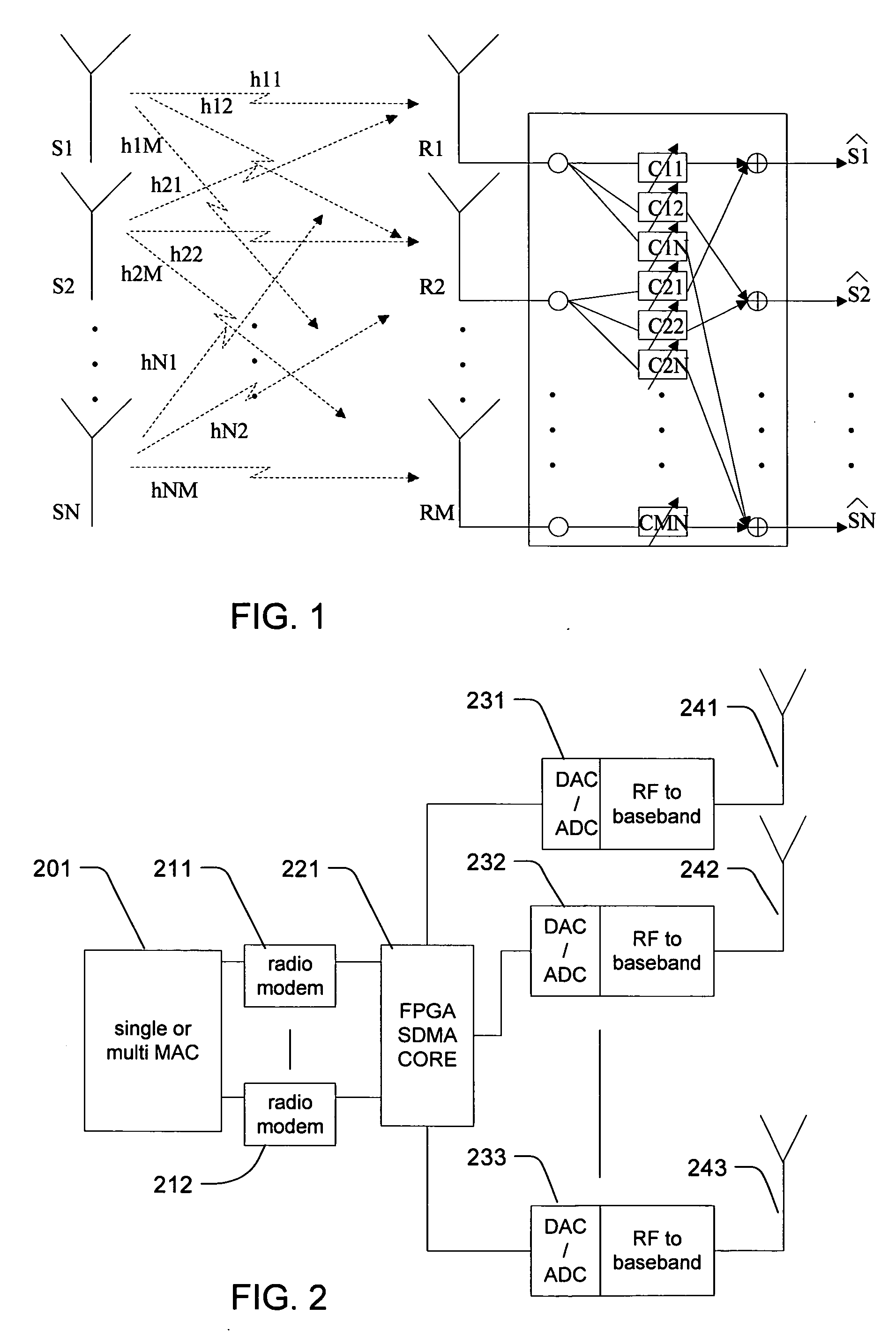
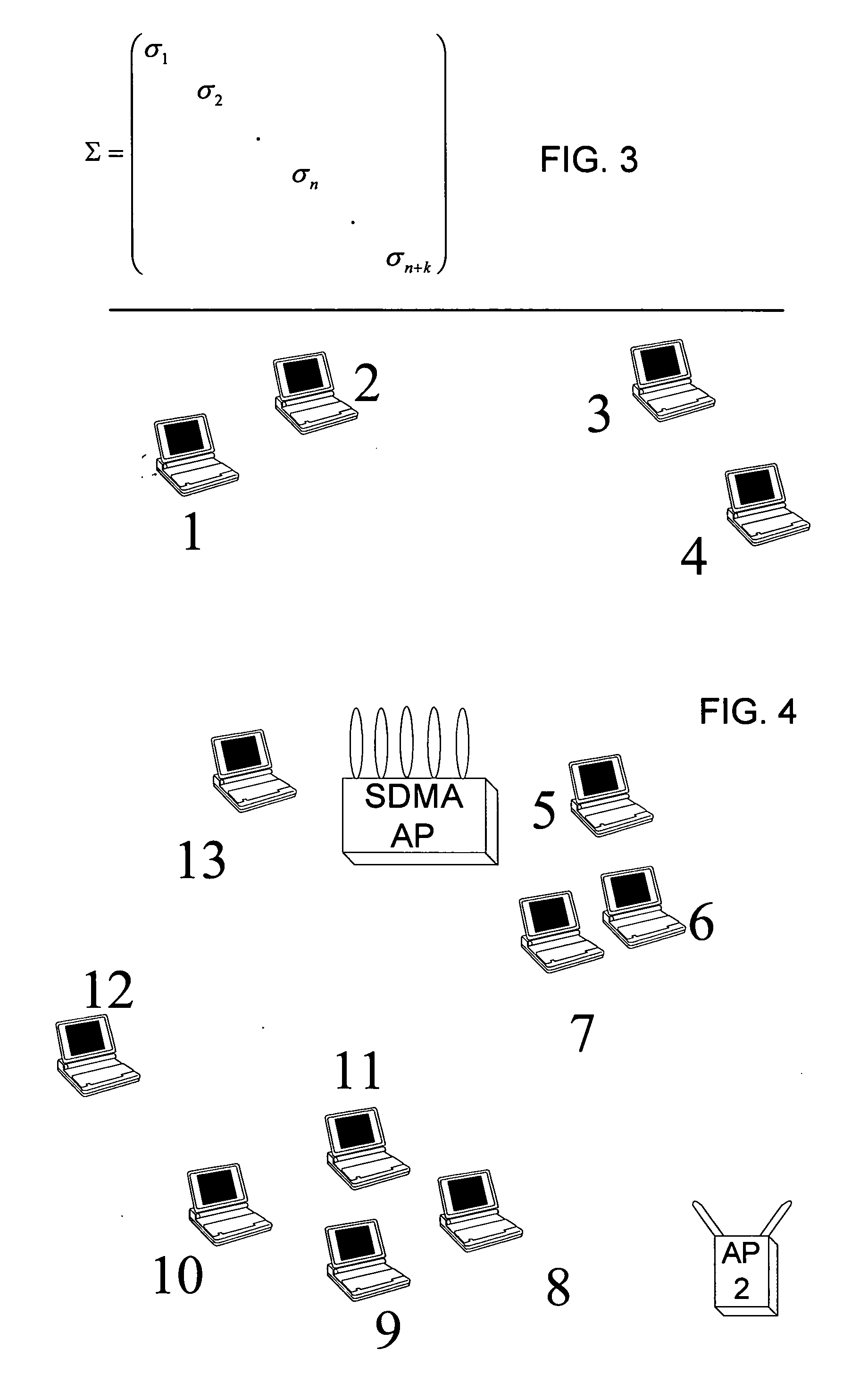
[0013] One application of SDMA to a multi-user wireless system such as a WLAN is to communicate with two or more clients using the same frequency and transmission time, whether the frequency and time are determined by TDMA, CDMA or other allocation strategy. Reusing a channel (communicating on the same frequency band and time instance) is possible when there is sufficient spatial separation between the clients and the base station antennas.
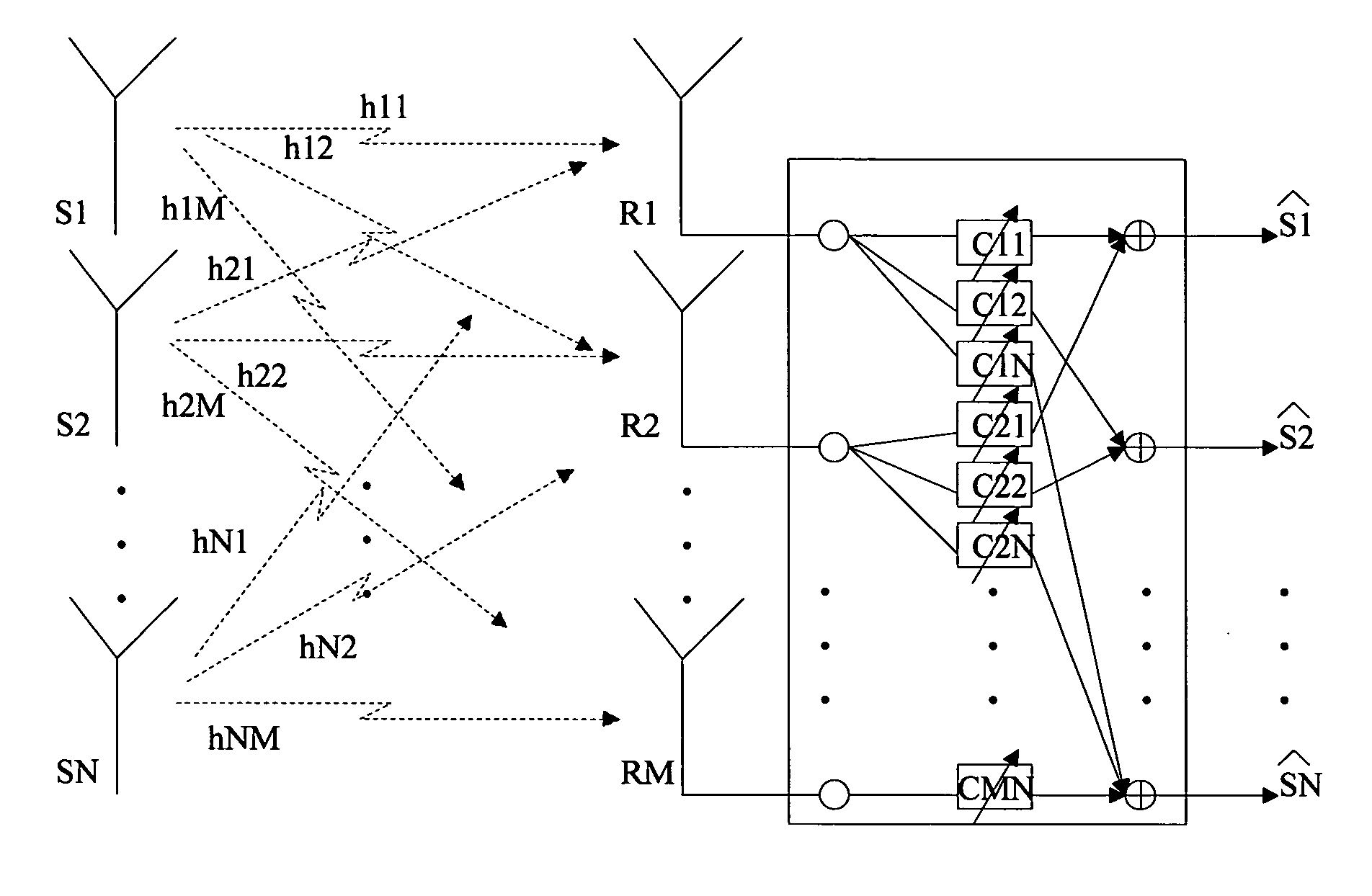
[0014] To reuse channels, application of a MU-SIMO strategy for the uplink and a MU-MISO strategy for the downlink is proposed. MU-SIMO refers to multiple user, single input (at the mobile unit) multiple output (at the base ...
PUM
 Login to View More
 Abstract
Description
Claims
Application Information
 Login to View More