Attitude determination system using null-steered array

a technology of arrays and positions, applied in direction finders, instruments, measurement devices, etc., can solve problems such as prone to errors in measurements, hindering the use of these devices, and prone to errors in geo-magnetic sensors
US20050280577A1Active Publication Date: 2005-12-22NOVATEL INC

Patent Information

Authority / Receiving Office
US · United States
Patent Type
Applications(United States)
Current Assignee / Owner
NOVATEL INC
Publication Date
2005-12-22

Smart Images

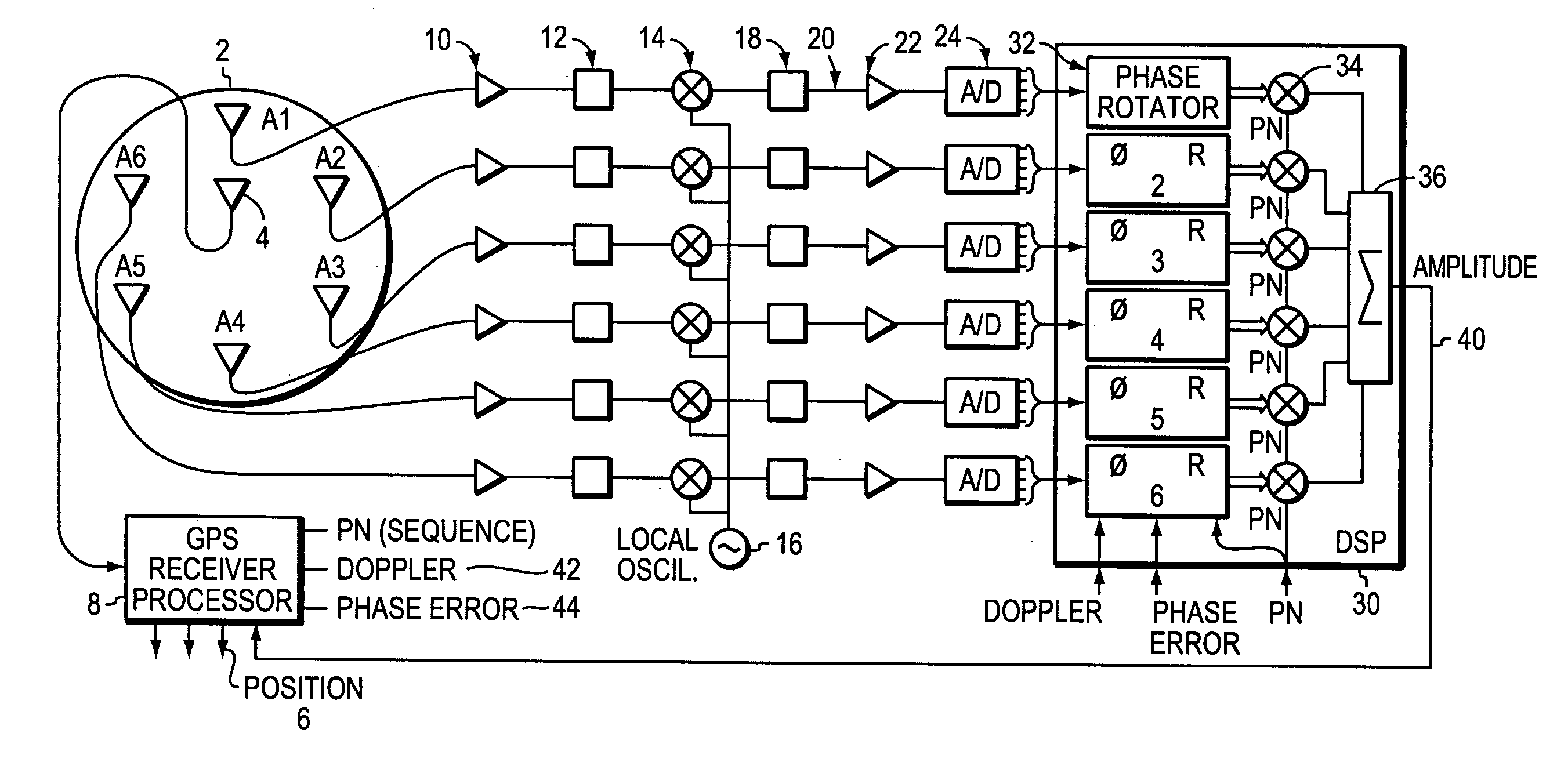
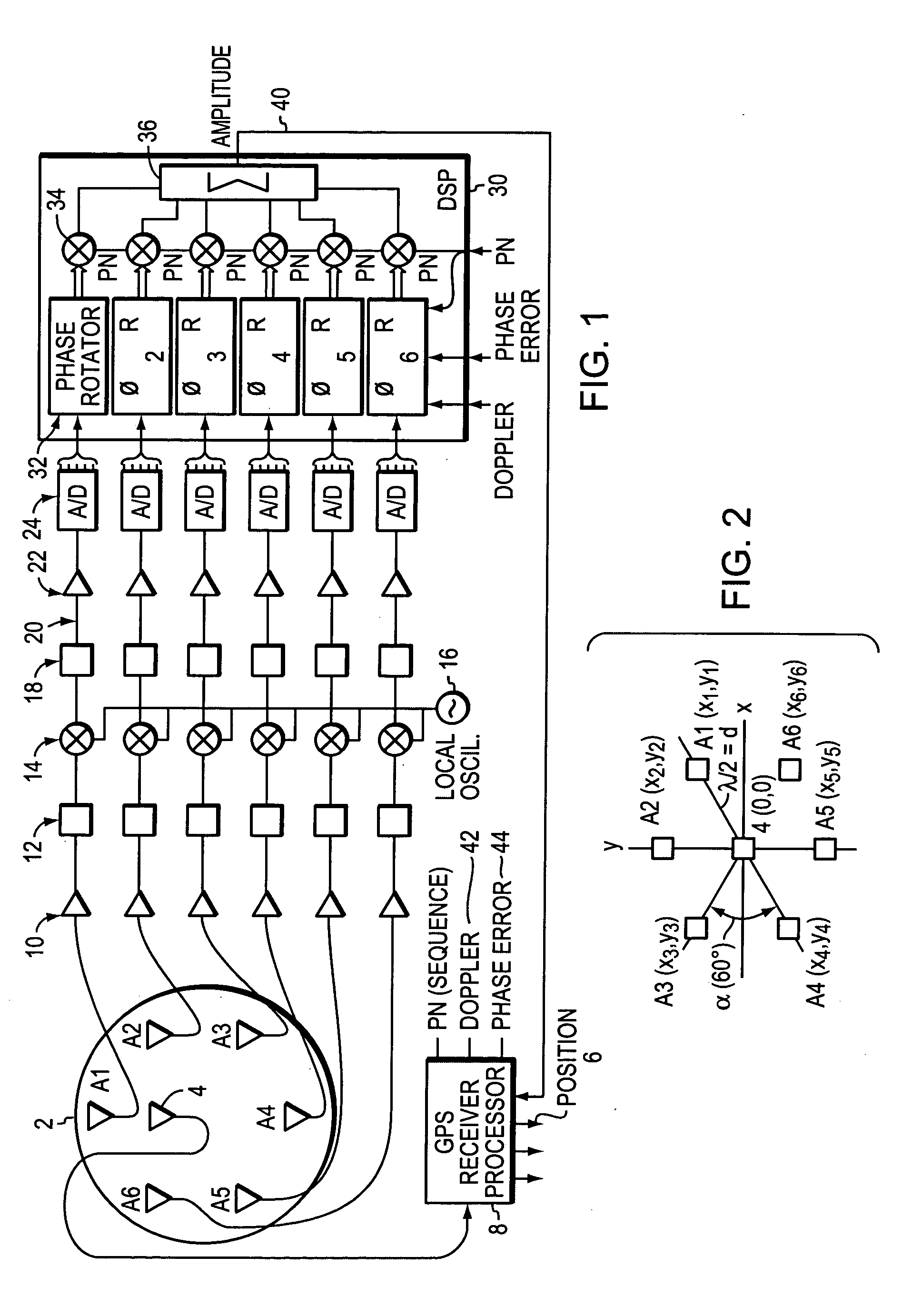
  • Figure 1
    Figure 1
  • Figure 2
    Figure 2
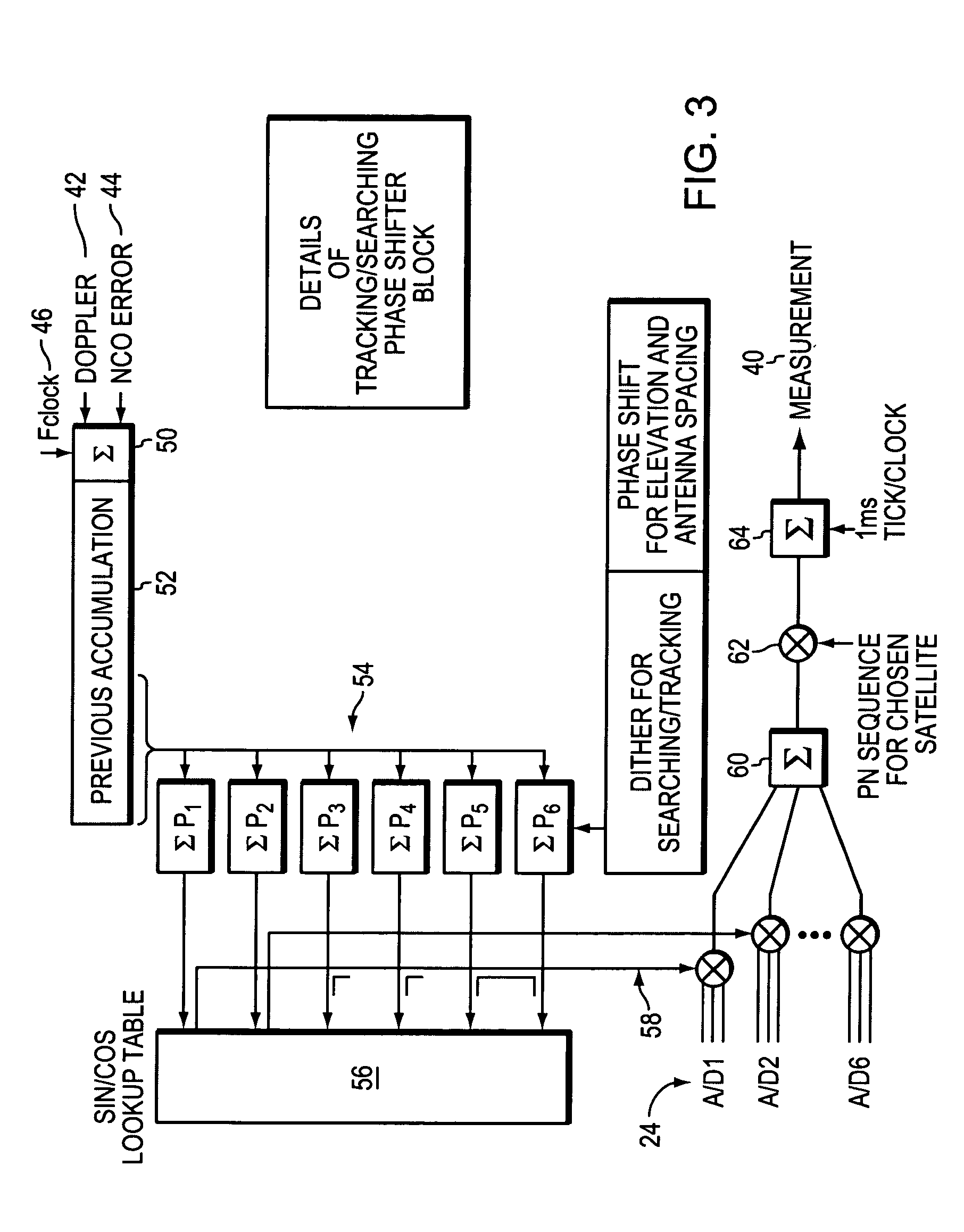
  • Figure 3
    Figure 3
Patent Text Reader

Abstract

Apparatus and process for determining the position and heading or attitude of an antenna array are described based on radiating sources, preferably GNSS or other such satellite positioning systems. An optimum satellite is selected and the antenna array is “null steered” by combining the phase of the received signals to calculate a null or null angle that points toward the optimum satellite. The null will determine angle for elevation toward the optimum satellite and azimuth or heading. The heading is the azimuth of the (which may be actual or calculated) projection of the null vector to the satellite onto the Earth's surface. The actual location on Earth of the antenna array can be found and the antenna array azimuth with respect to the satellite can be determined. The null angle may be measured more precisely by dithering on either side to average out noise and then averaging the angle deviations to calculate the null angle. If the attitude of the antenna array with respect to the Earth's surface is desired, a null vector to a second satellite may be generated and the intersection of the two nulls will allow the attitude of the antenna array, with respect to one or both of the satellites, to be determined. The difference between the measured attitude of the antenna array with respect to the null vector and the calculated attitude of the satellite from the GNSS signals, is the attitude of the array with respect to the Earth's surface. All viewable satellites may be used, tracked, and nulls determined for each, and many antennas if in a known pattern relative to each other can be used to make the determinations more accurate and reliable.
Need to check novelty before this filing date? Find Prior Art

Description

BACKGROUND OF THE INVENTION

[0001] 1. Field of the Invention

[0002] The present invention relates to determining navigation heading or attitude using a satellite based positioning system and antenna array.

[0003] 2. Background Information

[0004] Commonly used attitude determination apparatus and methods include use of geo-magnetic sensors, gyroscopic sensors or phase differences of signals received from multiple satellites of the Global Navigation Satellite System (GNSS) or other similar systems.

[0005] Geo-magnetic sensors are susceptible to errors from locally generated magnetic fields (from nearby electronics) and from nearby magnetic objects. Additionally, local earth magnetic fields must be mapped and available to the user. Gyroscopic sensors drift and must be re-calibrated regularly. Such limitations have hindered the use of these devices.

[0006] GNSS systems and techniques, including differential techniques, are now commonplace and as background are only briefly described her...

Claims

the structure of the environmentally friendly knitted fabric provided by the present invention; figure 2 Flow chart of the yarn wrapping machine for environmentally friendly knitted fabrics and storage devices; image 3 Is the parameter map of the yarn covering machine
Login to View More