
Method and apparatus for embolism analysis
a technology of embolism and analysis method, applied in image analysis, image enhancement, instruments, etc., can solve the problems of blood clots, treatment also carrying risks, and assessment may not be automated,
- Summary
- Abstract
- Description
- Claims
- Application Information
AI Technical Summary
Benefits of technology
Problems solved by technology
Method used
Image

Examples
Embodiment Construction
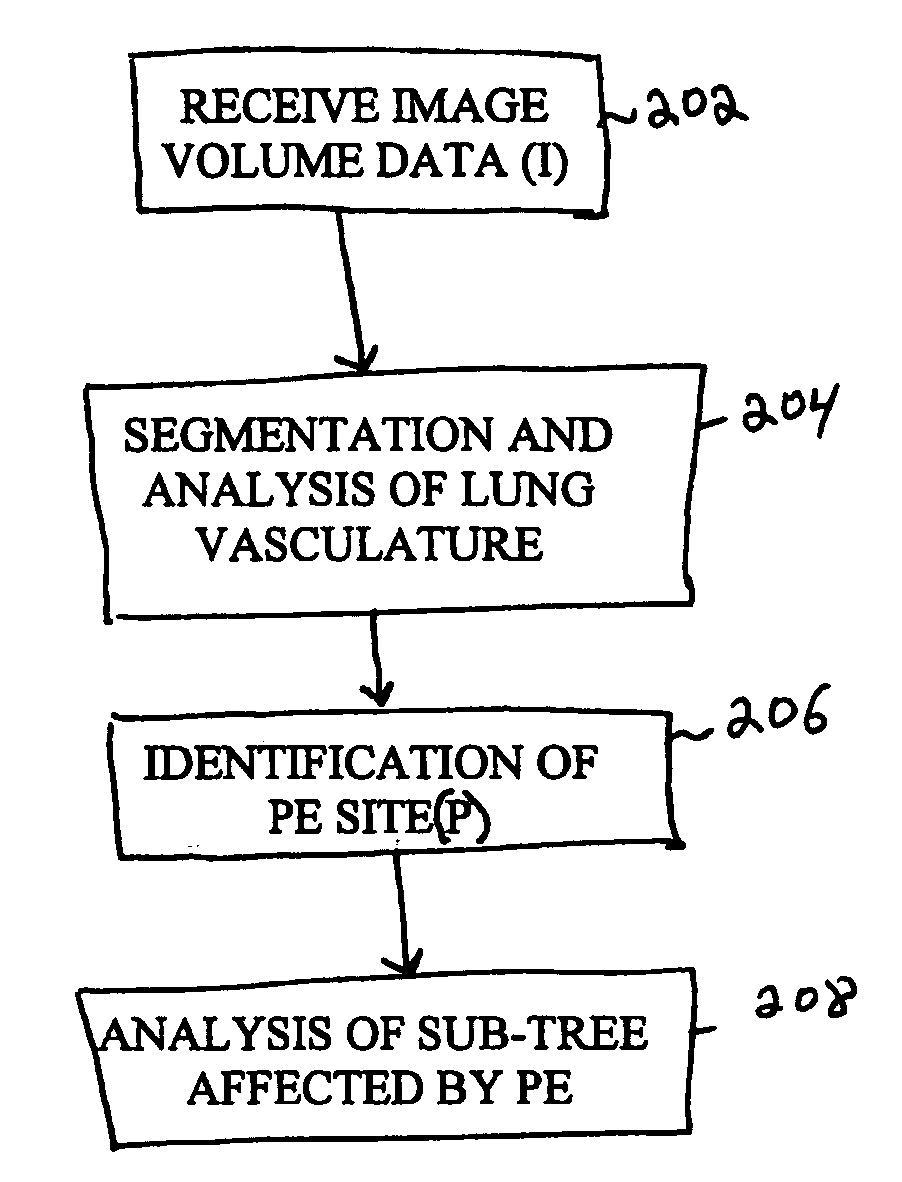
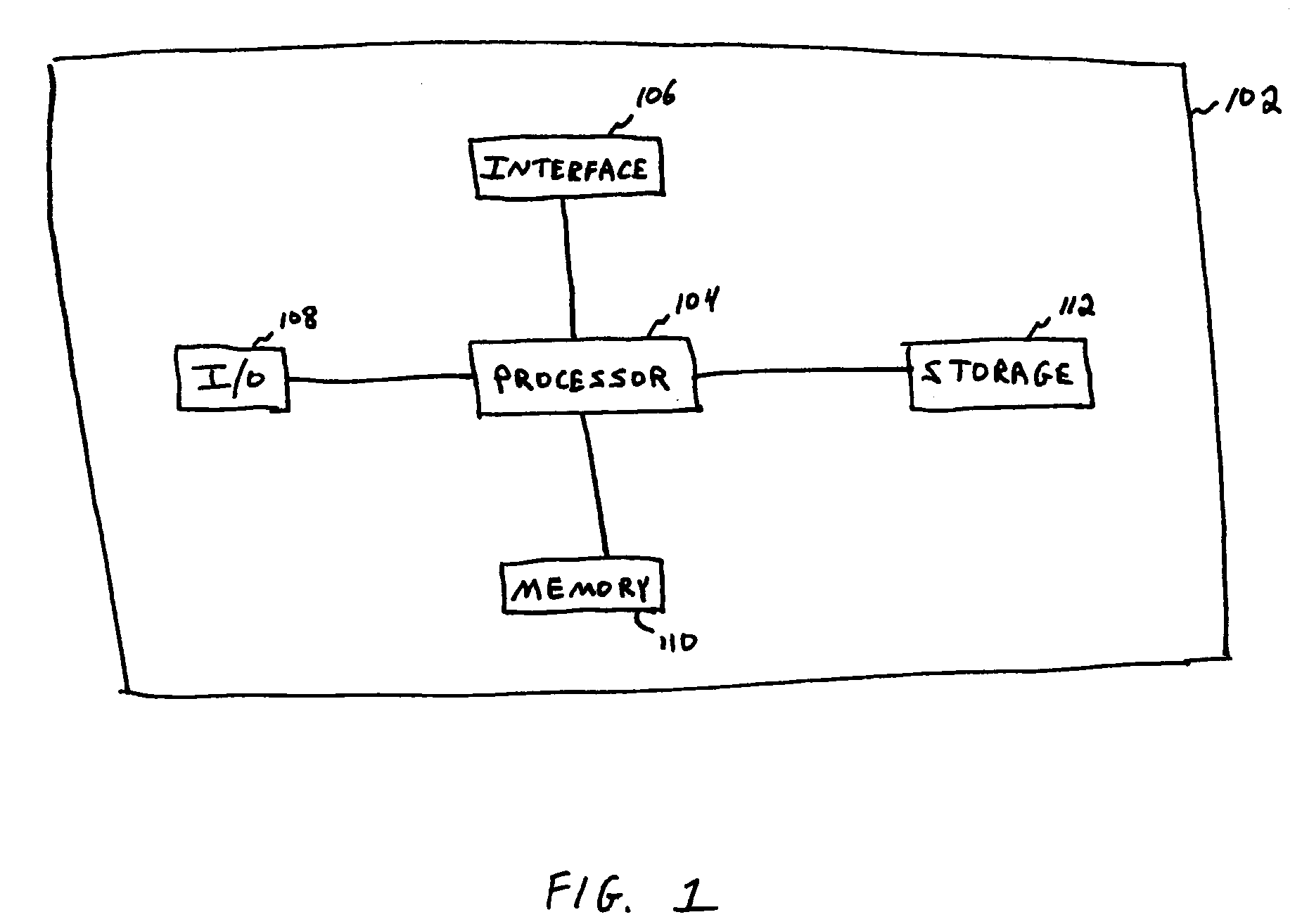
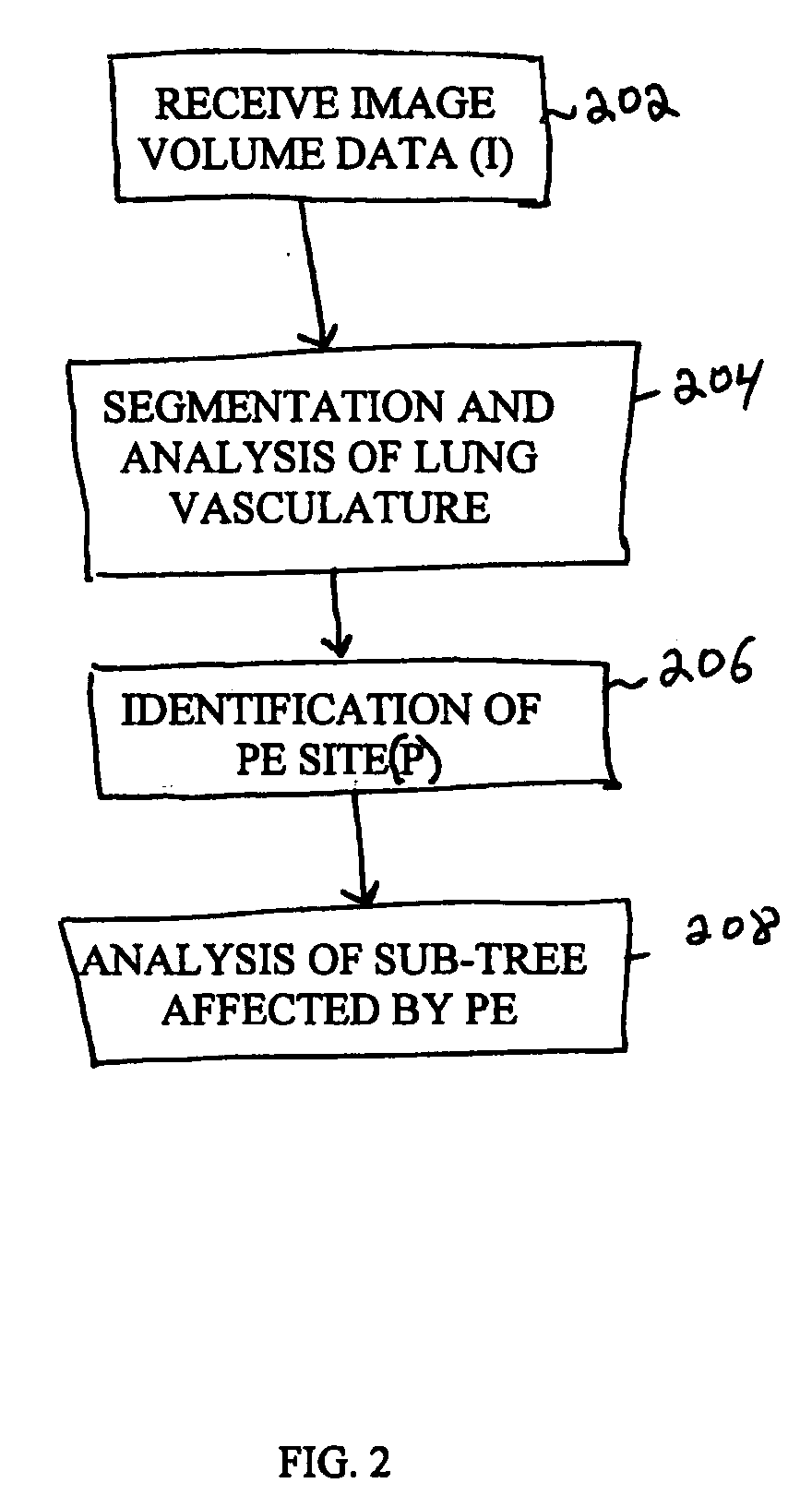
[0024] The following description describes the present invention in terms of the processing steps required to implement an embodiment of the invention. These steps may be performed by an appropriately programmed computer, the configuration of which is well known in the art. An appropriate computer may be implemented, for example, using a well known computer processors, memory units, storage devices, computer software, and other components. A high level block diagram of such a computer is shown in FIG. 1. Computer 102 contains a processor 104 which controls the overall operation of computer 102 by executing computer program instructions which define such operation. The computer program instructions may be stored in a storage device 112 (e.g., magnetic disk) and loaded into memory 110 when execution of the computer program instructions is desired. Computer 102 also includes one or more interfaces 106 for communicating with other devices (e.g., locally or via a network). Computer 102 a...
PUM
 Login to View More
 Abstract
Description
Claims
Application Information
 Login to View More