Reverse finite element analysis and modeling of biomechanical properties of internal tissues

a biomechanical property and reverse finite element technology, applied in the field of internal tissue biomechanical properties measurement and determination, can solve the problems of hampered efforts at accurately modeling the biomechanical properties of ‘living’ internal tissues, difficult in-vivo measurements of internal tissues to obtain biomechanical properties, and difficult characterization of internal tissues and organs

a biomechanical property and reverse finite element technology, applied in the field of internal tissue biomechanical properties measurement and determination, can solve the problems of hampered efforts at accurately modeling the biomechanical properties of ‘living’ internal tissues, difficult in-vivo measurements of internal tissues to obtain biomechanical properties, and difficult characterization of internal tissues and organs

US20070016391A1Inactive Publication Date: 2007-01-18THE PROCTER & GAMBLE COMPANY

Image

Smart Image Click on the blue labels to locate them in the text.
Viewing Examples
Smart Image
  • Reverse finite element analysis and modeling of biomechanical properties of internal tissues
  • Reverse finite element analysis and modeling of biomechanical properties of internal tissues
  • Reverse finite element analysis and modeling of biomechanical properties of internal tissues

Examples

Experimental program
Comparison scheme
Effect test

Embodiment Construction

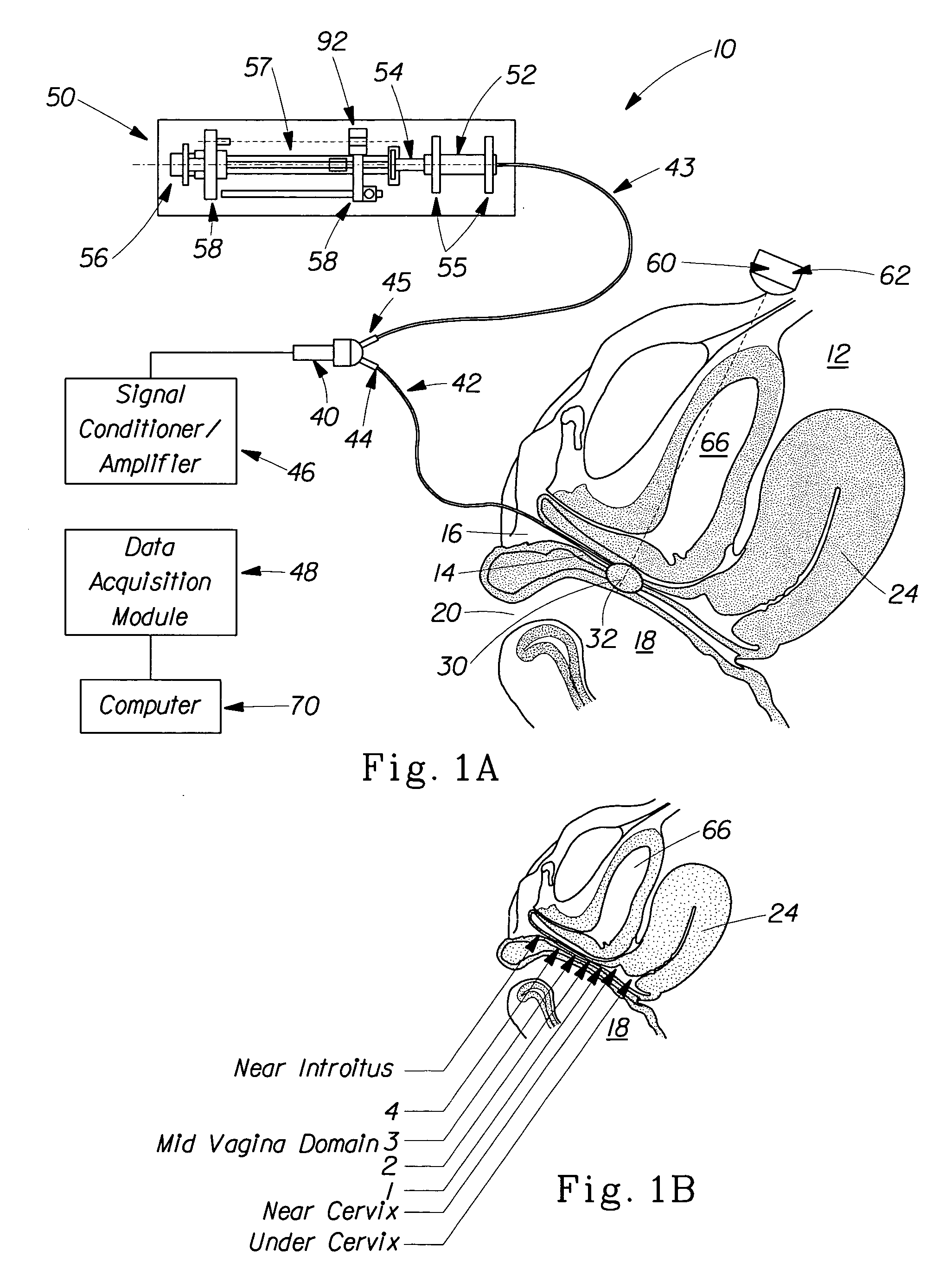
[0026] The method and device of the present invention overcomes the technical challenges and problems associated with determining in vivo the biomechanical properties of tissues. In particular, the method and device of the present invention can be used to determine location dependent biomechanical properties, i.e., properties that are specific to a particular location in the body and / or on a particular tissue. The method and device of the present invention can include a measurement system in a combined format of a strain gauge type physiological pressure transducer to measure the tissue loading stress, and imaging devices such as a CT, a magnetic resonance imaging (MRI), or an ultrasound imager to measure localized tissue strain profiles. Such imaging devices permit non-invasive, externally disposed probes to be utilized for the purpose of making measurements of static or dynamic tissue deformation. The method of the present invention also comprises a modeling internal tissues of a ...

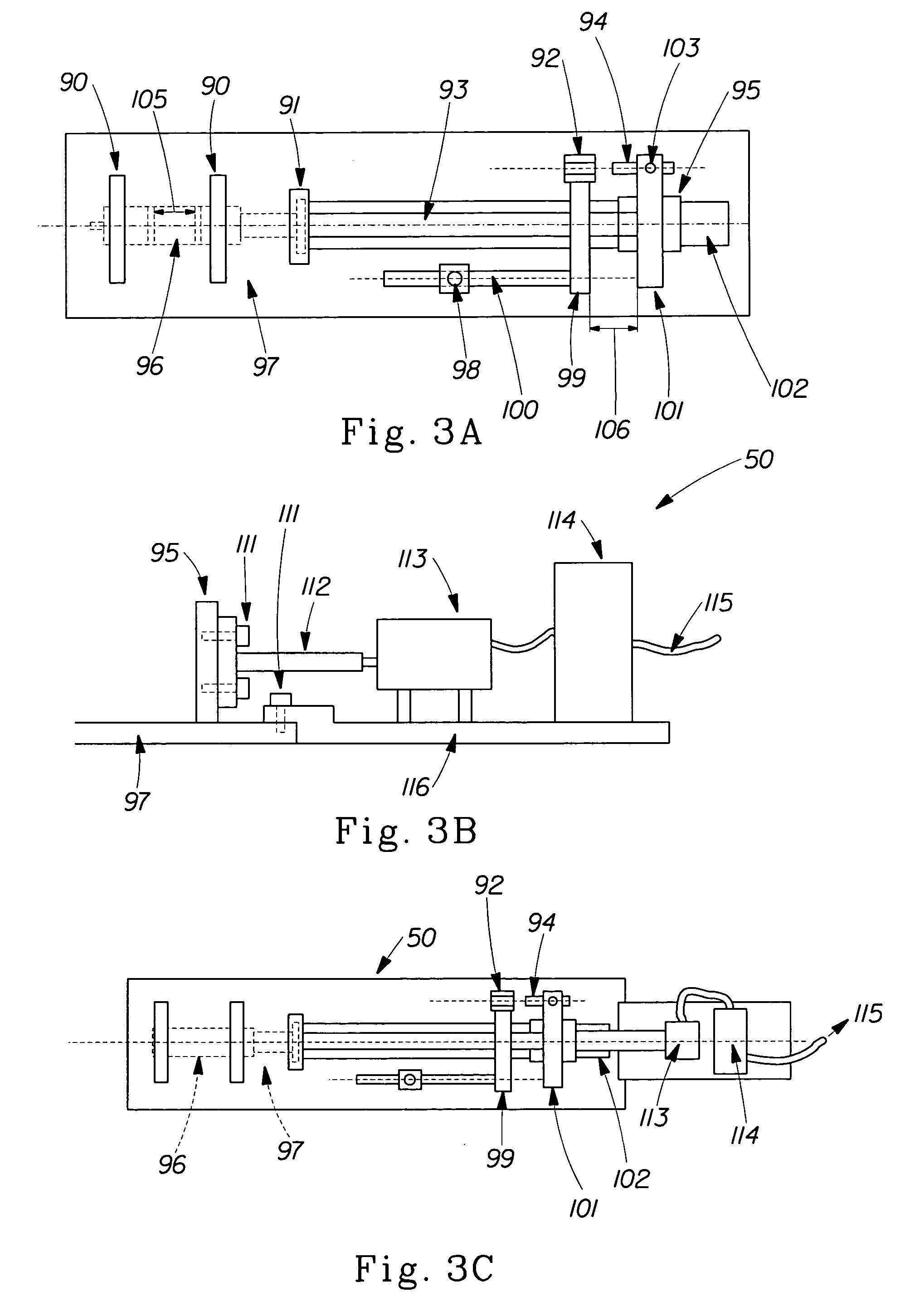
the structure of the environmentally friendly knitted fabric provided by the present invention; figure 2 Flow chart of the yarn wrapping machine for environmentally friendly knitted fabrics and storage devices; image 3 Is the parameter map of the yarn covering machine
Login to View More

PUM

No PUM Login to View More

Abstract

A computational model of the human vaginal environment is disclosed. The model comprises finite element analysis software, segmented tissue regions, at least one defined material parameter for each of said segmented tissue regions, and at least one boundary condition for each of said segmented tissue regions. At least one of the boundary conditions is subject to physiological condition changes and the model comprises computing means for manipulating the material parameters and the boundary conditions with the finite element analysis software.

Description

FIELD OF THE INVENTION [0001] This invention relates to the measurement and determination of biomechanical properties of internal tissues or organs of a living body, such as a human body. BACKGROUND [0002] Understanding the biomechanical properties of body tissues, particularly internal tissues or organs, is useful for the development of improved medical diagnostic and treatment tools. In addition, understanding the biomechanical properties such as the elastic and visco-elastic properties of internal tissues or organs can aid in designing more safe, comfortable and effective devices for internal use. Biomechanical implications learned from these measurements can improve not only the design of medical devices and implants used for minimally invasive surgery, but also any other products interacting with body tissues. As an example, knowledge of biomechanical properties can help in developing a better understanding of the effects of internally worn devices such as tampons on the deform...

Claims

the structure of the environmentally friendly knitted fabric provided by the present invention; figure 2 Flow chart of the yarn wrapping machine for environmentally friendly knitted fabrics and storage devices; image 3 Is the parameter map of the yarn covering machine
Login to View More

Application Information

Patent Timeline
18 Jan 2007
Publication
US20070016391A1
IPC
G06G7/48; G06G7/58
CPC
G06F17/5018; G06F2217/80; G06F2217/16; G06F30/23; G06F2111/10; G06F2119/08
Inventors
MINOGUCHI, RYO; OSBORN, THOMAS WARD III