
Drug containing chymase inhibitor as the active ingredient
a technology of chymase inhibitor and active ingredient, which is applied in the field of drugs that contain chymase inhibitors, can solve the problems of affecting the effect of chymase inhibitor, affecting the compliance of patients, side effects, etc., and achieves the effect of improving glucose intoleran
- Summary
- Abstract
- Description
- Claims
- Application Information
AI Technical Summary
Benefits of technology
Problems solved by technology
Method used
Image

Examples
example 1
[0226] Improving activity for glucose intolerance
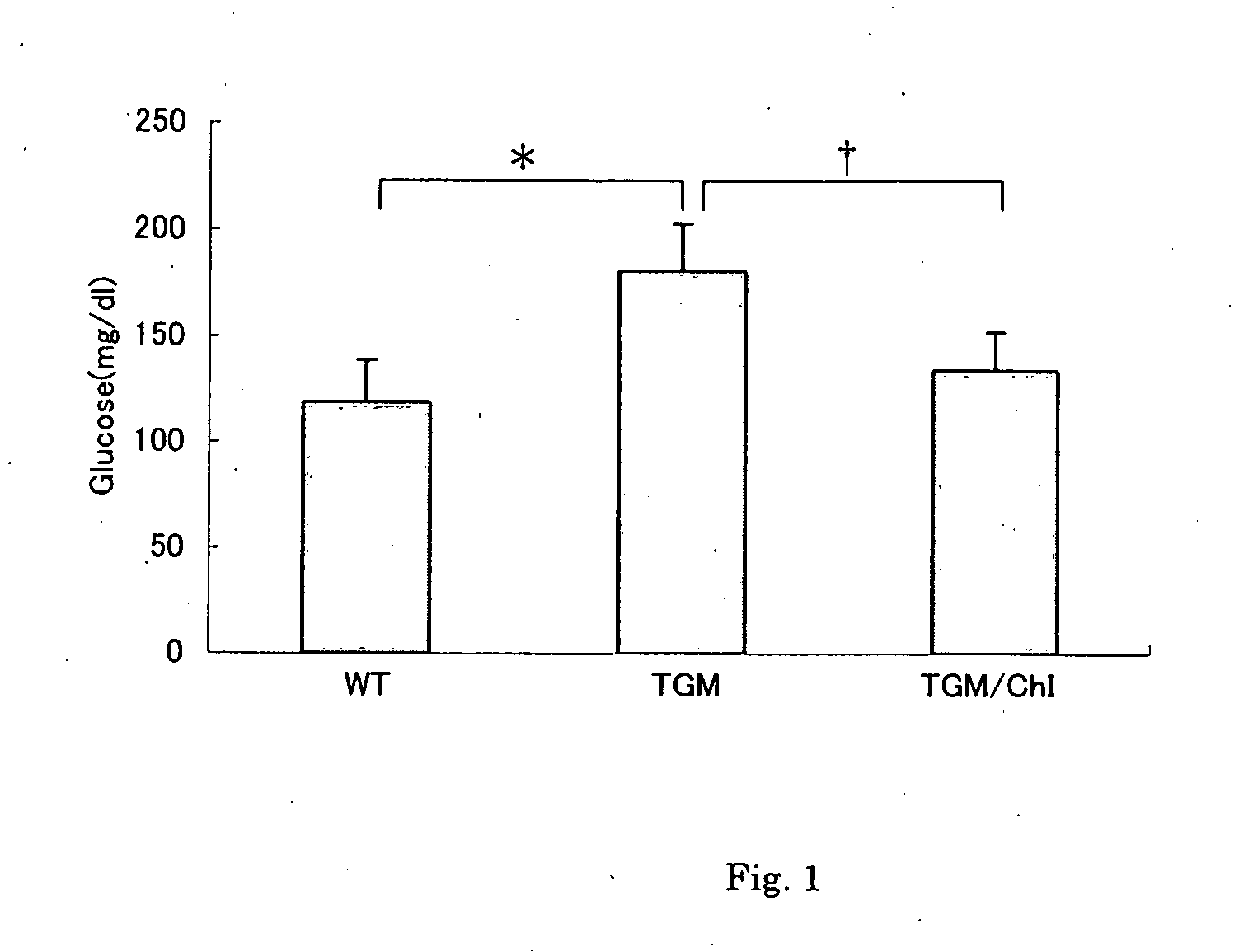
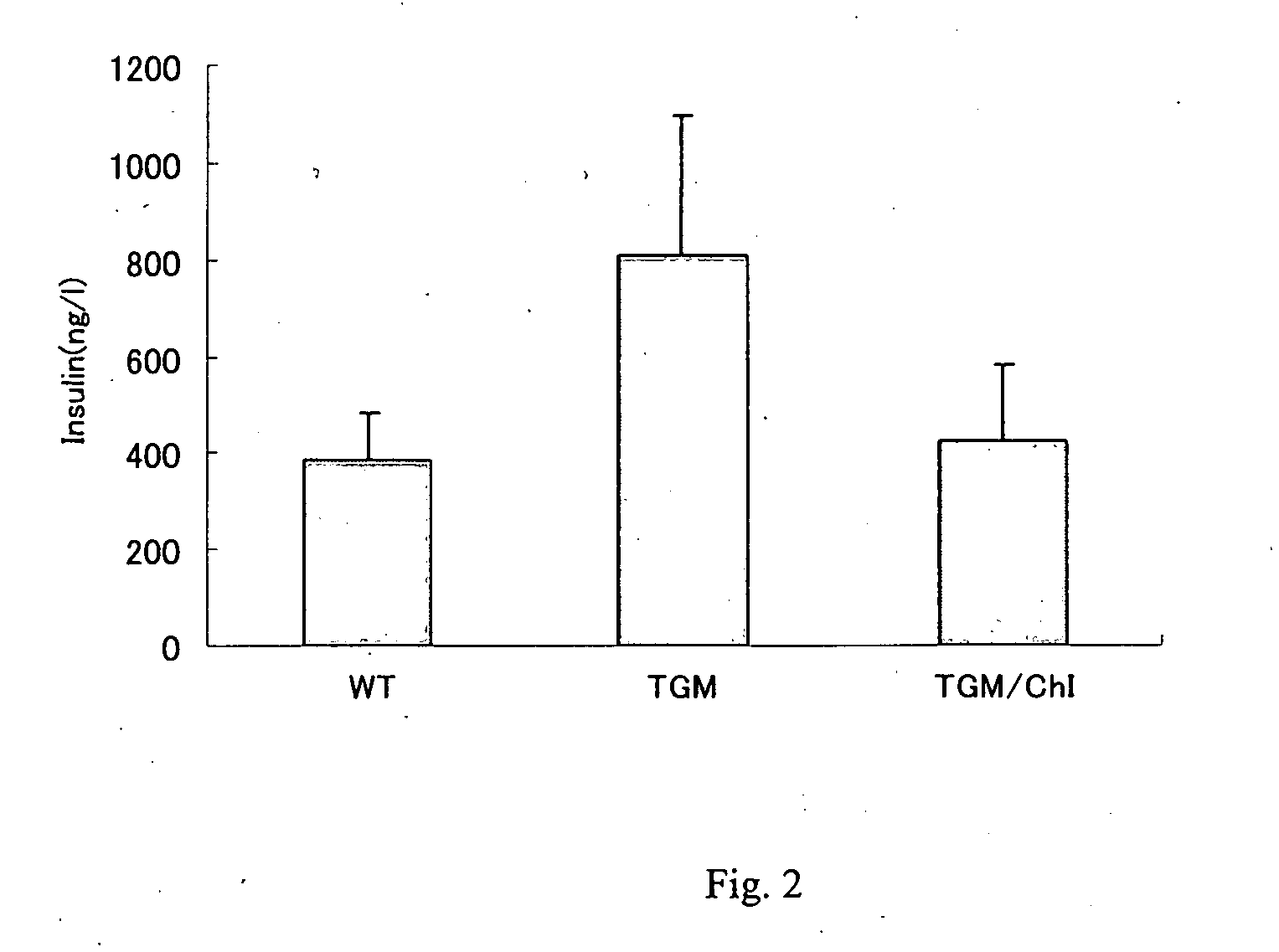
[0227] A group of 22 weeks-old wild type mice (C57Black) (Wild), a group of those in which human chymase gene was expressed (TGM) and a group of TGM that had been given feed containing 0.1% sulfate of compound 58 (the IC50 value of compound 58 is between 1 nM and 10 nM) as a chymase inhibitor (ChI) continuously for 12 weeks since 10 weeks old (TGM / ChI) were made fast overnight and orally administrated with 1.5 g / kg glucose. At 60 min after glucose load the concentrations of glucose and insulin in blood were assayed.
[0228] Results:
[0229] At 60 min after glucose load, the blood glucose levels were 119±20 mg / dl for Wild, 181±22 mg / dl for TGM and 134±18 mg / dl* for TGM / ChI (mean±SD, *p<0.01 vs. Wild, p=0.01 vs. TGM), indicating that the blood glucose level after glucose load significantly increased in TGM and that administration of ChI significantly repressed the increase (FIG. 1).
[0230] On the other hand, the insulin concentrations in...
PUM
 Login to View More
 Abstract
Description
Claims
Application Information
 Login to View More