Adaptive radiation therapy method with target detection

a radiation therapy and target technology, applied in the field of radiation therapy systems, can solve the problems of increasing the probability that all tumors will receive a lethal dose of radiation, increasing the collateral damage to healthy tissue, and difficult real-time detection of tumor targets in projection radiographs

US20070053491A1Inactive Publication Date: 2007-03-08CARESTREAM HEALTH INC
20 Cites 149 Cited by

Patent Information

Authority / Receiving Office
US · United States
Patent Type
Applications(United States)
Current Assignee / Owner
Publication Date
2007-03-08
Estimated Expiration
Not applicable · inactive patent

Smart Images

  • Figure 1
    Figure 1
  • Figure 2
    Figure 2
  • Figure 3
    Figure 3
Patent Text Reader

Abstract

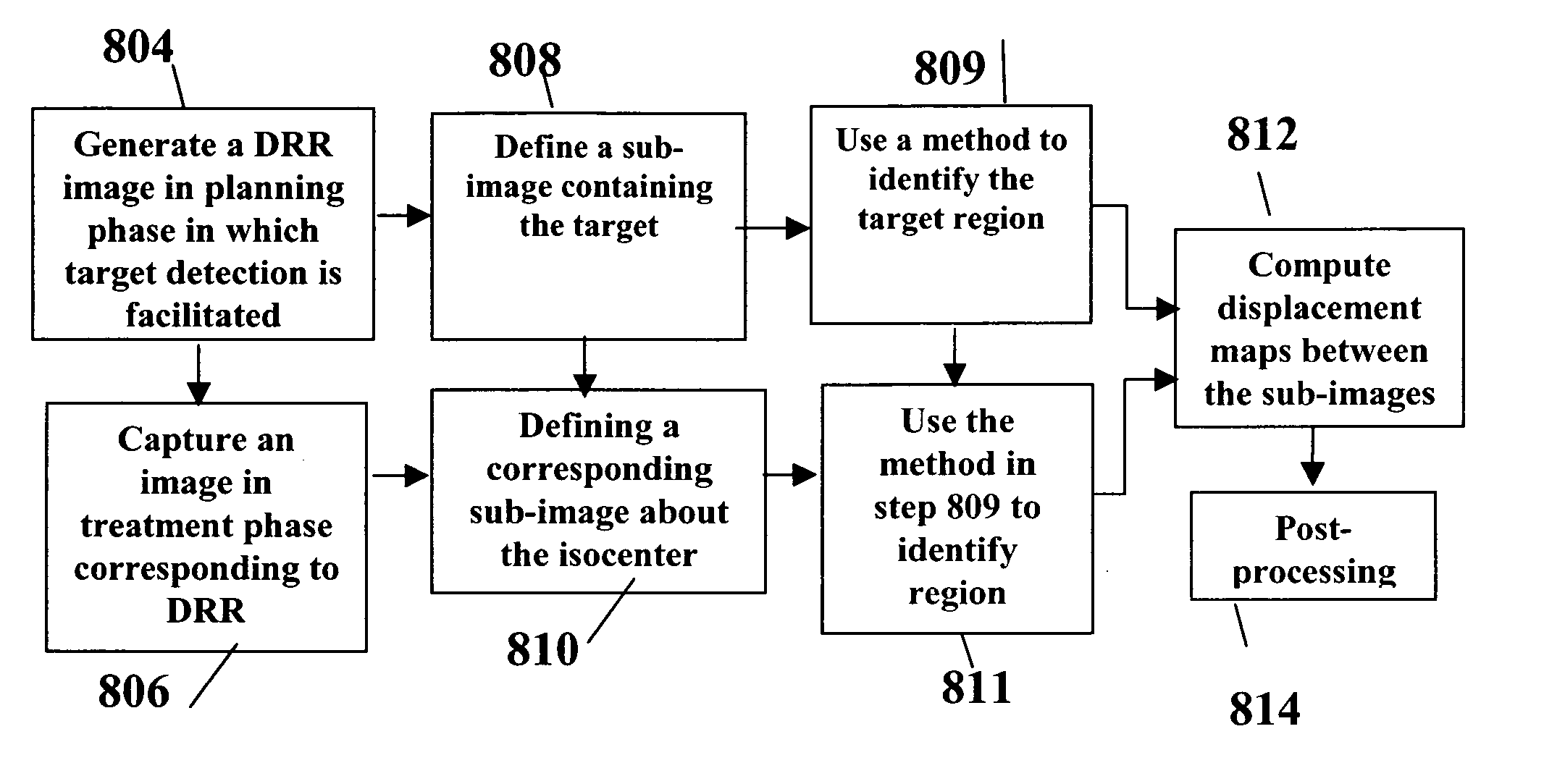
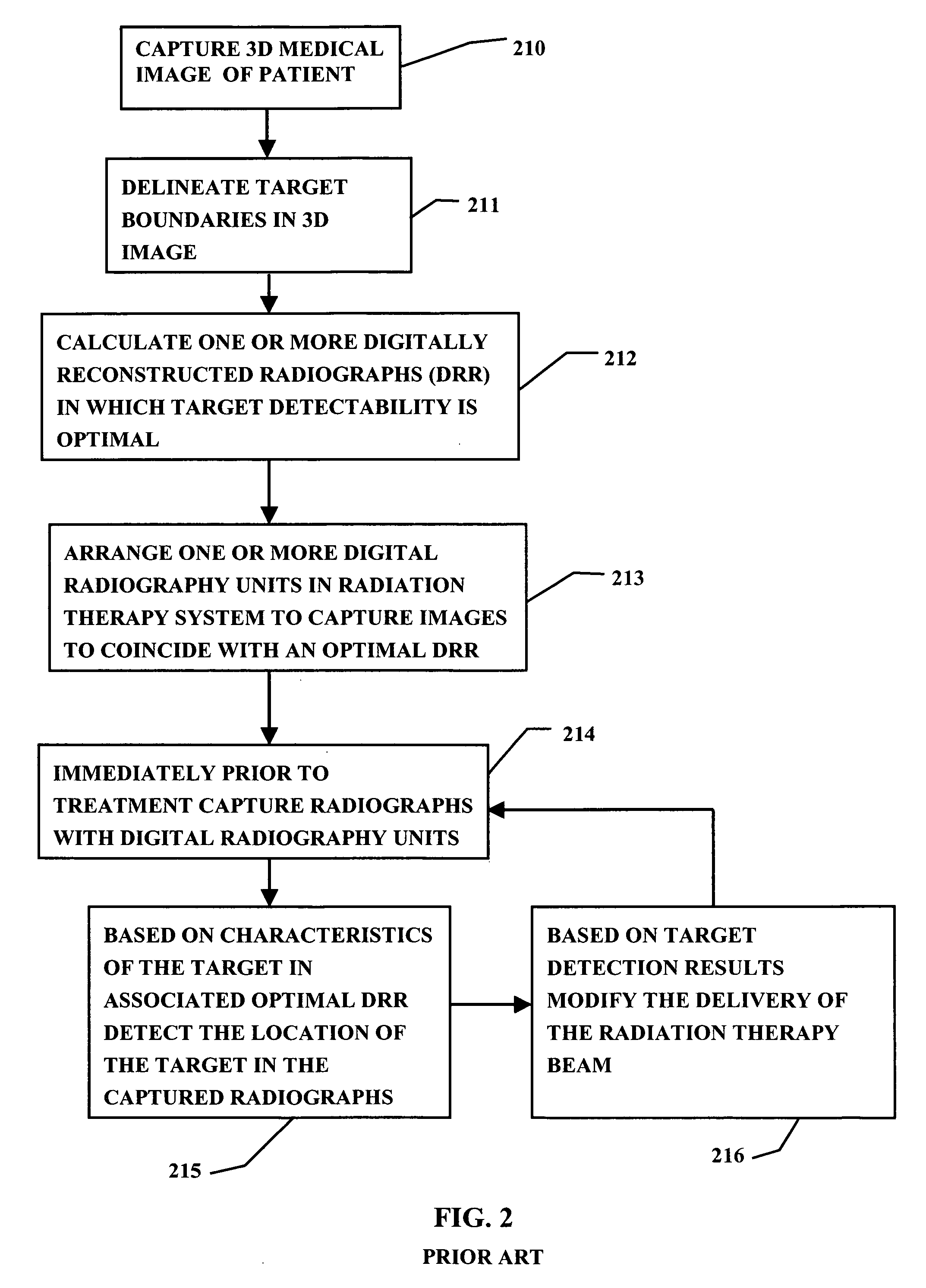
A method for delivering radiation therapy to a patient using a three-dimensional planning image for radiation therapy of the patient wherein the planning image includes a radiation therapy target includes the steps of: determining a digitally reconstructed radiograph from the planning image; identifying a region of the target's projection in the digitally reconstructed radiograph; capturing a radiographic image corresponding to the digitally reconstructed radiograph; identifying a region in the captured radiographic image; comparing the region of the target's projection in the digitally reconstructed radiograph with the identified region in the captured radiographic image; and determining a delivery of the radiation therapy in response to this comparison.
Need to check novelty before this filing date? Find Prior Art

Description

CROSS REFERENCE TO RELATED APPLICATIONS

[0001] Reference is made to commonly-assigned copending U.S. application Ser. No. 11 / 039,422, filed Jan. 20, 2005, entitled RADIATION THERAPY METHOD WITH TARGET DETECTION, by Schildkraut et al., the disclosure of which is incorporated herein. FIELD OF THE INVENTION

[0002] The invention relates generally to radiation therapy systems, and in particular, to the detection of the target at the time or radiation treatment without the use of internal markers. BACKGROUND OF THE INVENTION

[0003] In the application of radiotherapy to extra-cranial tumors, movement of the tumor target can result in a decrease in the radiation dose received by the tumor and an increased dose to normal tissue. This is especially relevant to pulmonary tumors that move due to respiration. The uncertainty in the location of the tumor target can be compensated for in several ways. One approach is to increase the treatment margin around the gross tumor volume. This approach inc...

Examples

Embodiment Construction

[0024] The following is a detailed description of the preferred embodiments of the invention, reference being made to the drawings in which the same reference numerals identify the same elements of structure in each of the several figures.

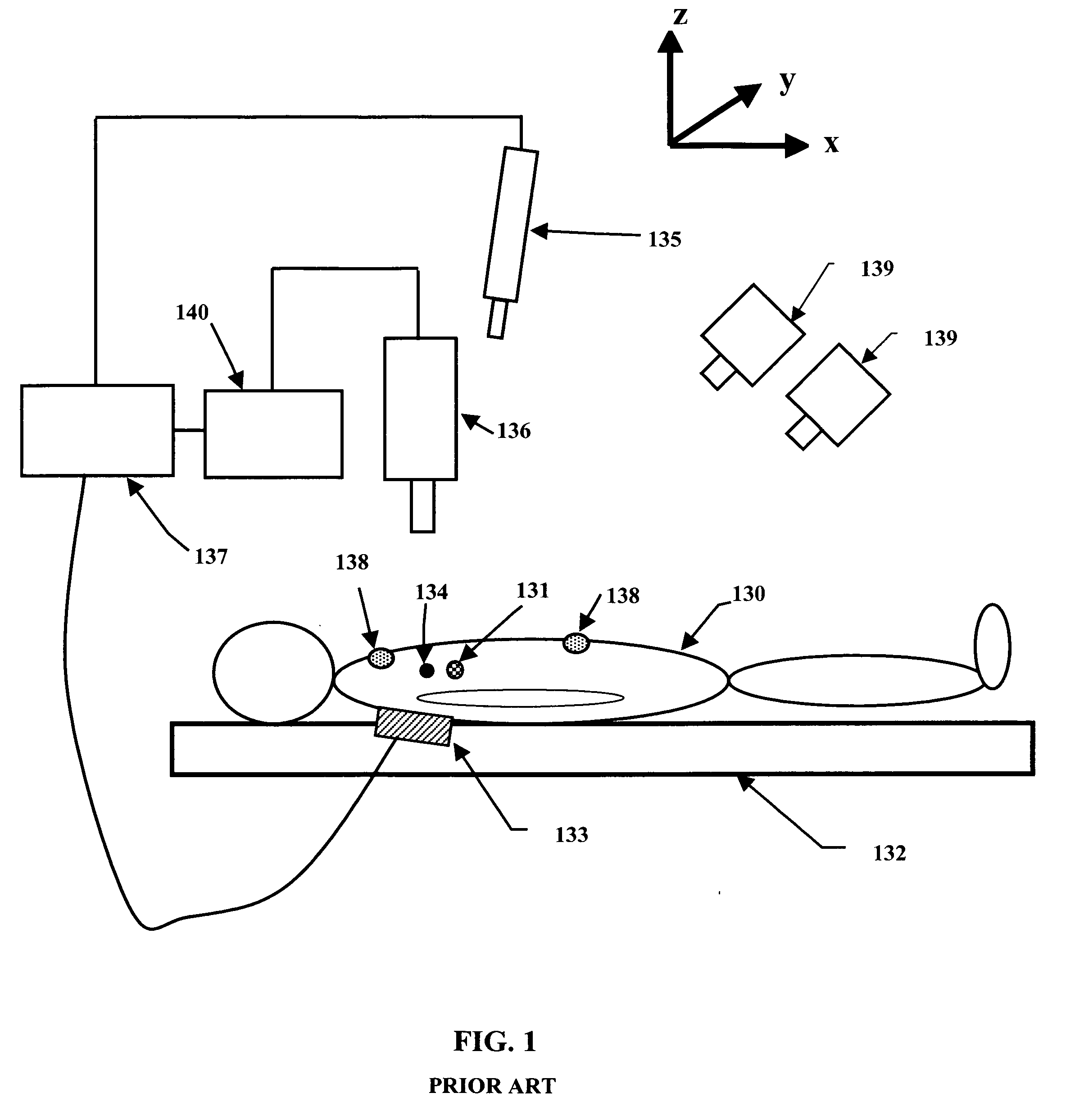
[0025]FIG. 1 shows an exemplary radiation therapy system with automatic target location detection. Referring to FIG. 1, a patient 130 is positioned on a support member such as a treatment couch 132. The patient has two or more external markers 138 attached. The position of the external markers is monitored with cameras 139. A therapeutic radiation source 136 is aimed at a isocenter 134 throughout treatment.

[0026] A radiography unit is comprised of a diagnostic X-ray source 135 and digital X-ray imaging device 133 images the region of the target 131. The radiation therapy system preferably has more that one radiography unit to enable the location of the target in three-dimensions.

[0027] The system has means to accurately determine the position an...