
System and method for asynchronous continuous-level-of-detail texture mapping for large-scale terrain rendering
a texture mapping and large-scale technology, applied in static indicating devices, 2d-image generation, instruments, etc., can solve the problems of increasing the size of the texture, unable to be accessed as quickly by a graphics processing unit or gpu, and unable to determine the precise influence of all the texels
- Summary
- Abstract
- Description
- Claims
- Application Information
AI Technical Summary
Benefits of technology
Problems solved by technology
Method used
Image

Examples
Embodiment Construction
[0045] The present invention applies to systems and methods of graphics rendering, and particularly to systems and methods for real-time rendering of large, geo-specific terrains using standards based, or commodity, GPUs, graphics hardware and / or graphics hardware systems.
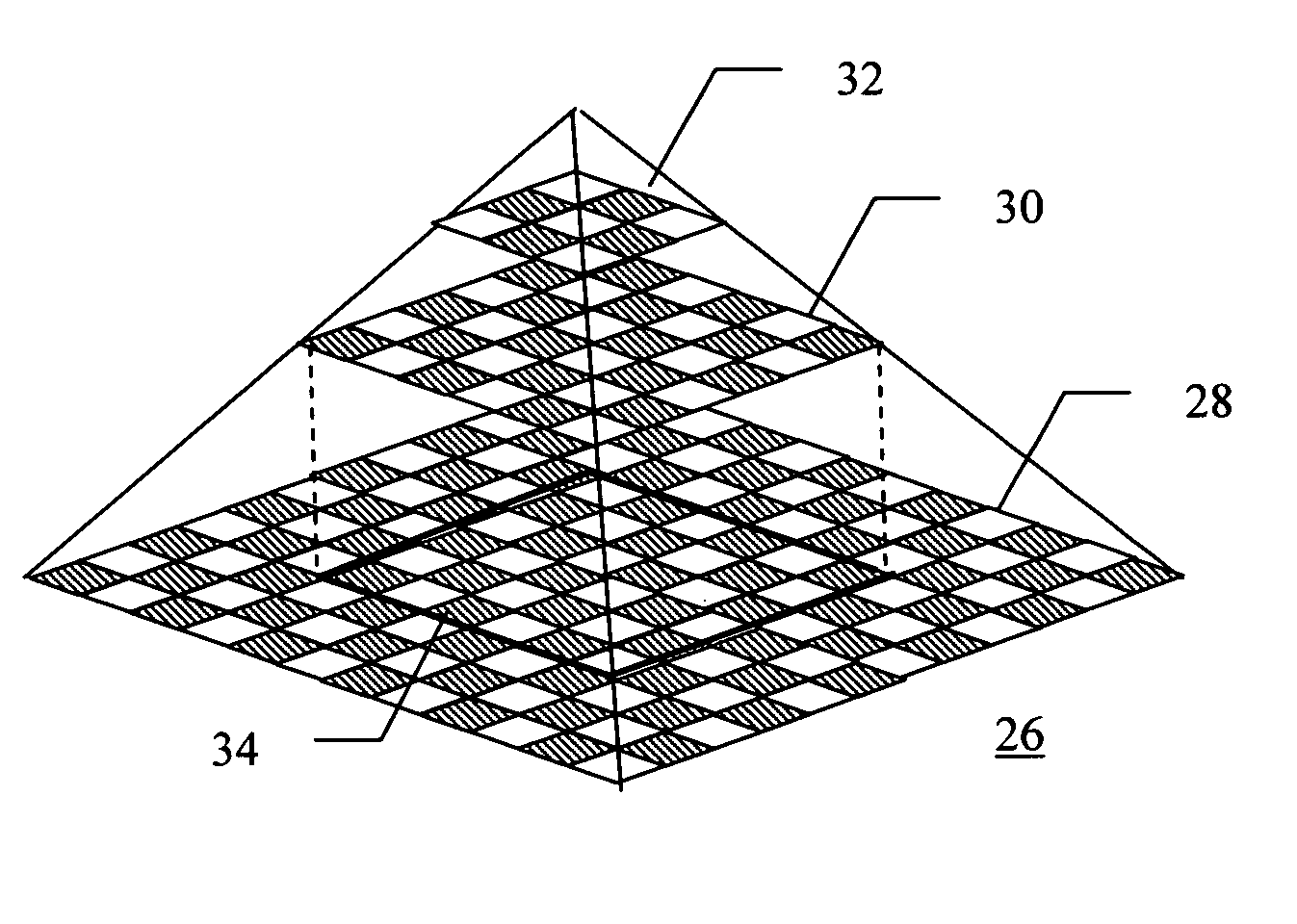
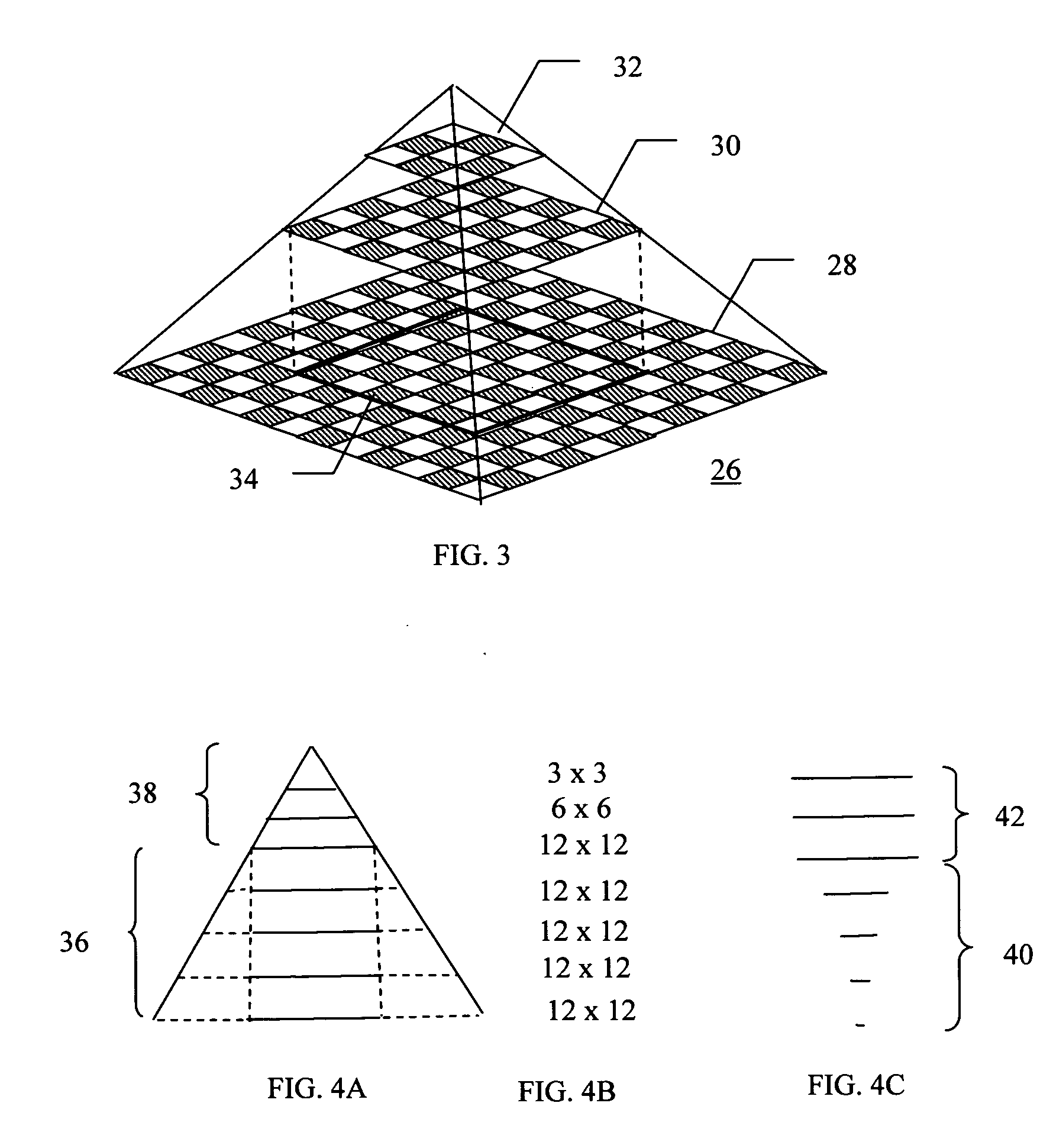
[0046] In a preferred embodiment, the present invention leverages the vertex and fragment processors and the vertex and fragment shaders that are now standard components of many commodity GPUs to implement an extended version of clip-mapping. Vertex shaders are programmable modules capable of modifying values associated with each vertex of a graphics geometry. Fragment or pixel shaders are programmable modules capable of modifying values on a per pixel basis. The extended clip-mapping of the present invention includes allowing asynchronous updating of the different clip-map levels. Whereas with prior clip-map technology, such as SGI's InfiniteReality Machine, the clip-maps of each clip-map level all have a common ...
PUM
 Login to View More
 Abstract
Description
Claims
Application Information
 Login to View More