
Skillet power system
a power system and skillet technology, applied in the field of skillet power systems, can solve the problems of increasing the total friction of the system, increasing the manufacturing cost of the system, and prolonging the length of the conductor, so as to reduce manufacturing, installation and maintenance costs, and facilitate the installation of the system.
- Summary
- Abstract
- Description
- Claims
- Application Information
AI Technical Summary
Benefits of technology
Problems solved by technology
Method used
Image

Examples
Embodiment Construction
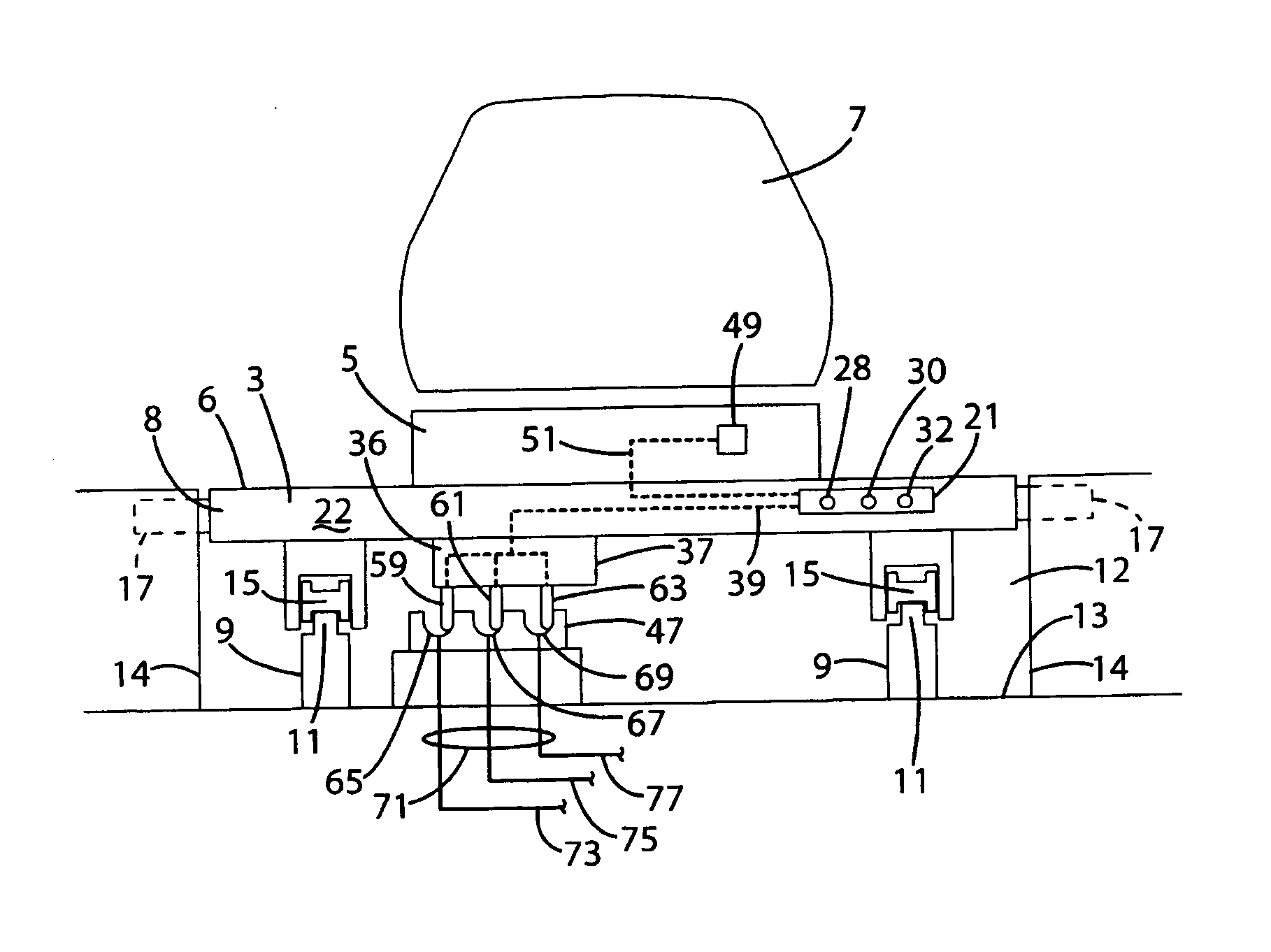
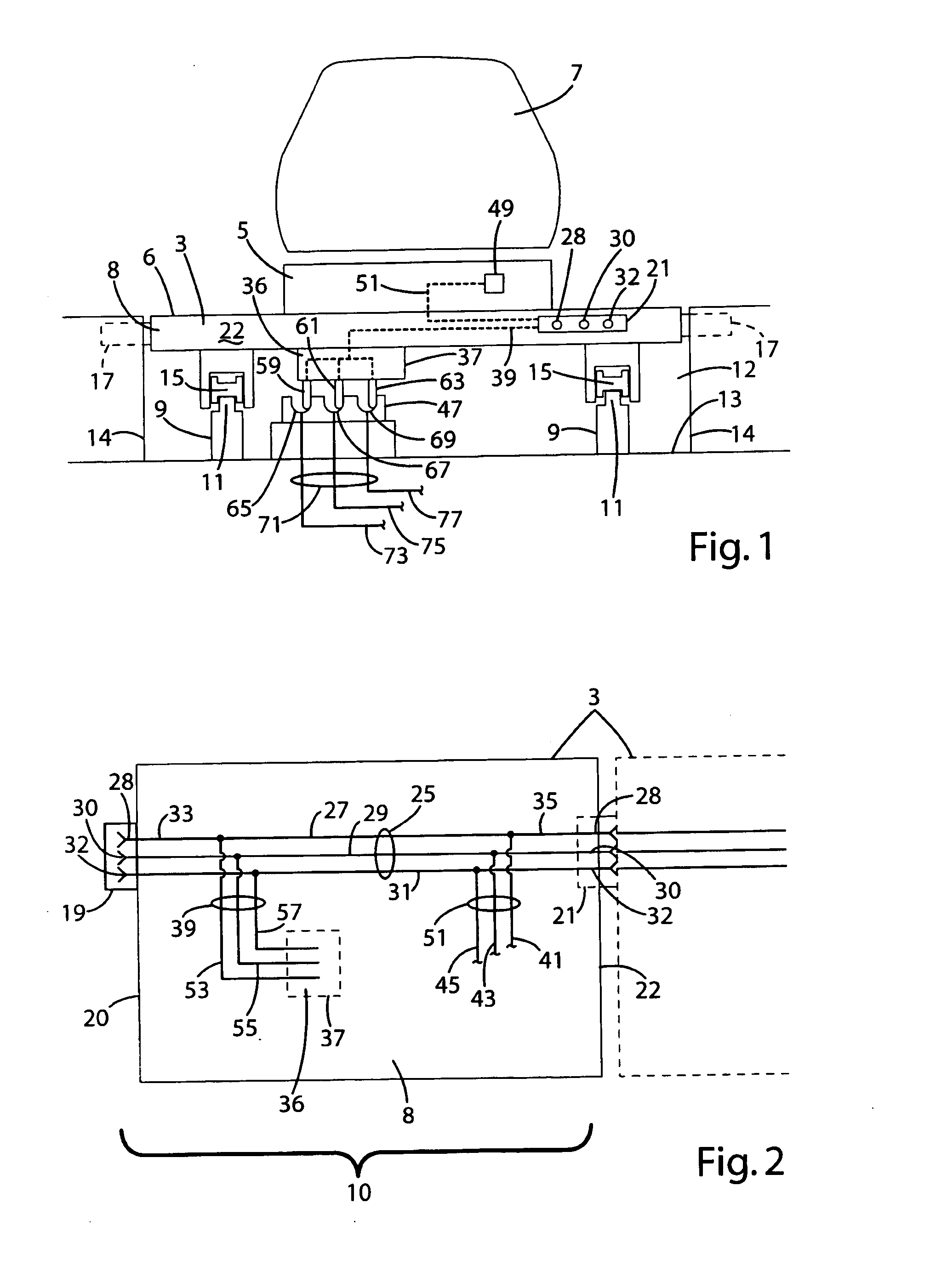
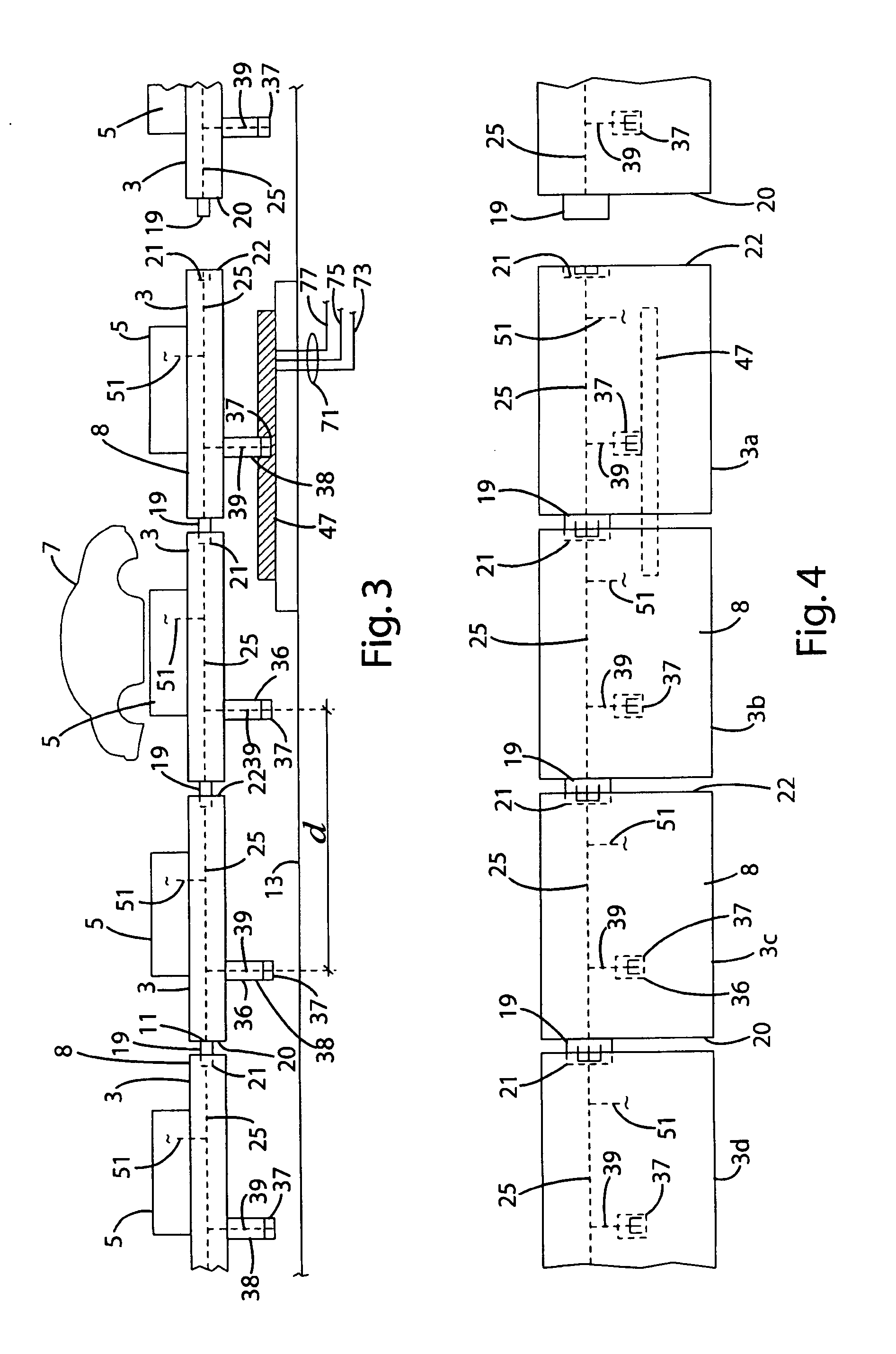
[0022] The present invention is directed to a skillet 3 for supporting a workpiece 7, as illustrated in FIG. 1. The skillet 3 generally includes a platform 8 having an upper surface 6 and an upper support 5 extending from the platform 8 and adapted to support thereon a workpiece 7. The workpiece 7 is illustrated in the drawings as an automobile body; however, it could be any other item needing assembly. Each skillet 3 includes an electrical assembly 10, as illustrated in FIG. 2, having at least one contact 29 for engaging a contact on an adjacent skillet to allow the passage of electrical power, and if desired, data signals between adjacent skillets. While the present invention is described below in detail for the passage of electricity, the present invention may transmit data signals instead.
[0023] The conveyor assembly 2 may have a variety of configurations, depending on the type of workpiece, production tasks to be performed, the facility, and a variety of other considerations. ...
PUM
 Login to View More
 Abstract
Description
Claims
Application Information
 Login to View More