
Picture layer rate control for video encoding
a video encoder and picture layer technology, applied in the field of digital video compression systems, can solve problems such as quality compromises, quality compromises made in ways that are minimally perceptible, and rate of compression
- Summary
- Abstract
- Description
- Claims
- Application Information
AI Technical Summary
Benefits of technology
Problems solved by technology
Method used
Image

Examples
Embodiment Construction
[0012] Several preferred embodiments of the present invention will now be described with reference to the accompanying drawings. Various other embodiments of the invention are also possible and practical. This invention may be embodied in many different forms and the invention should not be construed as being limited to the embodiments set forth herein.
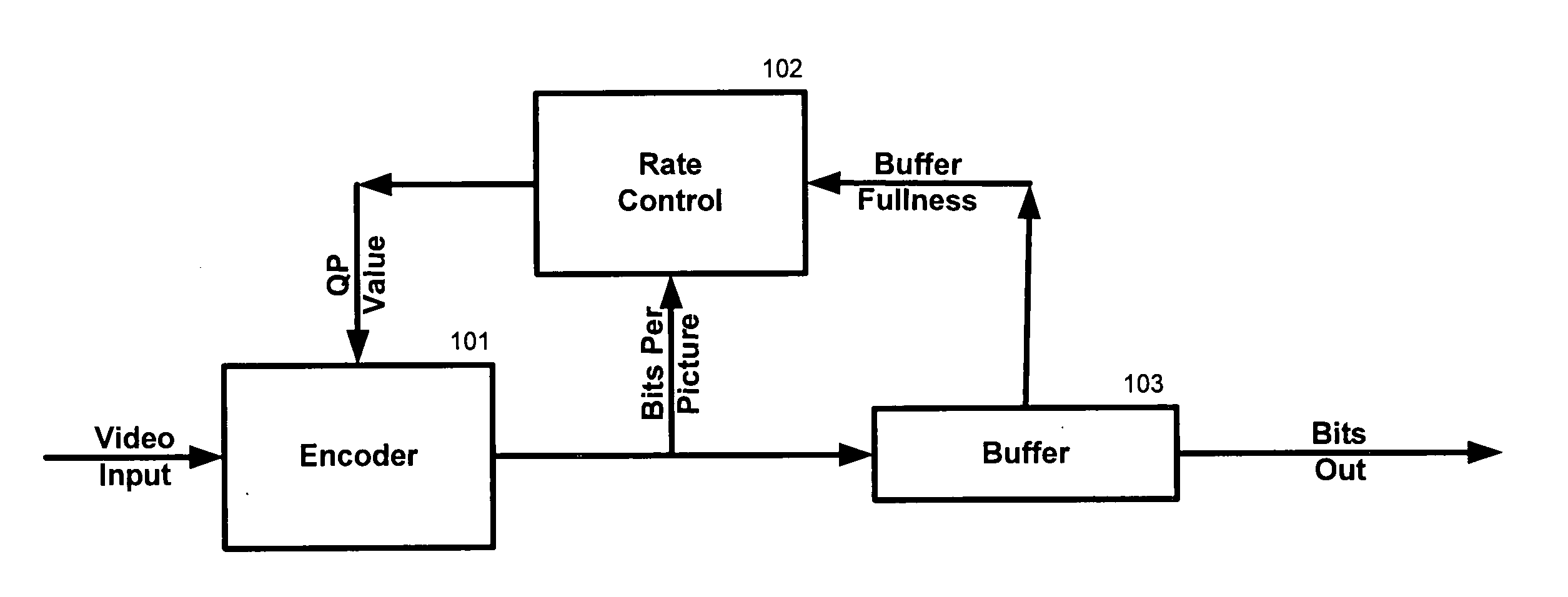
[0013] The figures listed above illustrate the preferred embodiments of the invention and the operation of such embodiments. In the figures, the size of the boxes is not intended to represent the size of the various physical components. Where the same element appears in multiple figures, the same reference numeral is used to denote the element in all of the figures where it appears.
[0014] Only those parts of the various units are shown and described which are necessary to convey an understanding of the embodiment to those skilled in the art. Those parts and elements not shown are conventional and known in the art.
[0015] The preferr...
PUM
 Login to View More
 Abstract
Description
Claims
Application Information
 Login to View More