

Restricting device access per session
a technology per session, applied in the field of restricting device access per session, can solve the problem of enumerating and/or detecting connected and/or redirected devices that are typically not secured
- Summary
- Abstract
- Description
- Claims
- Application Information
AI Technical Summary
Benefits of technology
Problems solved by technology
Method used
Image

Examples
Embodiment Construction
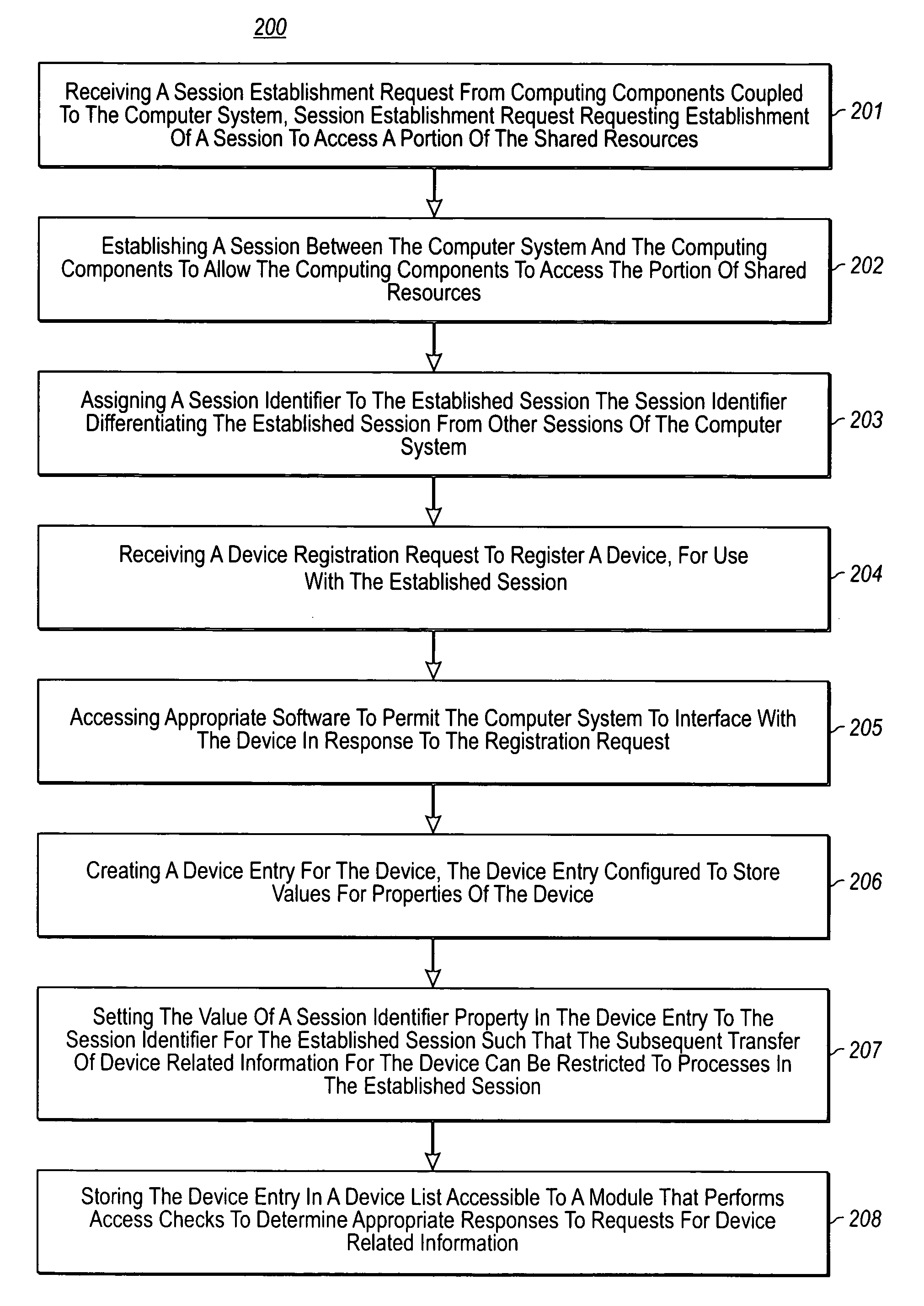
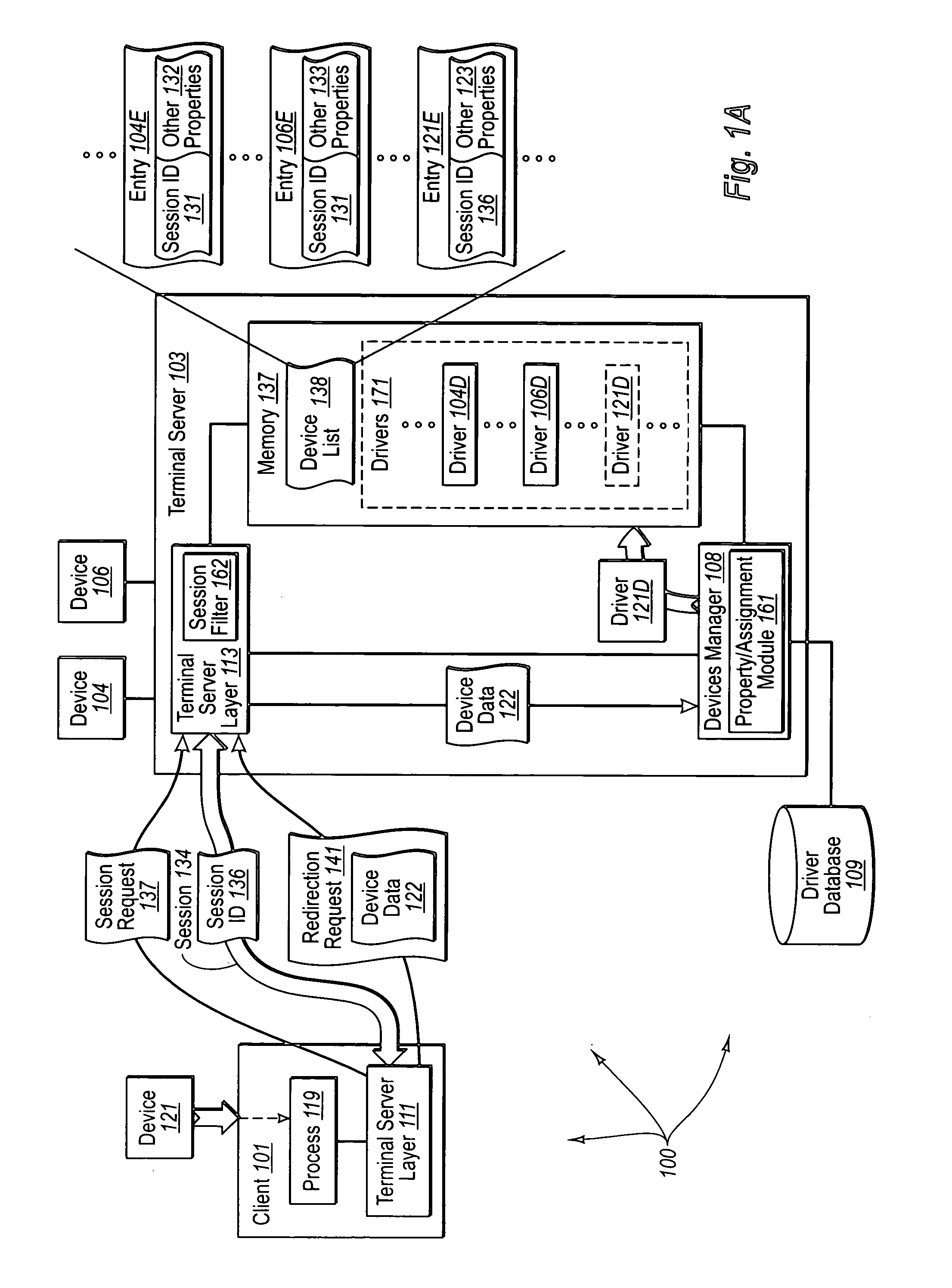
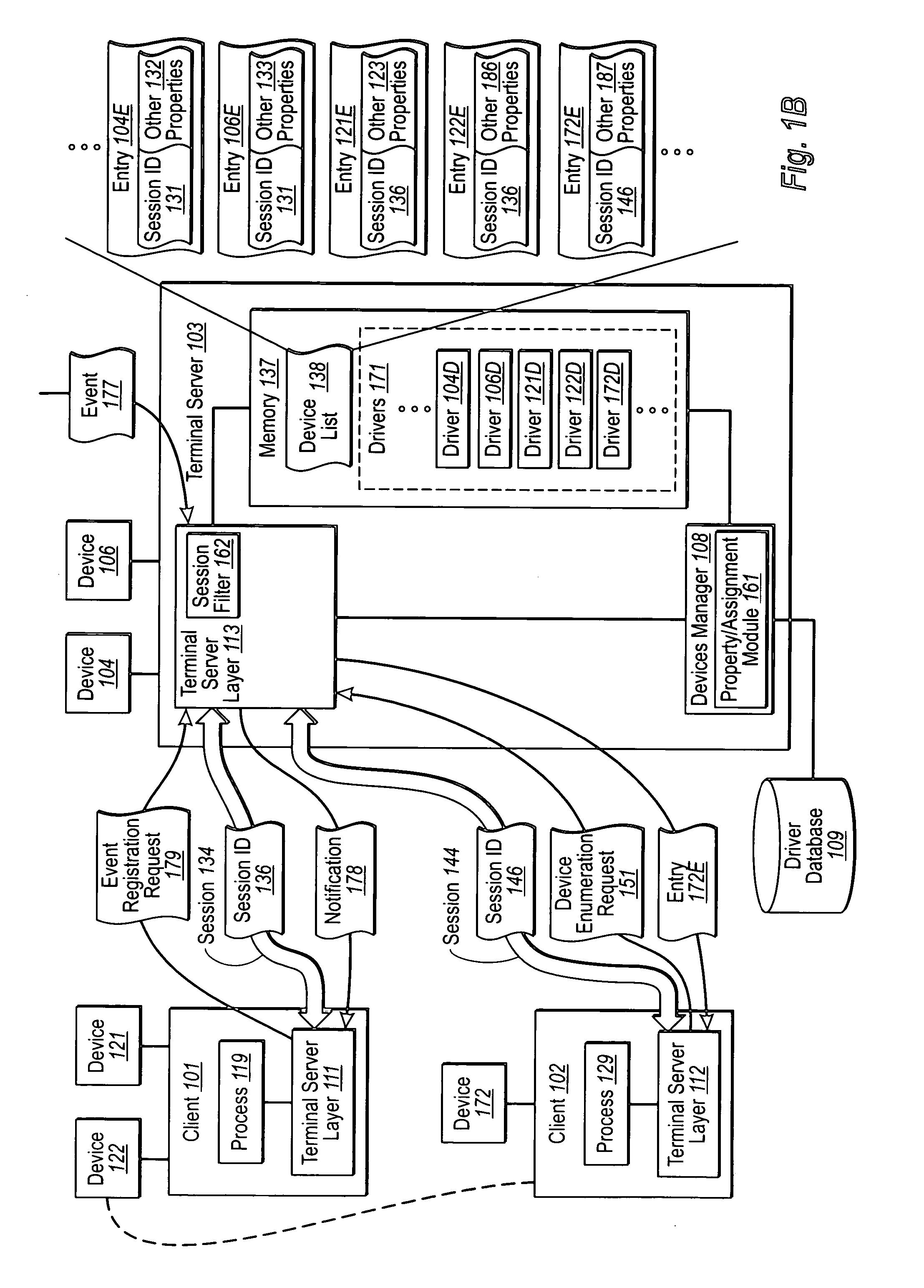
[0026] The present invention extends to methods, systems, and computer program products for restricting device access per session. In some embodiments, a session establishment request is received from computing components coupled to a computer system. The session establishment request requests establishment of a session to access a portion of the shared resources of the computer system. A session is established between the computer system and the computing components to allow the computing components to access the portion of shared resources. A session identifier is assigned to the established session to differentiate the established session from other sessions of the computer system.
[0027] A device registration request to register a device for use with an established session is received. Appropriate software is accessed to permit the computer system to interface with the device in response to the registration request. A device entry is created for the device. The device entry is c...
PUM
 Login to View More
 Abstract
Description
Claims
Application Information
 Login to View More