
Electropneumatic central unit for a commercial vehicle configured of modules with electrical and/or pneumatic components
- Summary
- Abstract
- Description
- Claims
- Application Information
AI Technical Summary
Benefits of technology
Problems solved by technology
Method used
Image

Examples
Example
DETAILED DESCRIPTION OF THE DRAWING
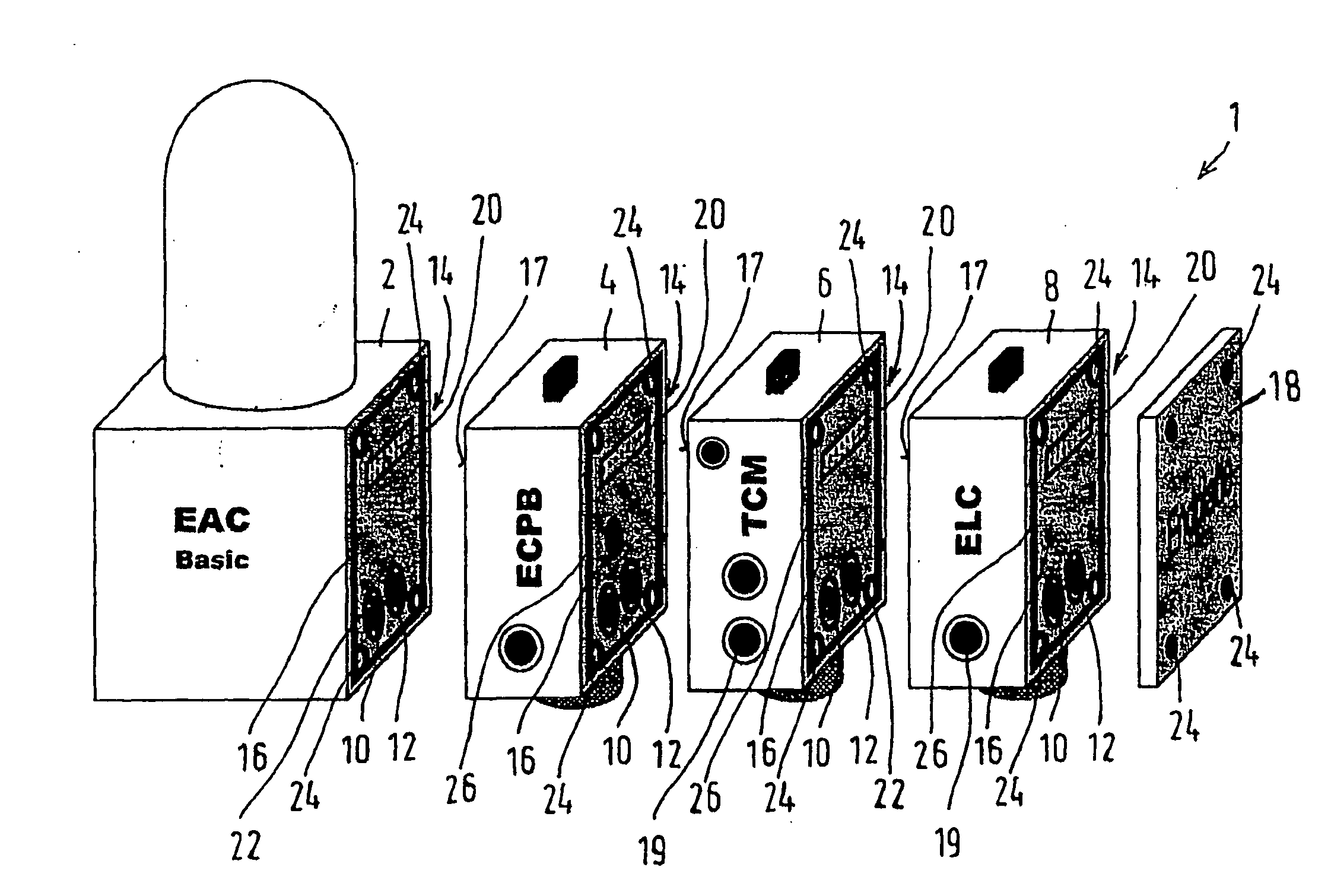
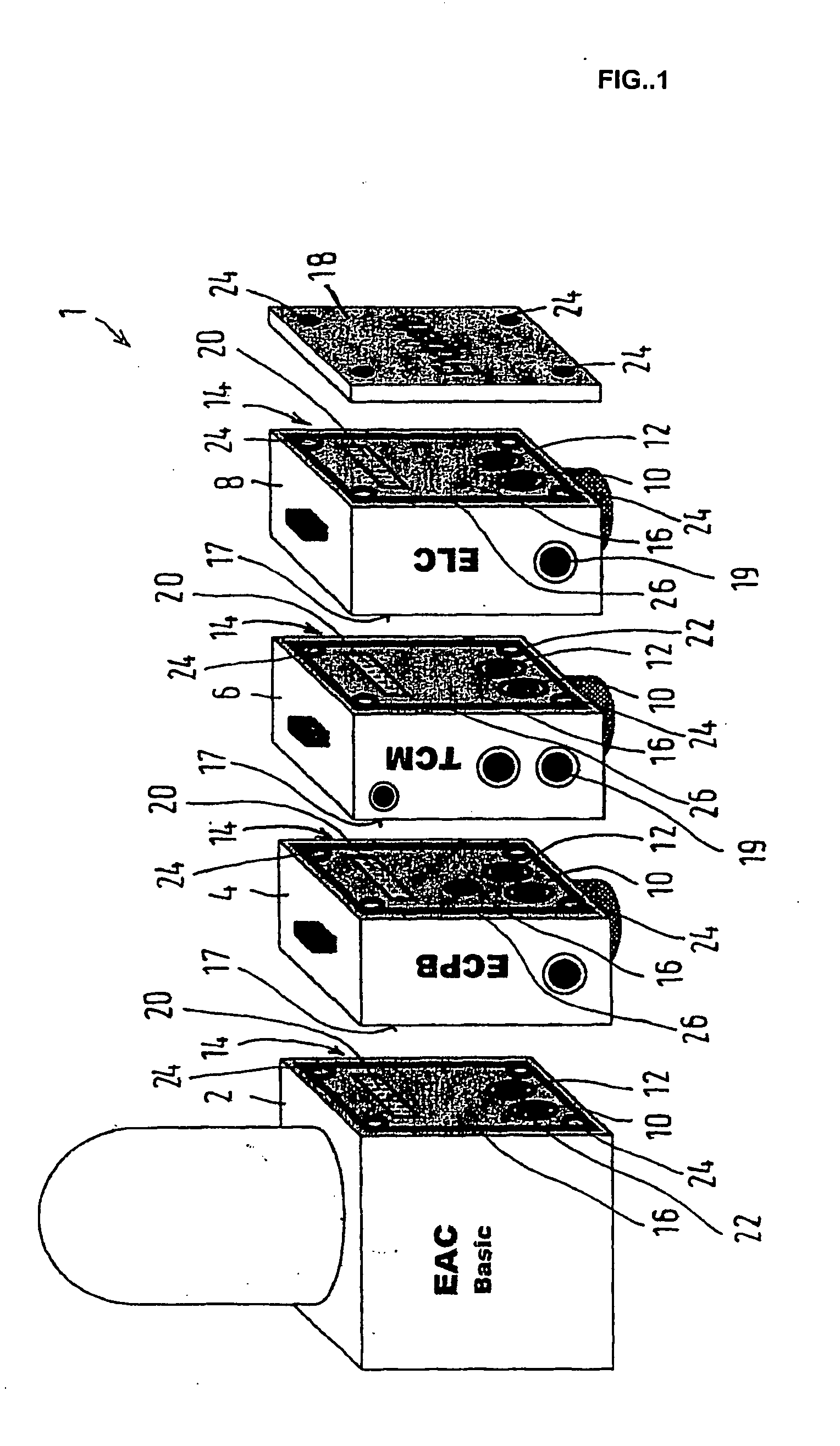
[0028] The electropneumatic central unit of a commercial vehicle, which central unit, as a whole, is designated 1 in the FIGURE, is constructed from individual modules which are manufactured separately from one another and have electrical and / or pneumatic components, for example from an EAC (Electronic Air Control) module, an ECPB (Electronic Controlled Parking Brake) module, a TCM (Trailer Control) module, and an ELC (Electrical Level Control) module.
[0029] These modules each contain the actuators which are required in order for them to function, for example solenoid valves, possibly the associated actuating circuits (output stages, free-wheeling diodes etc.), sensors, for example pressure sensors, and also possibly a simple low-cost microprocessor for controlling the output stages, reading the sensors and operator control elements and for communication with the central controller. An ESD protection means may also be provided in order to avoid d...
PUM
 Login to View More
 Abstract
Description
Claims
Application Information
 Login to View More