
Method for manufacturing open porous components of metal, plastic or ceramic with orderly foam lattice structure
a technology of foam lattice structure and open porous components, which is applied in the direction of manufacturing tools, foundry patterns, foundry moulding apparatus, etc., can solve the problems of difficult to clearly define the mechanical properties of the component cannot be clearly defined with difficulty, and the different size of the bubbles that develop
- Summary
- Abstract
- Description
- Claims
- Application Information
AI Technical Summary
Benefits of technology
Problems solved by technology
Method used
Image

Examples
Embodiment Construction
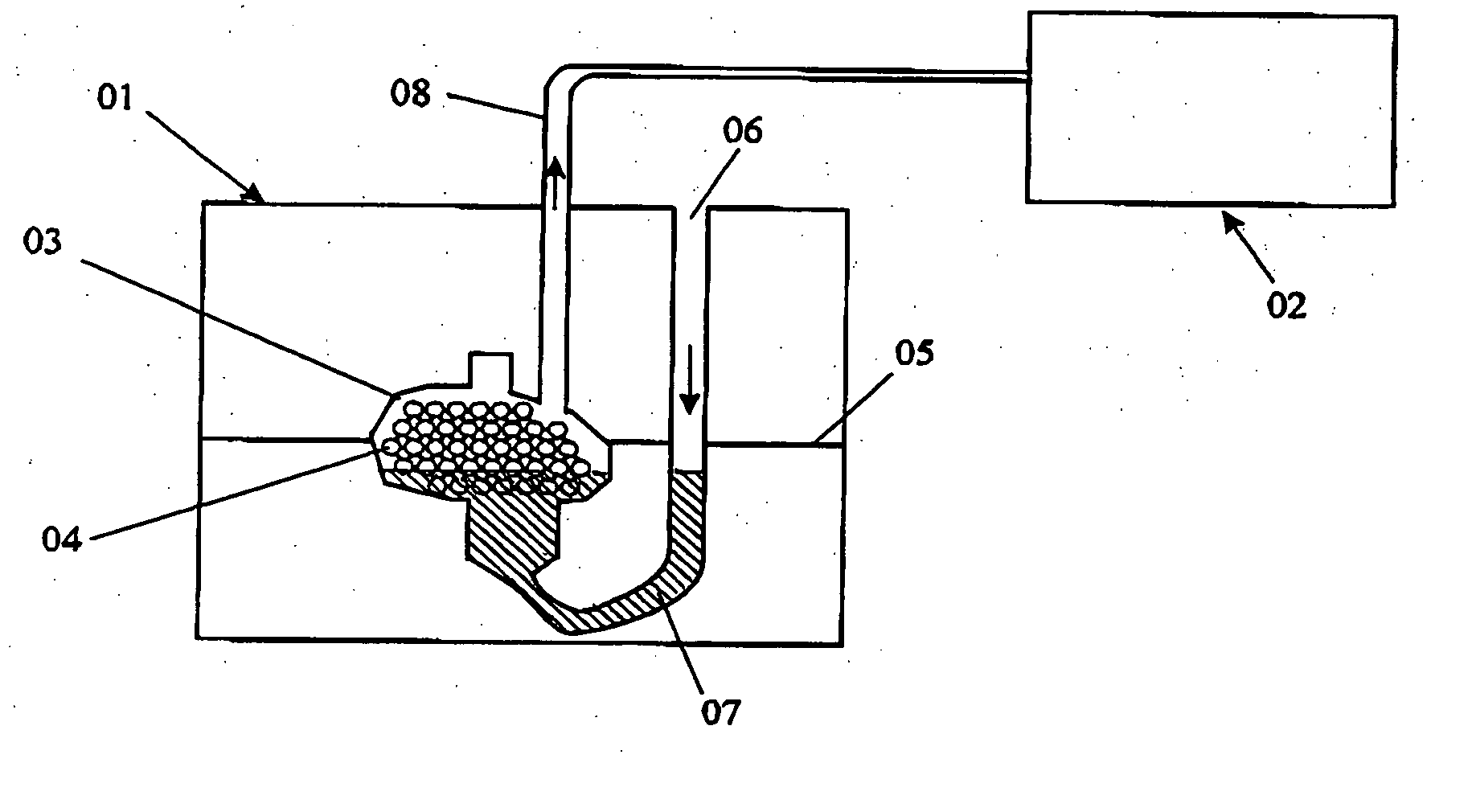
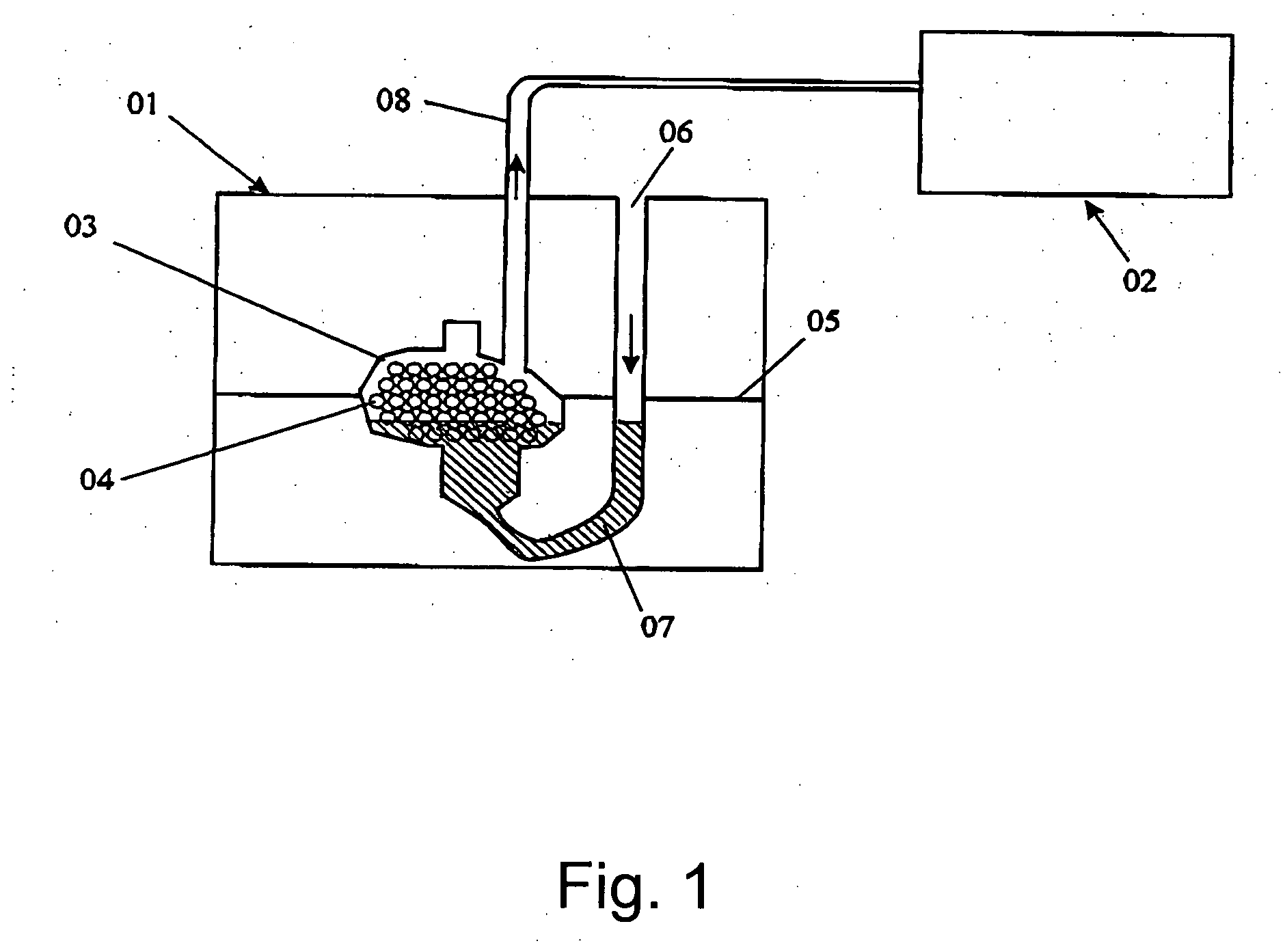
[0030] A casting device 01 is schematically shown in FIG. 1 in which a casting mold 03 is contained. In the casting mold 03, liquid material from an oven can be filled through a casting feed 06, wherein the liquid material forms a casting sump 07. Here, the liquid material flows into the casting mold 03 up to the level of the static pressure of the casting mold 07. The casting device 01 is constructed so that the casting mold 03 can be split at a splitting joint 05 in order to remove the cast component from the casting mold 03. In the interior of the casting mold 03 is located a core stack 04 which consists of individual core lattice planes which are assembled of individual core bodies and forms a regular core lattice. With the help of a vacuum station 02 a vacuum is created in the interior of the casting mold 03 through a vacuum discharge 06 so that the liquid material is drawn up within the core stack 04 in order to fill out the entire casting mold 03.
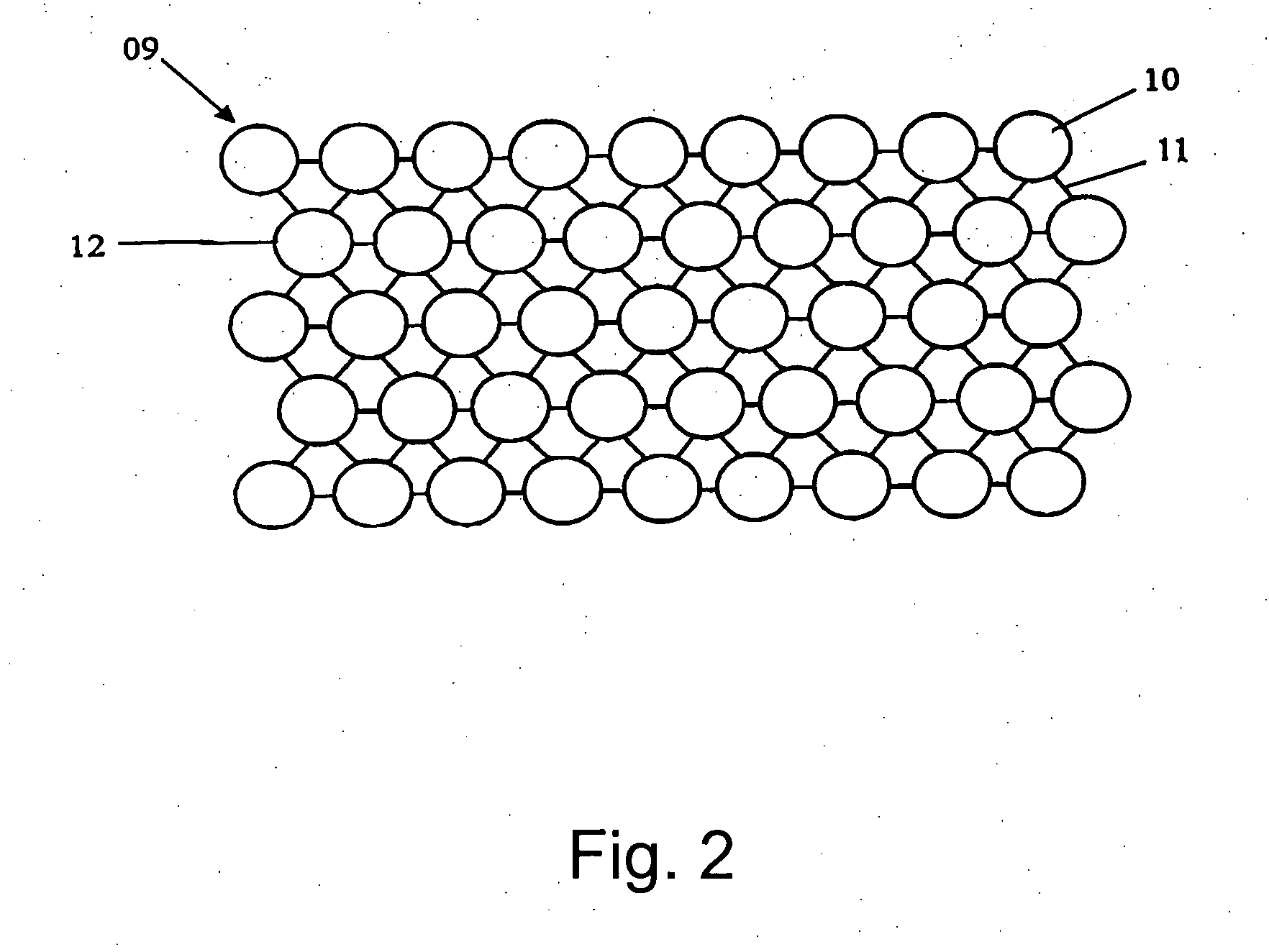
[0031]FIG. 2 shows a schemat...
PUM
| Property | Measurement | Unit |
|---|---|---|
| diameter | aaaaa | aaaaa |
| diameter | aaaaa | aaaaa |
| size | aaaaa | aaaaa |
Abstract
Description
Claims
Application Information
 Login to View More