

Use of Endophytic Bacteria to Treat Plants
a technology of endophytic bacteria and plants, applied in the field of endophytic bacteria, can solve the problems of not being able to culture plants in geothermal soil, not being able to observe living cells, and not being able to cultivate microorganisms in geothermal soil
- Summary
- Abstract
- Description
- Claims
- Application Information
AI Technical Summary
Problems solved by technology
Method used
Image

Examples
example 1
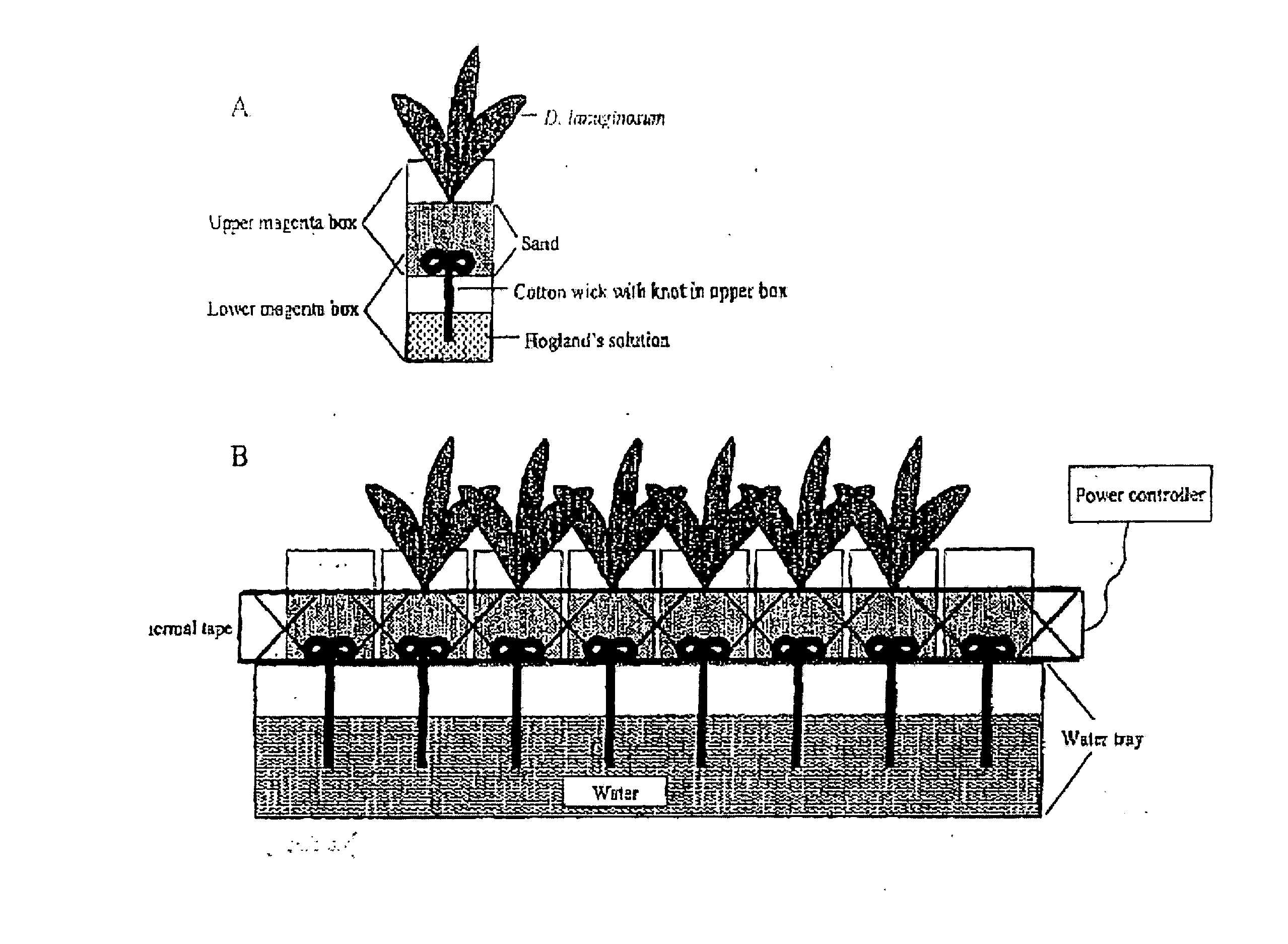
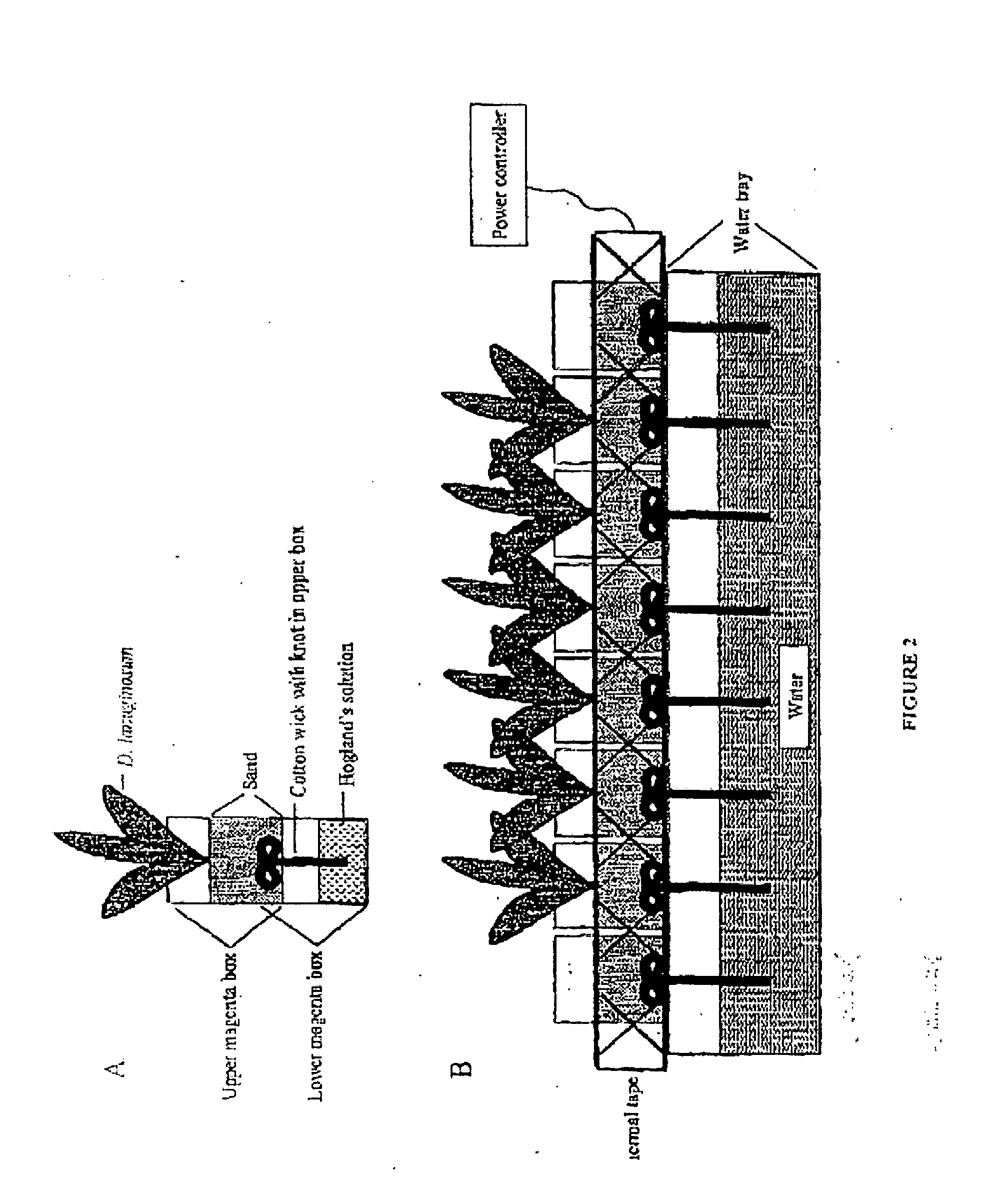
[0039] We report the first isolation of a fungal symbiont (Curvularia sp.) from a perennial grass (D. lanuginosum) inhabiting geothermal soils of Lassen Volcanic and Yellowstone National Parks. This plant-fungus symbiosis was mutualistic and provided thermotolerance to both host plant and fungal endophytes in laboratory experiments and field trials.
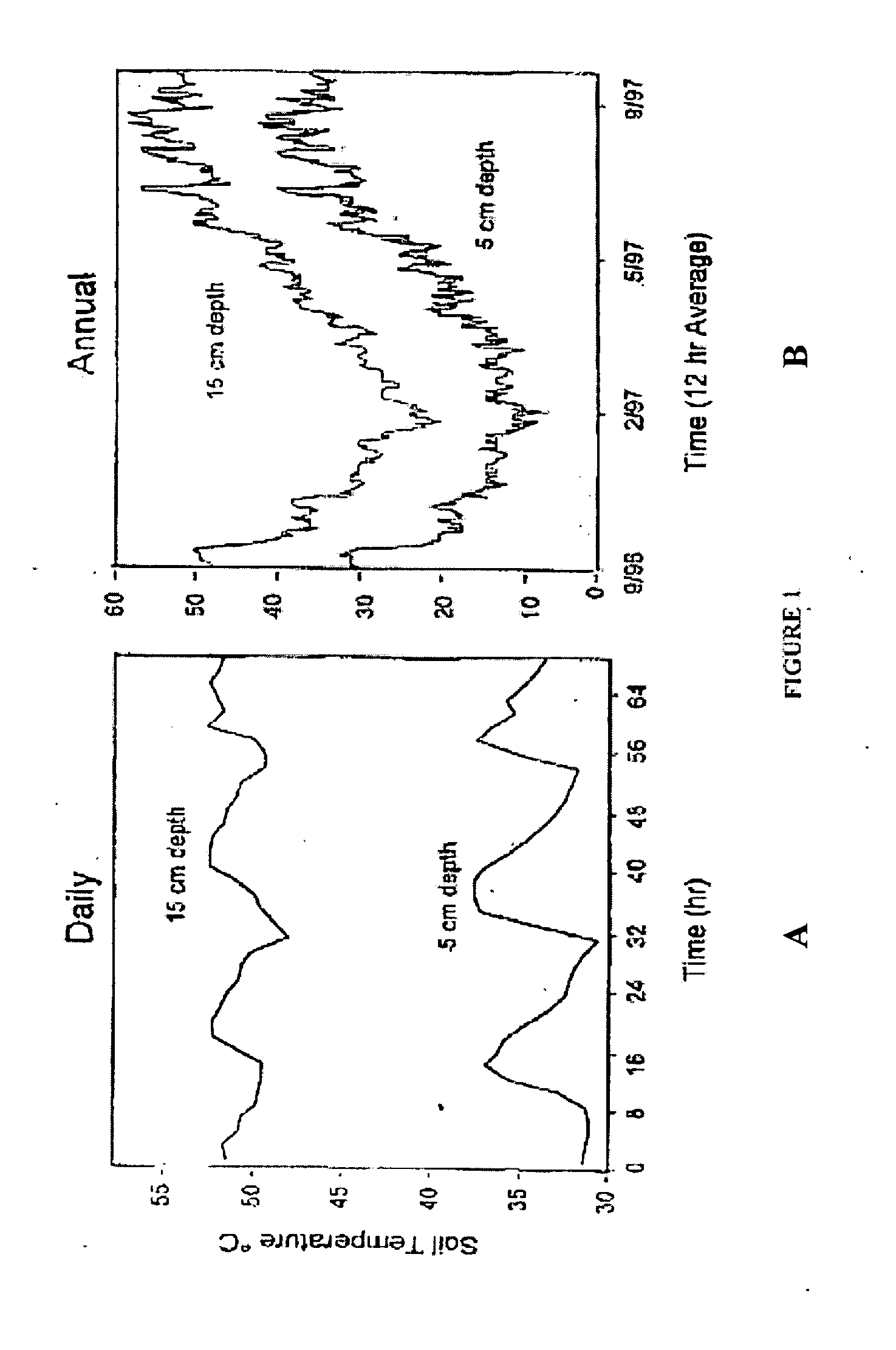
[0040] We collected approximately 200 D. lanuginosum plants from geothermal soils at more than ten different sites in two national parks. These soils are characterized as acid rhyolite and siliceous sinter, heated by geothermal activity (YNP Soil Scientists, Soil Investigation of the Reese Creek-McMinn Bench-Mammoth Area, Northwestern Yellowstone National Park, Wyoming. National Park Service, Mammoth, Wyoming (1991) expressly incorporated by reference). Soil temperatures in Yellowstone Park were measured at depths of 5 and 15 cm with a datalogger (Campbell Scientific). Temperatures increased with soil depth and showed daily and annual fl...
example 2
[0049] We tested the host range and symbiotic lifestyle expression of D. lanuginosum endophyte, Curvularia sp., isolate 1A15.1, in phylogenetically distant monocots and eudicots not previously known to be hosts. One week old monocot (wheat, corn) and eudicot (squash, cucumber, watermelon, tomato, arabidopsis) seedlings were either mock-inoculated or inoculated with 1A 15.1 (Redman, et at., Thermotolerance conferred to plant host and fungal endophyte during mutualistic symbiosis, Science In Press (2003) expressly incorporated by reference).
[0050] Colonization control plants were inoculated with a uv-induced mutant (path-1)( Freeman, S. & Rodriguez, R. J., Genetic conversion of a fungal plant pathogen to a nonpathogenic, endophytic mutualist. Science 260, 75-78 (1993) expressly incorporated by reference) of Colletotrichum magna that asymptomatically colonizes these hosts (except corn) and expresses a mutualistic, rather than, a pathogenic, lifestyle (Redman, et al., New Phytol. 151, ...
PUM
| Property | Measurement | Unit |
|---|---|---|
| depths | aaaaa | aaaaa |
| depths | aaaaa | aaaaa |
| temperatures | aaaaa | aaaaa |
Abstract
Description
Claims
Application Information
 Login to View More