
Direct drive methods
a direct drive and drive technology, applied in the field of direct drive methods, can solve the problems of inability to provide tactile user feedback, high cost, complicated systems, etc., and achieve the effect of facilitating control of the multiple degrees of freedom
- Summary
- Abstract
- Description
- Claims
- Application Information
AI Technical Summary
Benefits of technology
Problems solved by technology
Method used
Image

Examples
Embodiment Construction
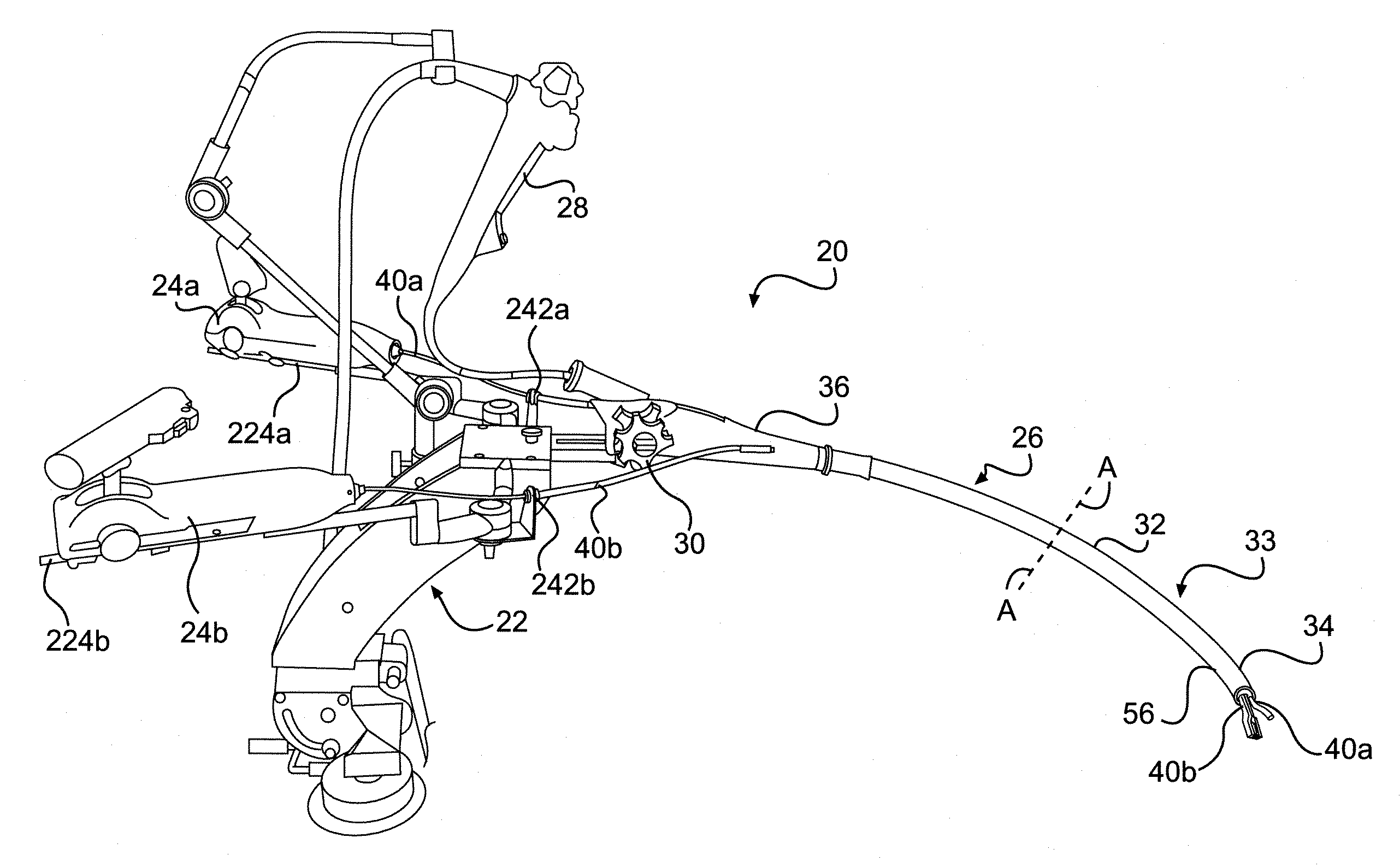
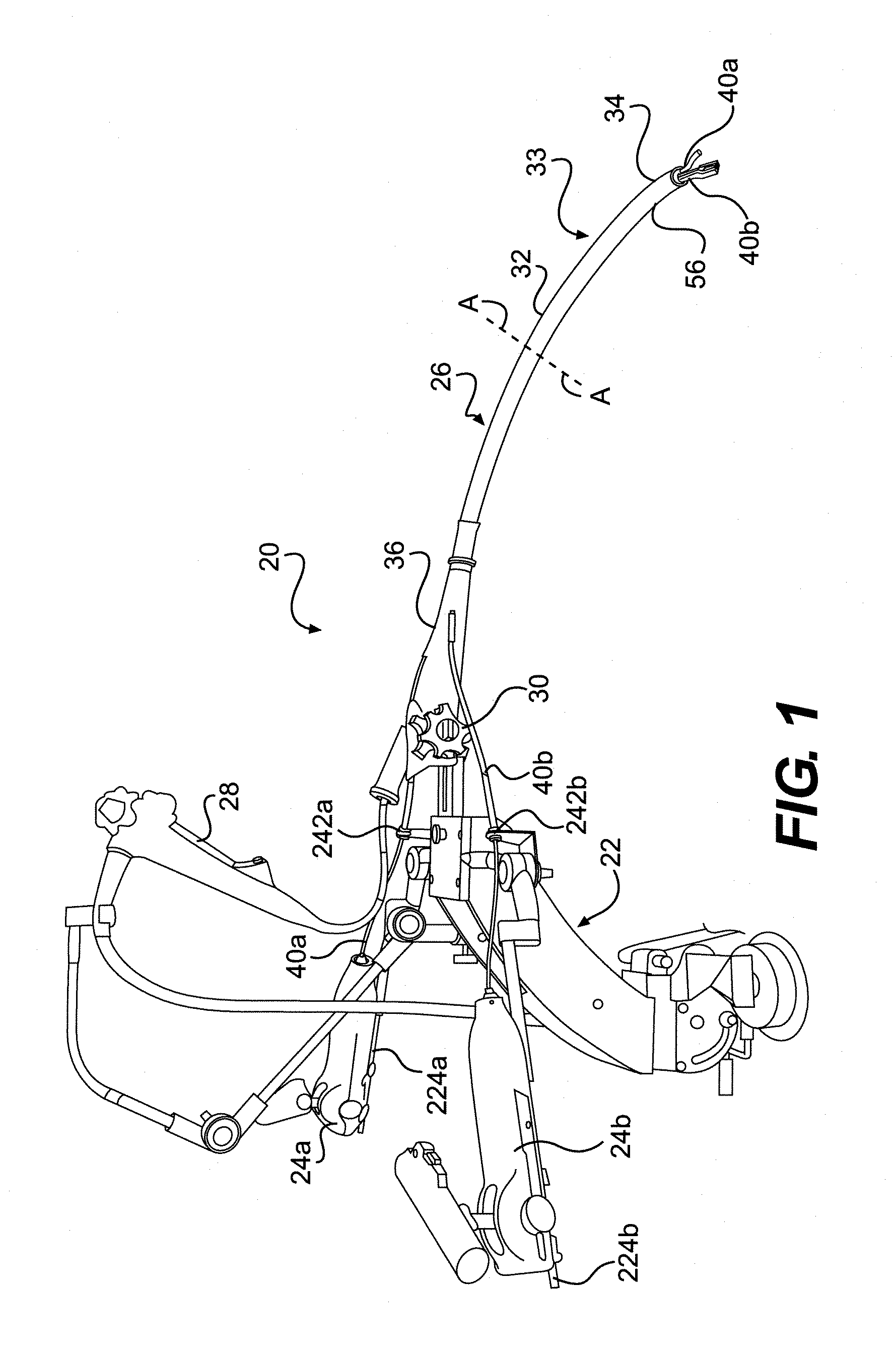
[0133]Disclosed herein are systems and methods for performing surgery at a distance via medical instruments directly connected to user controls. In one aspect, the system is adapted for trans-oral, trans-anal, trans-vaginal, trans-urethral, trans-nasal, transluminal, laparoscopic, thorascopic, orthopedic, through the ear, and / or percutaneous access.
[0134]Various exemplary components of the system are described below in more detail. However, generally, the system can include at least one instrument directly connected to a user control. The system can permit a user to control at least two degrees of freedom via a controller that can be manipulated with a single hand. In another aspect, the single-hand controller can control three, four, or more than four degrees of freedom. In yet another aspect, at least two controllers, each configured for single-hand control, are provided. Each controller can provide at least two degrees of freedom, three degrees of freedom, four degrees of freedom...
PUM
 Login to View More
 Abstract
Description
Claims
Application Information
 Login to View More