[0007]Because audiences often tend to fragment into groups with like characteristics, this fragmentation actually represents an opportunity (at which this invention is directed) for an advertiser to more effectively place their promotional message if the audience available in these insertion opportunities (i.e., the number and type of actual viewers of the content offered in such insertion opportunity) can be effectively measured, characterized based on a variety of behavioral, viewership, demographic and other attributes, projected for the future and a promotional message can be matched to the available audience. To meet this need, it would be advantageous to control the deployment and insertion of promotional messages in a video
stream in the most effective way from the perspective of the advertiser while at the same time enabling the owner of the insertion opportunity (e.g., a
programming network or cable operator) to derive increased value for the audience represented by such opportunity. For example, advertisers could ideally identify a target audience by specifying the characteristics of that audience, such as geodemographic attributes and viewing or other behavioral characteristics, such that the advertiser could more effectively deliver their marketing message to this target group than general audience groups identified through typical research and media planning / buying techniques.
[0008]Such a
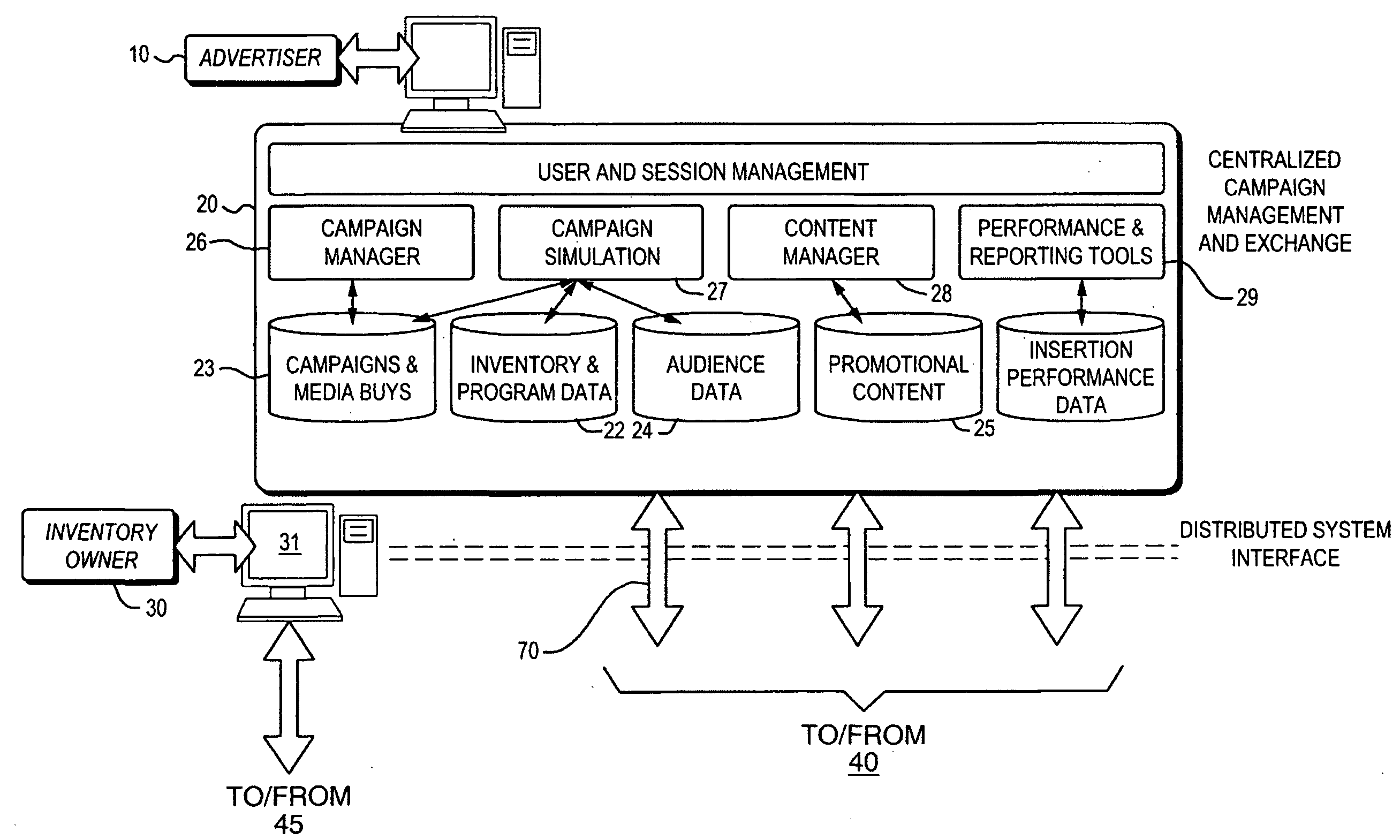
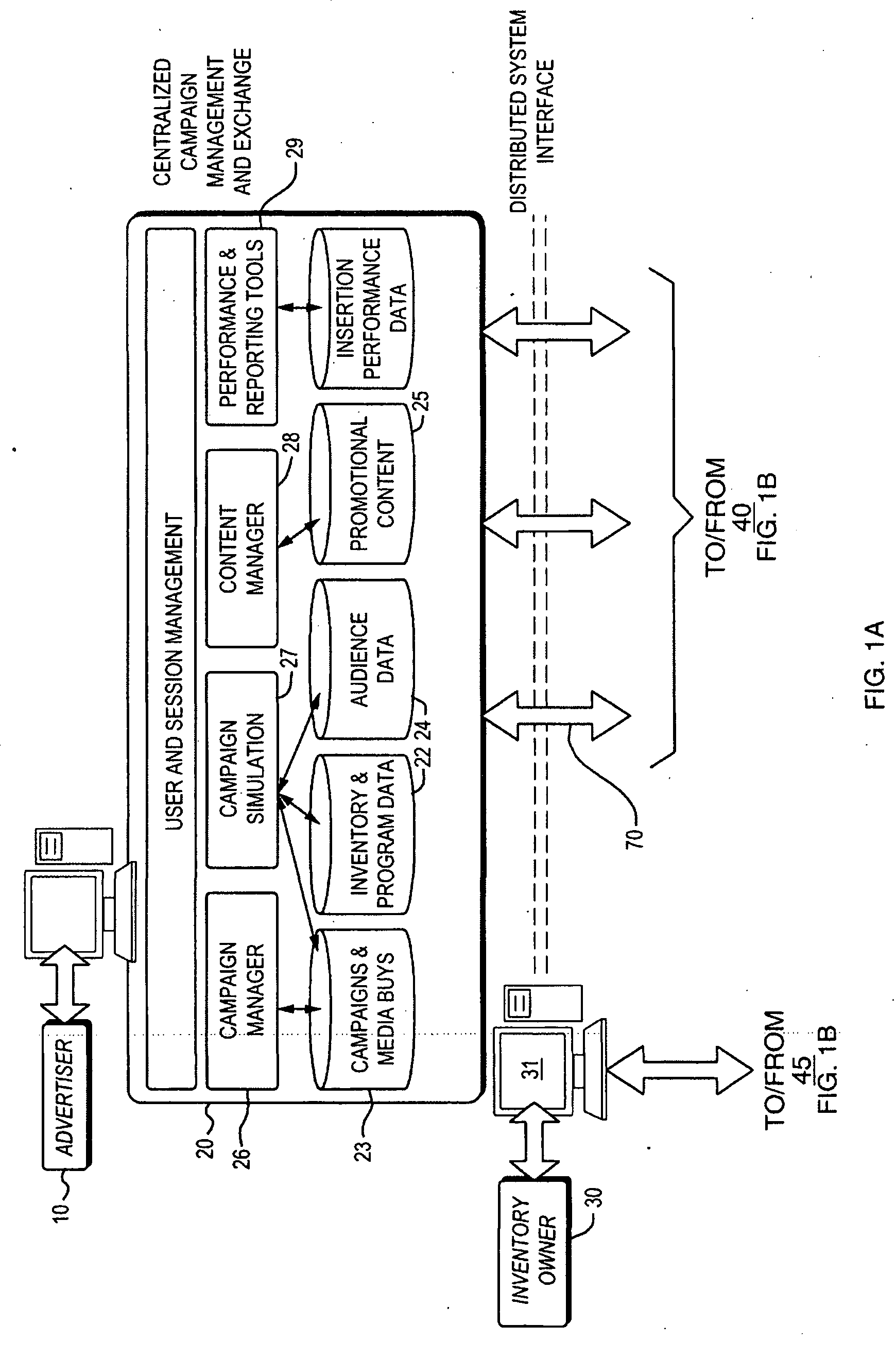
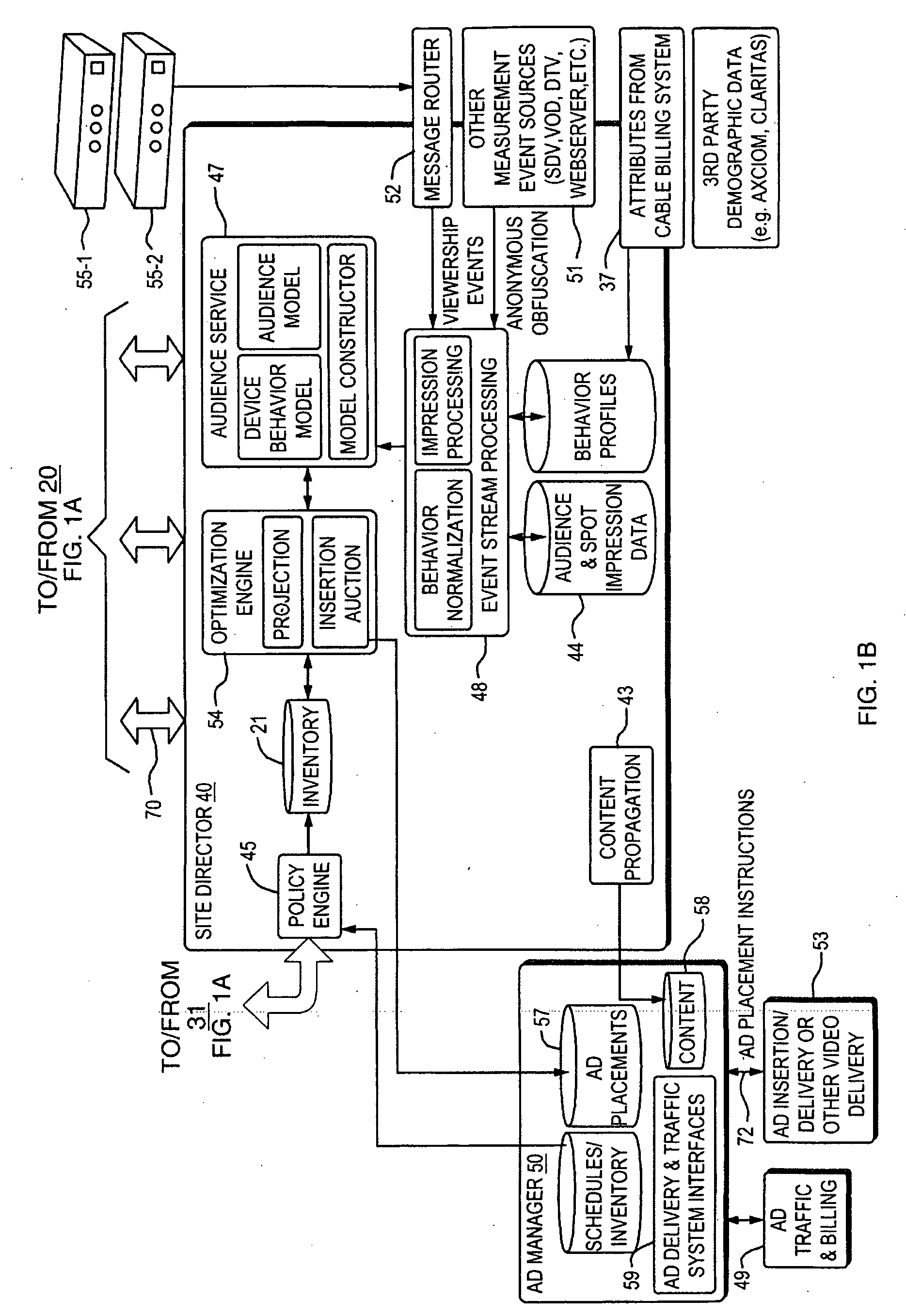
system can analyze who has, is and will be watching a video stream when an advertising insertion opportunity is available, and then optimize the placement of media into such insertion opportunity by, among other things, identifying which of several different possible competing promotional messages will yield to one or more advertisers a combination of the highest targeted reach and most efficient media placement based on that advertiser's targeted audience characteristics and parameters, while at the same time providing the best value for the insertion opportunity based on the advertiser's or other content provider's budget parameters. More particularly, the system allows two or more advertisers to provide their promotional content, to specify desired target viewership
demographic data and provide campaign goals including budget, reach, frequency and total impression goals.
[0009]At the same time, from the perspective of the owner of the insertion opportunity, the system also allows the various video providers that own or control these insertion opportunities, such as cable and
satellite TV operators, programmers, broadcast stations,
IPTV providers and
broadband video outlets, to make their inventory of insertion opportunities available to the system according to the placement policies and parameters of the individual inventory owner. These
business policies allow the owner of the insertion opportunity to control, for example, what types of media may be inserted into the insertion opportunity and at what rates and under what conditions the insertion opportunity is made available to the system for sale to advertisers using the system to place their promotions. By offering the end purchaser of the insertion opportunity (i.e., the advertiser or other content provider) with the accountability provided by measurement and the ability to optimally target specific audiences, the exchange system is able to provide added value to inventory of insertion opportunities provisioned by the owner into the exchange system. The inventory may be provisioned into the system on a consignment (i.e. pre-emptible) basis or as a fixed, pre-planned allocation from the inventory owner.
[0010]In addition, the exchange system offers owners of insertion opportunities the ability to make such insertion opportunities available to the system on an aggregate basis with owners of other insertion opportunities. This enables certain owners of insertion opportunities, such as a cable operator located in a specific city or a smaller or regional
programming network, to make a compelling sales offering to a broader
pool of content owners and advertisers than such owners can effectively reach today. Advertisers and content owners, especially those that are interested in reaching a wide audience, are more likely to place media on an insertion opportunity that may only appear in a certain region or within an insertion opportunity that has a relatively small reach, if that placement is part of a larger campaign that also includes placement on other insertion opportunities in different regions or on different
programming networks. However, without a system that aggregates such insertion opportunities and allows advertisers and content providers to effectively place media on these disparate insertion opportunities as one or a limited number of media buys, the cost and effort of individually placing media buys with these disparate owners of insertion opportunities is often prohibitive.
[0016]The system thus enables advertisers to access a precisely defined target audience, with automated accountability of delivered promotional impressions, and without the overhead of establishing relationships and executing orders for a multitude of insertion opportunities and inventory owners.


 Login to View More
  Login to View More