However, although locking screws may reduce the incidence of loosening, they provide only one
fixed angle relationship between the plate and the screw(s).
In short, locking screws are unidirectional, limiting their use in some instances.
For example, when treating a severe fracture, fragments may be shattered and in irregular positions.
Although a surgeon may wish to obtain the benefits of a locking screw and
bone plate used together, the angle at which the locking screw extends from the plate at a certain opening may not be the angle that would allow the surgeon to “grab” (or seize, fix, or otherwise secure) the desired, random
bone fragment.
However, if the surgeon desires the rigid stable construct of a locking screw and plate, the use of a non-locking screw to obtain the desired
angular orientation is not necessarily optimal.
However, because these combination slots are only partially threaded, the locking screw(s) may not be able to maintain the fixed angular relationship between the screw(s) and plate under physiological loads.
This can result in loss of fixation or loss of established intraoperative plate orientation.
Moreover, the locking screw can still only be inserted at a single angle—the predetermined angle defined by the manufacturer.
Additionally, current bone plate and screw systems still limit a surgeon's ability to both (a) lock a
fastener with respect to the bone plate, but still (b) allow the
fastener to extend from the bone plate at various angles.
Locking screws lock into the plate, but only in a single angular configuration, and non-locking screws allow various angle configurations, but they do not provide a stable construct with the plate.
Accordingly, none of these options allow a surgeon to capture bone fragments that do not fall in line with the axis of the opening provided on the plate in a rigid fashion.
Thus, currently available options can still lead to malalignment and poor clinical results.
Such a
system can be cumbersome to use because although the multidirectional peg can be inserted at any angle, the surgeon then needs to thread a small cap onto the top of the peg head and into the plate, requiring an extra step, extra time, and extra
instrumentation.
Such systems also fail to allow the use of non-locking members in conjunction with the locking and multidirectional pegs.
Challenges with such systems are that they cannot be used with non-locking screws, the inserts do not have the strength to receive and hold a regular locking screw, (i.e., they do not provide the surgeon with options), and plates with deformable inserts are more expensive to manufacture than regular
bone plates.
Other attempts have failed to provide adequate locking mechanisms.



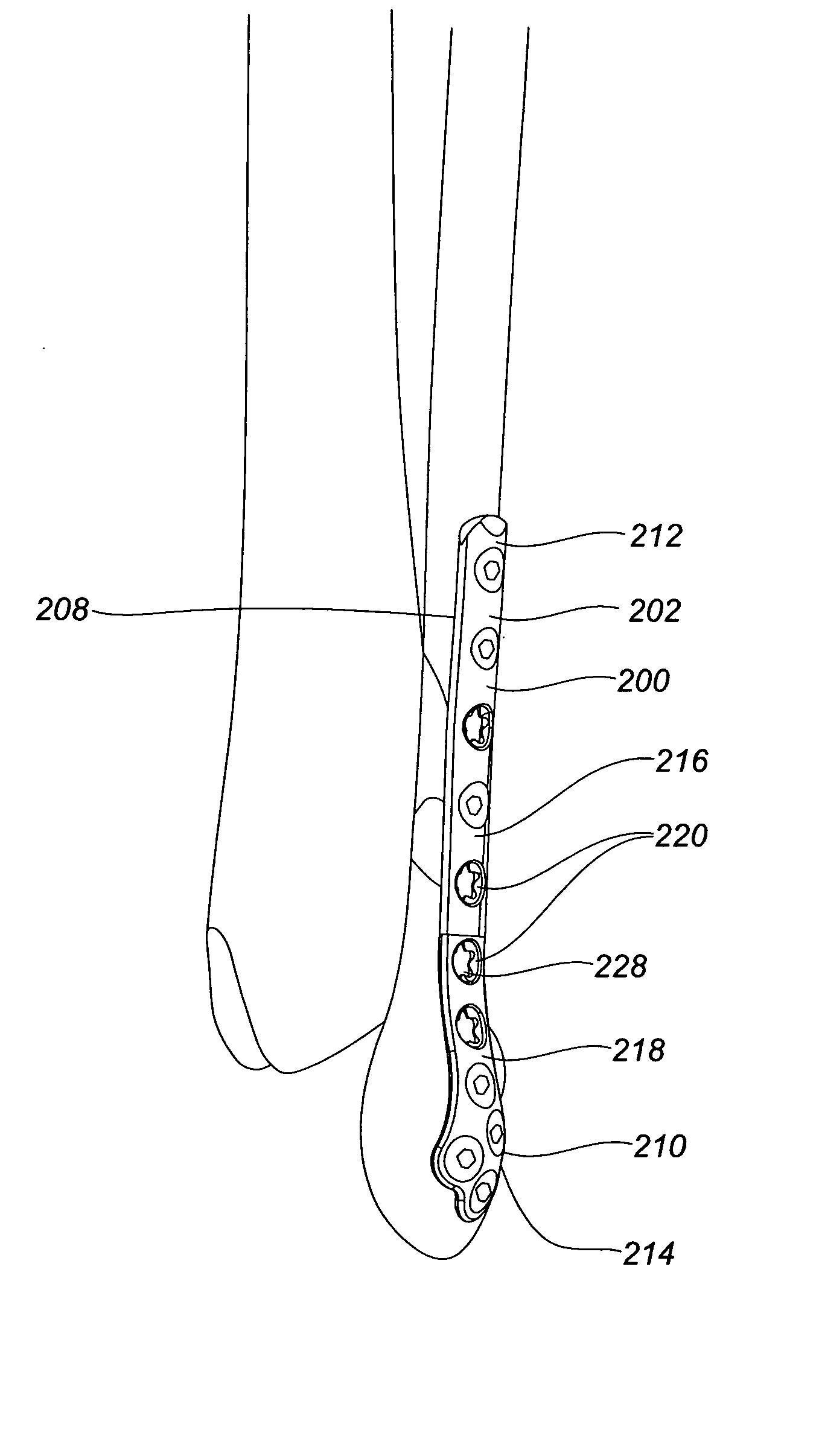
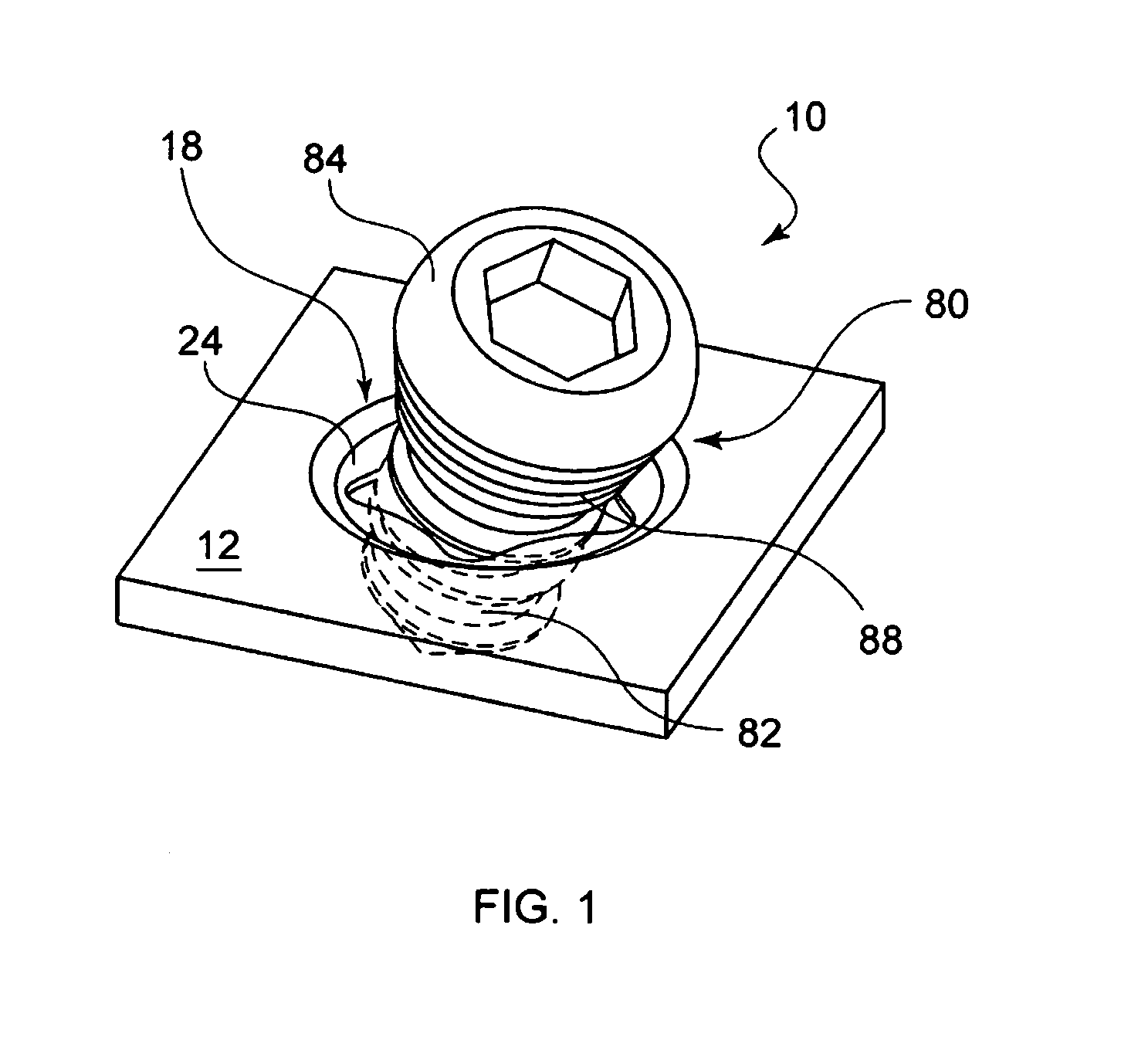
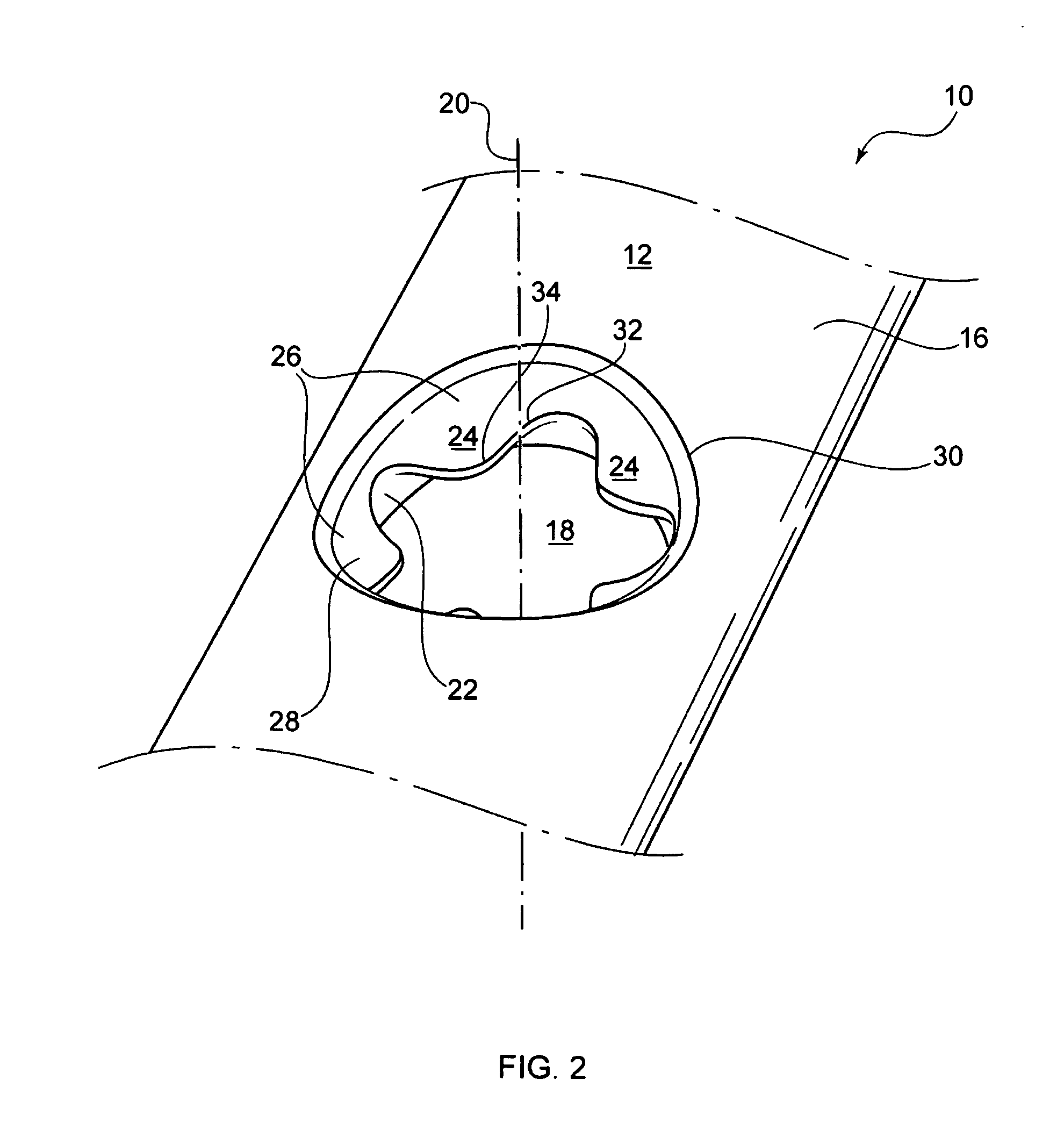
 Login to View More
  Login to View More