
Enzyme Reagents for Amplification of Polynucleotides in the Presence of Inhibitors
- Summary
- Abstract
- Description
- Claims
- Application Information
AI Technical Summary
Benefits of technology
Problems solved by technology
Method used
Image

Examples
example i
Direct amplification from Whole Blood Using Taq DNA Polymerase and Vent® exo− DNA Polymerase
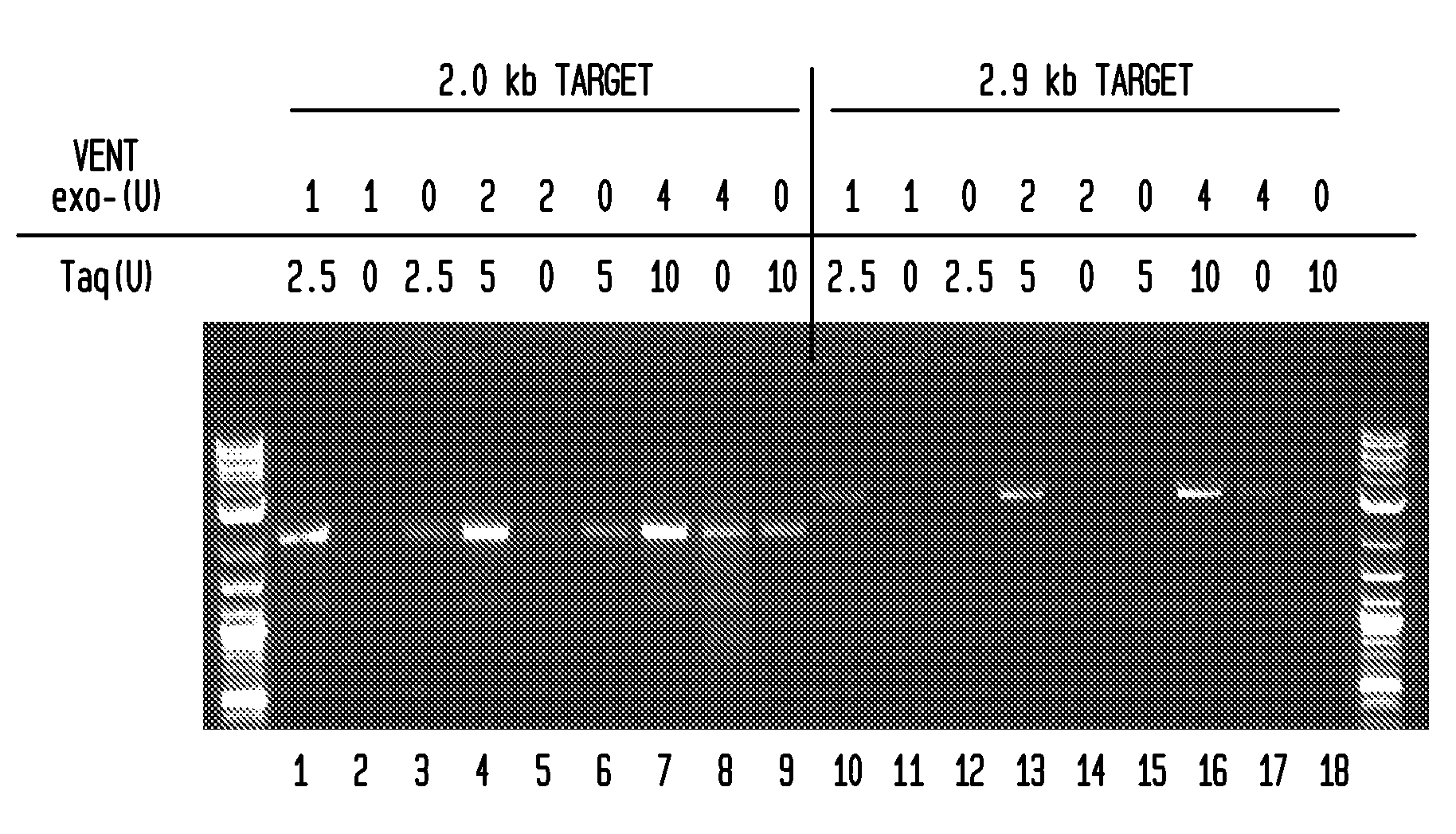
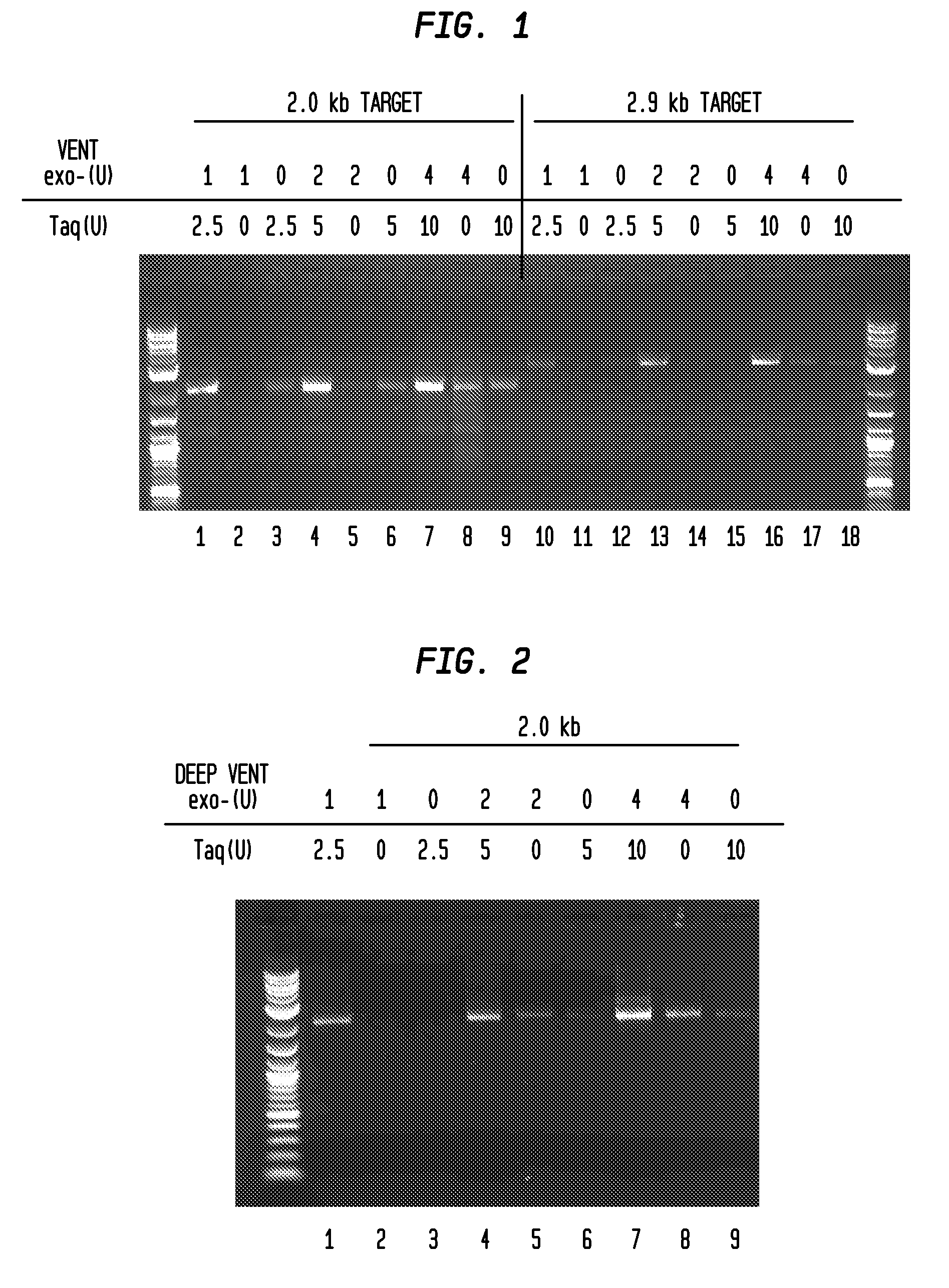
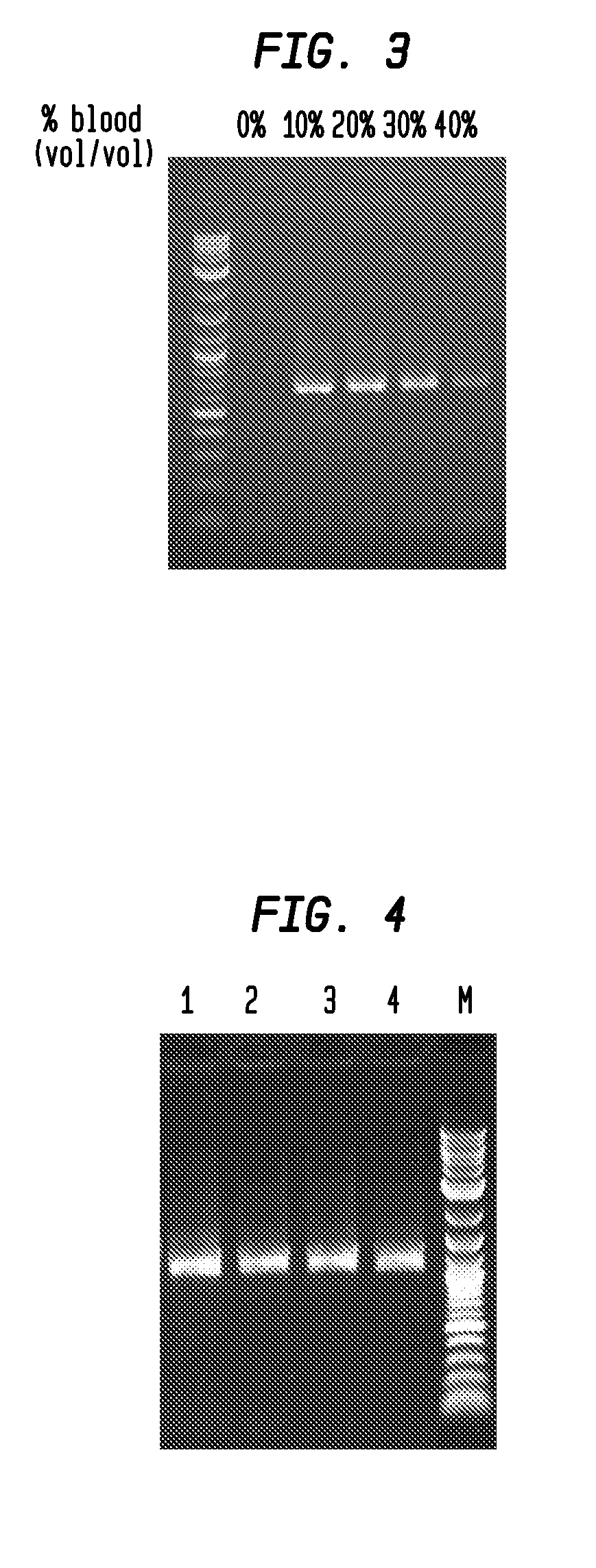
[0042]FIGS. 1 and 2 illustrate the advantageous effect of combining two polymerases into a blend for amplifying DNA in the presence of inhibitors. In FIG. 3, the enzyme blend of Taq DNA polymerase and Vent® exo− DNA polymerase amplified a specific 0.68 kb fragment from whole blood where the whole blood was as much as 40% of the amplification reaction mixture. The blood-resistant property of the enzyme mix was tested with whole blood treated with four different anticoagulants: potassium EDTA, sodium EDTA, sodium citrate, and sodium heparin (FIG. 4).
[0043]The unit concentrations of the polymerases used herein can be varied and readily tested to observe the synergistic effect shown in the figures. Although the range of concentrations selected here showed a synergistic effect, it is anticipated that other enzyme unit concentrations could be used together to provide this observed synergy.
example ii
Direct Amplification from Mouse Whole Blood Using Tag DNA Polymerase and Vent® exo− DNA Polymerases
[0044]Mice are commonly used as a model system for gene knockout studies. Screening for successful integration of foreign DNA into a specific genomic region is an important step in mouse genetic studies. A blood-direct PCR reagent can speed up the screening process by allowing PCR analysis at early stages from a single drop of blood without tedious genomic DNA purification. As shown in FIG. 5, amplicons of 0.2 kb-4.0 kb were successfully amplified from mouse whole blood using the enzyme blend of Taq DNA polymerase and Vent® exo− DNA polymerase.
example iii
Direct Amplification from Mouse Whole Blood Stored on Paper
[0045]Clinical blood samples were either stored as liquid with anticoagulant present or as dry blood on paper. Amplification of three amplicons from mouse blood stored on a Guthrie paper was tested. A disk of 1 mm diameter was used in a 25 μl PCR reaction. As shown in FIG. 6, three specific bands were produced after 35 cycles.
PUM
| Property | Measurement | Unit |
|---|---|---|
| Fraction | aaaaa | aaaaa |
| Fraction | aaaaa | aaaaa |
| Digital information | aaaaa | aaaaa |
Abstract
Description
Claims
Application Information
 Login to View More