[0009]Pressure is applied to the user's
skin in order to apply specific pressure to the skin to stimulate the cutaneous nerve receptors, thereby resulting in enhanced
proprioception and enabling the wearer to self correct body alignment and posture. Mechanoreceptors are sensitive to pressure, stretch, torque on muscles, tendons, joint lining, etc. These are the receptors that help the wearer to adjust and adapt. The nociceptor is also stimulated by the design of the garment and reacts by decreasing
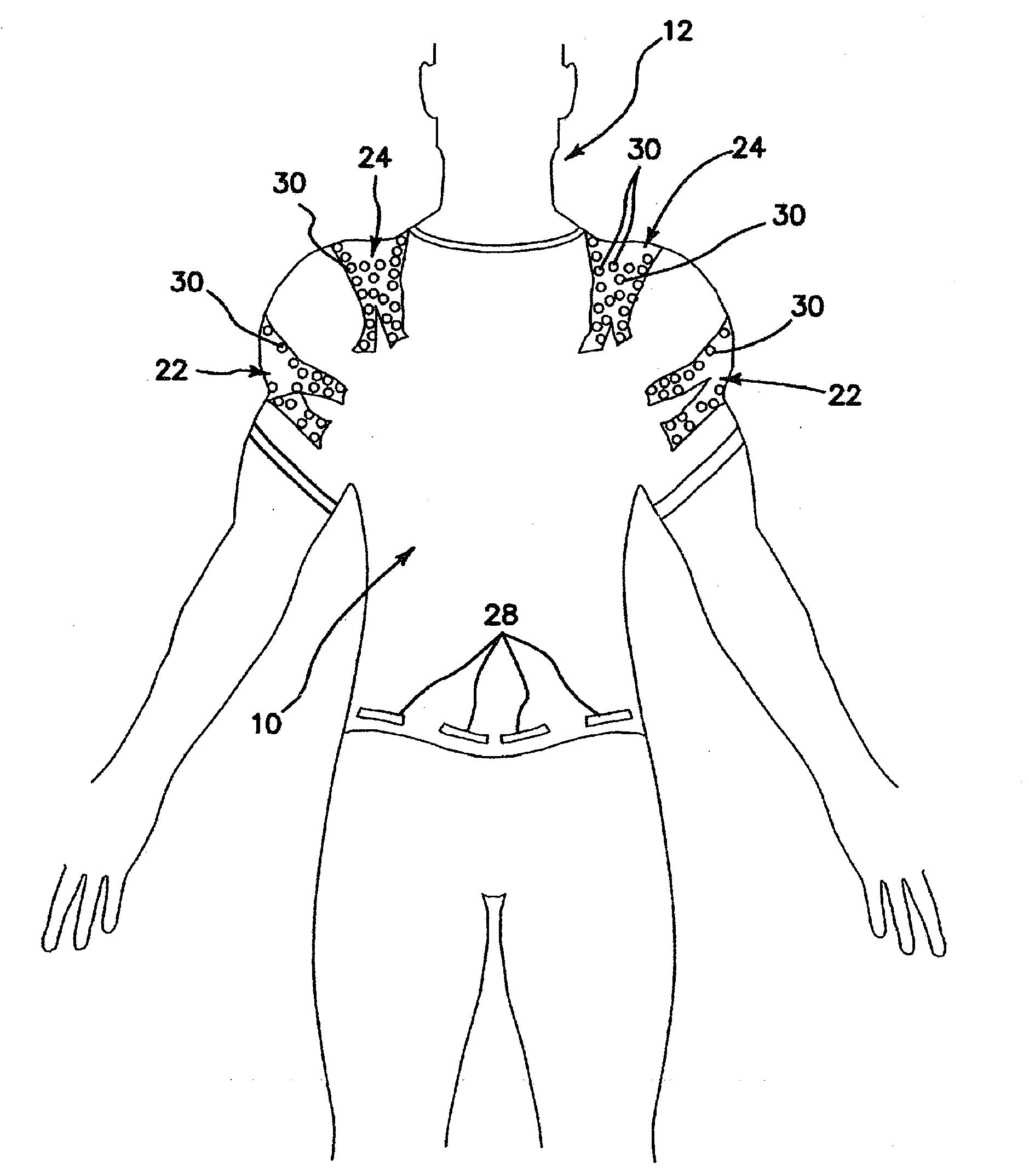
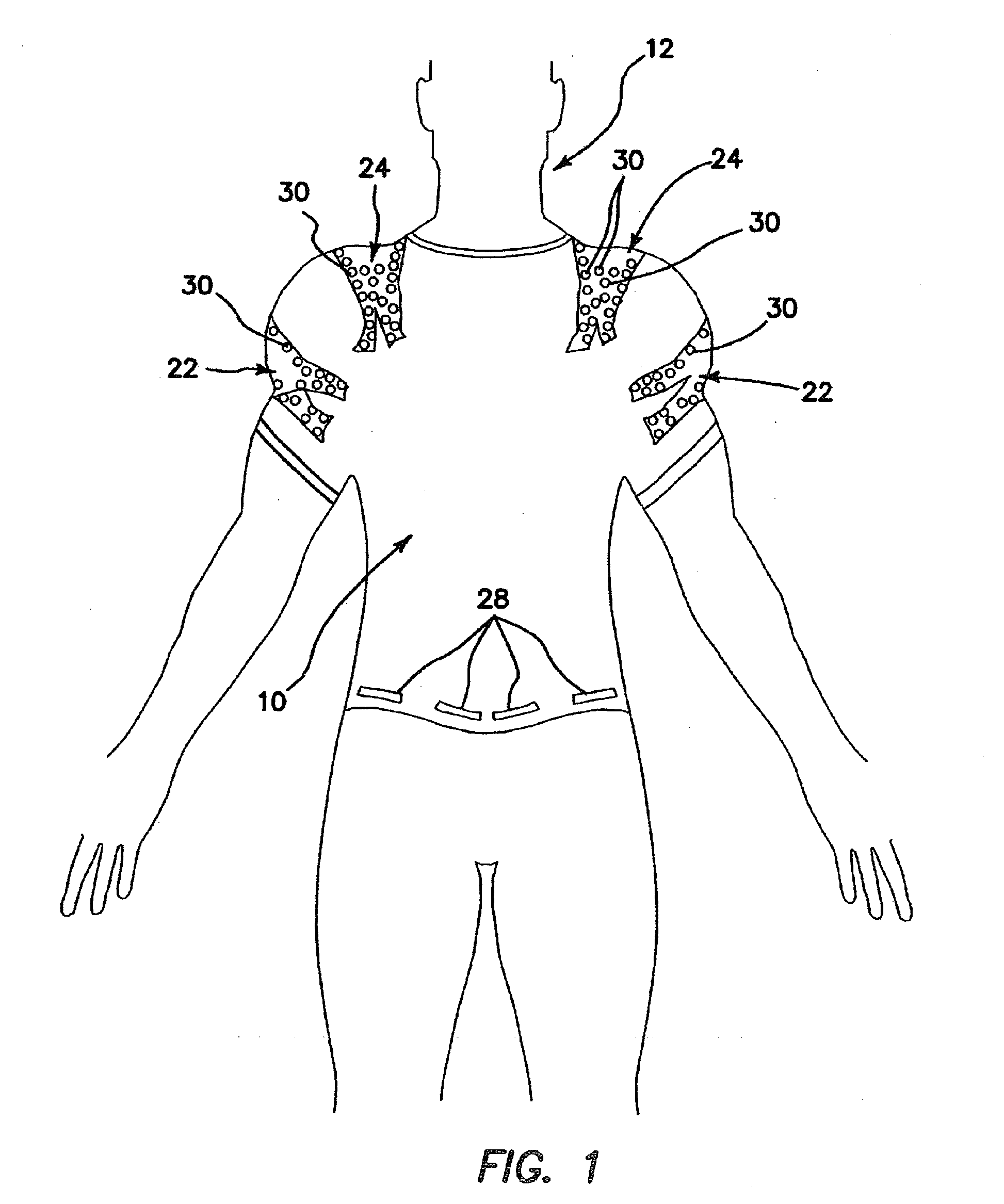
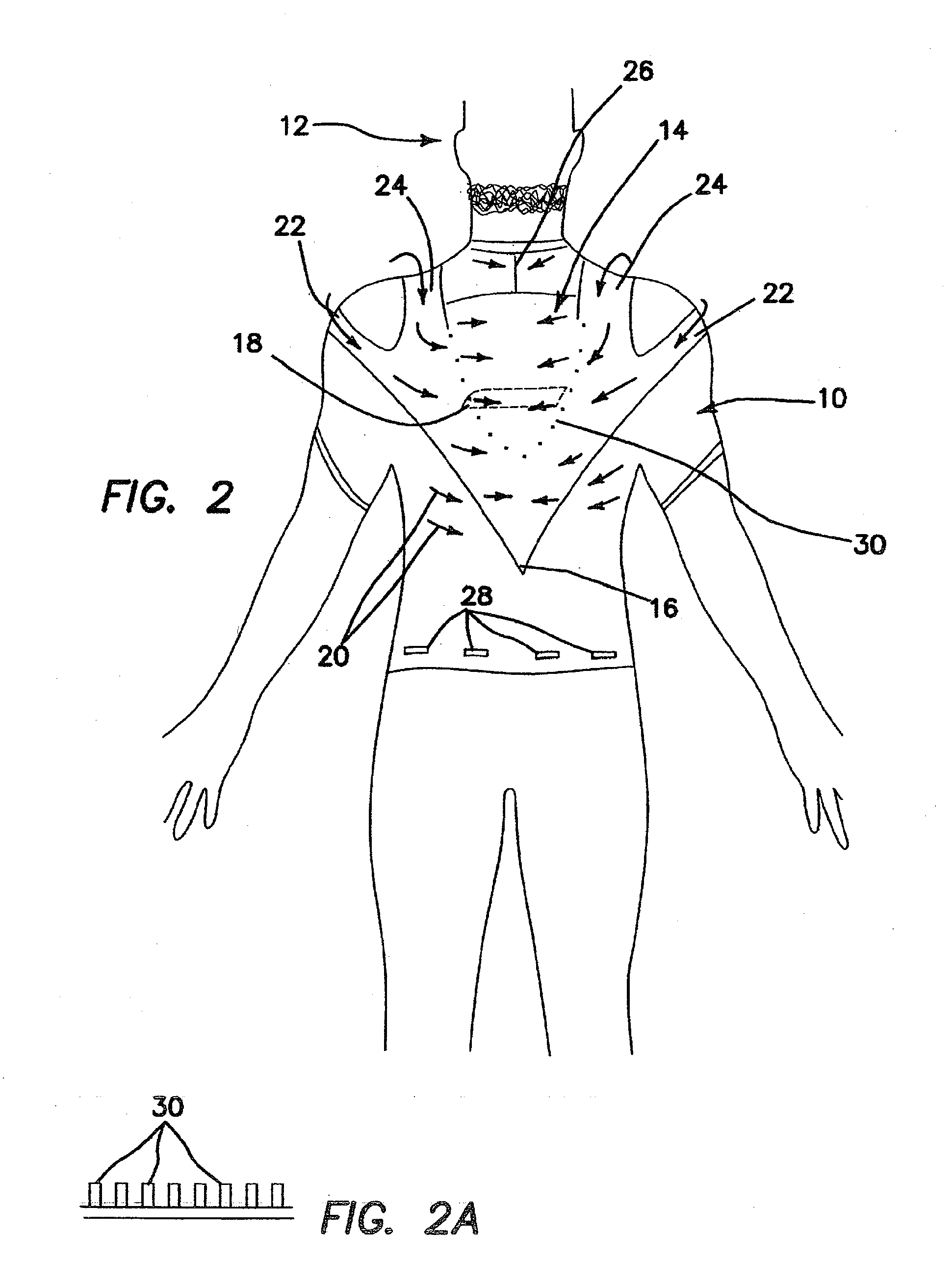
neurotransmitter frequency and causes an instant decrease in pain. This is done preferably by configuring the garment as a relatively tight, form-fitting shirt. The garment is adapted to envelop at least a portion of the user's
torso and at least a portion of the user's
upper arms. The garment has an inner and an outer surface, a front side, a back side, opposing lateral sides, and a pair of partial sleeves. The front side includes a chest portion and a
stomach portion, while the back side includes a back portion. The garment also defines opposing shoulder portions and a
waist portion extending about a lower end of the garment. A short-sleeved version of the garment allows for effective training of the user's pectoralis major muscles located in the user's chest. In addition, the short-sleeved configuration of the garment enhances the user's
range of motion, particularly at the shoulder joints, in addition to providing conditioning of the user's rotator cuffs. This short sleeved version allows for effective retraining of the overused and understretched pectoralis minor and major, serratus, subscapularis muscles. It three dimensionally balances muscles of the chest, neck, under arms, upper back and inter
scapula. It also simultaneously aligns the spine and joints of the upper extremities allowing for improved
range of motion, optimized
biomechanics and improves overall function and
recovery.
[0028]In accordance with one preferred embodiment of the present invention, there is provided a garment adapted to be worn by a wearer that includes an outer layer configured to be worn over at least a portion of the wearer's
torso. The outer layer has an anterior portion, a posterior portion, an inner surface and an outer surface. The garment also includes at least one sensory motor stimulation member affixed to the inside surface of the outer layer. When the garment is worn by a wearer the at least one sensory motor stimulation member contacts a portion of the wearer's skin and when the wearer moves the at least one sensory motor stimulation member alters the normal stretch of the portion of the skin contacted by the at least one sensory motor stimulation member, thereby stimulating the wearer's cutaneous nerve receptors to cause the wearer's muscles to respond appropriately.


 Login to View More
  Login to View More