
Ship with a contaminant separation device
a separation device and contaminant technology, applied in the field of ships, can solve the problems of increased danger of asphyxiation, constant fire hazards, and carcinogenic vapours
- Summary
- Abstract
- Description
- Claims
- Application Information
AI Technical Summary
Benefits of technology
Problems solved by technology
Method used
Image

Examples
Embodiment Construction
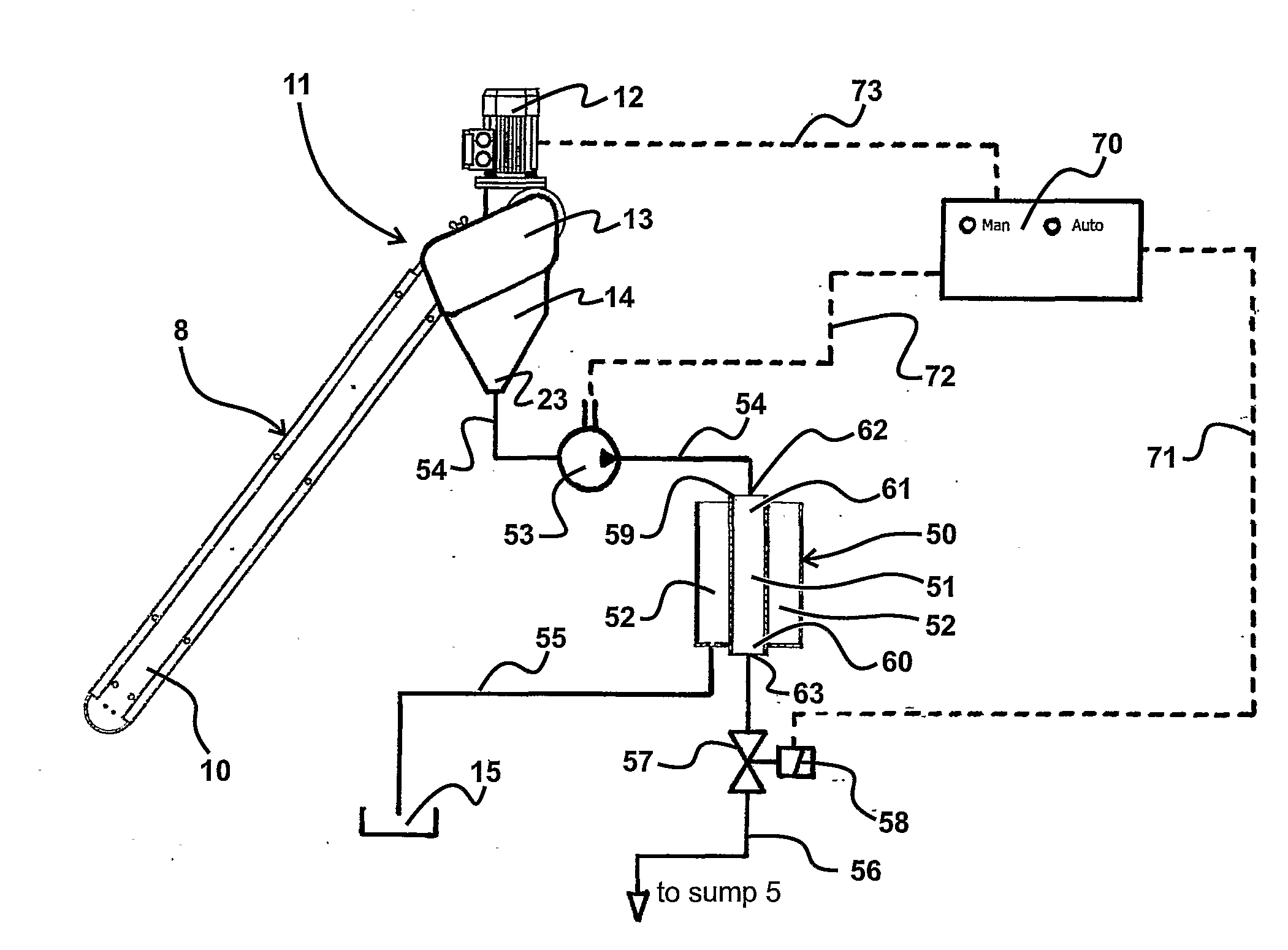
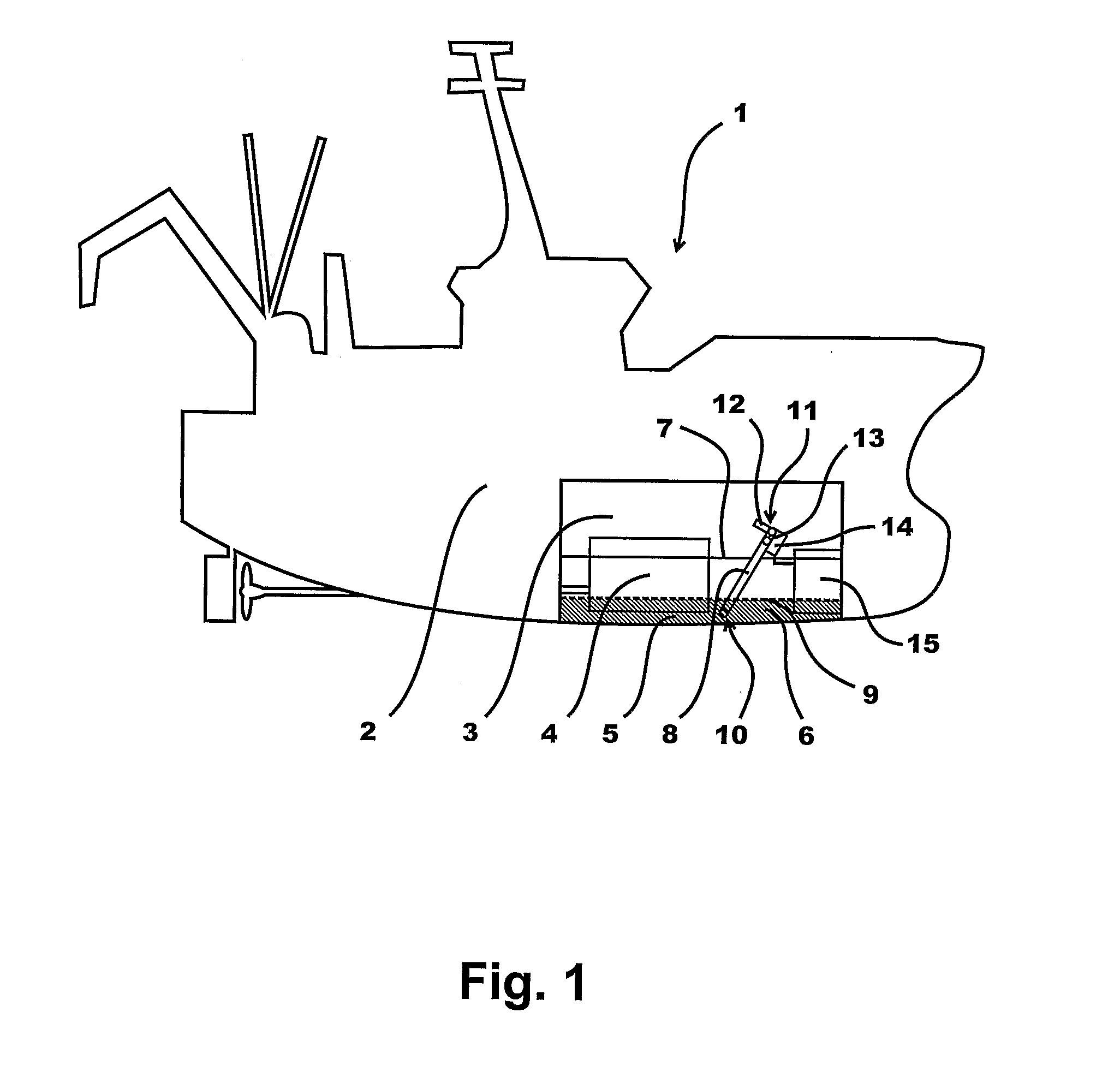
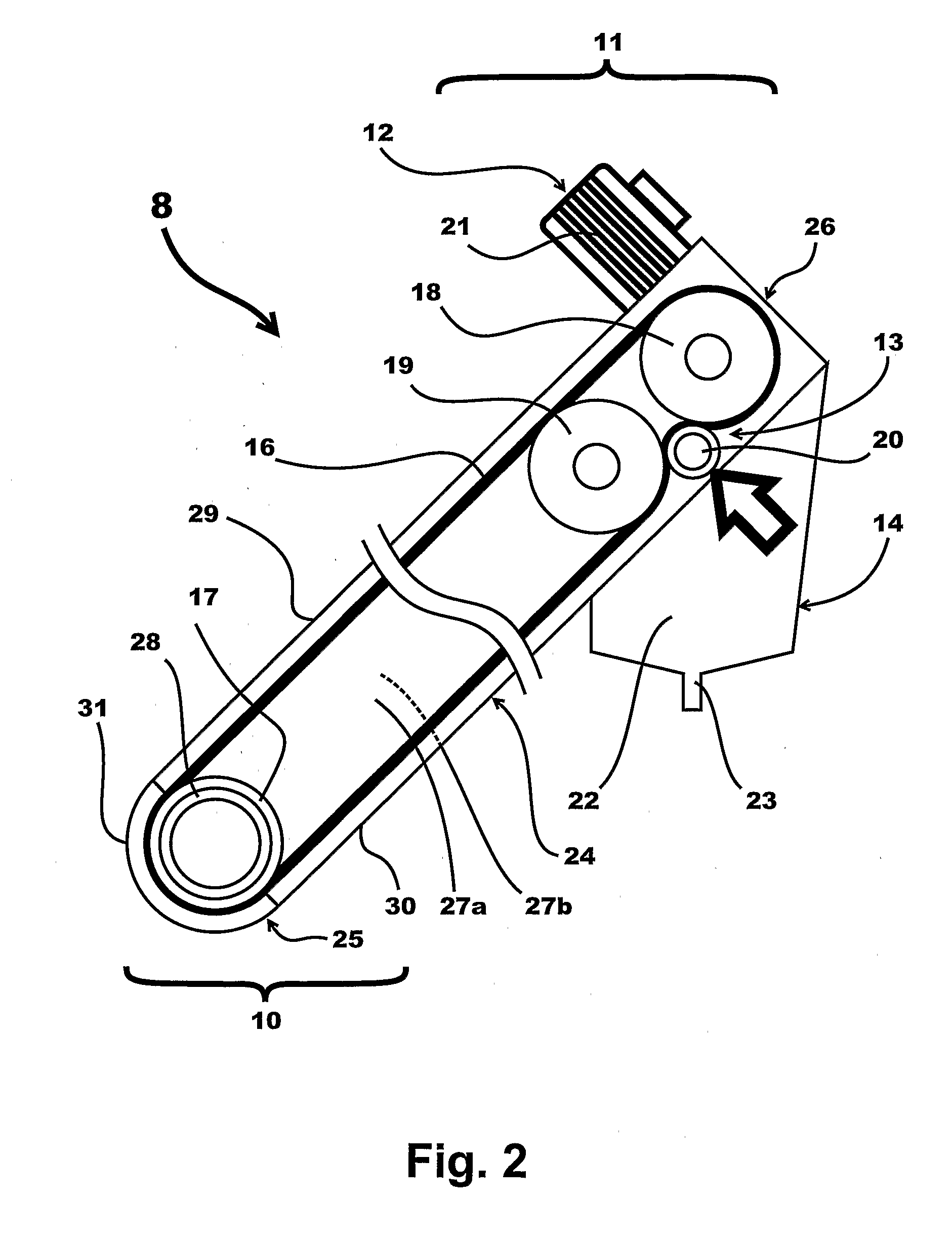
[0088]FIG. 1 schematically shows a ship 1 with a hull 2 comprising a engine room 3 accommodating machinery, such as the engine 4. The engine room 3 is provided with a bilge water sump 5 collecting bilge water 6 and contaminants. The bilge water sump 5 may be covered by an arrangement of floor panels 7. A first contaminant separation device with a conveyor arrangement 8 comprising an endless belt 16 extends through an opening in the floor panels 7 into the bilge water sump 5 and below the surface 9 of the bilge water 6. A first portion 10 of the conveyor arrangement 8 is thereby at least partially submerged in the bilge water 6. A second portion 11 of the conveyor arrangement 8 comprising driving means 12, releasing means 13, and collecting means 14 is arranged above the floor panels 7. The collecting means 14 may be connected to a waste reservoir 15 for receiving the collected contaminants.
[0089]The conveyor arrangement 8 may be mounted in a frame fixed to the floor panel arrangemen...
PUM
| Property | Measurement | Unit |
|---|---|---|
| Time | aaaaa | aaaaa |
| Time | aaaaa | aaaaa |
| Pressure | aaaaa | aaaaa |
Abstract
Description
Claims
Application Information
 Login to View More