Vehicle behavior control device, and vehicle behavior control method

a technology of vehicle behavior and control device, which is applied in the direction of electric devices, brake systems, instruments, etc., can solve the problems of not being able to supply regenerative electric power or only a small amount of regenerative electric power

US20100292882A1Inactive Publication Date: 2010-11-18TOYOTA JIDOSHA KK
8 Cites 32 Cited by

Patent Information

Authority / Receiving Office
US · United States
Current Assignee / Owner
Publication Date
2010-11-18
Estimated Expiration
Not applicable · inactive patent

Smart Images

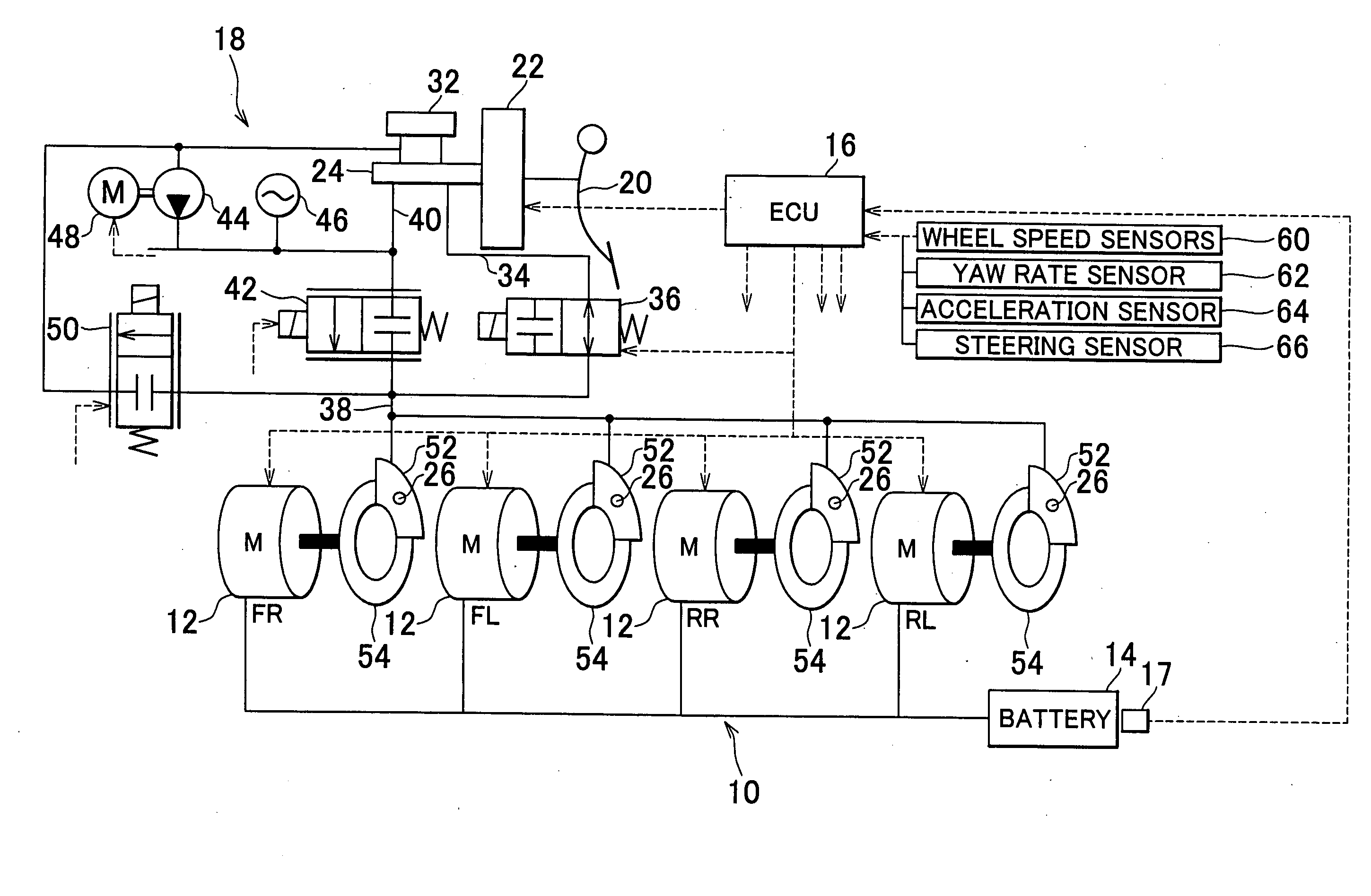
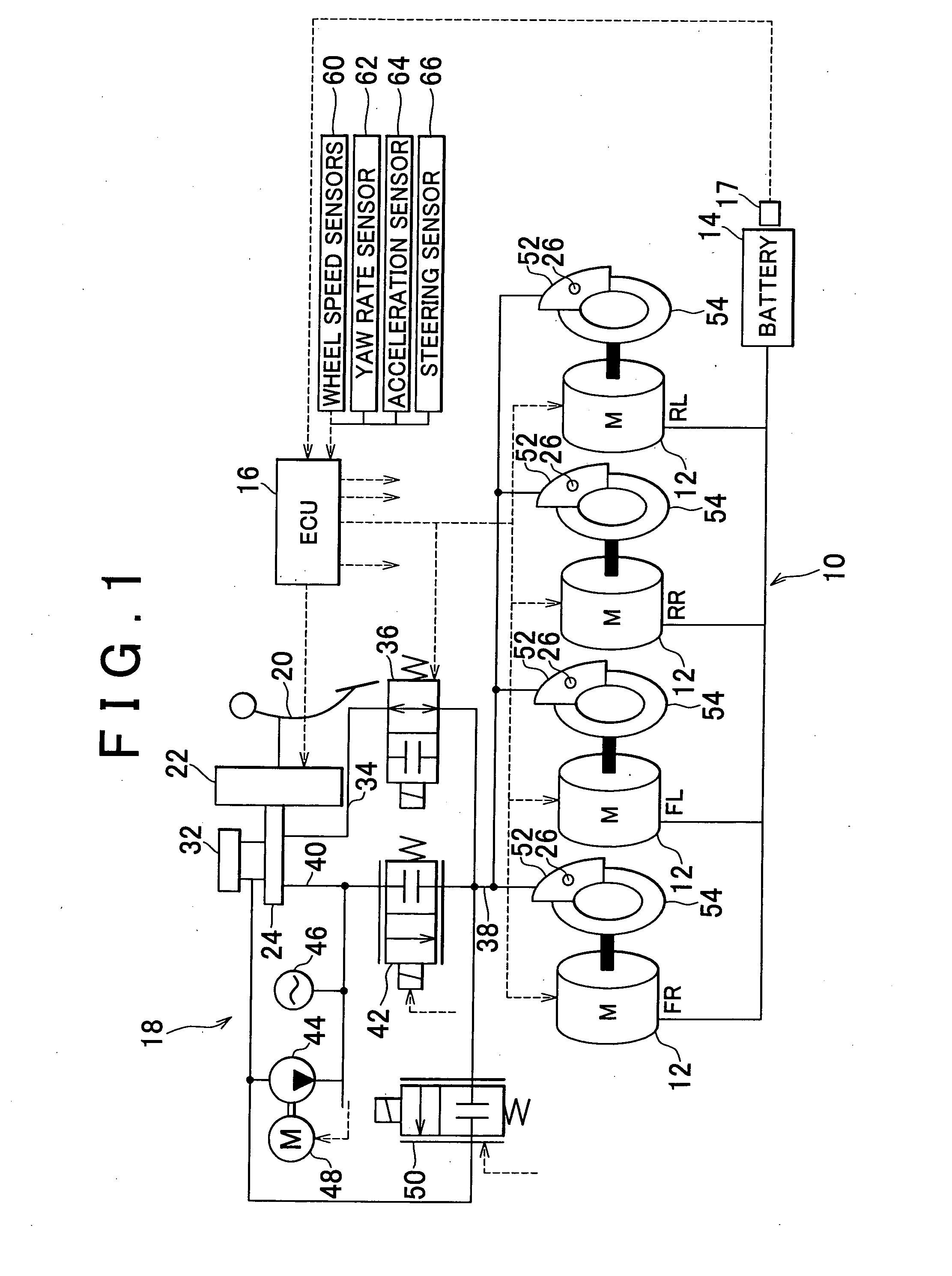
  • Figure 1
    Figure 1
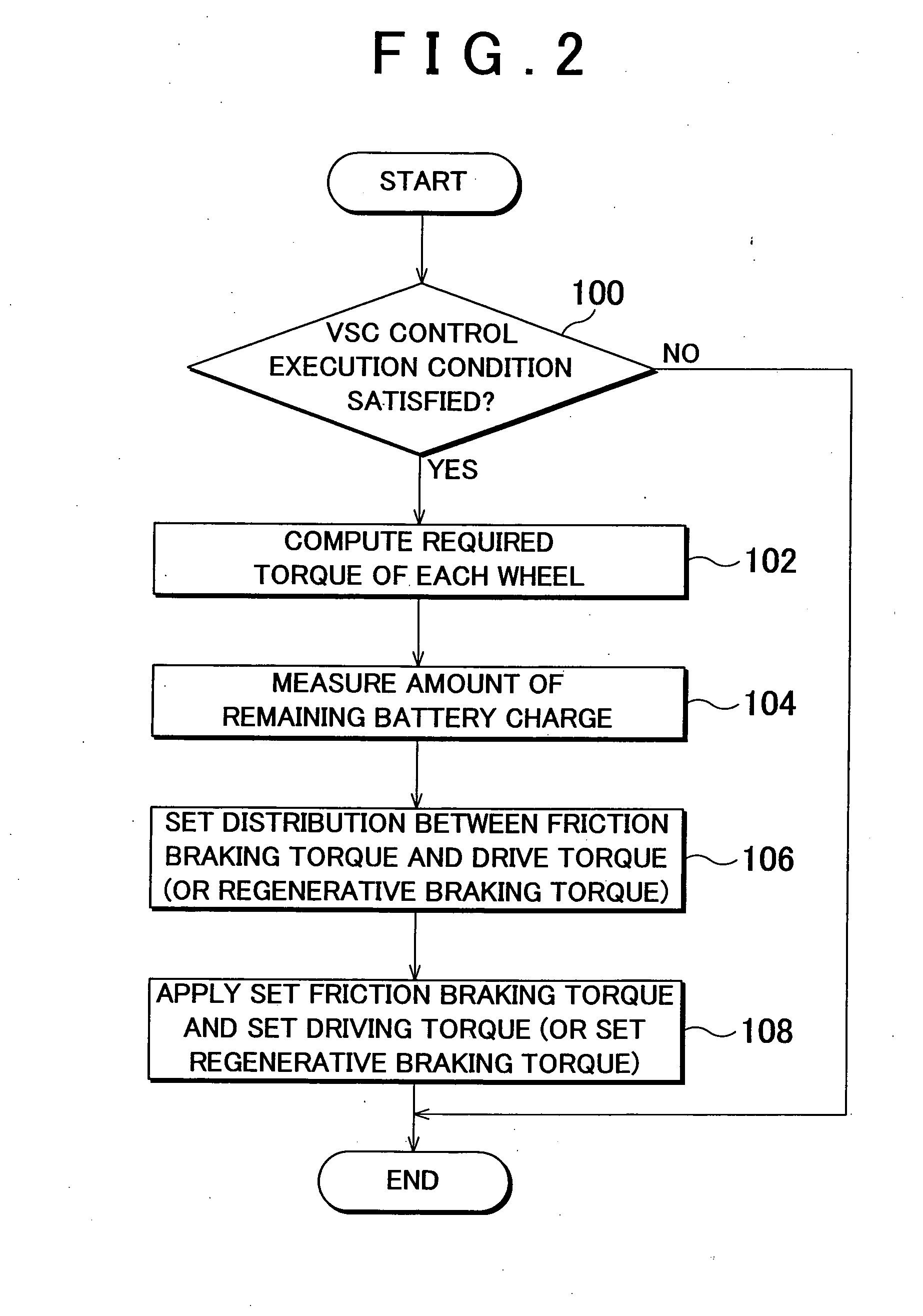
  • Figure 2
    Figure 2
  • Figure 3
    Figure 3
Patent Text Reader

Abstract

Required torques that individual wheels are required to generate are computed on the basis of vehicle behavior. With respect to the computed required torque of each wheel, a torque value provided uniformly for the wheels is set as a value of the friction braking torque that the wheel is caused to generate by friction control means (18), and a torque value provided for each wheel independently of each other is set as a value of the driving torque or the regenerative braking torque that the wheel is caused to generate by a corresponding one of electric motors (12) of the wheels. At this time, the amount of remaining charge of a vehicle-mounted battery (14) is measured, and the distribution between the friction braking torque by the friction control means (18) and the driving torque or the regenerative braking torque by each electric motor (12) is altered according to the measured amount of remaining charge.
Need to check novelty before this filing date? Find Prior Art

Description

BACKGROUND OF THE INVENTION

[0001] 1. Field of the Invention

[0002] The invention relates to a vehicle behavior control device and a vehicle behavior control method. More particularly, the invention relates to a device for controlling the behavior of a vehicle which includes a vehicle-mounted battery into and from which electric power can be charged and discharged, electric motors that are provided individually for a plurality of wheels, and that apply driving torque to corresponding wheels when supplied with electric power from the vehicle-mounted battery or supply regenerative electric power to the vehicle-mounted battery by causing the corresponding wheels to generate regenerative braking torque, and friction control means for causing the wheels to generate friction braking torque.

[0003] 2. Description of the Related Art

[0004] A brake device is known which generates a larger braking force at the time of emergency brake operation than at the time of usual brake operation (see, e.g., Jap...

Examples

Embodiment Construction

[0036]Concrete embodiments of the invention will be described hereinafter with reference to the drawings.

[0037]FIG. 1 shows a construction diagram of a braking / driving system 10 mounted in a vehicle equipped with a vehicle behavior control device in accordance with an embodiment of the invention. In this embodiment, the vehicle is a so-called in-wheel electric motor vehicle equipped with electric motors that are provided individually for wheels as drive devices that drive the corresponding wheels. The following description will be made with an example of a four-wheel drive vehicle whose four wheels are all driven by electric motors.

[0038]The braking / driving system 10 has electric motors 12 that are provided individually for wheels FR, FL, RR, RL. Each electric motor 12 is linked to a corresponding one of the wheels FR, FL, RR, RL via a speed reducer or the like. Besides, the electric motors 12 are electrically connected to a vehicle-mounted battery 14 of the vehicle, and supply and ...