

Inhibitors of the plasmodial surface anion channel as antimalarials
- Summary
- Abstract
- Description
- Claims
- Application Information
AI Technical Summary
Benefits of technology
Problems solved by technology
Method used
Image

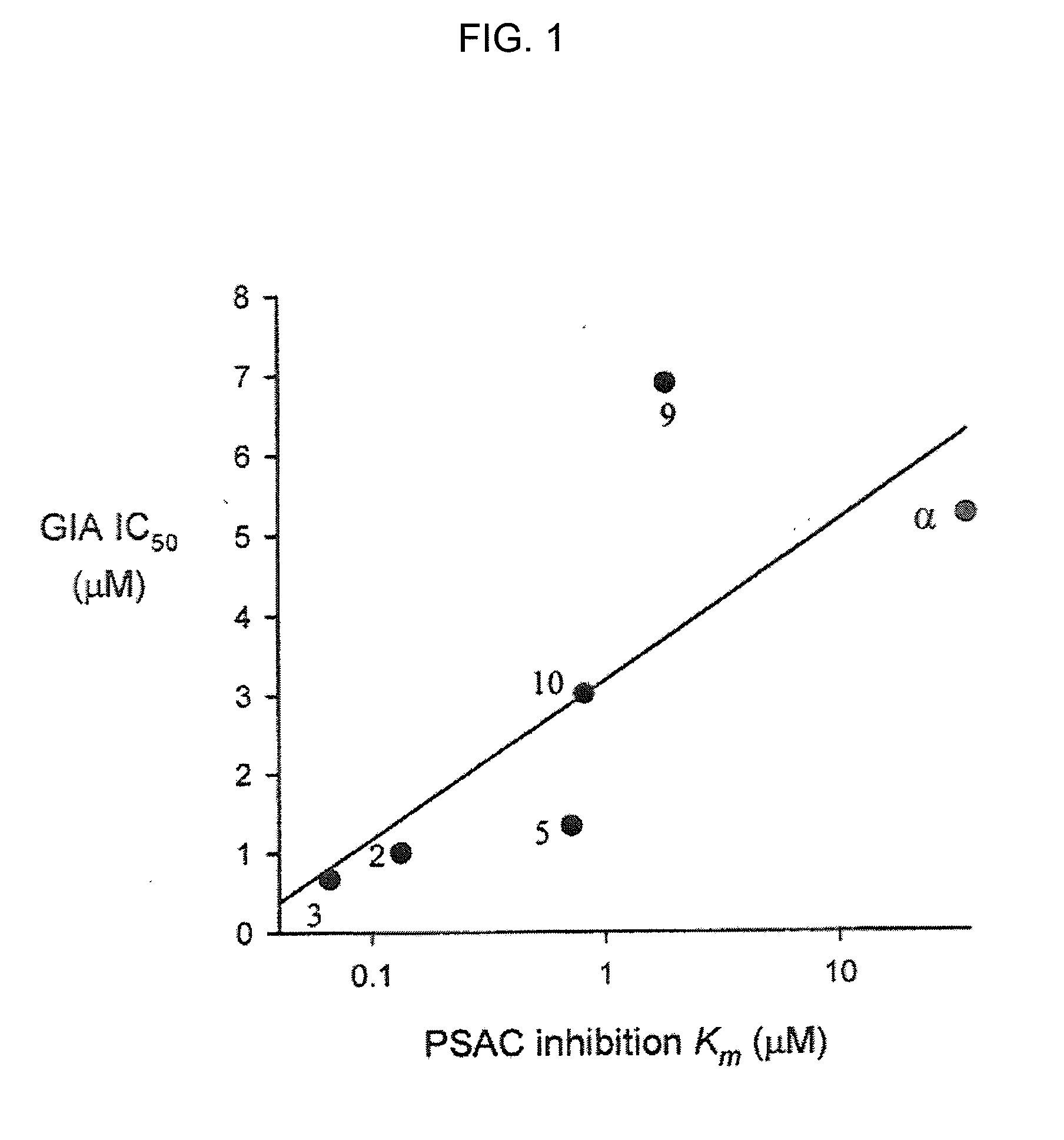
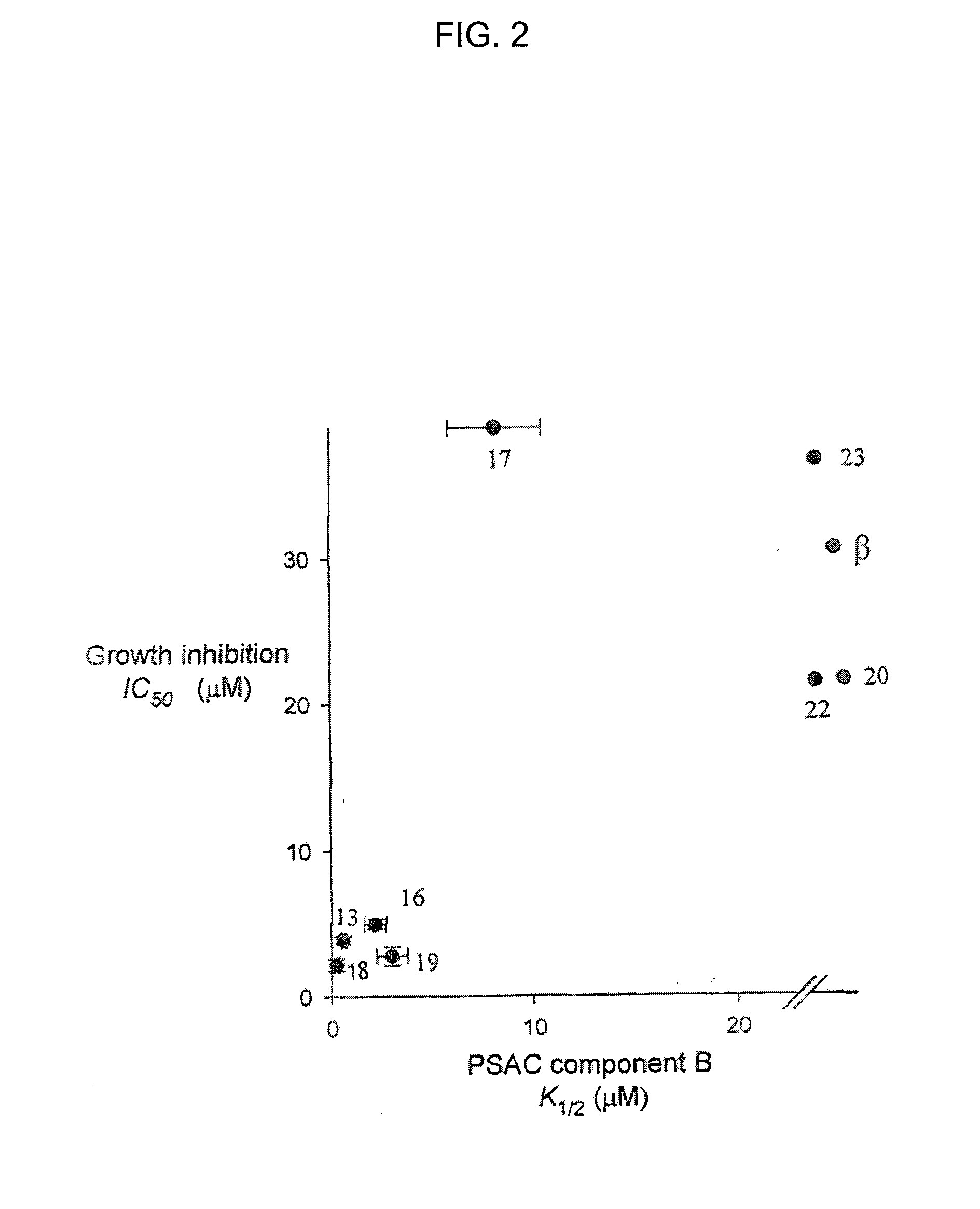
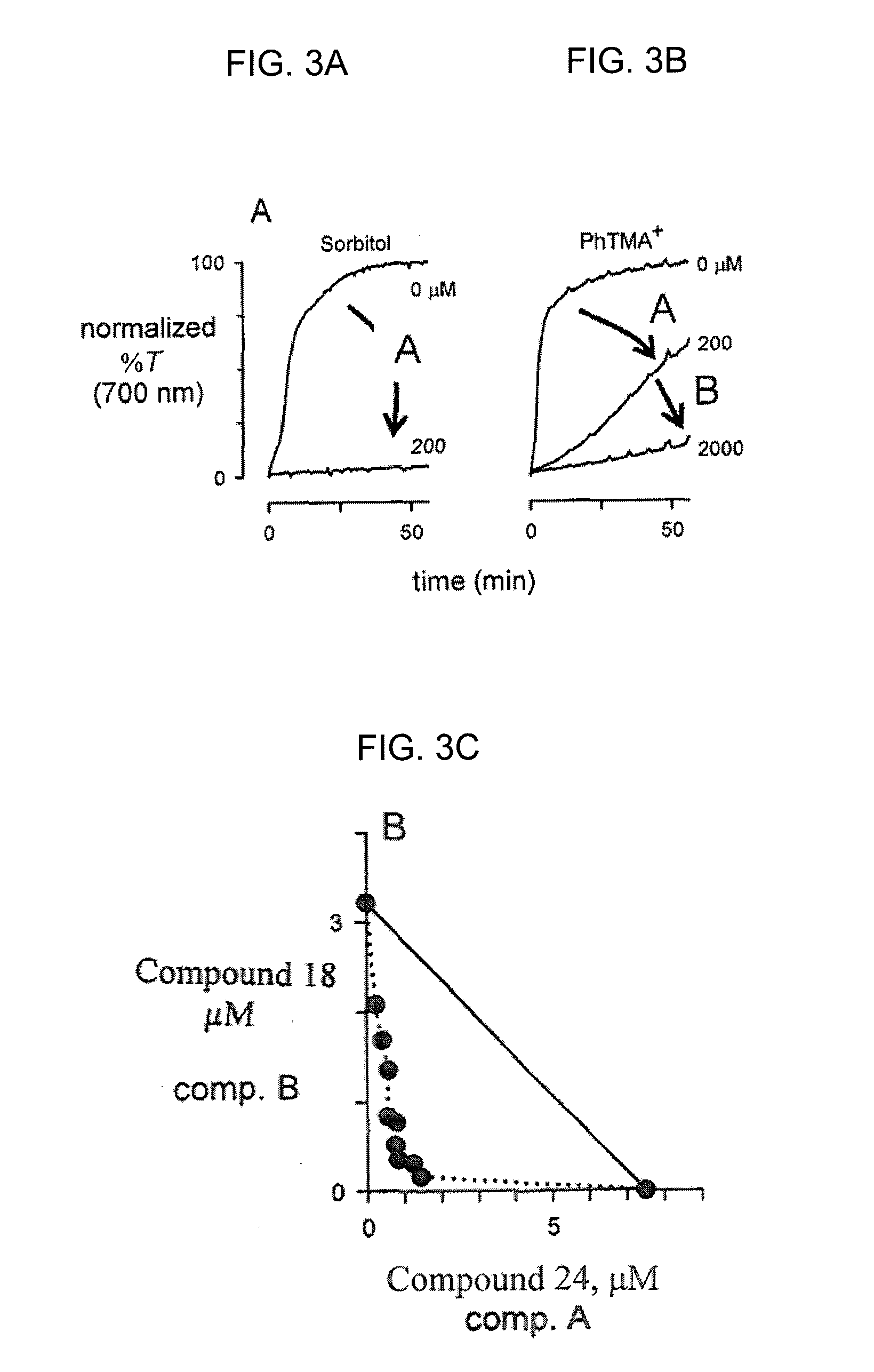
Examples
example 1
[0120]This example demonstrates the methodology employed to identify PSAC antagonists and characterize their interactions with PSAC. Methodologies include, but are not limited to, high-throughput screening of antagonists, electrophysiology, and in vitro parasite growth inhibition assays.
[0121]A high-throughput screen for antagonists of the plasmodial surface anion channel (PSAC) was developed. This screen is based on a quantitative light scattering assay for PSAC activity (Wagner et al., Biophys. J. 84:116 (2003)). This light scattering assay measures changes in turbidity resulting from osmotic swelling and lysis of P. falciparum-infected cells in solutes with high permeability through PSAC, but negligible permeability in uninfected erythrocytes.
[0122]Synchronous in vitro cultures of P. falciparum (Indo 1 isolate) were harvested at the mature trophozoite stage and enriched to >95% parasitemia by percoll-sorbitol density gradient centrifugation. Cells were washed and resuspended in p...
PUM
| Property | Measurement | Unit |
|---|---|---|
| Pharmaceutically acceptable | aaaaa | aaaaa |
Abstract
Description
Claims
Application Information
 Login to View More