
Triterpene saponins, methods of synthesis, and uses thereof
a technology of triterpene glycoside and saponin, which is applied in the field of triterpene glycoside saponinderived adjuvants, can solve the problems of affecting the synthesis of qs-21, qs-7 and other triterpene glycoside saponins, and their structural complexity
- Summary
- Abstract
- Description
- Claims
- Application Information
AI Technical Summary
Benefits of technology
Problems solved by technology
Method used
Image

Examples
example 1
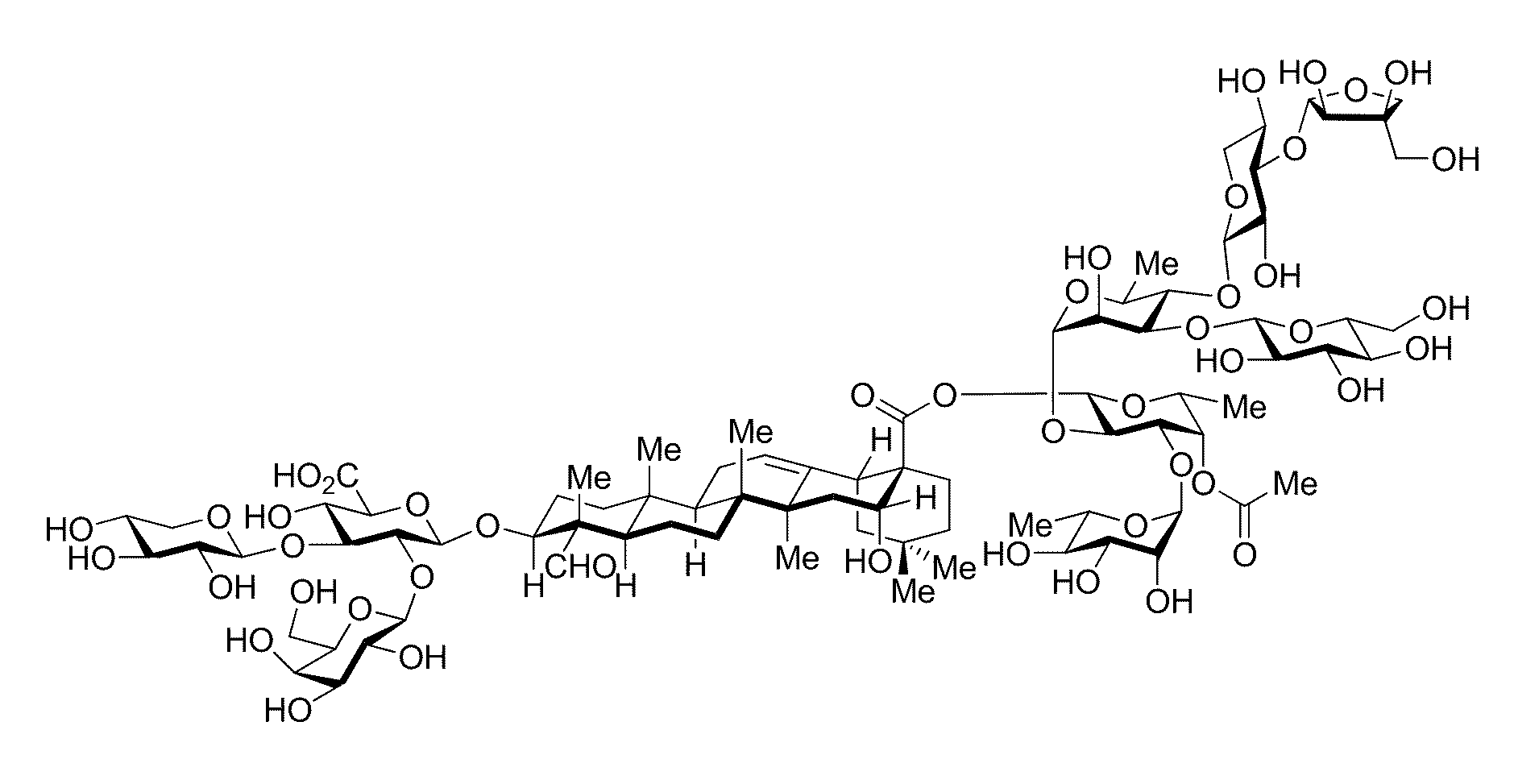
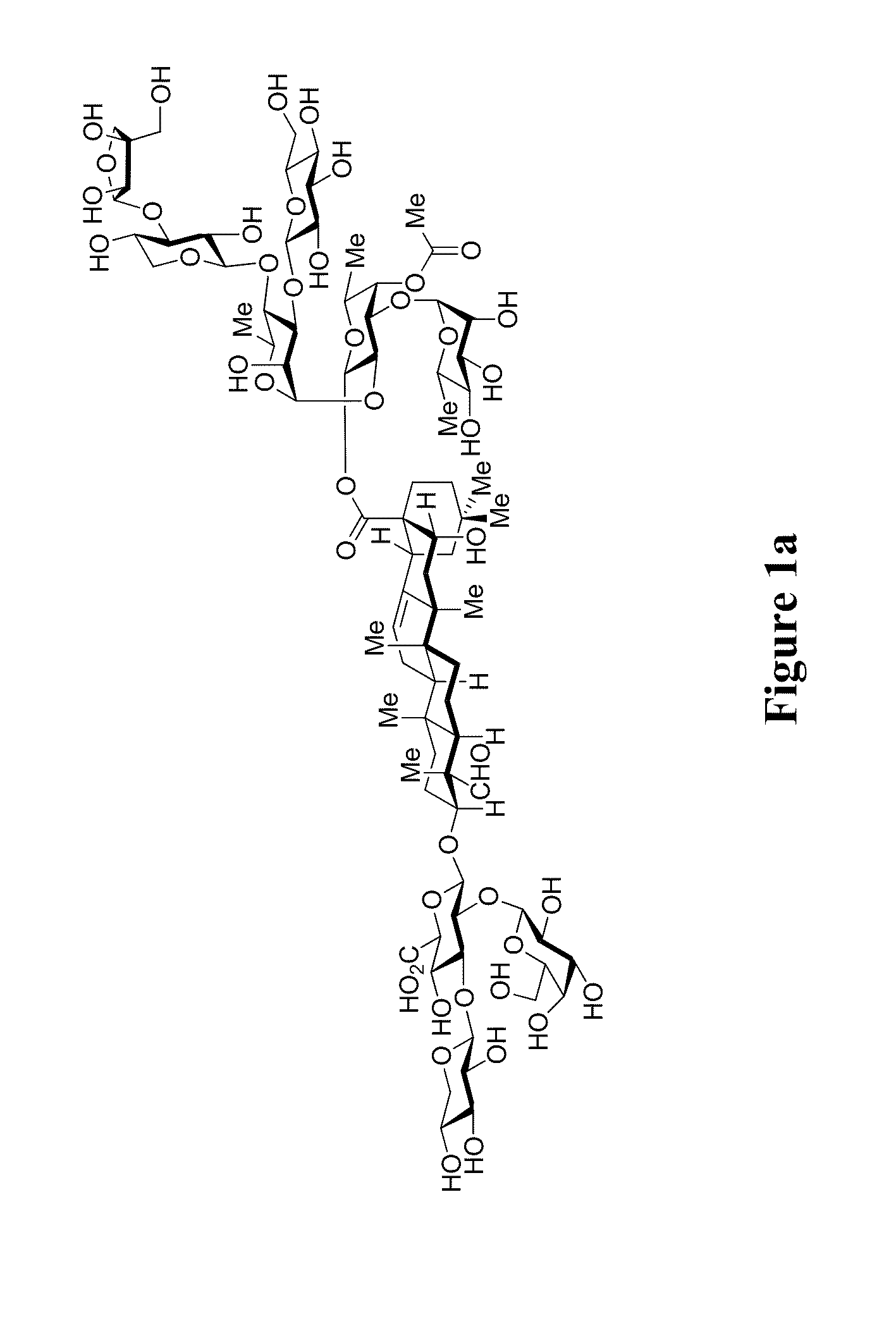
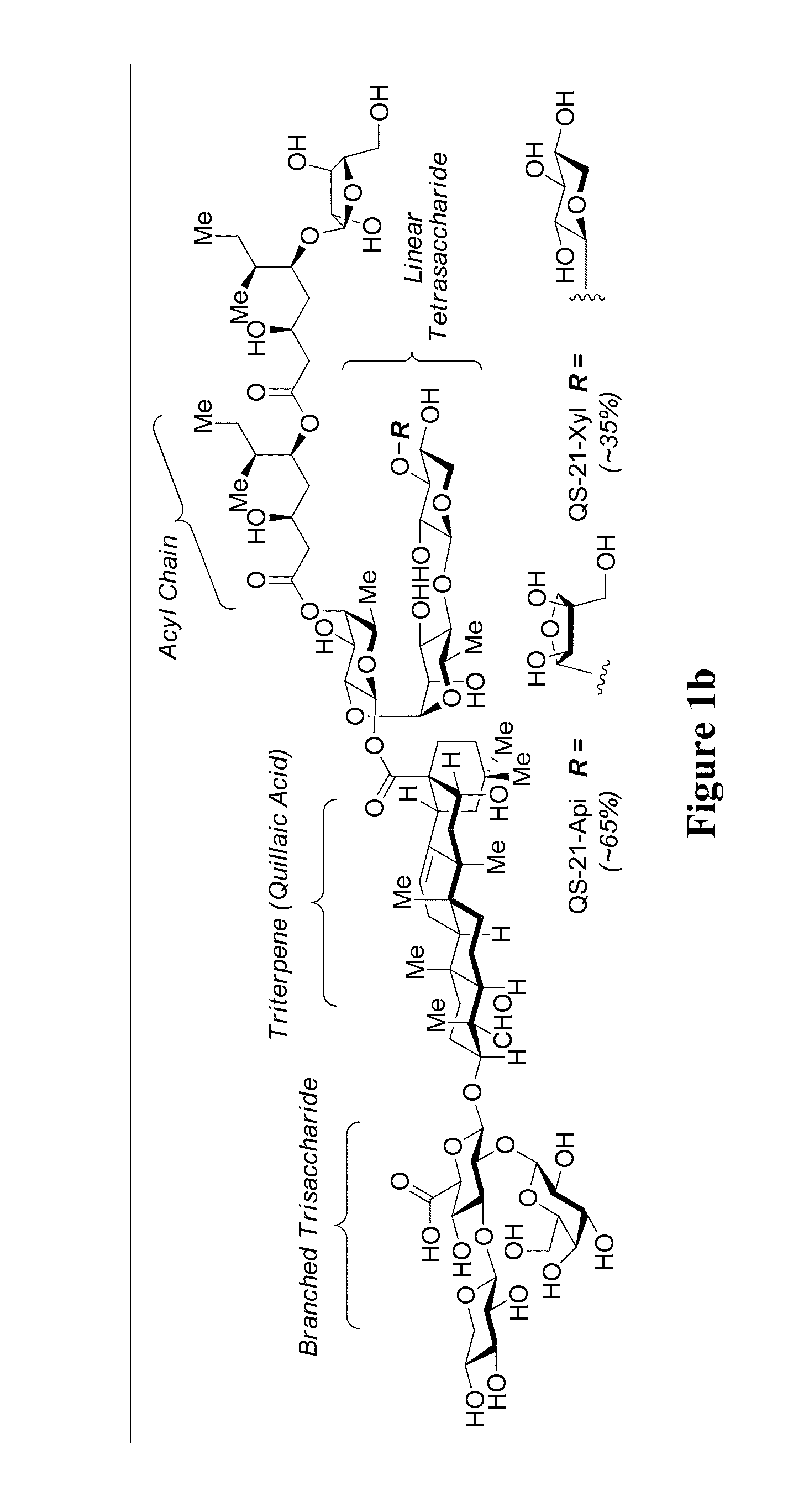
[0420]The synthesis of the hexasaccharide fragment within QS-7-Api (FIG. 1) required initial preparation of the selectively protected monosaccharides 2-4, 6, and 8 (Scheme 7). While the xylo-, gluco- and apio-derived monosaccharides 2-4 (Scheme 7A) were obtained in multi-step sequences by previously reported procedures and modifications thereof (Kim, Y. J.; Wang, P.; Navarro-Villalobos, M.; Rohde, B. D.; Derryberry, J.; Gin, D. Y. J. Am. Chem. Soc. 2006, 128, 11906-11915; Nguyen, H. M.; Chen, Y. N.; Duron, S. G.; Gin, D. Y. J. Am. Chem. Soc. 2001, 123, 8766-8772) the novel sugars 6 and 8 were prepared from rhamnopyranose 5 and fucopyranoside 7, respectively. Silylation of the selectively-protected rhamnopyranose 5 (Scheme 7B) with TIPSOTf provided the α-TIPS glycoside (96%), which subsequently underwent C4-O-debenzylation to furnish the rhamnopyranoside 6 (98%). Synthesis of the fucosyl residue within QS-7 commenced with selective C3-O-alkylation of the allyl fucopyranoside 7 (Schem...
example 2
[0464]This Example demonstrates that certain methods described above for Example 1 are applicable to substrates that differ in chemical structure.
Final Assembly of Semisynthetic QS-21-Api
[0465]
[0466]Fully protected QS-21-Api (140). A solution of boron trifluoride diethyl etherate (0.49 μL, 0.0039 mmol, 0.50 equiv) in dichloromethane (10 μL) was added to a solution of imidate 23 (17.6 mg, 0.00780 mmol, 1.00 equiv) and carboxylic acid 139 (24.3 mg, 0.0117 mmol, 1.50 equiv) in dichloromethane (0.260 mL) with 4 Å molecular sieves (50 mg) at −78° C. The reaction temperature was allowed to warm to 23° C. slowly, and triethylamine (20 μL) was added after 16 h. The reaction was concentrated and purified by silica gel chromatography (silica pretreated with 0.2% triethylamine in benzene, then benzene / ethyl acetate 99:1 to 47:3) to afford 140 (13.8 mg, 0.0033 mmol, 42% yield) as a clear film. Rf=0.42 (benzene / ethyl acetate 19:1); characteristic resonances from 1H NMR (500 MHz, CDCl3) δ 9.68 (s...
example 3
[0472]
[0473]3,6-Di-O-benzyl-4-azido-4-deoxy-D-galactal (218). Sodium hydroxide (0.115 g, 2.89 mmol, 0.357 equiv) was added to a solution of glycal 221 (2.930 g, 8.063 mmol, 1.000 equiv) in methanol (40 mL) at 0° C., and the reaction was stirred at 23° C. After 14 h, the reaction was concentrated to a sticky tan solid, and trace solvent was removed by co-evaporation with toluene (7 mL).
[0474]Dimethylformamide (40 mL) was added to the residue, and the resulting brown suspension was cooled to 0° C. Sodium hydride (60% dispersion in oil, 0.977 g, 24.4 mmol, 3.03 equiv) was added to the reaction, followed by benzyl bromide (4.80 mL, 40.3 mmol, 5.01 equiv). After 3 h, the orange suspension was stirred at 23° C. for 16 h. The reaction was quenched with methanol (20 mL), diluted with dichloromethane (100 mL), and washed with water (100 mL). The aqueous layer was extracted with dichloromethane (80 mL), and the combined organic layers were washed with water (100 mL), dried with magnesium sulf...
PUM
| Property | Measurement | Unit |
|---|---|---|
| Structure | aaaaa | aaaaa |
Abstract
Description
Claims
Application Information
 Login to View More