

Multi-pane electrochromic windows
a multi-pane, electrochromic window technology, applied in the direction of ohmic-resistance heating, door/window protective devices, instruments, etc., can solve the problems of high defectivity, conventional electrochromic windows, and various problems of electrochromic devices, so as to achieve the effect of improving defectivity
- Summary
- Abstract
- Description
- Claims
- Application Information
AI Technical Summary
Benefits of technology
Problems solved by technology
Method used
Image

Examples
Embodiment Construction
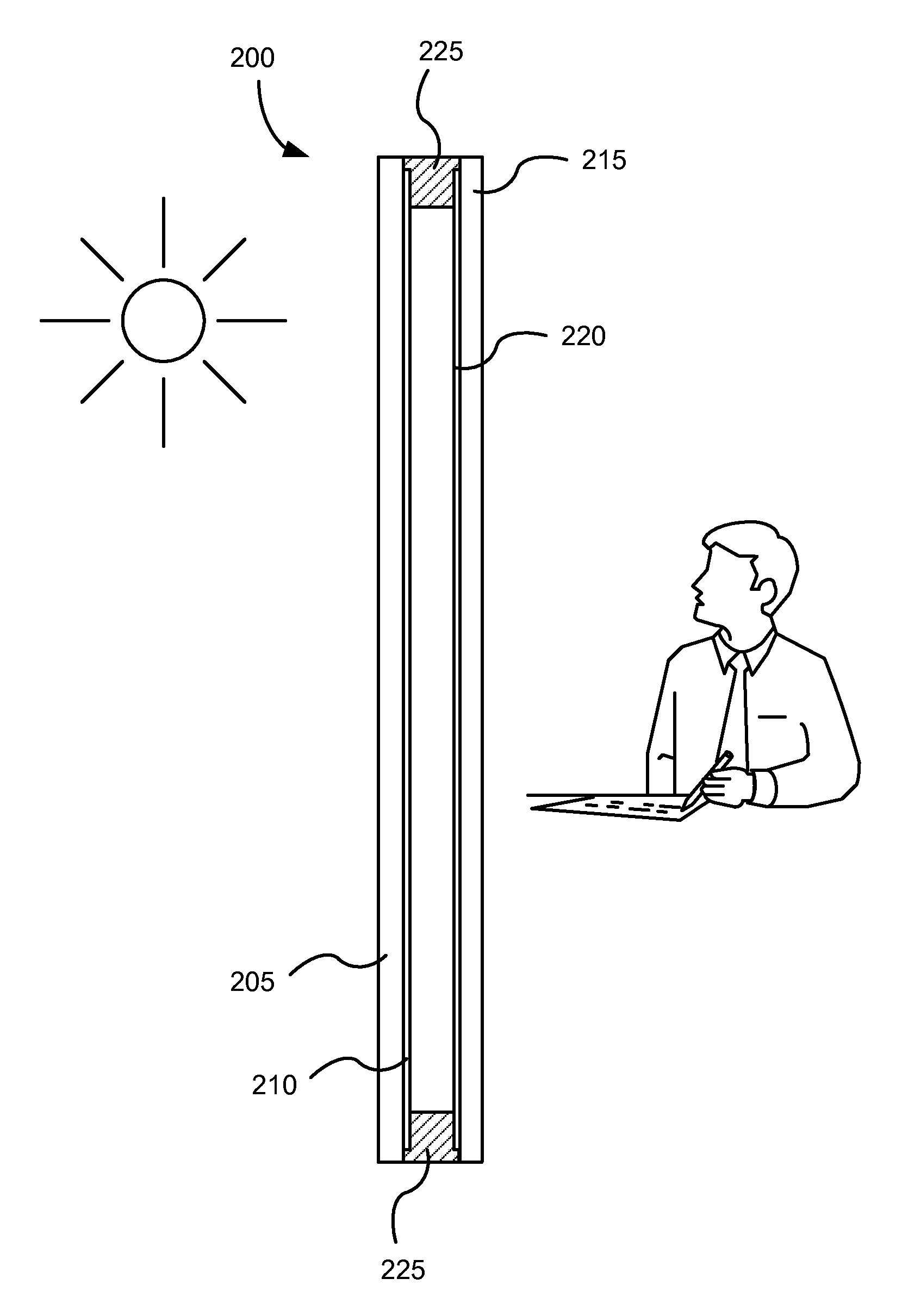
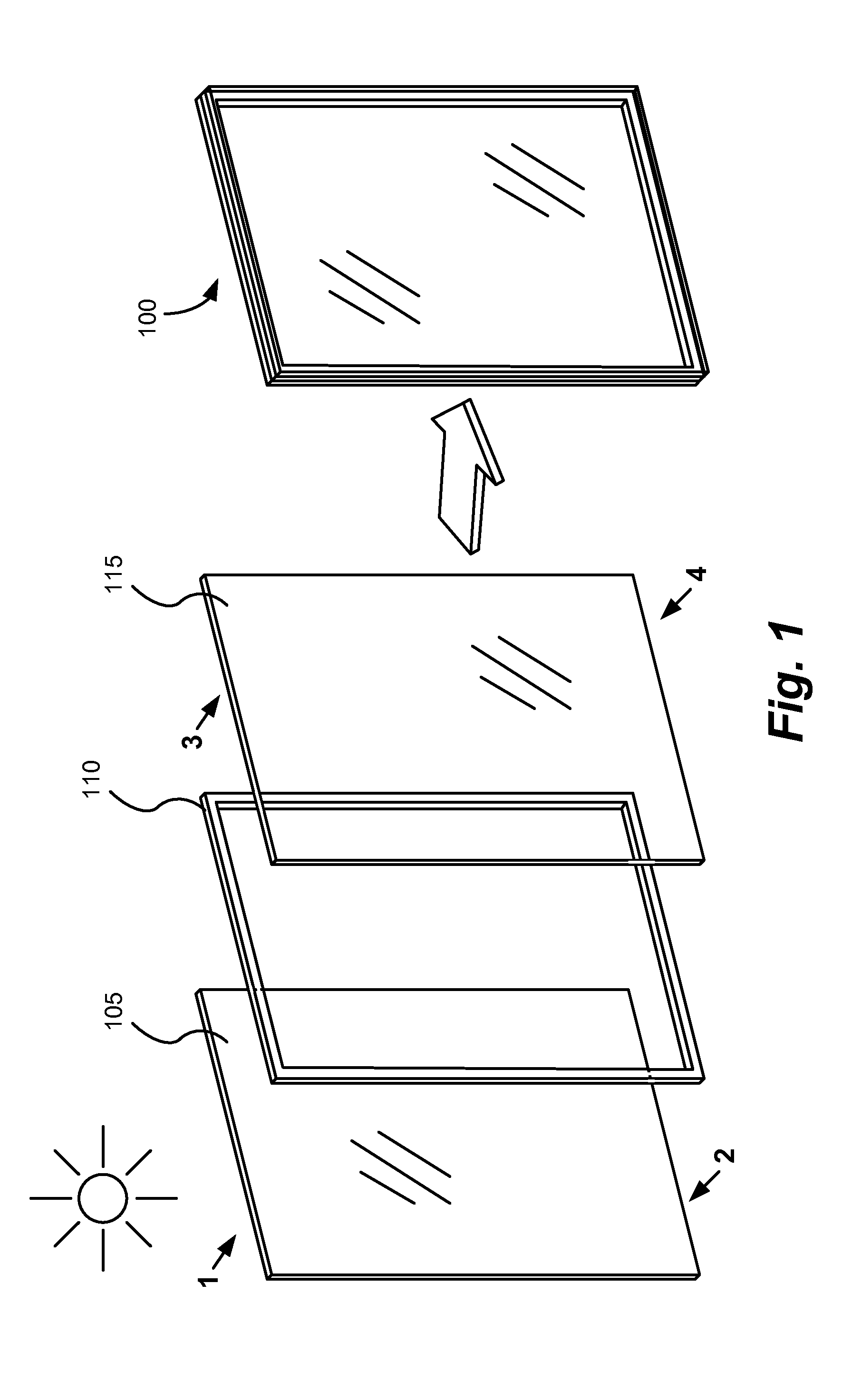
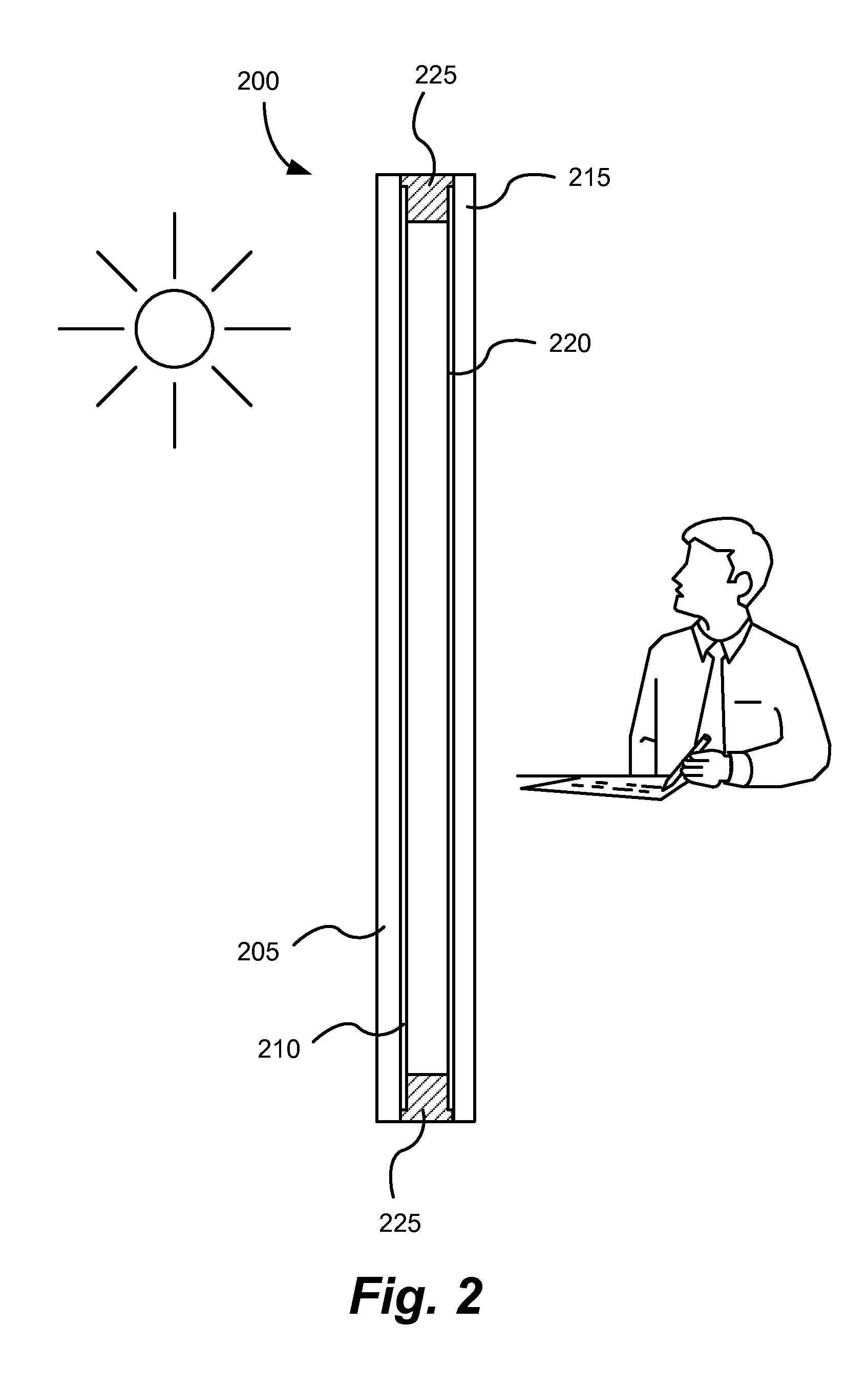
[0026]Herein are described window units, for example IGU's, that have at least two panes, each pane having an electrochromic device thereon. For example, when a window unit has two panes, each with two optical states, then the window unit can have four optical states. Window units described herein allow the window user a greater choice of how much light is transmitted through the electrochromic window, that is, the multi-pane IGU concept allows a gradation of transmission rather than a simple “on or off” conventional two-state window. A secondary benefit is the improvement in defectivity due to non-aligned optical defects, even for two-state windows. The inventors have discovered that by using two or more window panes, each with its own electrochromic device, registered in a window unit, that is, one in front of the other, visual defects in any of the individual devices are negated by virtue of the extremely small likelihood that any of the visual defects will align perfectly and th...
PUM
| Property | Measurement | Unit |
|---|---|---|
| transmittance | aaaaa | aaaaa |
| transmittance | aaaaa | aaaaa |
| transmittance | aaaaa | aaaaa |
Abstract
Description
Claims
Application Information
 Login to View More