
Fast algorithm for mining high utility itemsets
a mining algorithm and high utility technology, applied in the field of data mining algorithm, can solve the problems of significant degrading mining performance, twu of itemsets being likely to overestimate the utility of itemsets, and inability to provide high utility itemsets, so as to reduce mining space, improve overall mining efficiency, and reduce mining space
- Summary
- Abstract
- Description
- Claims
- Application Information
AI Technical Summary
Benefits of technology
Problems solved by technology
Method used
Image

Examples
Embodiment Construction
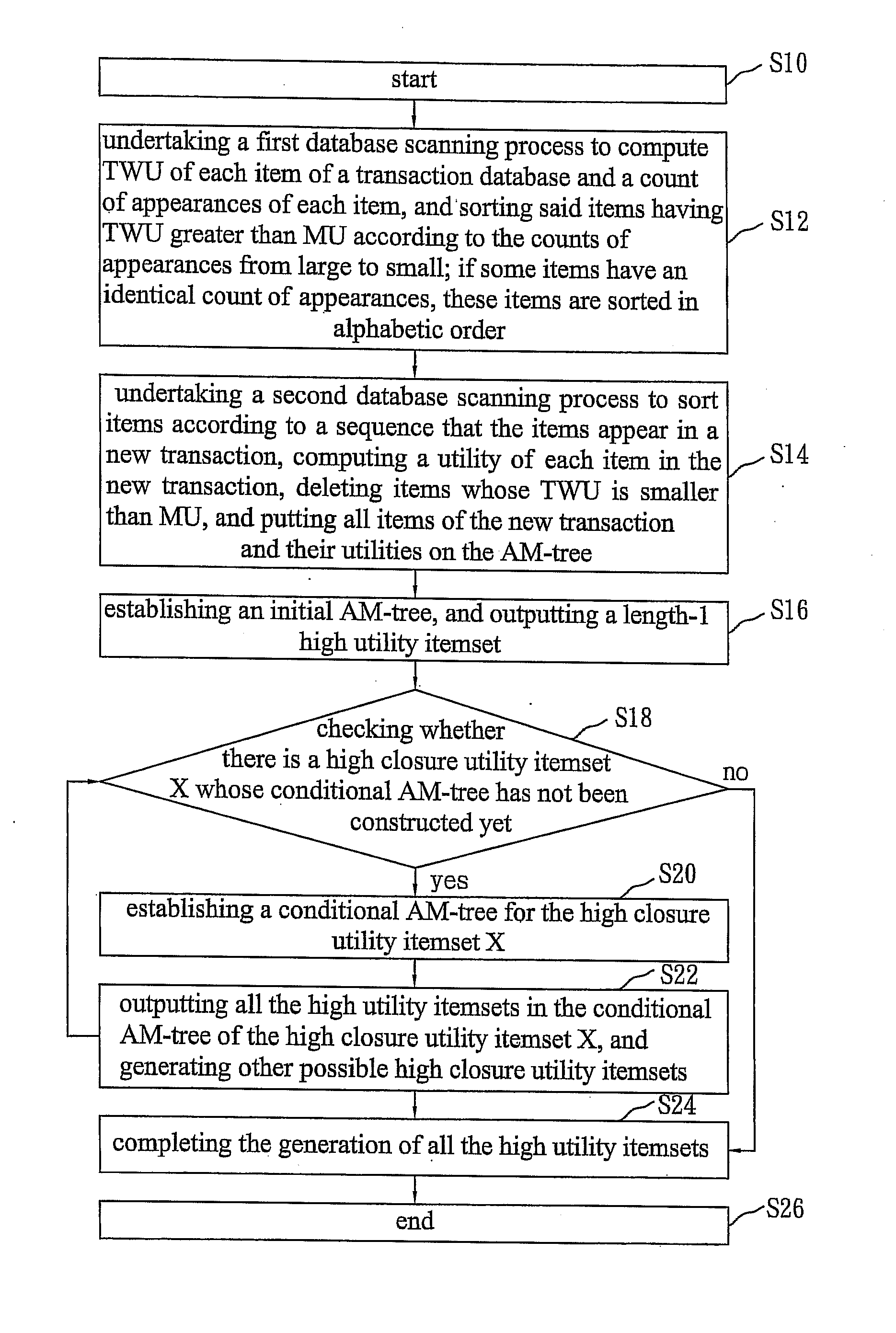
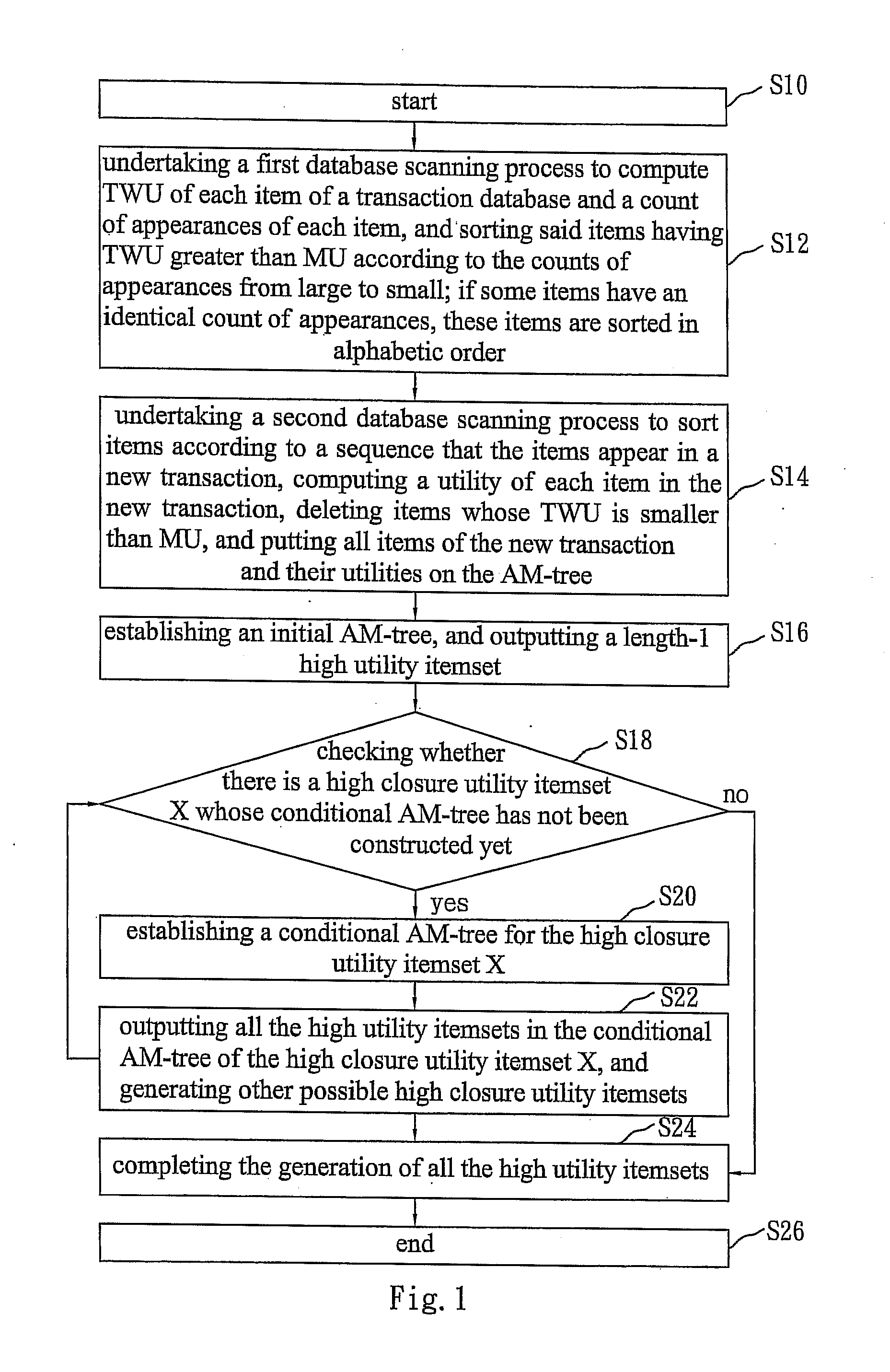
[0034]The present invention discloses a fast algorithm for mining high utility itemsets, which is called the absorptive mining (AM) algorithm thereinafter. The AM algorithm also adopts the FP-tree structure, but it skillfully records some information, whereby none candidate high utility itemset is generated in the mining process. The present invention also proposes an evaluation value having a downward closure property similar to that of the transaction weighed utility TWU. Distinct from the TWU-based technology that has to compute the total utility of all the items of each transaction, the present invention considers only the utilities of the items used in the mining process. Therefore, the estimated value of utility is much smaller than TWU. Thereby is reduced the mining space of the high utility itemsets and improved the overall mining efficiency.
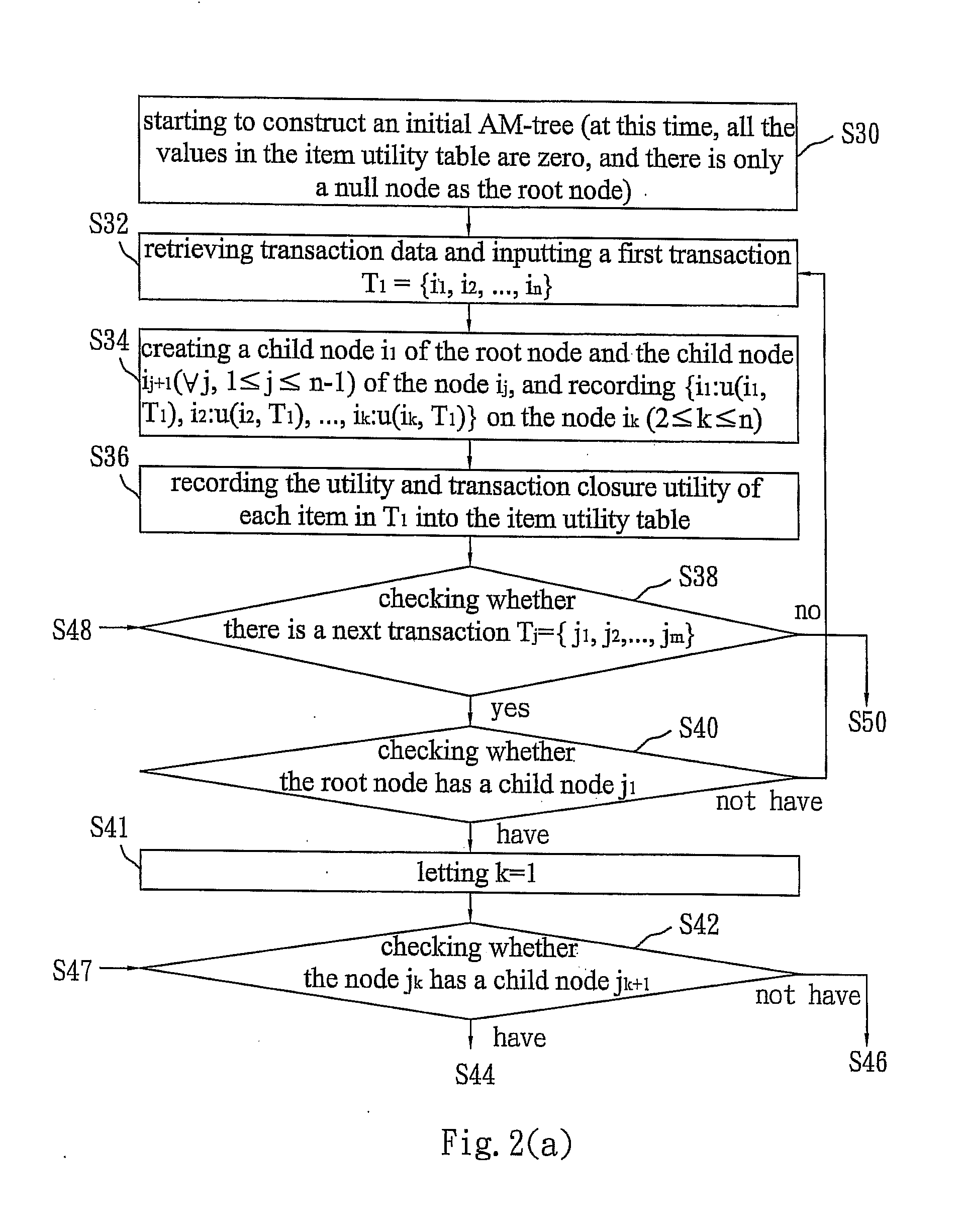
[0035]The tree structure for the AM algorithm is called the AM-Tree (Adsorptive Mining Tree). In the AM-tree, each child node of the ro...
PUM
 Login to View More
 Abstract
Description
Claims
Application Information
 Login to View More