
Method and a device for preparing sheet material to be used for a page of a book, a printing paper sheet for a page of a book, and a book
- Summary
- Abstract
- Description
- Claims
- Application Information
AI Technical Summary
Benefits of technology
Problems solved by technology
Method used
Image

Examples
Embodiment Construction
with reference to the attached drawings, which are given by way of example. The drawings present:
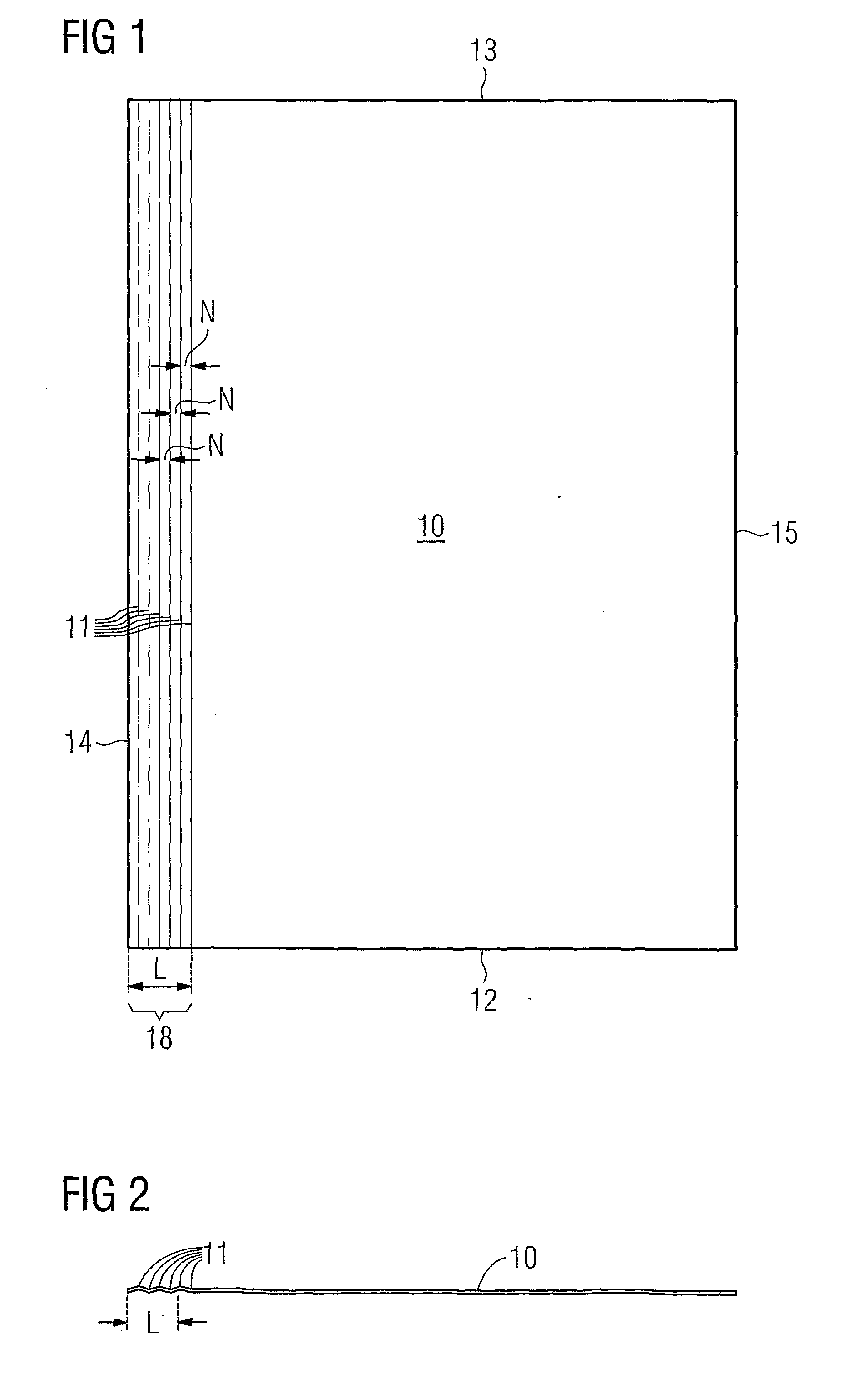
[0038]FIG. 1 is a plan illustration of a single printing paper sheet intended as a page of a book, viewed from the front;
[0039]FIG. 2 is an end view of a single printing paper sheet intended as a page of a book, viewed from the top or bottom;
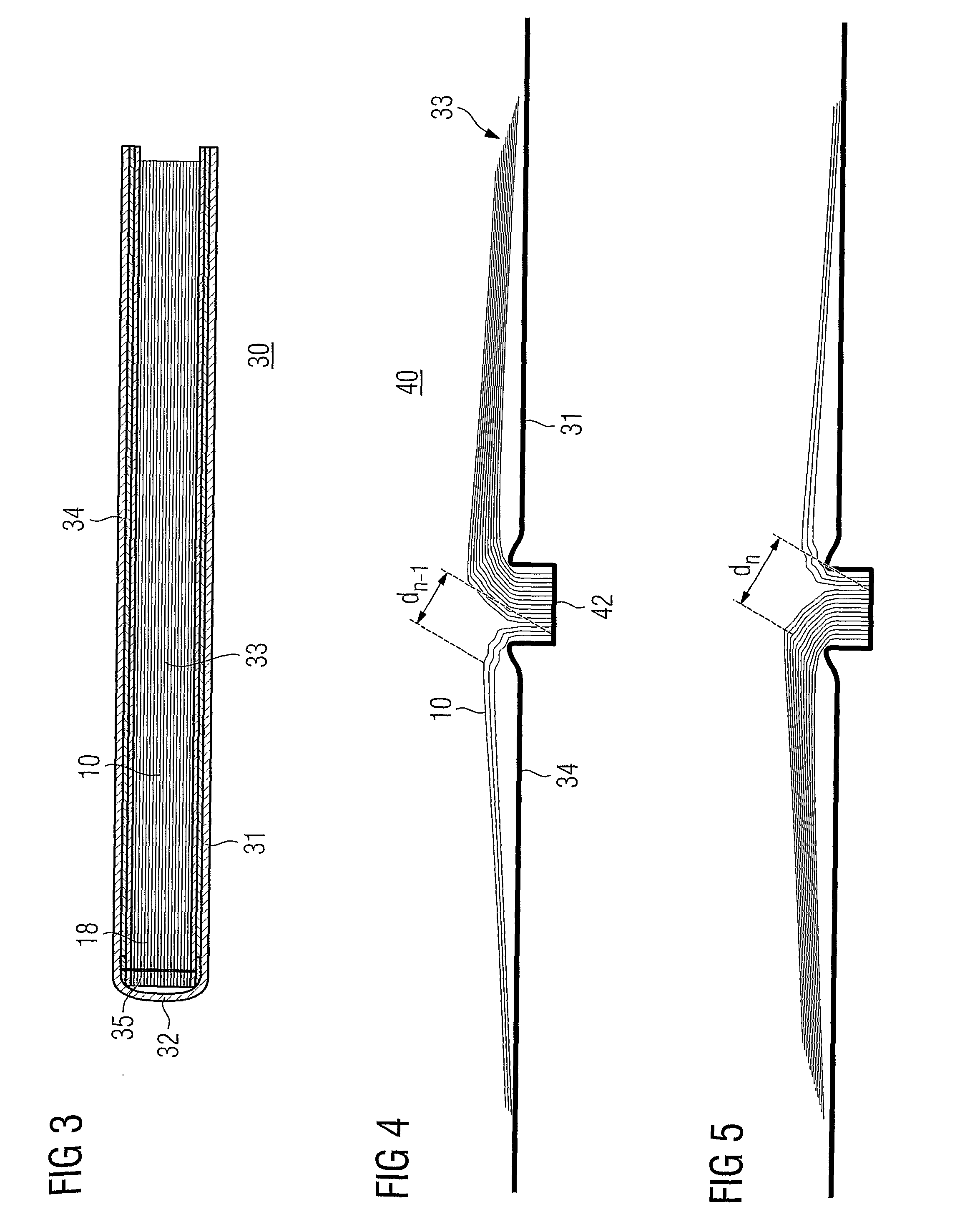
[0040]FIG. 3 is an end cross-sectional view of a book in a closed position according to the invention;
[0041]FIG. 4 is an end cross-sectional view of a book according to the invention after the book has been opened and the first batch of pages has been browsed by turning from right to left;
[0042]FIG. 5 is an end cross-sectional view of the book presented in FIG. 4 after a second batch of pages has been browsed by turning from right to left;
[0043]FIG. 6 is a plan view of a book according to the invention, viewed from the front when the book has been opened;
[0044]FIG. 7 is a flow chart illustrating the steps of the method to be used when preparing the s...
PUM
 Login to View More
 Abstract
Description
Claims
Application Information
 Login to View More