
Plant extract, compositions containing same, method of extraction and uses thereof
a technology of compositions and extracts, applied in the field of extracts, compositions containing same, and extraction methods, can solve problems such as skin diseases, pigmentation ailments or diseases, exogenous pigment spots,
- Summary
- Abstract
- Description
- Claims
- Application Information
AI Technical Summary
Benefits of technology
Problems solved by technology
Method used
Image

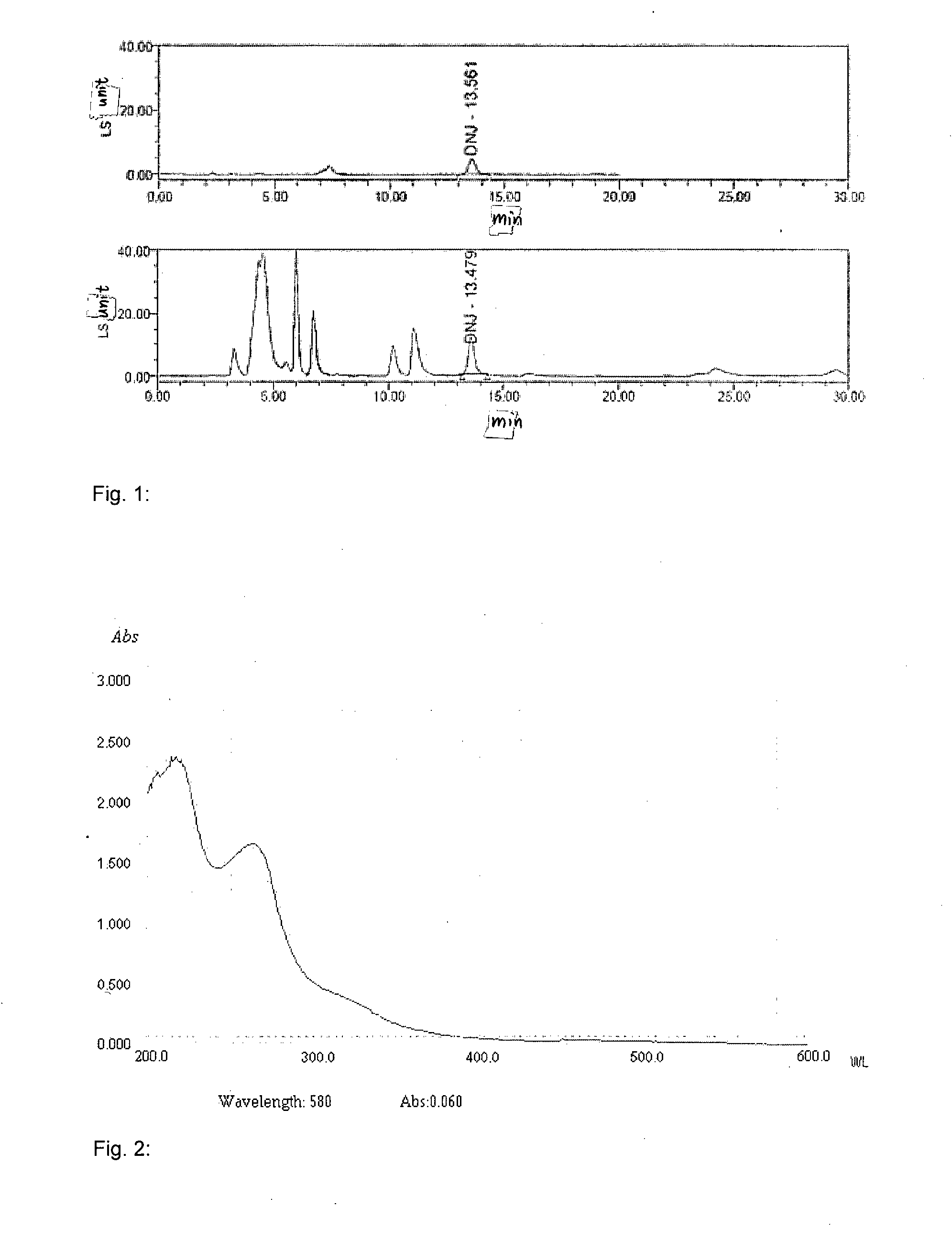
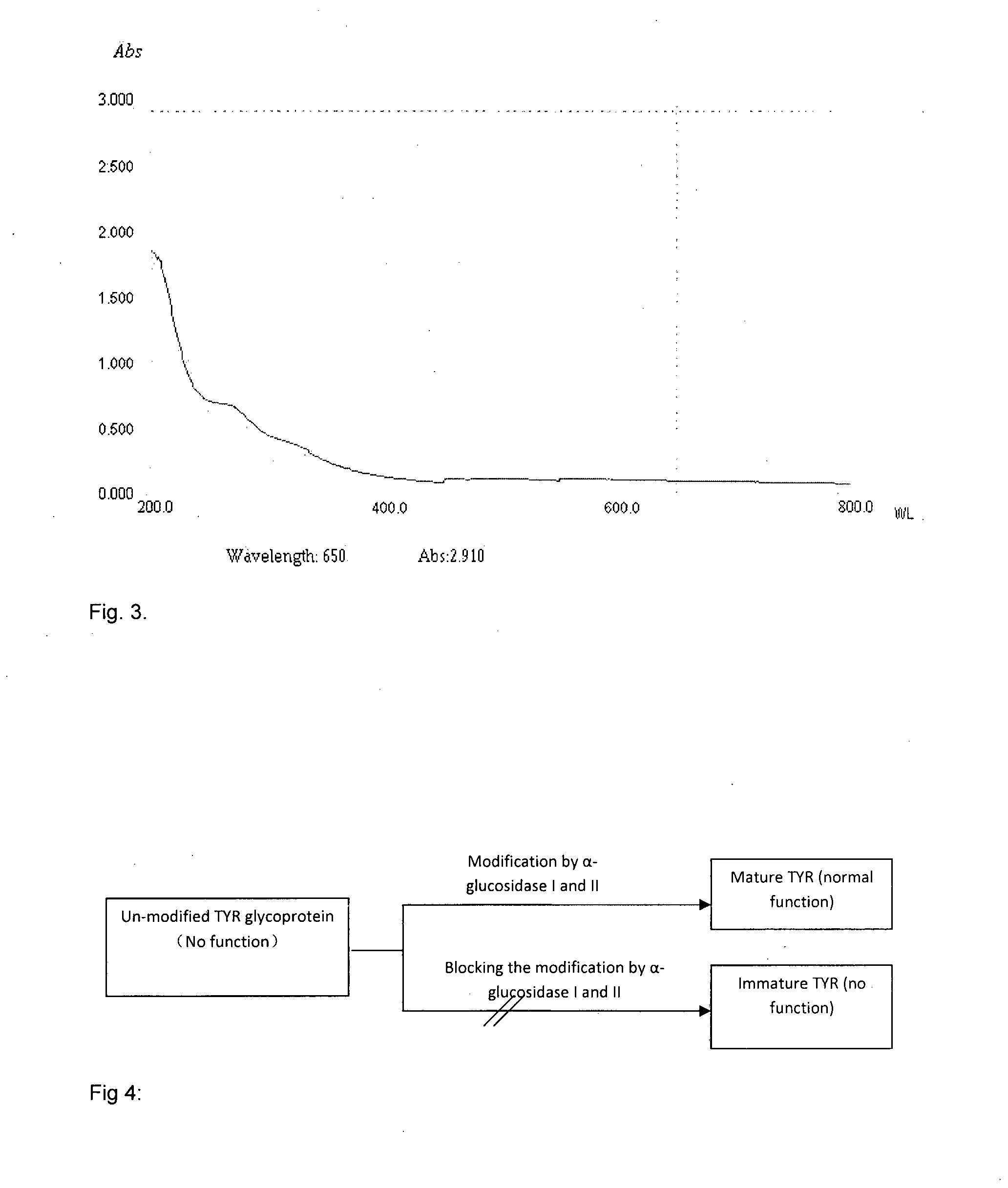
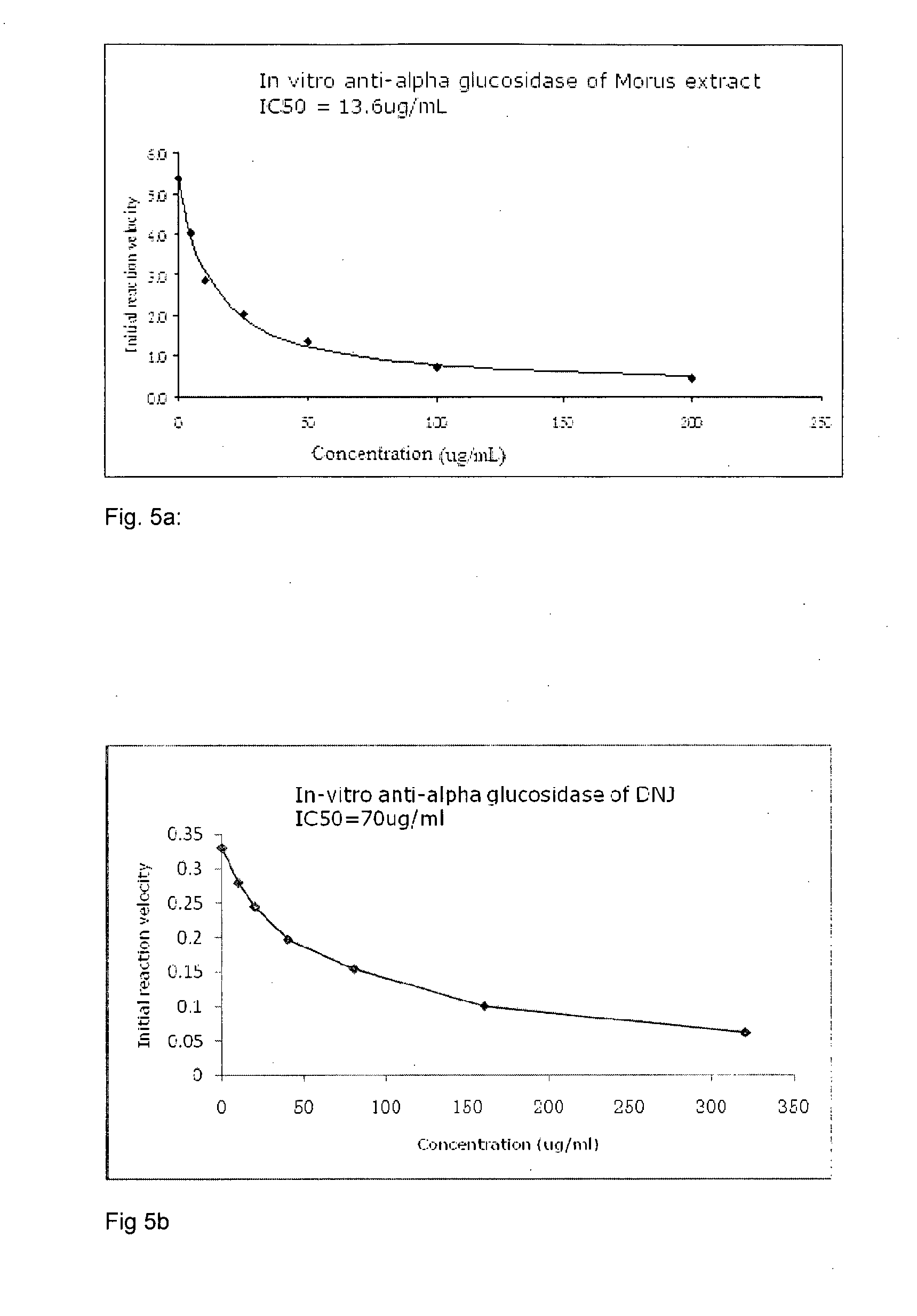
Examples
example 1
[0125]Pulverize 100 kg of dry mulberry leaves of the species Morus alba and extract under reflux 3 times (1 hour each time) with 12 folds of 30% ethanol (compared to the weight of the raw material). Condense the extract to a given volume and pass it through a column filled with a strong acidic cationic resin, such as 001X 7. The volume of the column was 1 / 14 of the extracted liquid. The column was washed with water (1.5 folds of the column volume) and the component of interest (imino sugars) released from the column using 0.7 N ammonia water (5 folds of the column volume), at a flow rate of 1.5 folds of the column volume per hour. The ammonia water eluent with a pH of 9-11 was collected. The eluent was condensed to a given volume, the ammonium removed and the pH adjusted to pH 7. The eluent was then passed through a column filled with a macroporous resin, such as S-8. The volume of the column was 1 / 10 of the eluent liquid and the flow rate 2 folds of the column volume per hour. The ...
example 2
[0128]Pulverize 100 kg of dry mulberry leaves of the species Morus alba and extract under reflux 3 times (1 hour each time) with 18 folds of water (to the weight of the raw material). Pass the extract through a column filled with strong acidic cationic resin, such as Dowex-50. The volume of the column was 1 / 20 of the extract. Wash the column with water (2 folds of the column volume) followed by 0.5 N ammonium water (8 folds of the column volume) at a flow rate of 3 folds of the column volume per hour. Collect the ammonium water eluent with a pH of 9-11. Condense to a given volume, remove the ammonium and adjust to pH 7. Run the eluent through a column filled with a macroporous resin, such as, HP20. The volume of the column was 1 / 20 of the eluent and the flow rate 4 folds of the column volume per hour. The collected fluid was then dried under vacuum and the dried product pulverized to pass through a 80 mesh sieve. 1.4 kg of a pale yellow powder was obtained, which contained 4.3% DNJ,...
example 3
[0129]Pulverize 20 kg of dry mulberry leaves of the species Morus alba and extract under reflux 3 times with 5 folds of 40% ethanol to the weight of the raw material. Filter the combined extract, to which an equal volume of ethanol was added, stir with constant speed for half an hour and leave it overnight. Remove the precipitate by centrifuging at 12000 r / min for 15 min, recover ethanol to a given volume. Pass the supernatant liquid through a column filled with a strong acidic cationic resin, e.g.001X7 type. The volume of the column was ⅓ of the liquid. Wash the column with water (same amount as the column volume) and elute with 1.0 N ammonia water (2 folds of the column volume) with a flow rate of the column volume per hour. Collect the ammonia water eluent with a pH 9-11. Condense to a given volume, remove ammonium and adjust to pH 7. Pass the eluent through a column filled with a macroporous resin, such as S-8. The volume of the column was 1 / 13 of the eluent and the flow rate, t...
PUM
| Property | Measurement | Unit |
|---|---|---|
| concentration | aaaaa | aaaaa |
| concentration | aaaaa | aaaaa |
| concentration | aaaaa | aaaaa |
Abstract
Description
Claims
Application Information
 Login to View More