
Multi-targeting boolean satisfiability-based test pattern generation
a multi-targeting, boolean satisfaction technology, applied in the field of multi-targeting boolean satisfaction-based test pattern generation, can solve the problems of computational intensiveness, difficult to cope with some hard-to-detect faults in today's complex circuit design, and the manufacturing process of today's integrated circuit (ic) design is very susceptible to defects
- Summary
- Abstract
- Description
- Claims
- Application Information
AI Technical Summary
Problems solved by technology
Method used
Image

Examples
Embodiment Construction
General Considerations
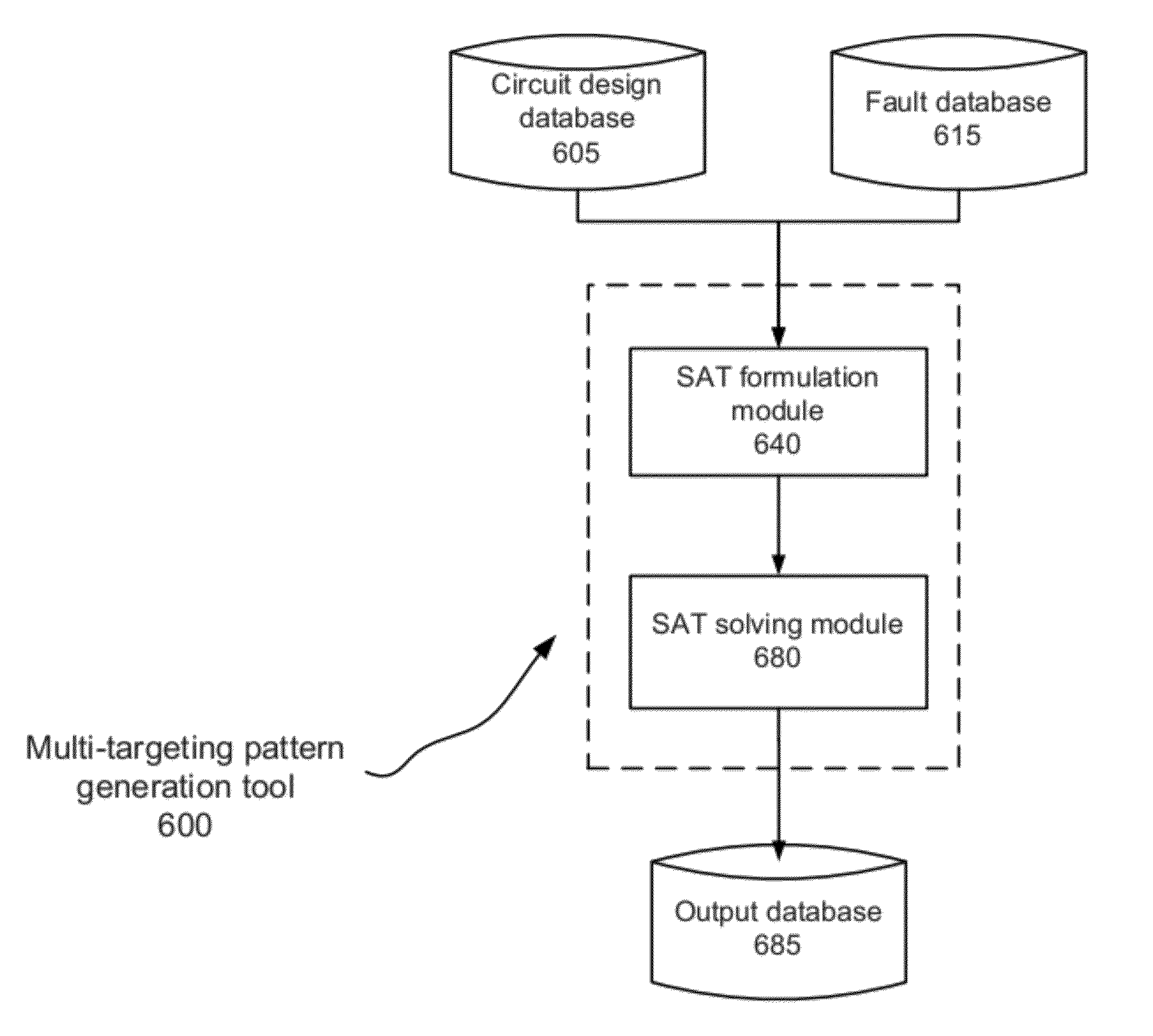
[0017]Various aspects of the present invention relate to generating test patterns that target multiple faults using SAT-based ATPG techniques. In the following description, numerous details are set forth for the purpose of explanation. However, one of ordinary skill in the art will realize that the invention may be practiced without the use of these specific details. In other instances, well-known features have not been described in details to avoid obscuring the present invention.
[0018]Although the operations of some of the disclosed methods, apparatus, and systems are described in a particular, sequential order for convenient presentation, it should be understood that this manner of description encompasses rearrangement, unless a particular ordering is required by specific language set forth below. For example, operations described sequentially may in some cases be rearranged or performed concurrently. Moreover, for the sake of simplicity, the attached figure...
PUM
 Login to View More
 Abstract
Description
Claims
Application Information
 Login to View More