Stereoscopic display apparatus

a display device and stereoscopic technology, applied in the field of stereoscopic display devices, can solve the problems of high cost, high cost, and high cost of batteries, and achieve the effect of reducing light loss and shortening back focal length

US20130170030A1Inactive Publication Date: 2013-07-04DELTA ELECTRONICS INC
2 Cites 2 Cited by

Patent Information

Authority / Receiving Office
US · United States
Patent Type
Applications(United States)
Current Assignee / Owner
Publication Date
2013-07-04
Estimated Expiration
Not applicable · inactive patent

Smart Images

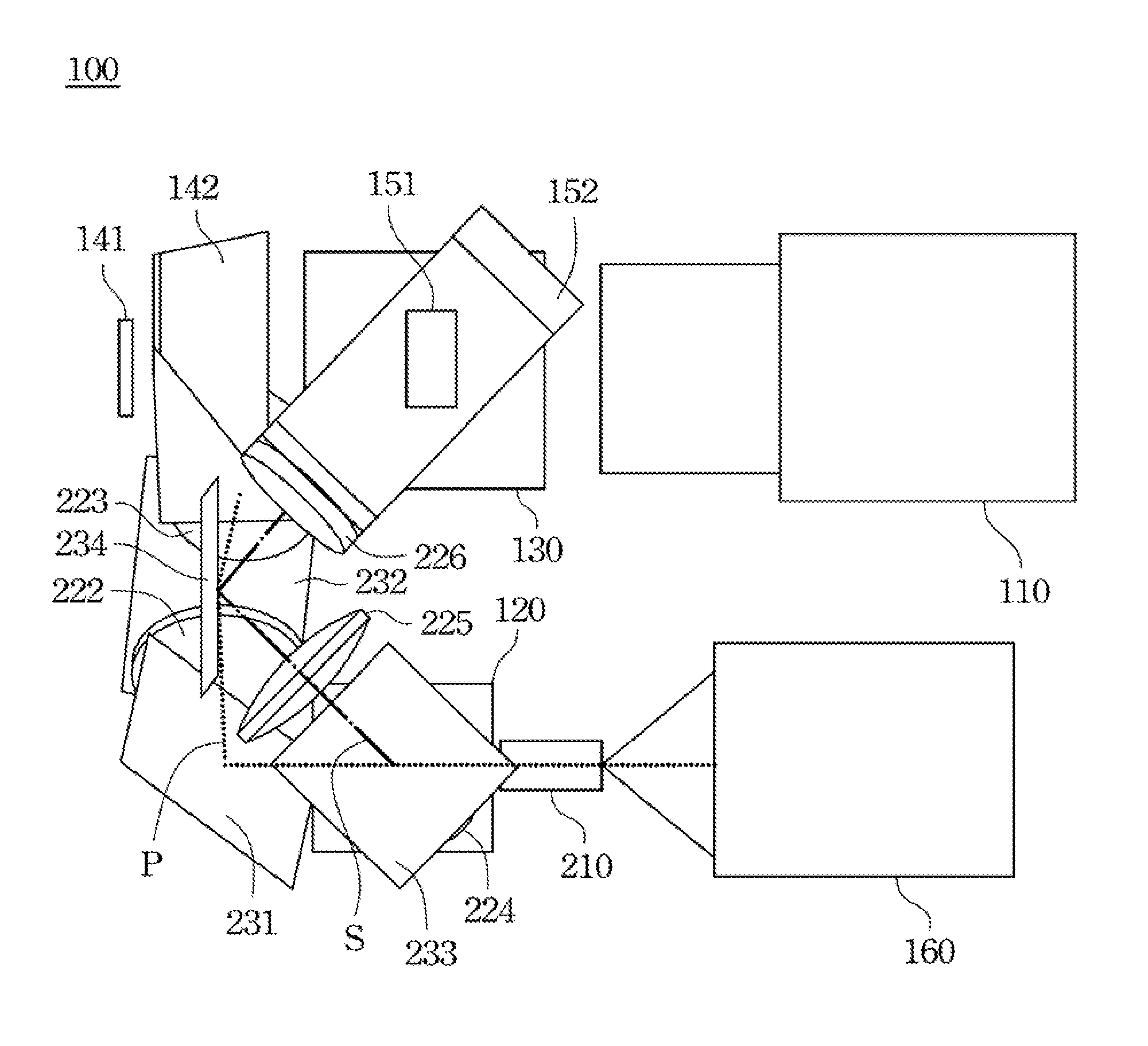
  • Figure 1
    Figure 1
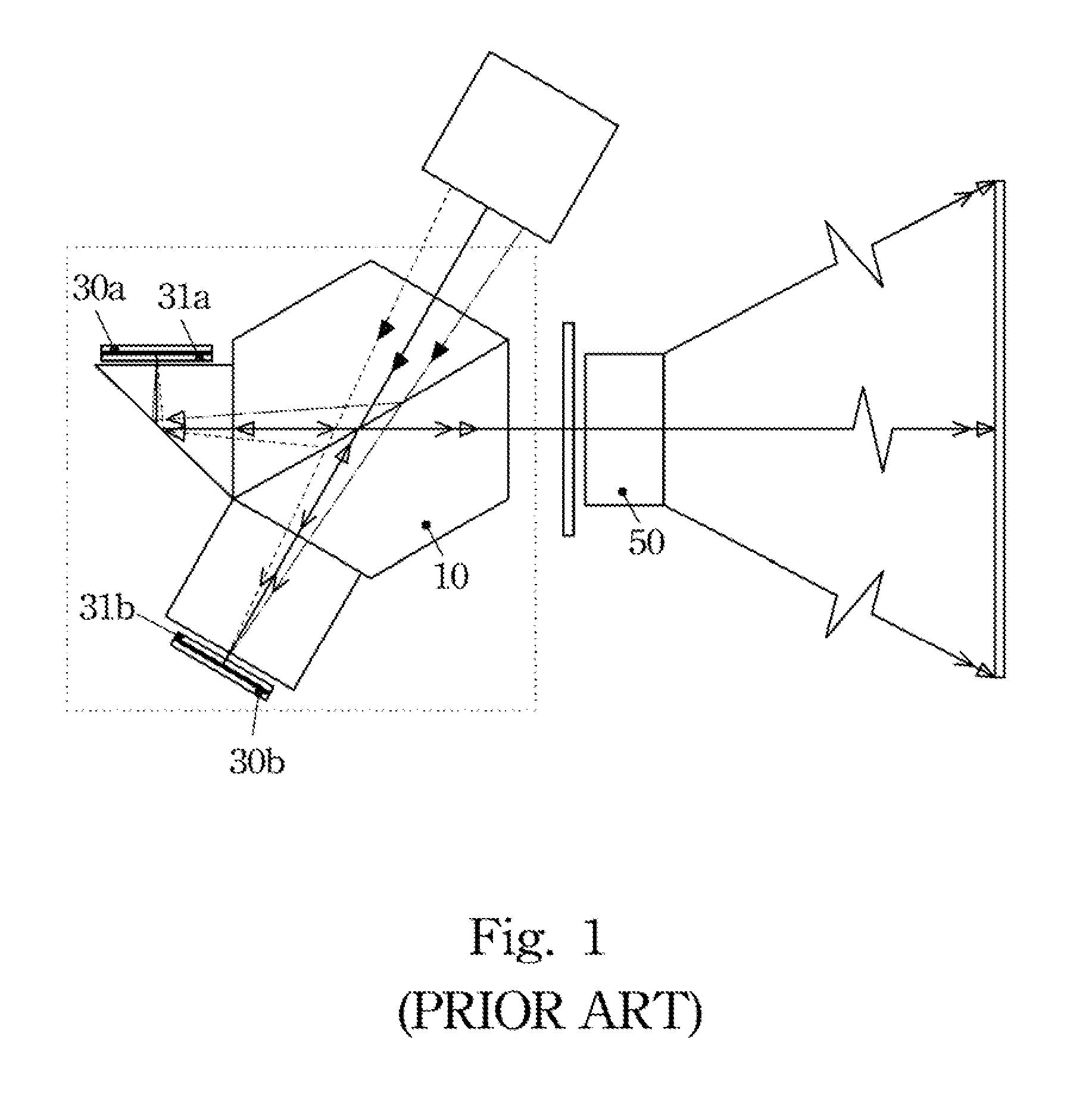
  • Figure 2
    Figure 2
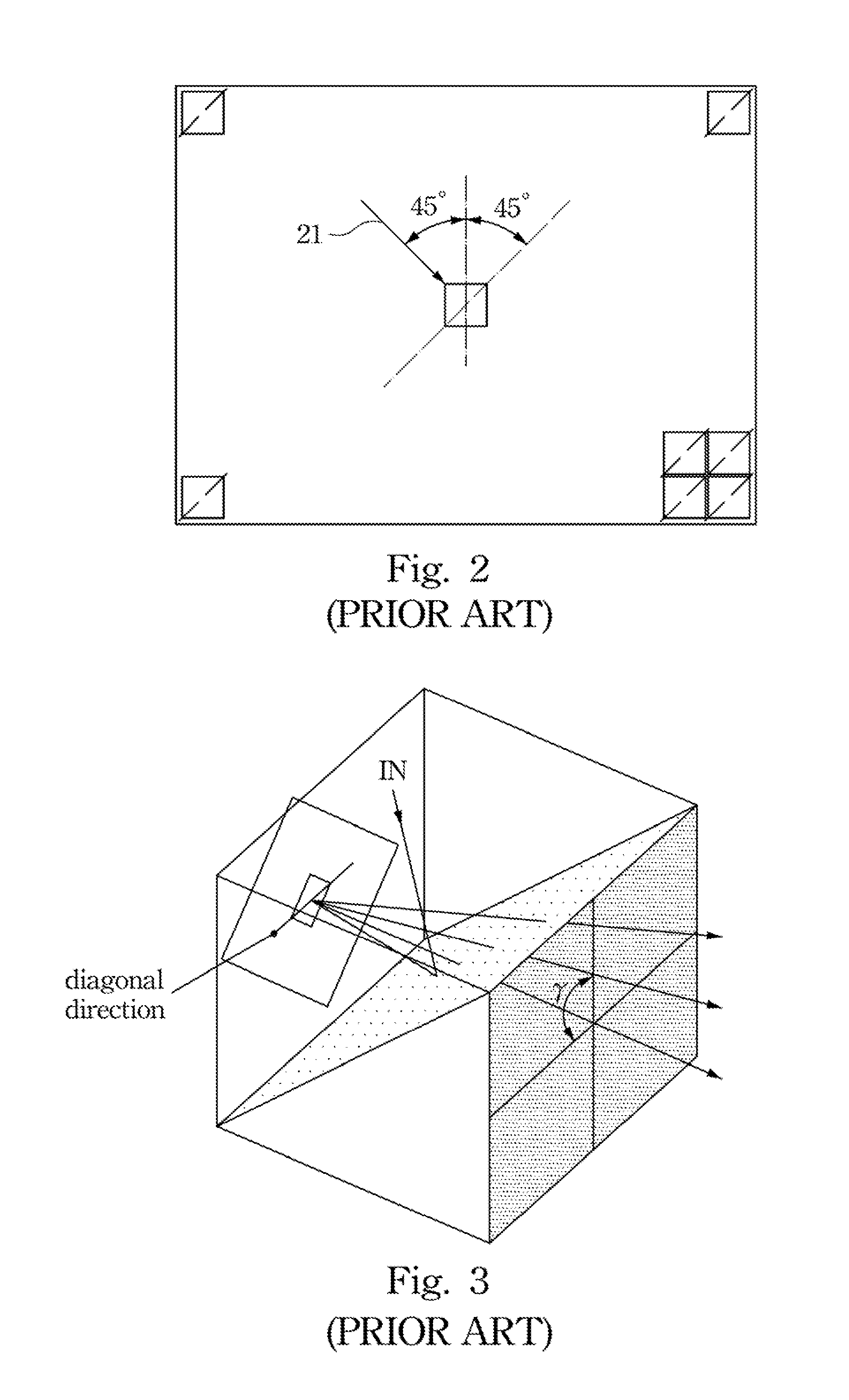
  • Figure 3
    Figure 3
Patent Text Reader

Abstract

A stereoscopic display apparatus includes a projection lens, a light source, a first and a second polarized beam splitters, a first and a second optical guiding system. The light source can radiate non-polarized light. The first polarized beam splitter divides the non-polarized light into P-polarized light and S-polarized light. The first optical guiding system guides the P-polarized light to the second polarized beam splitter, and the second optical guiding system guides the S-polarized light to the second polarized beam splitter. The second polarized beam splitter combines and transmits the P-polarized light and S-polarized light to the projection lens.
Need to check novelty before this filing date? Find Prior Art

Description

RELATED APPLICATIONS

[0001] This application claims priority to Taiwan Application Serial Number 100149421, filed Dec. 29, 2011, which is herein incorporated by reference.BACKGROUND

[0002] 1. Technical Field

[0003] The present disclosure relates to display devices, and more particularly, stereoscopic display apparatus.

[0004] 2. Description of Related Art

[0005] Providing vivid images to the consumers has long been the goal of display manufacturers and researchers. Among various advanced techniques, the application of three-dimensional (3D) stereoscopy is one of the most sought after fields.

[0006] From the technical aspect, 3D imaging is achieved by using the parallax due to the different views from the eyes of a viewer. Generally, 3D stereoscopic techniques may be categorized into glasses-aided stereoscopy and glass-free, naked-eye stereoscopy. For 3D stereoscopy that requires glasses, there are two types of glasses commonly used to view 3D images; that is, active shutter glasses and passive ...

Examples

Embodiment Construction

[0034]In the following detailed description, for purposes of explanation, numerous specific details are set forth in order to attain a thorough understanding of the disclosed embodiments. It will be apparent, however, that one or more embodiments may be practiced without these specific details. In other instances, well-known structures and devices are schematically shown in order to simplify the drawing.

[0035]As used in the description herein and throughout the claims that follow, the meaning of “a”, “an”, and “the” includes reference to the plural unless the context clearly dictates otherwise. Also, as used in the description herein and throughout the claims that follow, the terms “comprise or comprising”, “include or including”, “have or having”, “contain or containing” and the like are to be understood to be open-ended, i.e., to mean including but not limited to. As used in the description herein and throughout the claims that follow, the meaning of “in” includes “in” and “on” un...