
Systems and methods for suppressing resonances in power converters
a power converter and resonance suppressing technology, applied in the field of power converters, can solve problems such as overheating and/or malfunction of various converter components, and achieve the effect of suppressing resonances
- Summary
- Abstract
- Description
- Claims
- Application Information
AI Technical Summary
Benefits of technology
Problems solved by technology
Method used
Image

Examples
Embodiment Construction
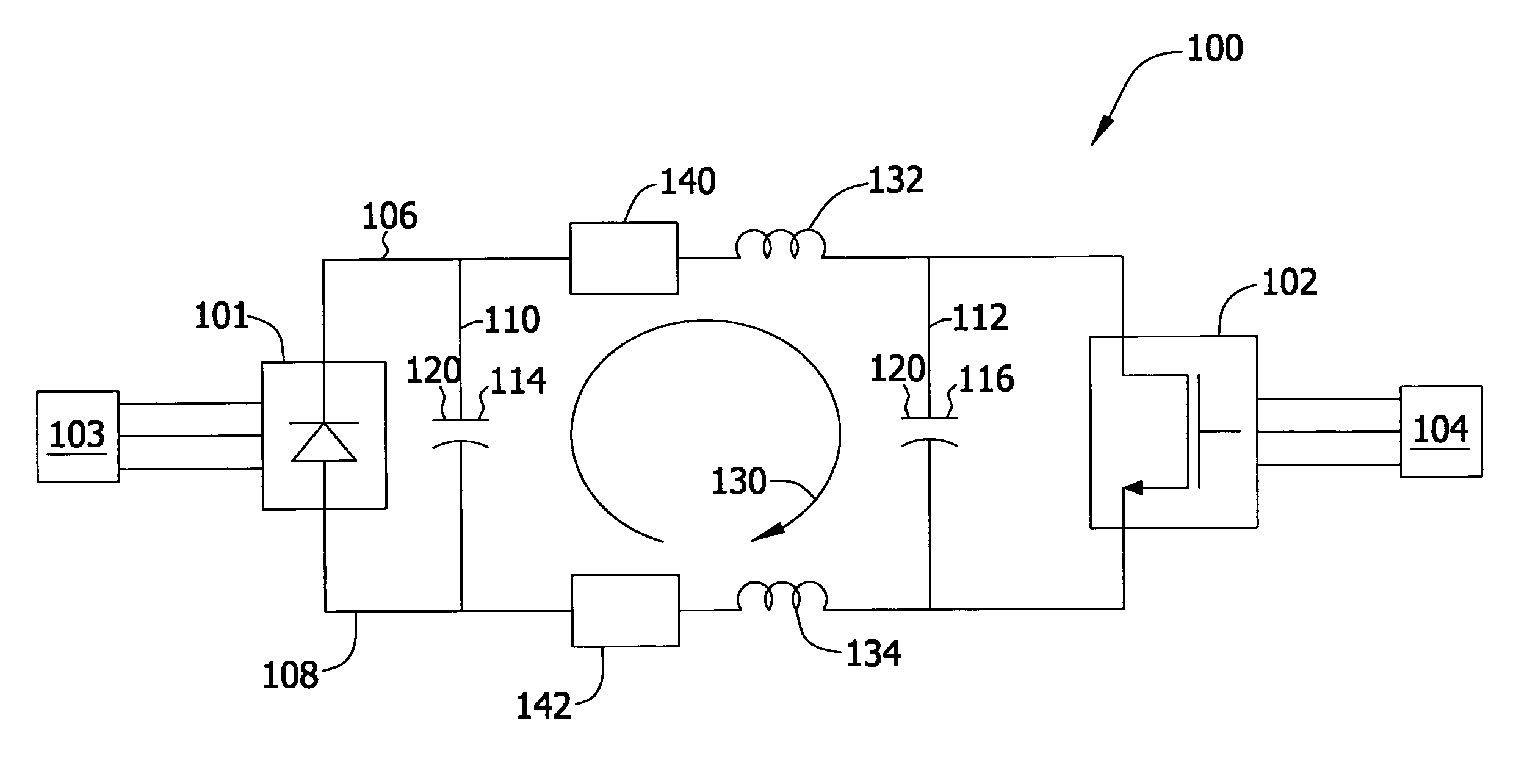
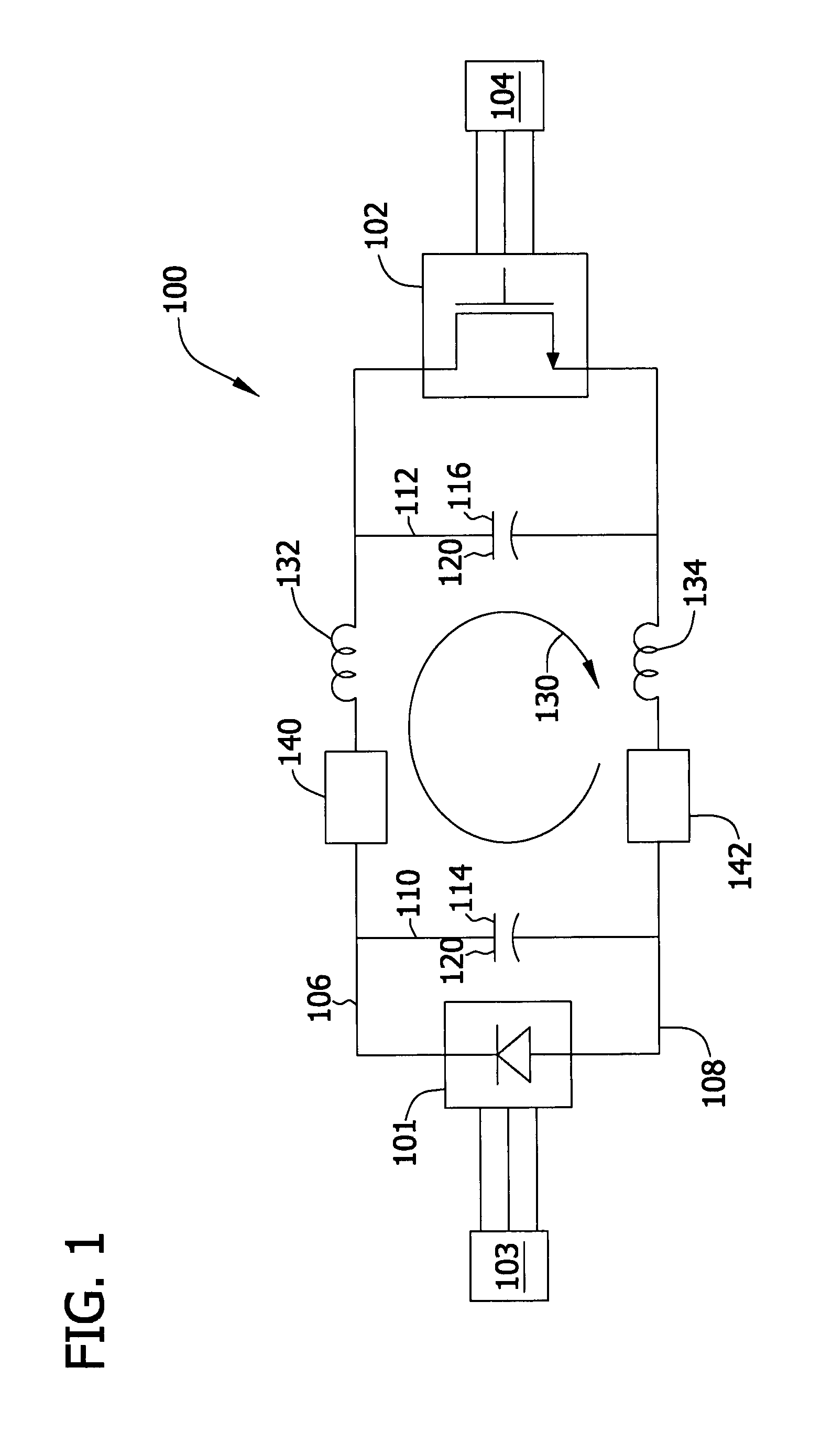
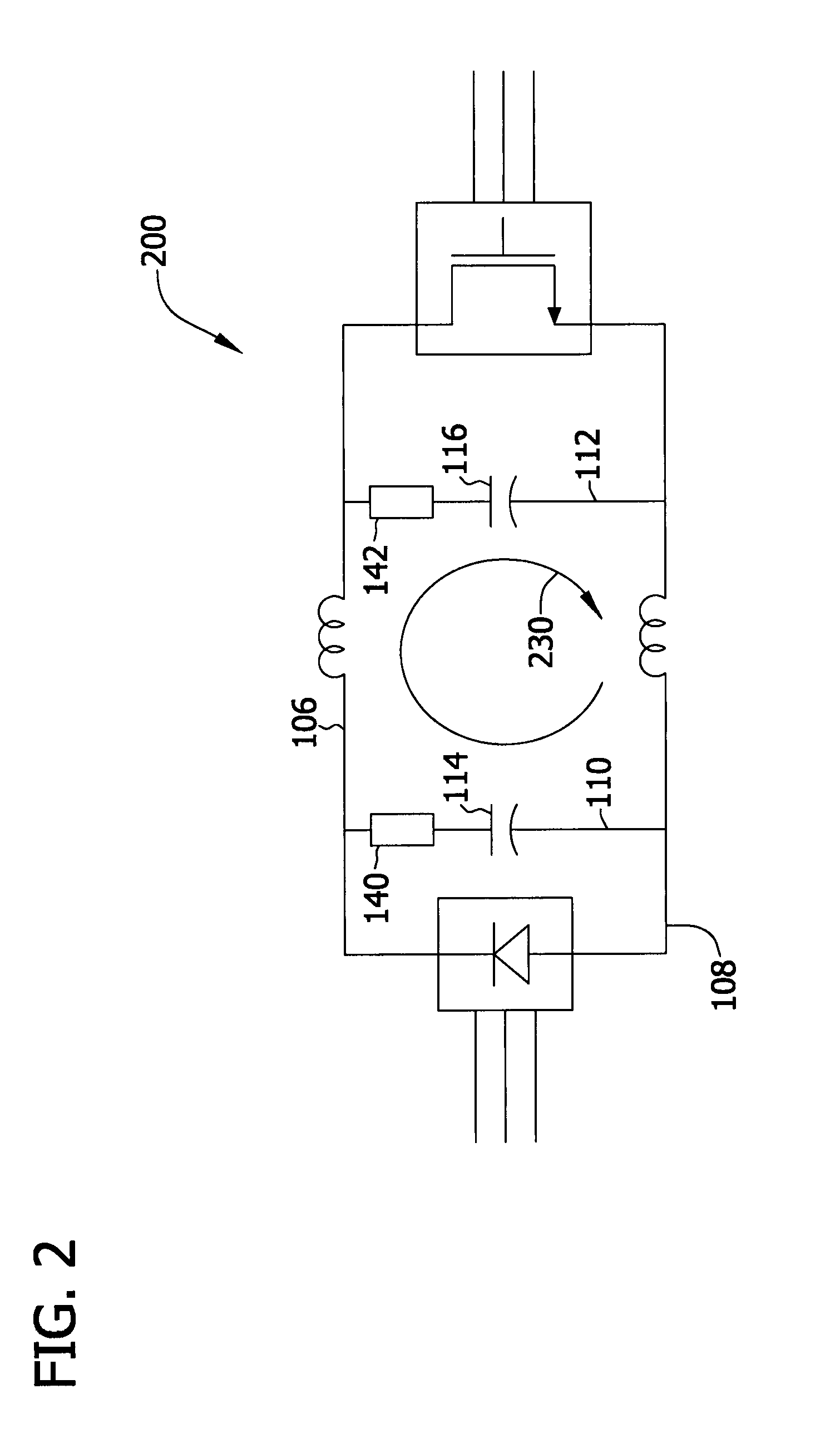
[0015]The methods and systems described herein facilitate suppressing resonances in power converters. Power converters including distributed direct current (DC) links may produce non-trivial inductances and may effectively act as inductor-capacitor (LC) circuits with corresponding resonant frequencies. Damping resistors are included at various locations within the power converter to facilitate suppressing the resonances produced by effective LC circuits. Suppressing resonances using the systems and methods described herein facilitates stabilizing operation of the power converter, and facilitates reducing the likelihood of damage to and / or malfunction of the power converter.
[0016]FIG. 1 is a schematic diagram of an exemplary power converter 100. In the exemplary embodiment, power converter 100 is a non-reversible, or unidirectional, power converter that includes an input stage 101 that receives alternating current (AC), and an output stage 102 that outputs AC. More specifically, in t...
PUM
 Login to View More
 Abstract
Description
Claims
Application Information
 Login to View More