

Method of controllably directing a device into a human vessel
a controllable and human-vessel technology, applied in the field of surgical procedures, can solve the problems of excessive radiation exposure, increased contrast volume, and increased catheter manipulation
- Summary
- Abstract
- Description
- Claims
- Application Information
AI Technical Summary
Benefits of technology
Problems solved by technology
Method used
Image

Examples
Embodiment Construction
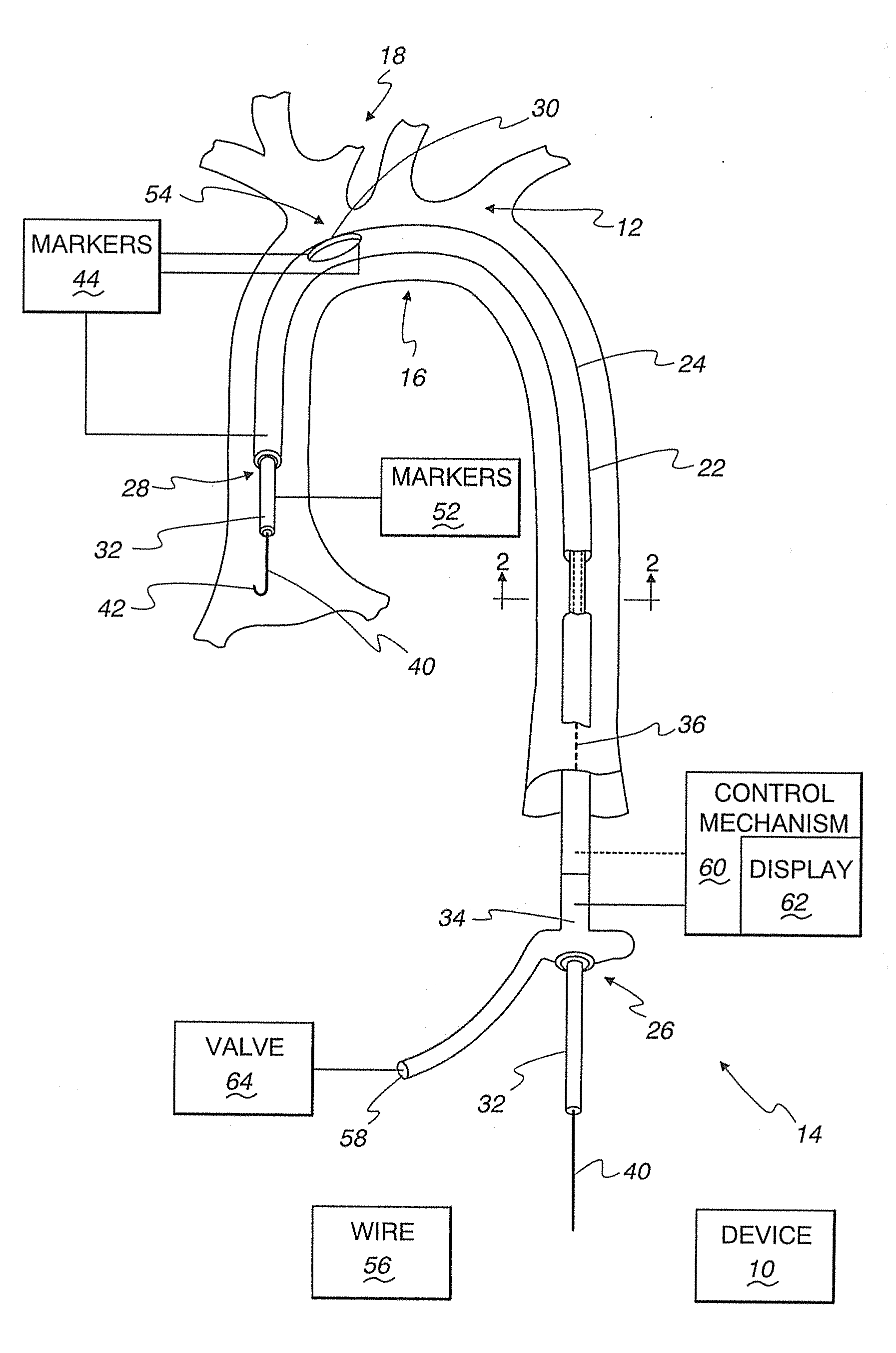
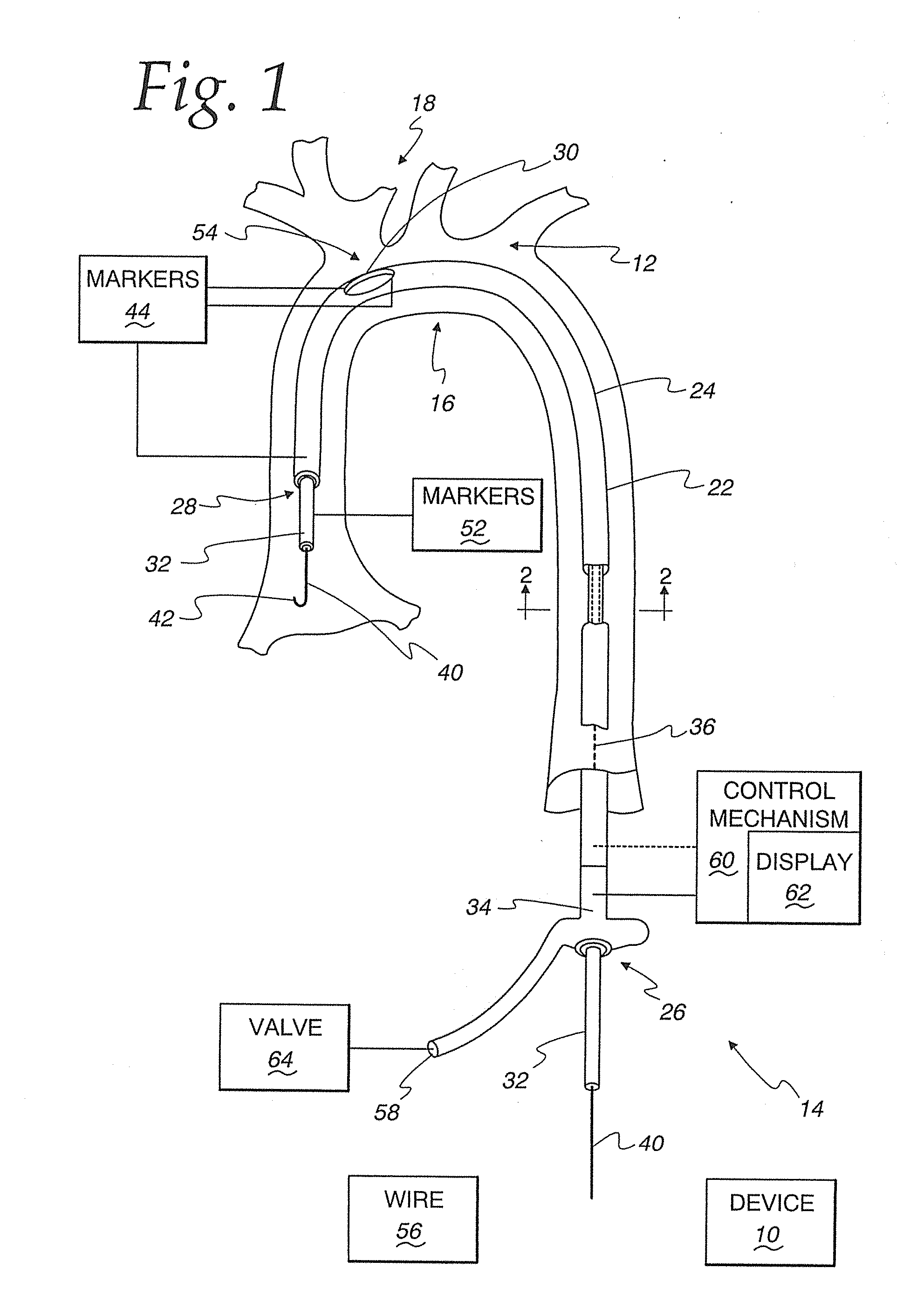
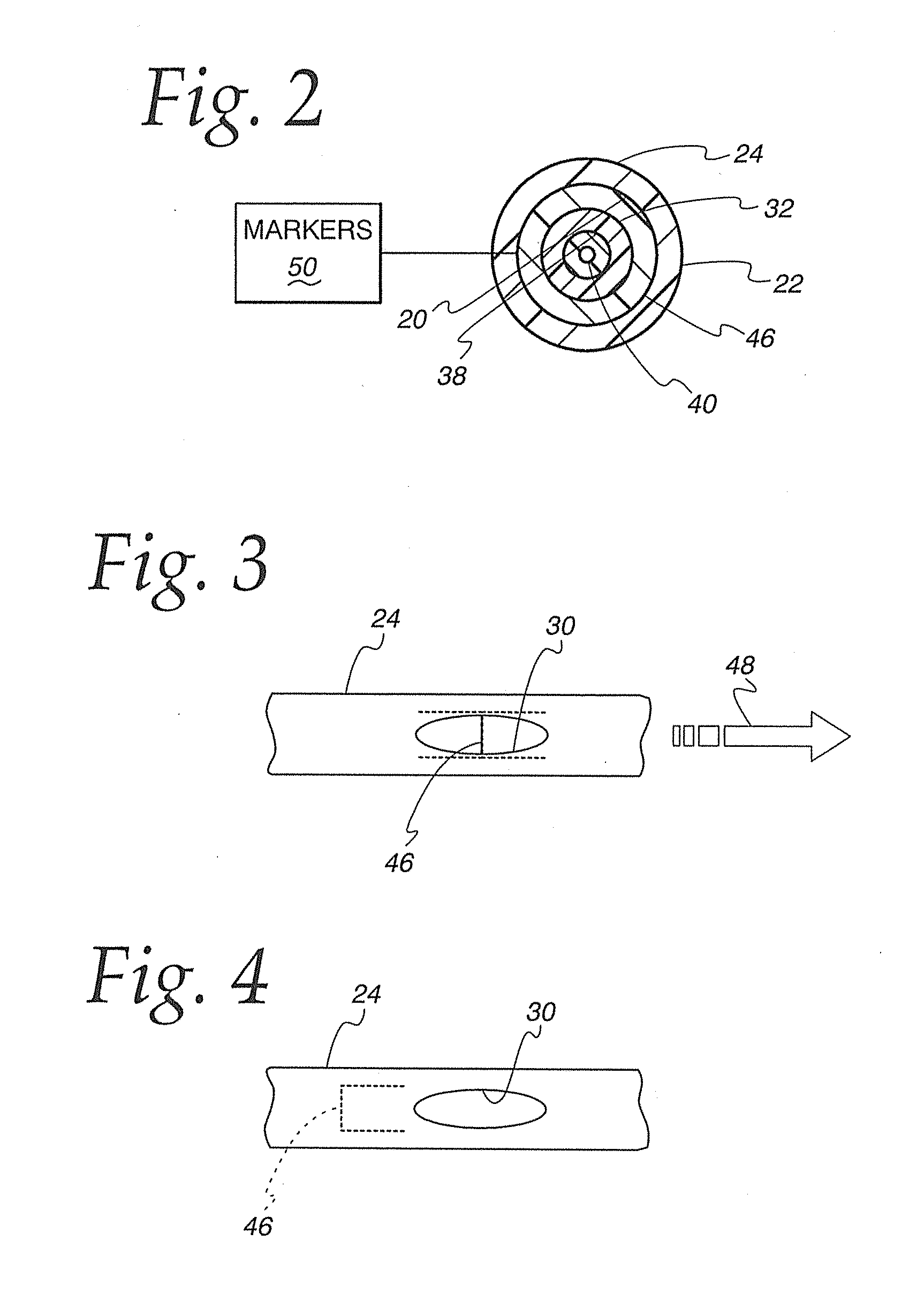
[0037]Referring initially to FIGS. 1-4, one form of system for controllably directing a device 10 to a target site in a vessel network 12 in a human body, is shown generally at 14. It should be understood that the system 14 is usable in any human or non-human vessel network, but has particular utility in the region of the aortic arch at 16, wherein the target site is in one or more of the vessels at 18 leading to a patient's head or neck.
[0038]Further, the nature of the device 10 is not limited other than by the fact that it is desirably introducible into a passageway 20 bounded by a tubular wall 22 on a tubular component 24. The tubular wall 22 has a length between proximal and distal ends 26, 28, respectively. An elongate aperture 30 is formed through the tubular wall 22 between the ends 26, 28.
[0039]The system 14 further includes an introducing member 32. The introducing member 32 and tubular component 24 are placed in an operative relationship with at least a portion of the intr...
PUM
 Login to View More
 Abstract
Description
Claims
Application Information
 Login to View More