Aircraft vapour trail control system

US20150285158A1Active Publication Date: 2015-10-08ROLLS ROYCE PLC
7 Cites 13 Cited by

Patent Information

Authority / Receiving Office
US · United States
Current Assignee / Owner
Publication Date
2015-10-08

Smart Images

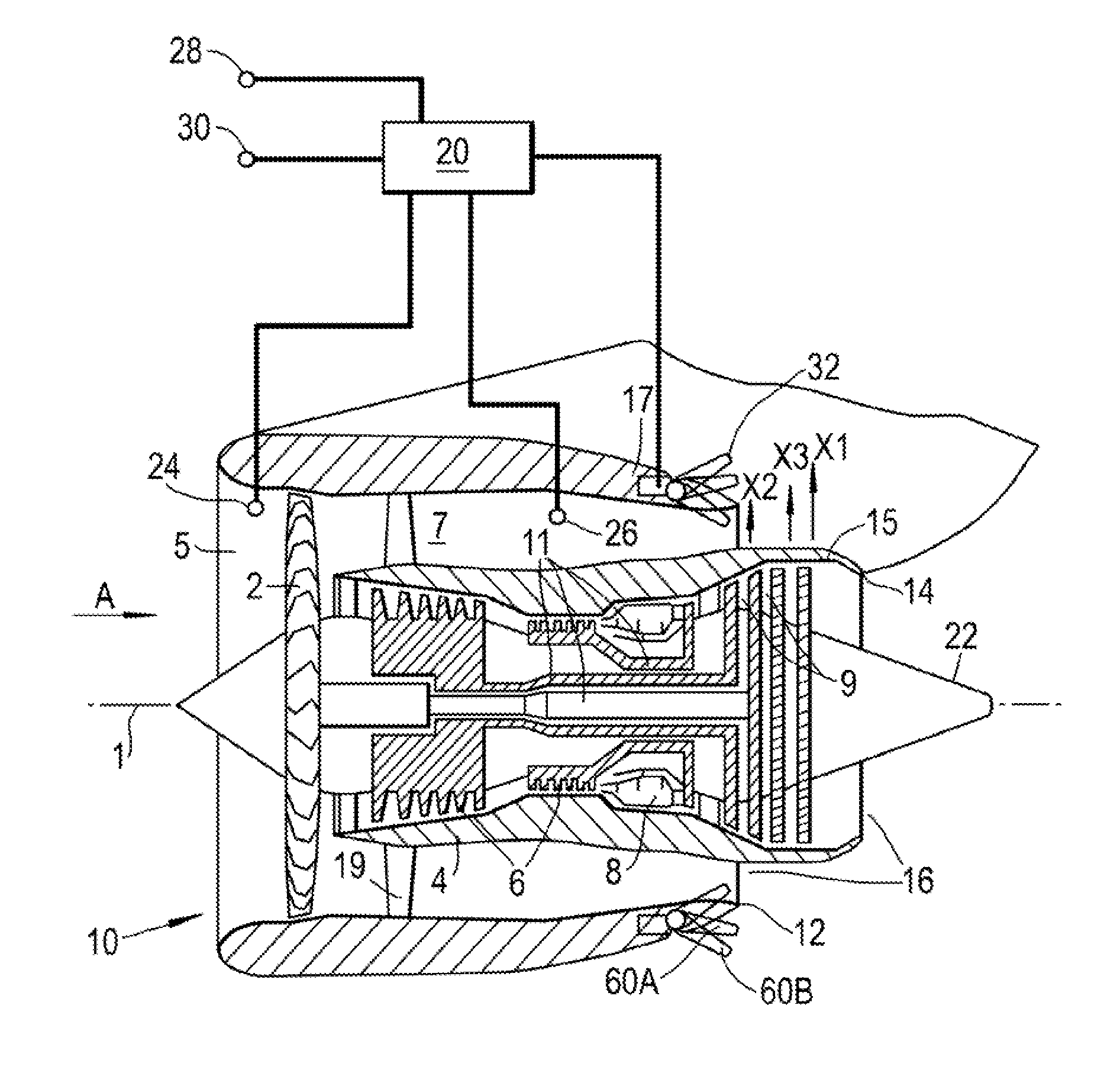
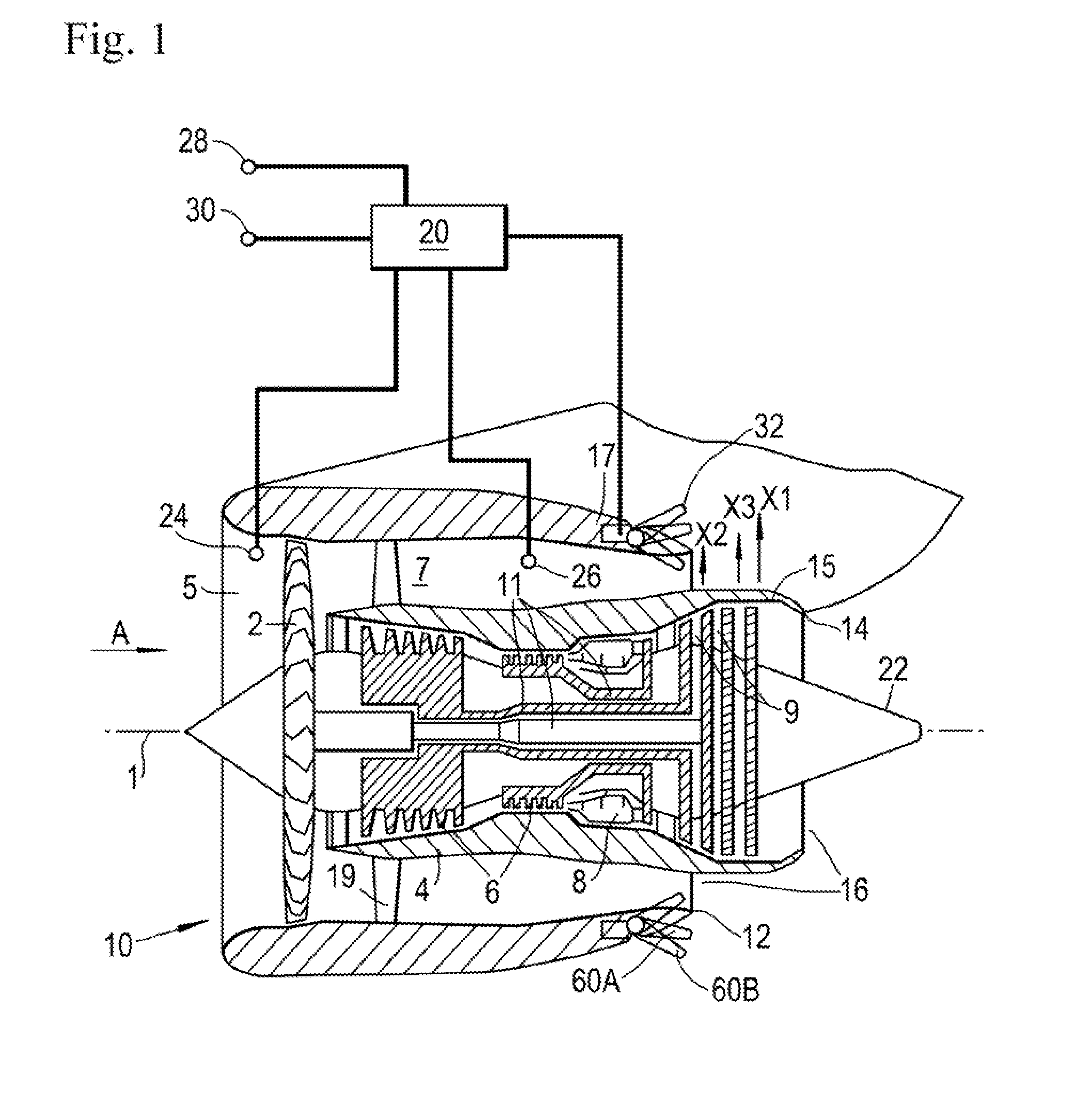
  • Figure 1
    Figure 1
  • Figure 2
    Figure 2
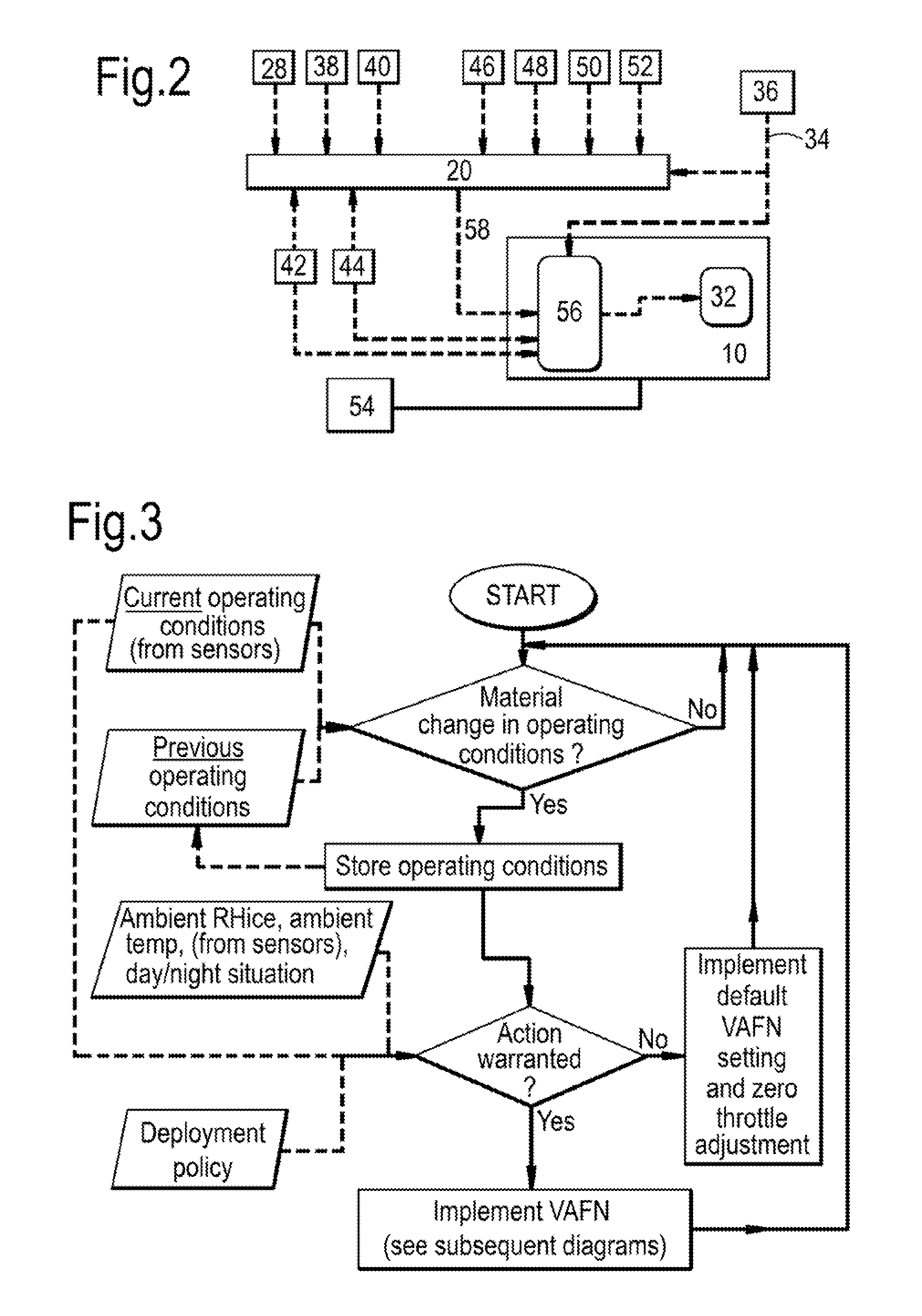
  • Figure 3
    Figure 3
Patent Text Reader

Abstract

The invention concerns an aircraft propulsion control system in which a gas turbine engine has an actuable flow opening for control of flow to or from a portion of the engine. One or more sensor is arranged to sense a condition indicative of vapour trail formation by the exhaust flow from the engine. A controller is arranged to control actuation of the flow opening so as to reduce the efficiency of the engine upon sensing of said condition by the one or more sensor. In one example, the flow opening is a variable area fan nozzle.
Need to check novelty before this filing date? Find Prior Art

Description

BACKGROUND OF THE INVENTION

[0001] The present invention relates to aircraft propulsion systems, and more particularly to control systems for aiding the prevention of the formation of contrails.

[0002] Contrails, also known as condensation trails or vapour trails, are line-shaped ice-clouds that appear behind aircraft under certain circumstances. The formation of a contrail depends on a number of factors, including: ambient temperature, humidity and pressure; the efficiency of the aircraft's engines; and the properties of the fuel burned in the engines.

[0003] The term “contrail factor” is used herein to refer to the gradient of a line representing the mixing of engine exhaust air with ambient air, when plotted on a chart using water-vapour partial pressure as the y-axis and temperature as the x-axis. A reduction in an engine's contrail factor reduces the range of ambient conditions under which the engine can form a contrail. Alternatively, at a particular ambient condition (characterised...

Examples

Embodiment Construction

[0033]In essence this invention achieves a contrail suppression effect by selectively altering the total efficiency of the engine, thus decreasing the threshold ambient temperature below which a contrail can form, at a given level of ambient humidity. That is to say, when contrail suppression is operative, the contrail formation requires colder ambient air and so takes place under a smaller range of circumstances.

[0034]Variable area fan nozzles (VAFNs) have been previously considered for managing fan flutter and for reducing noise, for example as described in European Patent Application 09252067.5 (published as EP2184480), in the name of Rolls-Royce plc. In prior art applications, the VAFN is opened to avoid flutter during the take-off roll, and opened to reduce jet and fan noise just after take-off whilst overflying noise sensitive communities. In contrast, examples of the invention described below propose the use of a VAFN to implement a reduction in engine total efficiency in ord...