Additional rinse aids and salt were still needed; however, it did not take long before all-in-one tablet solutions were available on the market.
Despite the fact that most of the practical aspects of cleaning results have been improved, there are still performance issues with the ADW.
In addition, spotted glasses and the need for towel
drying dishes are almost accepted flaws of the automatic dishwasher.
Research has shown that the main reason these problems exist is that all cleaning compositions in the tablet are released at the same time.
Some cleaning compositions counteract or are not fully compatible with each other, leaving the full potential cleaning performance unmet.
As shown, the temperature and duration values between pre-wash and main wash cycles often overlap making it difficult to distinguish between these cycles.
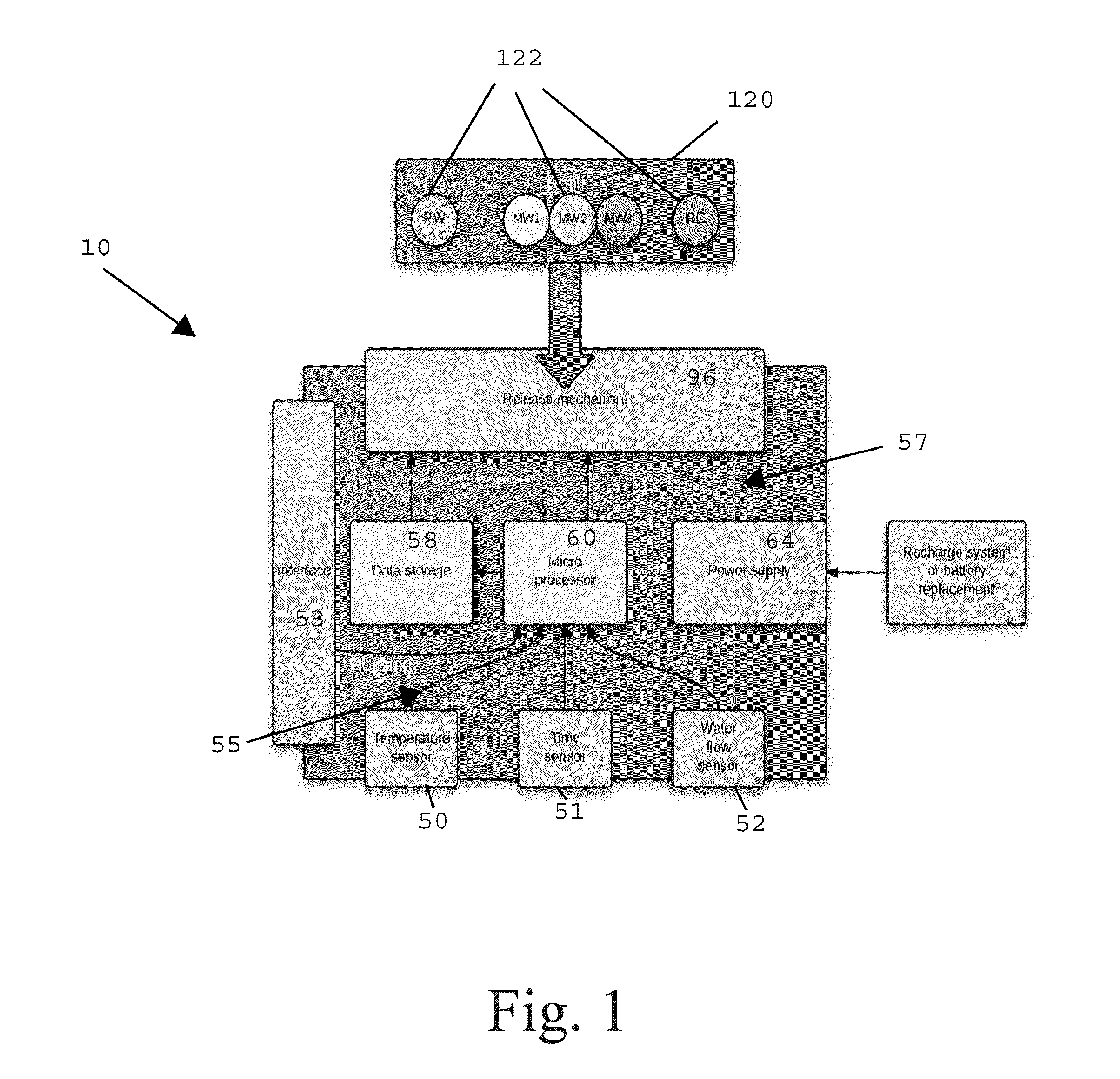
The challenge for wash program sensing is determining what parameters to measure in order to clearly distinguish between the wash cycles.
With temperature you can follow the progress of heated and cold cycles; however, the
warm water inlet in North America vs. the cold inlet in Europe as well as overlapping temperature profiles of different cycles can present a problem.
However, it will not distinguish a pre-wash cycle from a main wash cycle.
Since rotation of the spray arms is typically controlled by
water flow, the added weight of a sensor could affect performance.
However, the placement of the sensor will be essential and not preferred to be left to the
consumer.
This approach has similar drawbacks in that it relies on the
consumer to close the dosing chamber door even though cleaning composition is not placed inside.
However, these are so weak that you would have to place the sensor very close to the source (e.g. 10 cm).
In addition, not all ADW's use solenoid valves.
However, the device will have to be placed directly in front of the dosing chamber requiring placement by the
consumer which is not preferred.
To conclude, most of the sensor options can be effective in detecting cycle transitions, but not so effective distinguishing cycles from one another.
While a combination of sensors improves the ability to effectively distinguish cycles, the overlapping cycle characteristics across ADW machines makes it difficult to distinguish all cycles.
For instance, it is impossible for a
sensor system to predict whether a second or third hot rinse cycle will follow a first hot rinse cycle.
Similarly some wash cycle programs have a longer hot prewash cycle than the main wash cycle of wash cycle programs having zero pre-wash cycles causing the device to mistakenly identify the long pre-wash as a main wash and prematurely release the main wash composition during the prewash cycle.


 Login to View More
  Login to View More