
Method and apparatus for measuring a packet throughput in wireless communication system
a wireless communication system and packet throughput technology, applied in the field of wireless communication, can solve the problems of inability to provide a clarified definition of measurement time and inability to correct measurement, and achieve the effect of improving service quality of the whole system and efficient control of status link wireless resources
- Summary
- Abstract
- Description
- Claims
- Application Information
AI Technical Summary
Benefits of technology
Problems solved by technology
Method used
Image

Examples
Embodiment Construction
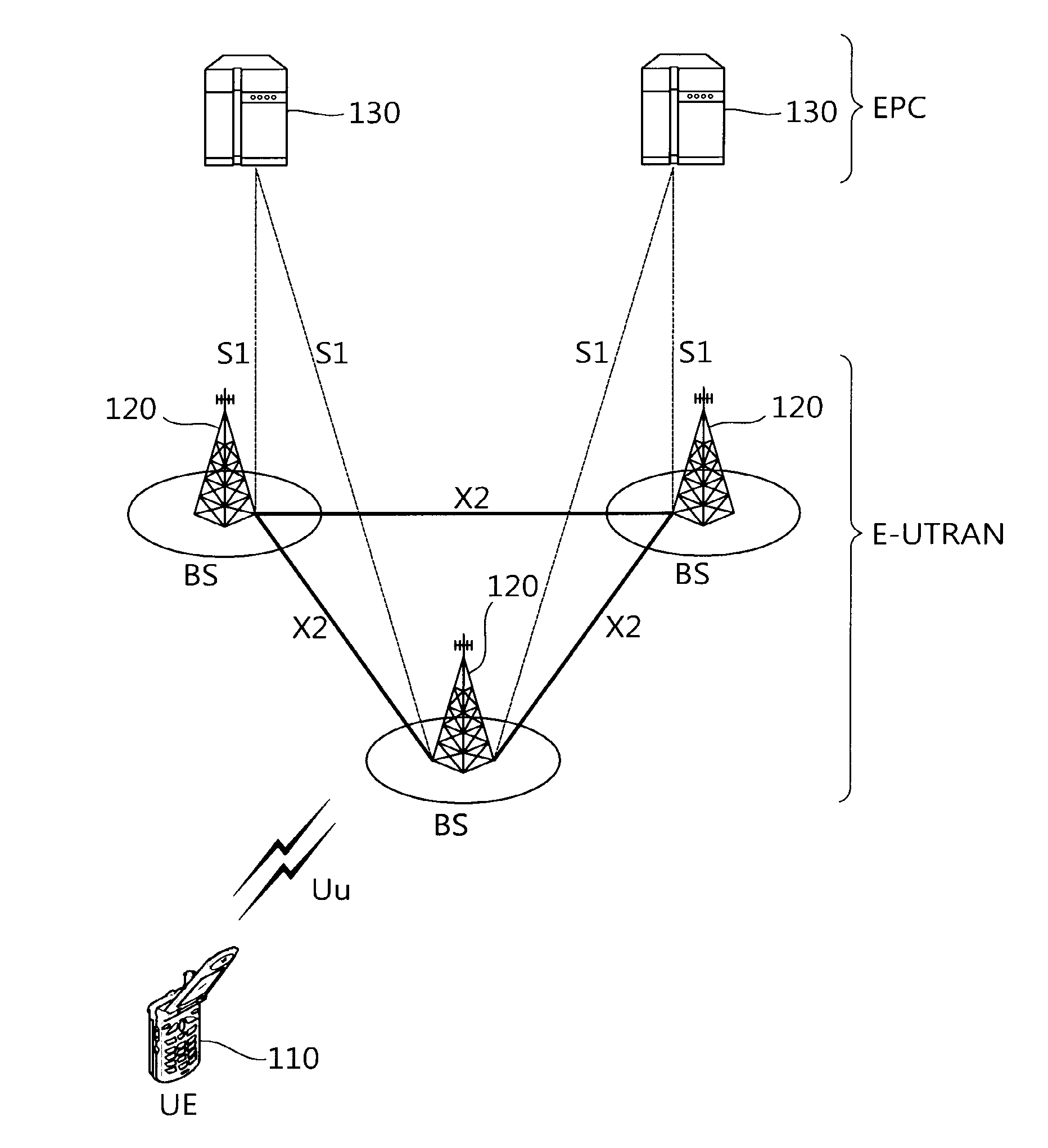
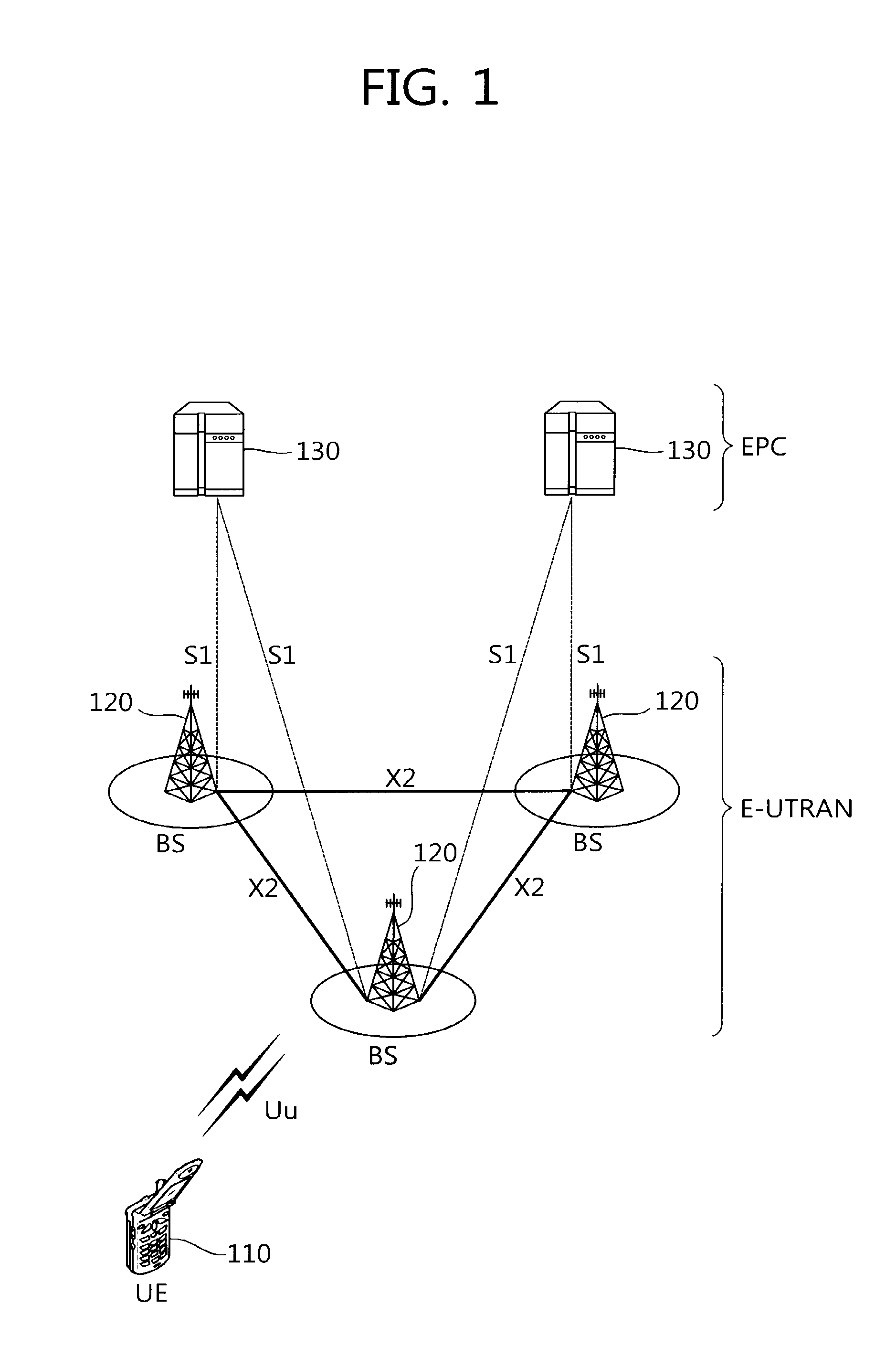
[0033]FIG. 1 shows a wireless communication system to which the present invention is applied. The wireless communication system may also be referred to as an evolved-UMTS terrestrial radio access network (E-UTRAN) or a long term evolution (LTE) / LTE-A system. First, the LTE system architecture may generally consist of E-UTRAN (Evolved UMTS Terrestrial Radio Access Network) and EPC (Evolved Packet Core).
[0034]The E-UTRAN includes at least one evolved Node-B (eNB) 20 which provides a control plane and a user plane to a user equipment (UE) 10. The UE 10 may be fixed or mobile, and may be referred to as another terminology, such as a mobile station (MS), a user terminal (UT), a subscriber station (SS), a mobile terminal (MT), a wireless device, etc. The eNB 20 is generally a fixed station that communicates with the UE 10 and may be referred to as another terminology, such as a base station (BS), a base transceiver system (BTS), an access point, etc.
[0035]The eNBs 20 are interconnected by...
PUM
 Login to View More
 Abstract
Description
Claims
Application Information
 Login to View More