
Crown Molding Protractor
a protractor and crown molding technology, applied in the field of crown molding protractors, can solve the problems of uneven and unattractive joints in crown molding, time-consuming and unreliable process, and difficult installation of crown molding and other types of decorative molding and trim, and achieve the effect of facilitating and guiding adjustment, quick and accurate calculation of spring and wall angles, and reducing labor intensity
- Summary
- Abstract
- Description
- Claims
- Application Information
AI Technical Summary
Benefits of technology
Problems solved by technology
Method used
Image

Examples
Embodiment Construction
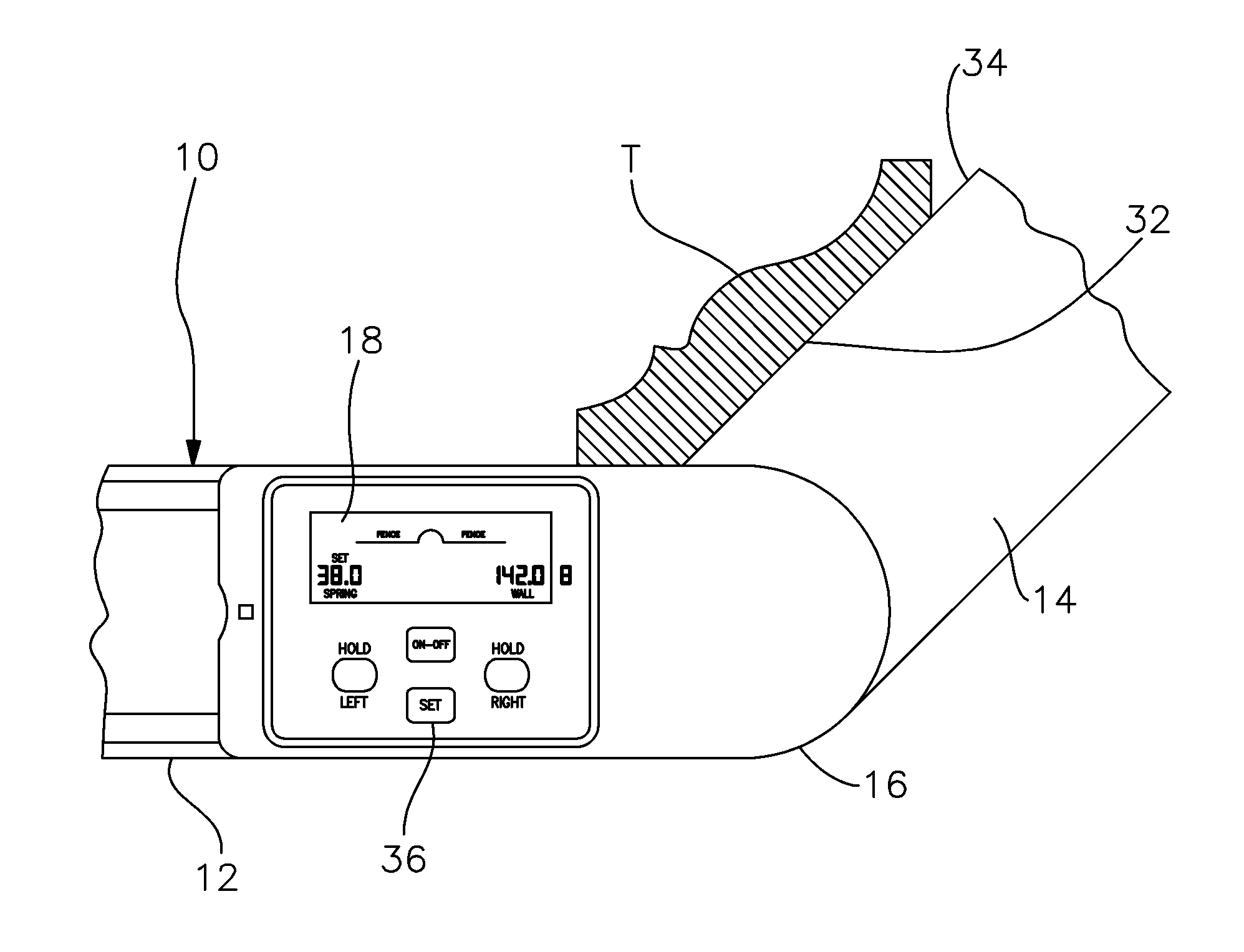
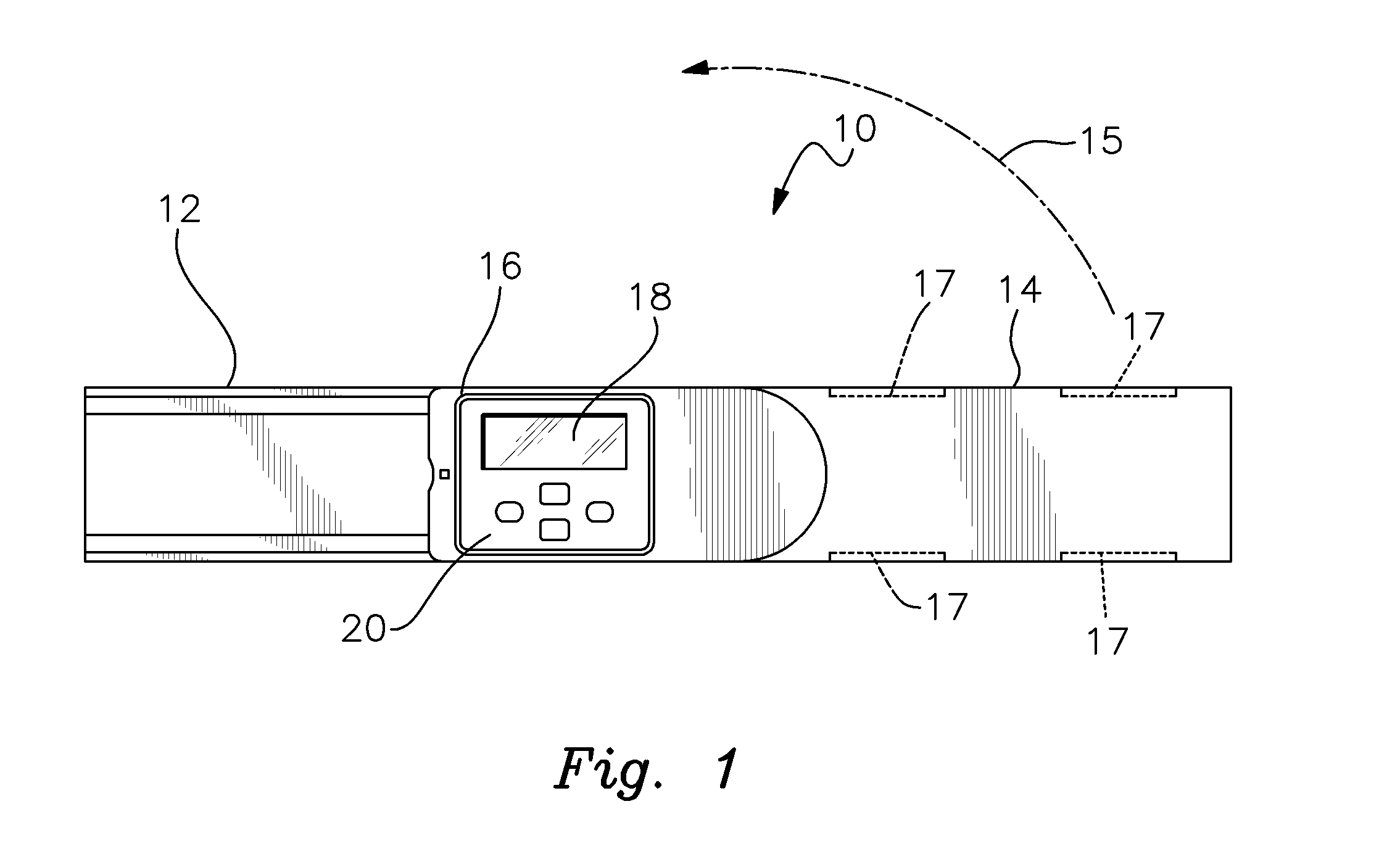
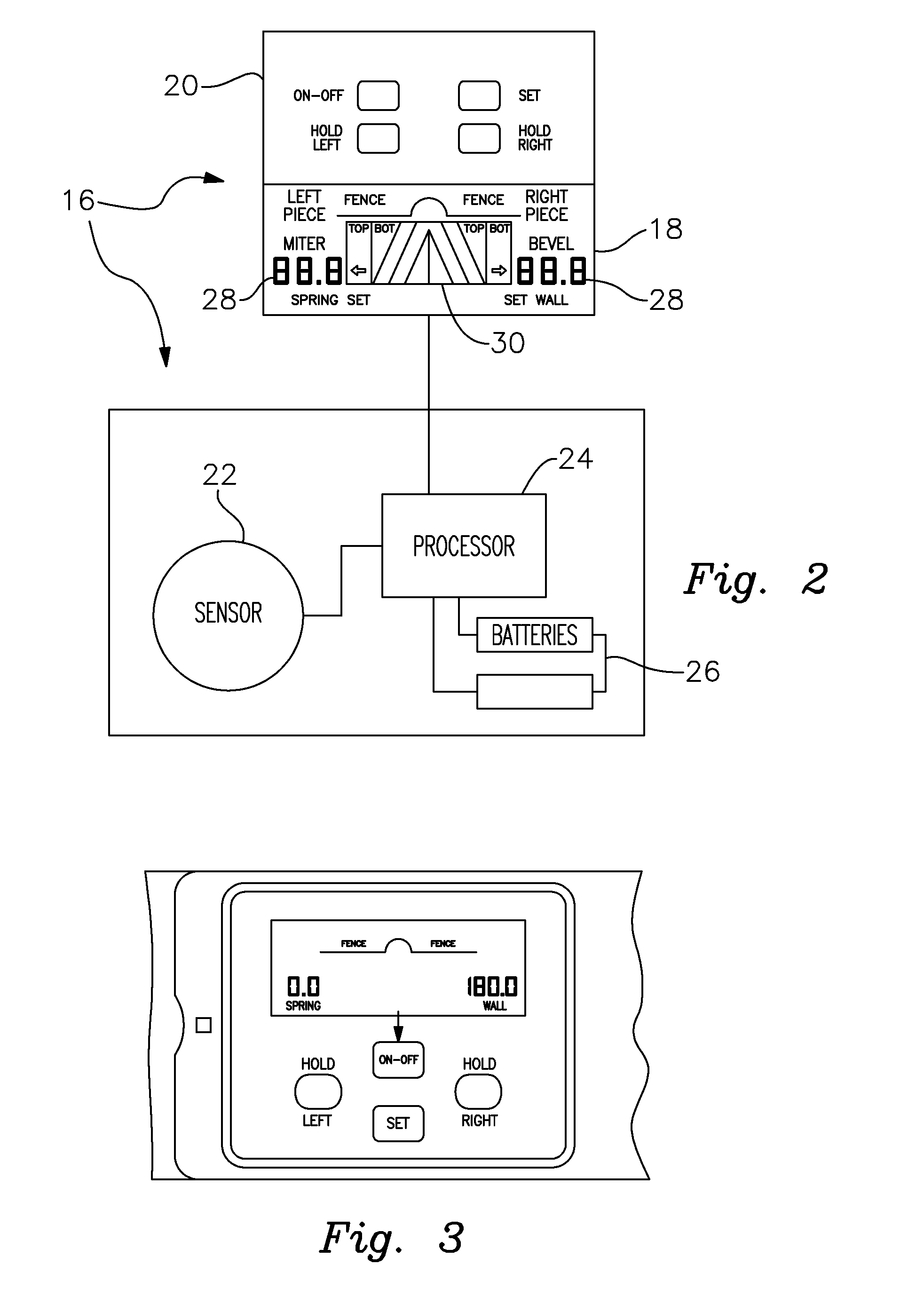
[0043]There is shown in FIG. 1 a protractor 10 that is used for both measuring both the spring and wall angles and for calculating and setting the corresponding miter and bevel angles needed to install adjoining pieces of molding and trim in crown molding and other carpentry applications. The particular environment and trim or molding application in which protractor 10 is employed are not limitations of this invention. Nonetheless, the protractor is especially useful for determining and setting the complex saw cut angles that must be formed in adjoining pieces of molding or trim used in crown molding and analogous applications where adjoining walls meet at a corner. As used herein, the terms “trim” and “molding” should be understood as being used interchangeably. Complex angles in adjoining pieces of trim are often required when those pieces meet at an inside or outside corner of a room or otherwise where two adjoining walls meet. The present invention enables both the wall angle an...
PUM
 Login to View More
 Abstract
Description
Claims
Application Information
 Login to View More