
Novel bis-amide derivative and use thereof
a technology of bis-amide and derivatives, which is applied in the field of bis-amide derivative compounds, can solve the problems of alisporivir test stoppage, toxicity, resistance, sustained virological response rates, etc., and achieves the effect of effective inhibition of the activity of an isomerase, low dissociation rate, and increased duration of inhibitory
- Summary
- Abstract
- Description
- Claims
- Application Information
AI Technical Summary
Benefits of technology
Problems solved by technology
Method used
Image

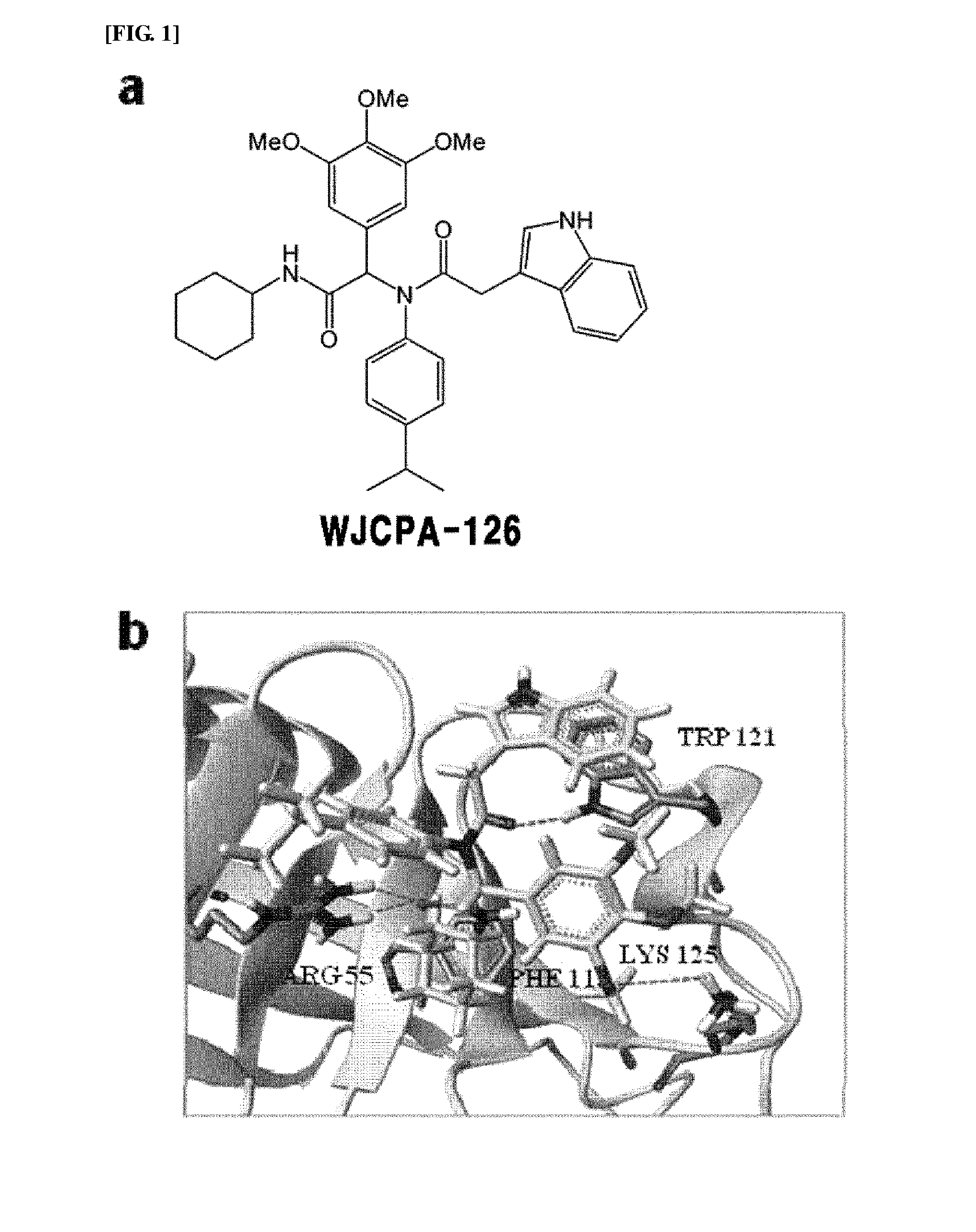
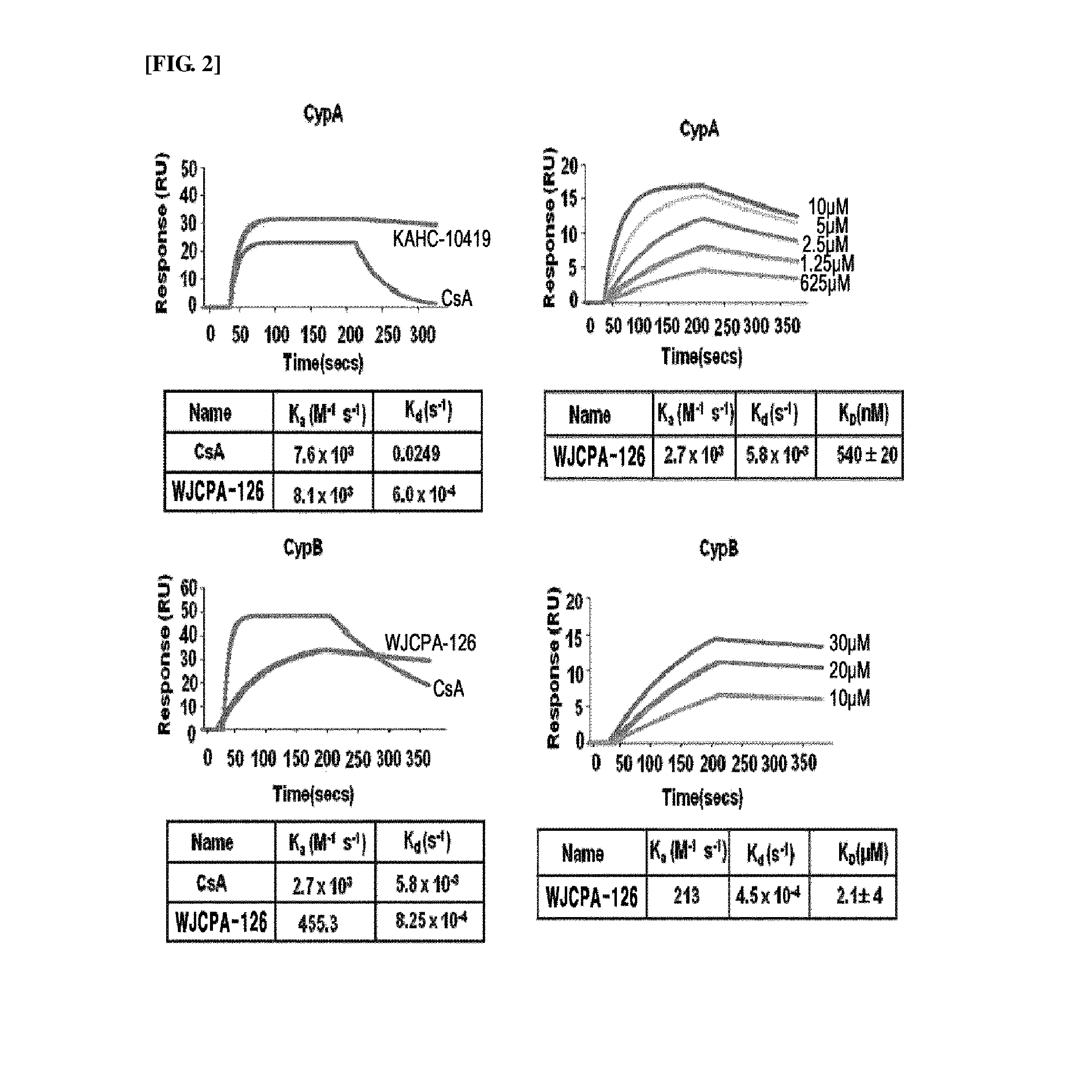
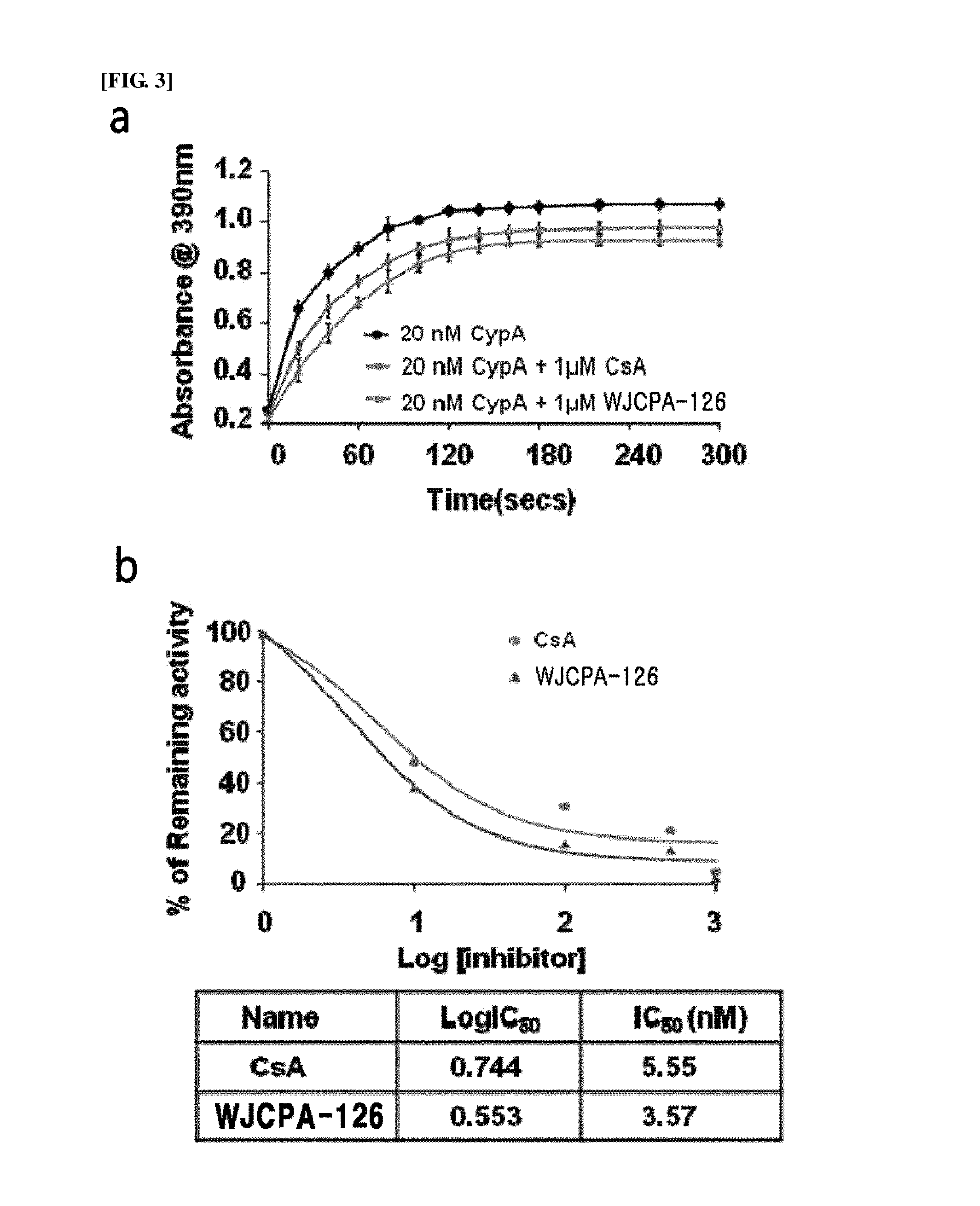
Examples
example 1
Synthesis of Bis-Amide Derivative Compounds (WJCPA-001 to WJCPA-135)
[0223]The method of synthesizing bis-amide derivatives according to the present invention is schematically shown in Reaction Scheme 1 and Formula 2 below.
[0224]Bis-amide derivatives were prepared by Ugi multi-component reaction. The conventional Ugi 4-component condensation reaction includes the in-situ formation of imine as an intermediate from aldehyde (2) and amine (3). The imine further reacts with isocyanide (1) and carboxylic acid (4) to form an intermediate, and subsequently bis-amide derivatives WJCPA-001 to WJCPA-135 were synthesized by rearrangement through acyl transfer (Reaction Schemes 1 and 2). The reagents used in the reactions are shown in Table 2 below.
TABLE 2Isocyanide (R1—NC)1a1b1c1dAldehyde (R2—CHO)2a2b2c2d2e2f2g2h2i2j2k2l2m2nAmine (R3—NH2)3a3b3c3d3e3f3g3h3i3j3k3l3m3nCarboxylic acid (R4—COOH)4a4b4c4d4e4f4g4h4i4j4k4l4m4n4o4p4q4r4s4t4u
1.1. N-cyclohexyl-2-[(2-1H-indol-3-yl-acetyl)-phenyl-amino]-2-(3...
example 2
Materials
[0859]Antibodies specific to CypA, GST (glutathione S-transferase), HCV NS5A, STAT1, STAT2, IRF9, OAS1, and ISG15 were purchased from Santa Cruz Biotechnology (Santa cruz, CA, USA). Antibodies to HCV NS5B and NFAT1 were purchased from Enzo life Science (Plymouth Meeting, Pa., USA) and Abcam (Cambridge, Mass., USA), respectively.
[0860]Cyclosporine (CsA) was purchased from Sigma (St. Louis, Mo., USA). Bis-amide derivatives containing WJCPA-126 were synthesized and prepared into 5 mM DMSO solution as a stock solution and stored at −20° C. Recombinant human IFN-α 2A and ribavirin were purchased from Sigma (St. Louis, Mo., USA) and stored at −20° C. Telaprevir was purchased from Selleck Chemicals (Houston, Tex., USA).
example 3
Isolation of Splenocytes from Mice and Cell Culture
[0861]Seven to eight week-old female Balb / c mice were purchased from Orient Bio, Inc. (Sungnam, Korea). Experimental animals were allowed to maintain at a non-pathogenic environment and adapted before the experiment. Experimental mice were sacrificed by dislocation of spine, and the spleens collected therefrom were removed into petri dishes filled with RPMI containing 10% FBS, 100 units / mL of penicillin, and 100 μg / mL of streptomycin. The spleens were dispersed through a nylon mesh to prepare a single cell suspension, and RBC was depleted by using RBC lysis buffer (Sigma, St. Louis, Mo.). Splenocytes were washed and cultured in RPMI complete medium.
[0862]Meanwhile, human liver cancer Huh7 cells were cultured in Dulbecco's modified Eagle's medium (DMEM), which contains a mixture of 10% heat-labile fetal bovine serum (FBS), 100 units / mL of penicillin, 100 μg / L of streptomycin, 1% L-glutamine, and 1× nonessential amino acids (NEAA). Th...
PUM
 Login to View More
 Abstract
Description
Claims
Application Information
 Login to View More