

Base Cutter Blade
a cutter blade and base technology, applied in the field of blades, can solve the problems of cutting work, bearing the brunt of the blade wear, and saving a significant amount of time, and achieve the effects of reducing the amount of material to be discarded or discarded, reducing the amount of material to be discarded, and not dulling as readily
- Summary
- Abstract
- Description
- Claims
- Application Information
AI Technical Summary
Benefits of technology
Problems solved by technology
Method used
Image

Examples
Embodiment Construction
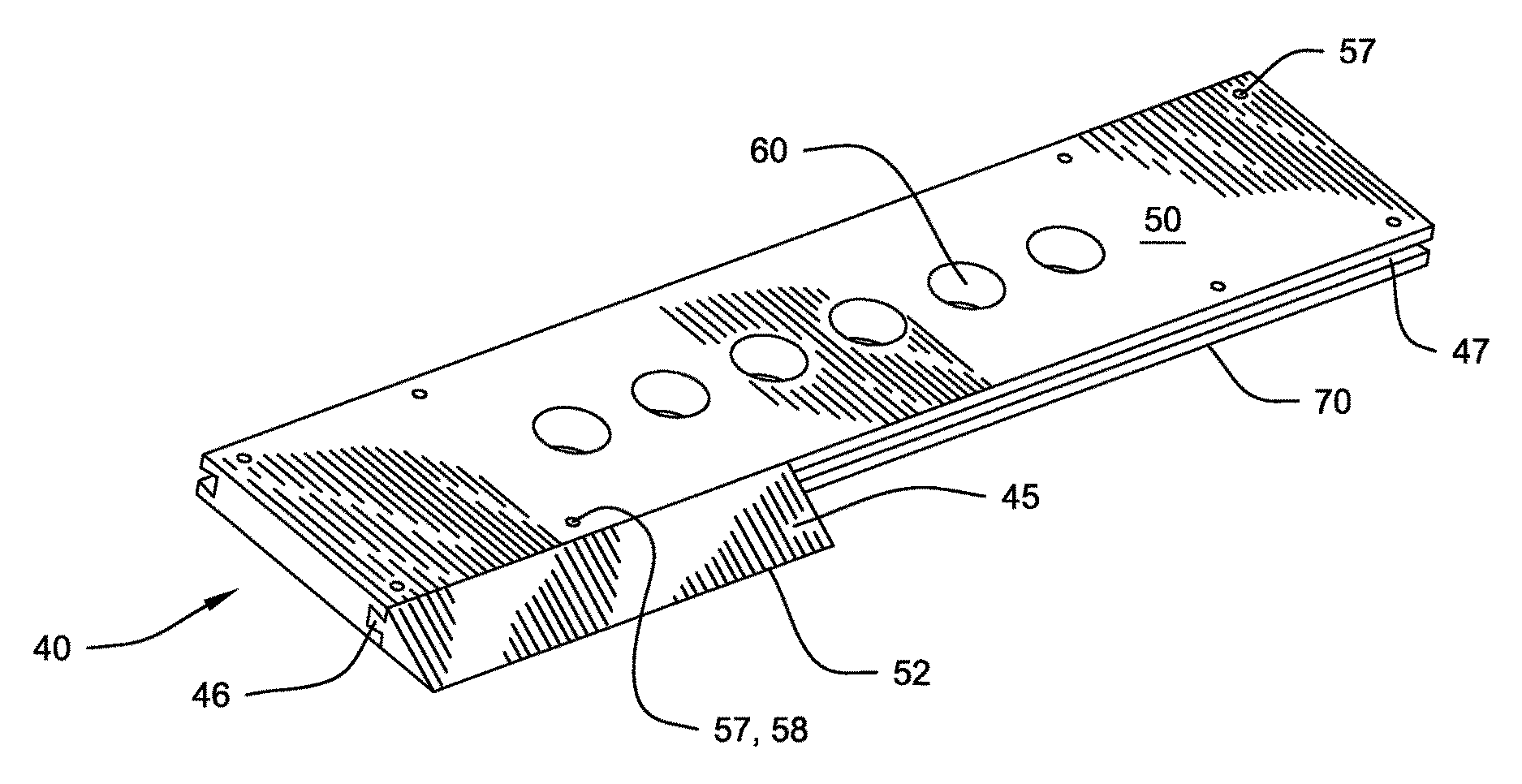
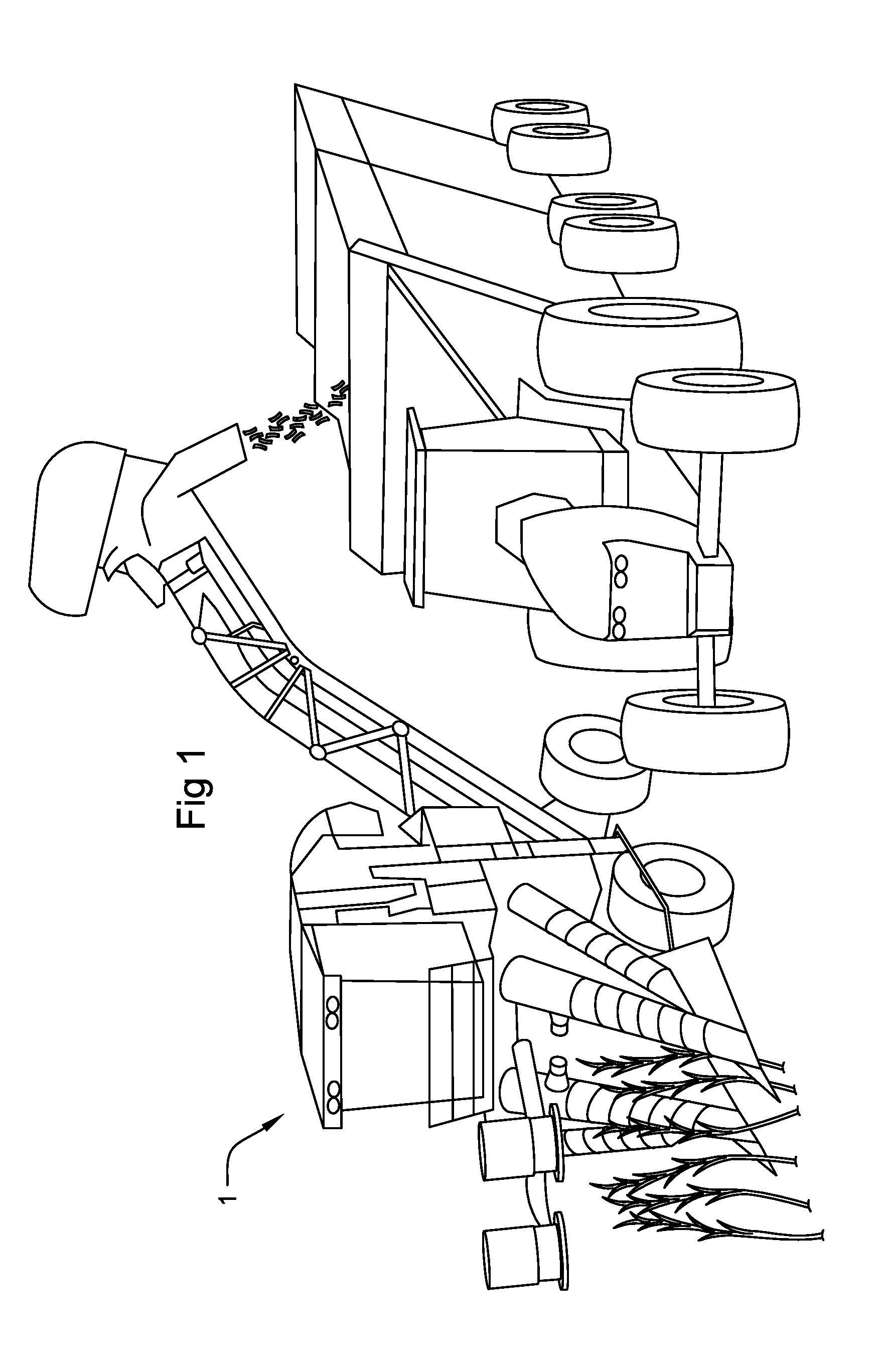
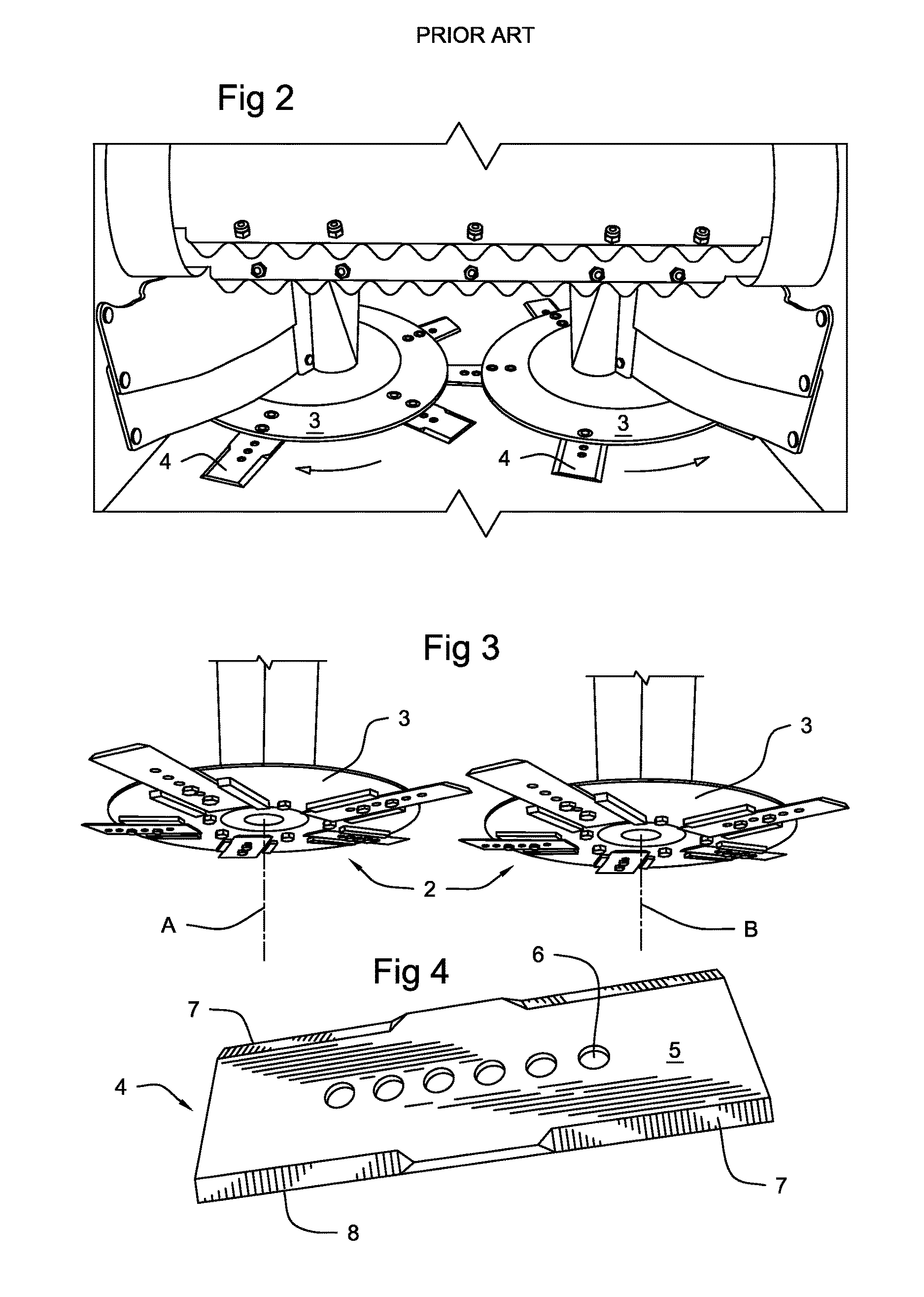
[0023]The invention pertains to base cutter blades for sugar cane harvesters. Harvesters 1 typically include one or more pairs 2 of cutting plates 3. Plates 3 are preferably approximately round and each configured to rotate about separate, substantially parallel axes A, B. Plates 3 typically rotate in opposite directions. Each plate 3 is provided with a plurality of base cutter blades 4. Prior art base cutter blades 4 are typically elongated metal bars 5 with a plurality of mounting holes 6 centrally positioned in bars 5. The opposing longitudinal edges 7 of bars 5 are beveled to create a knife edge 8. Base cutter blades 4 are positioned on plates 3 so that blades 4 extend radially from plates 3. When plates 3 are rotated the ends of blades 4 define a circumference 9 that is greater than the circumference 10 of plates 3. Plates 3 are positioned relative to each other so that circumferences 9 of adjacent plates 3 overlap. However, blades 4 are offset relative to each other so that th...
PUM
 Login to View More
 Abstract
Description
Claims
Application Information
 Login to View More