
Three level neutral point clamped converter with improved voltage balancing
a neutral point clamping and converter technology, applied in the direction of electric variable regulation, process and machine control, instruments, etc., can solve the problems of computational complexity, unfavorable thermal stress of different power semiconductor devices within the npc converter,
Patent Information
- Authority / Receiving Office
- US · United States
- Patent Type
- Applications(United States)
- Current Assignee / Owner
- Publication Date
- 2017-08-03
Smart Images
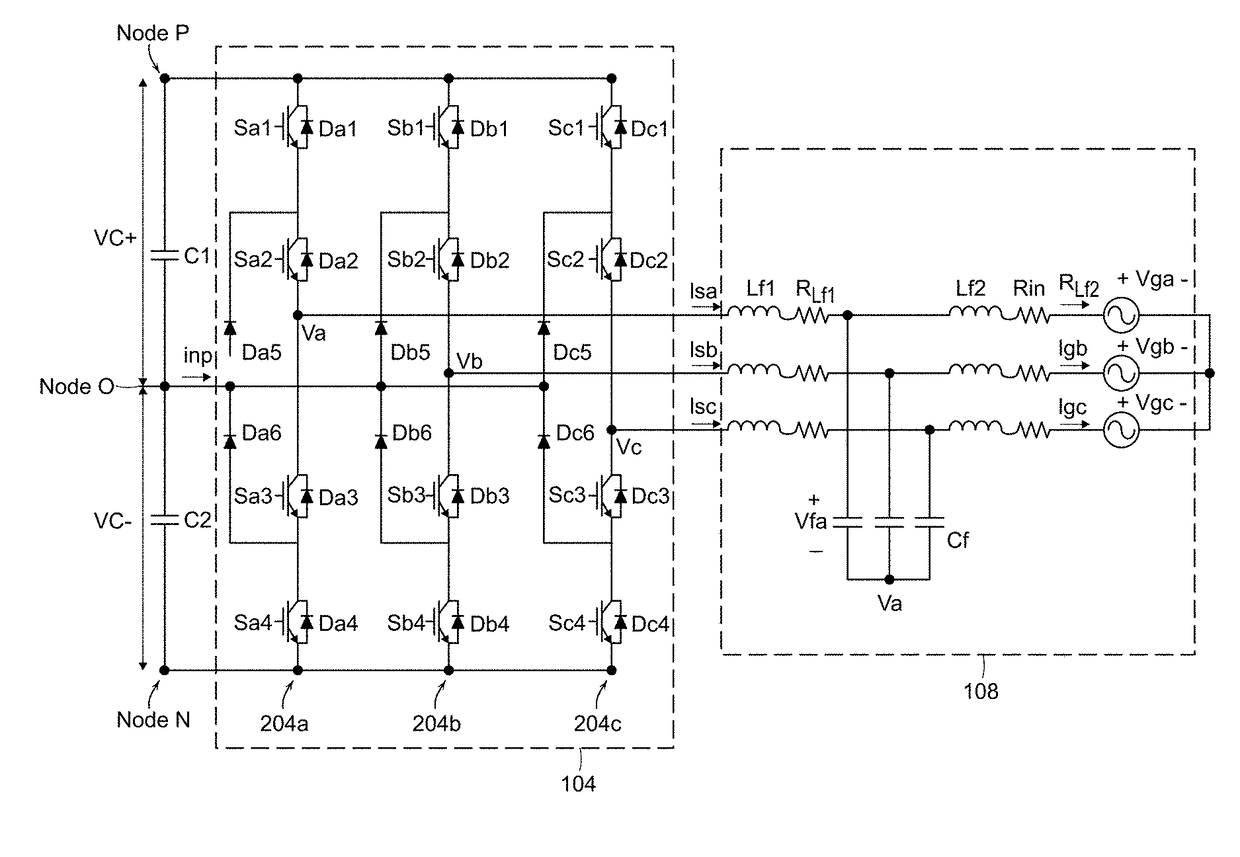
Figure 1 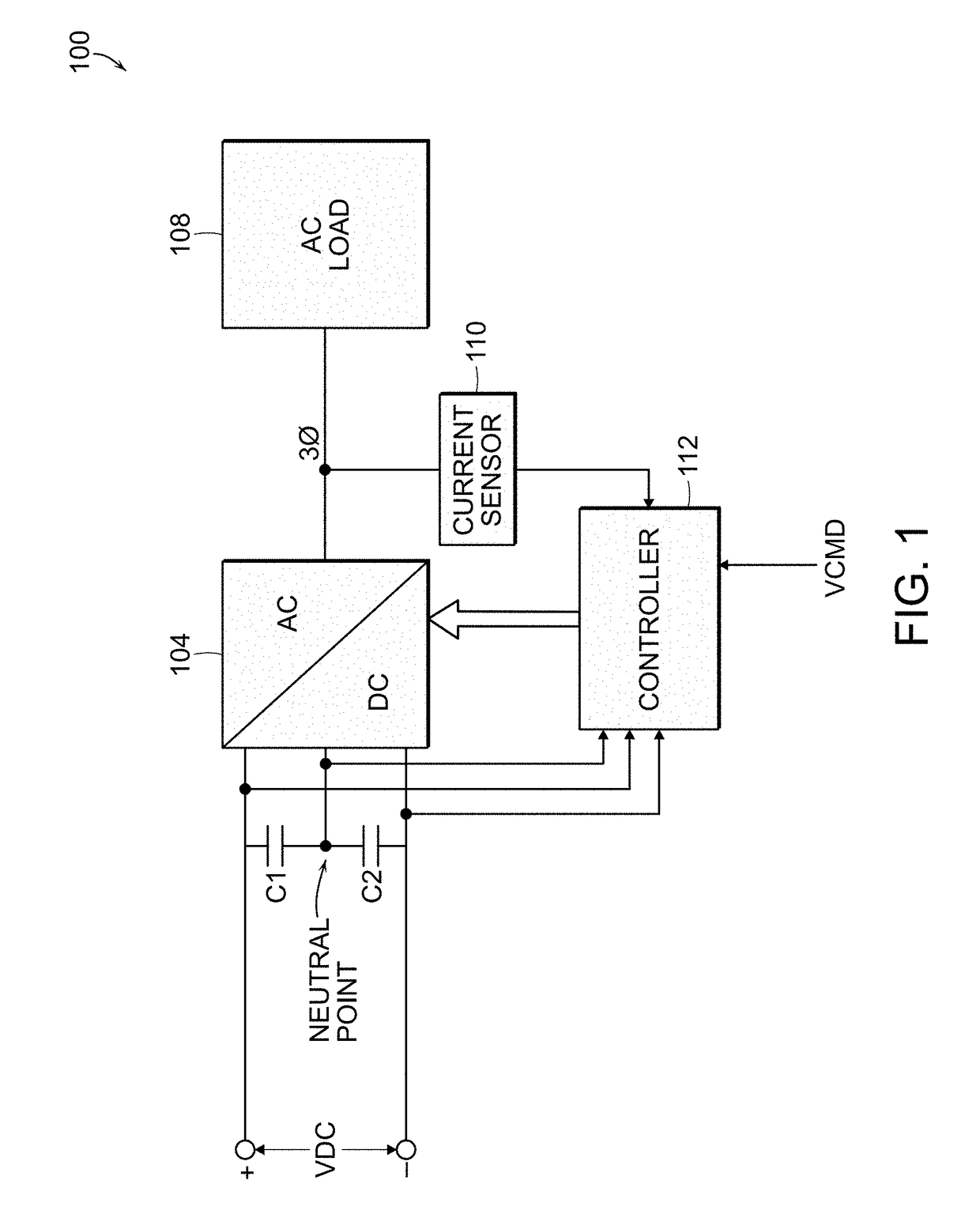
Figure 2 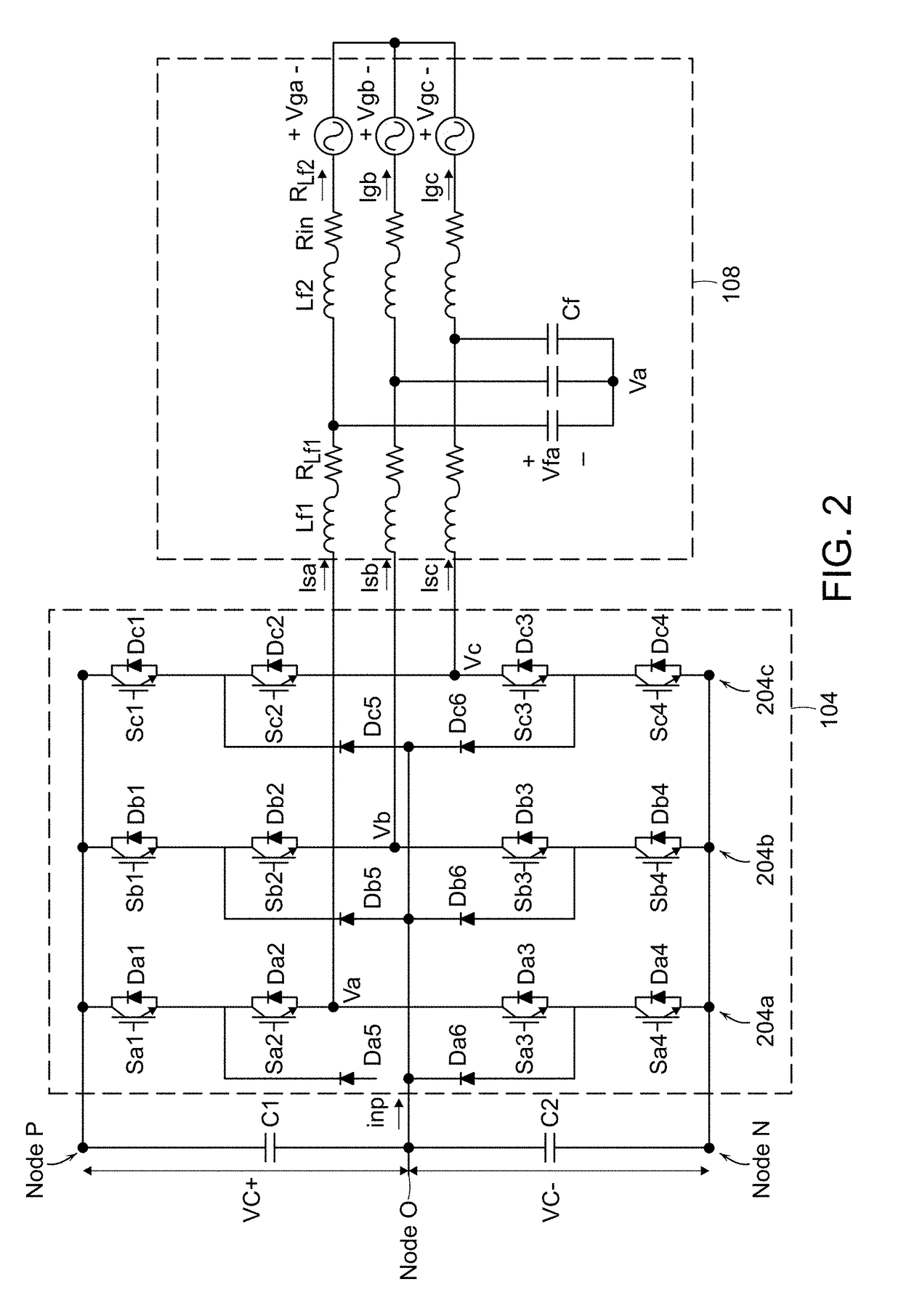
Figure 3
Abstract
Description
BACKGROUND OF THE INVENTION
[0001] Multilevel converters are considered to be a good choice for medium- and high-voltage applications. Prior to the use of multilevel converters, semiconductors needed to be connected in series in order to withstand the high voltages experienced during operation. This series configuration, however, required fast switching to avoid unequal voltage sharing among the devices, which could lead to a breakdown. Multilevel converters, however, have the advantage of clamping the voltages, which prevents the need for fast switching while also providing a smoother output voltage.
[0002] A neutral point clamped (NPC) multilevel converter, typically with three (3) levels, can be used to convert a DC signal to an AC signal or to convert an AC signal to a DC signal. One of the challenges with the NPC three-level converter is that of neutral point (NP) voltage balancing. As is known, the correct operation of an NPC converter requires that the voltages across the respect...
Examples
Embodiment Construction
[0019]In the following detailed description, numerous specific details are set forth in order to provide a thorough understanding of the embodiments of the present invention. It will be understood by those of ordinary skill in the art that these embodiments of the present invention may be practiced without some of these specific details. In other instances, well-known methods, procedures, components and structures may not have been described in detail so as not to obscure the embodiments of the present invention.
[0020]Prior to explaining at least one embodiment of the present invention in detail, it is to be understood that the invention is not limited in its application to the details of construction and the arrangement of the components set forth in the following description or illustrated in the drawings. The invention is capable of other embodiments or of being practiced or carried out in various ways. Also, it is to be understood that the phraseology and terminology employed he...