Safe Execution in Place (XIP) From Flash Memory

a flash memory and execution mechanism technology, applied in the field of execution in place, can solve the problems that current flash devices do not cost effectively provide the protection mechanisms needed to meet these requirements

US20180293129A1Active Publication Date: 2018-10-11TEXAS INSTR INC
2 Cites 8 Cited by

Patent Information

Authority / Receiving Office
US · United States
Current Assignee / Owner
Publication Date
2018-10-11

Smart Images

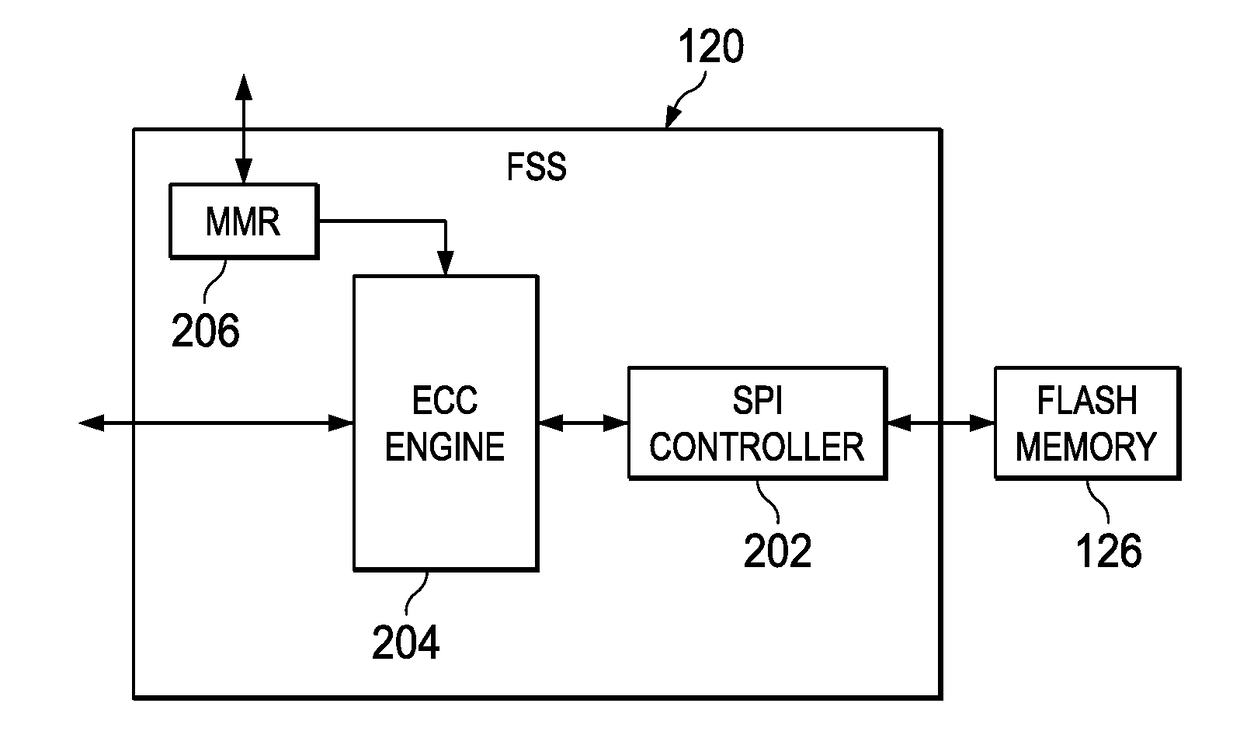
  • Figure 1
    Figure 1
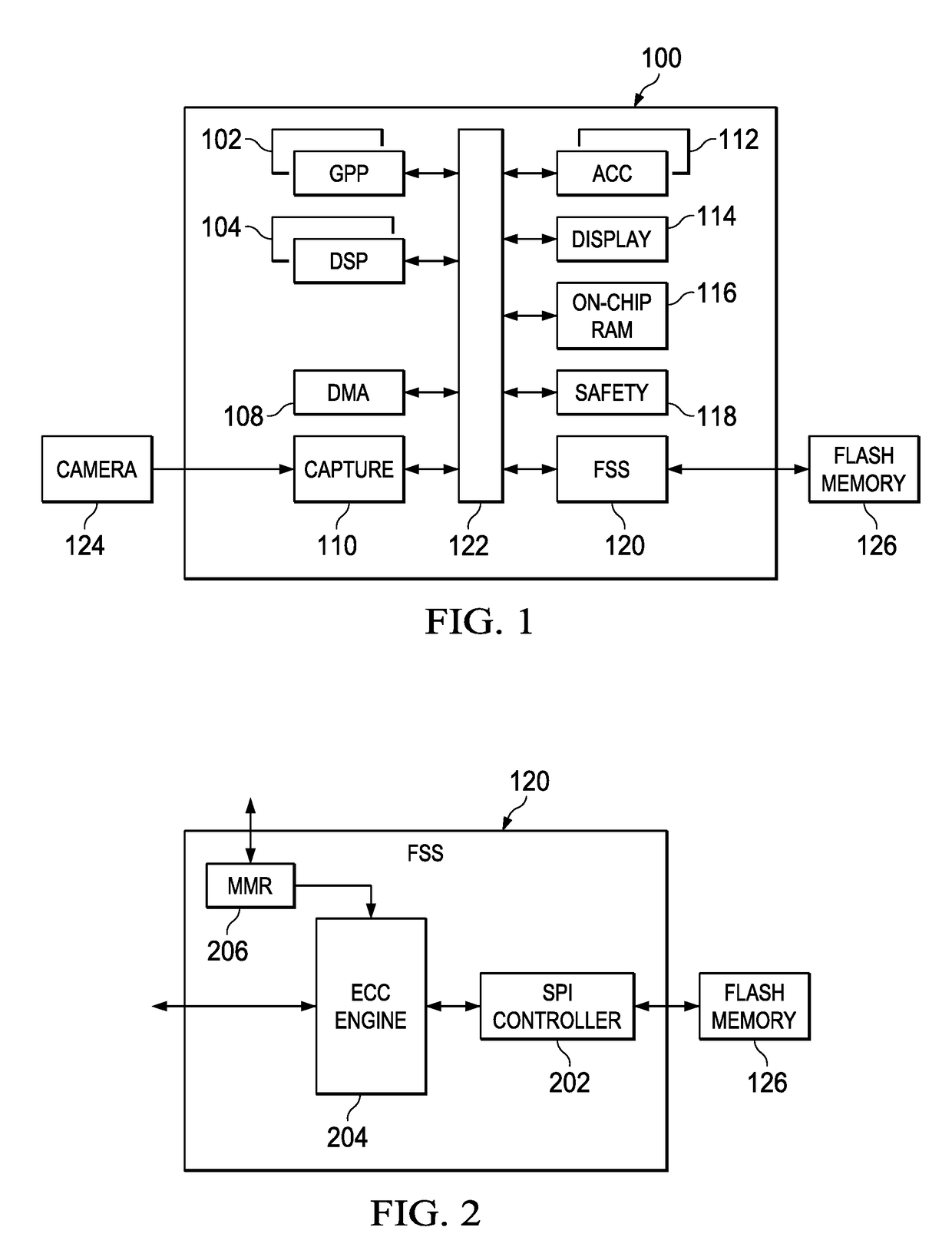
  • Figure 2
    Figure 2
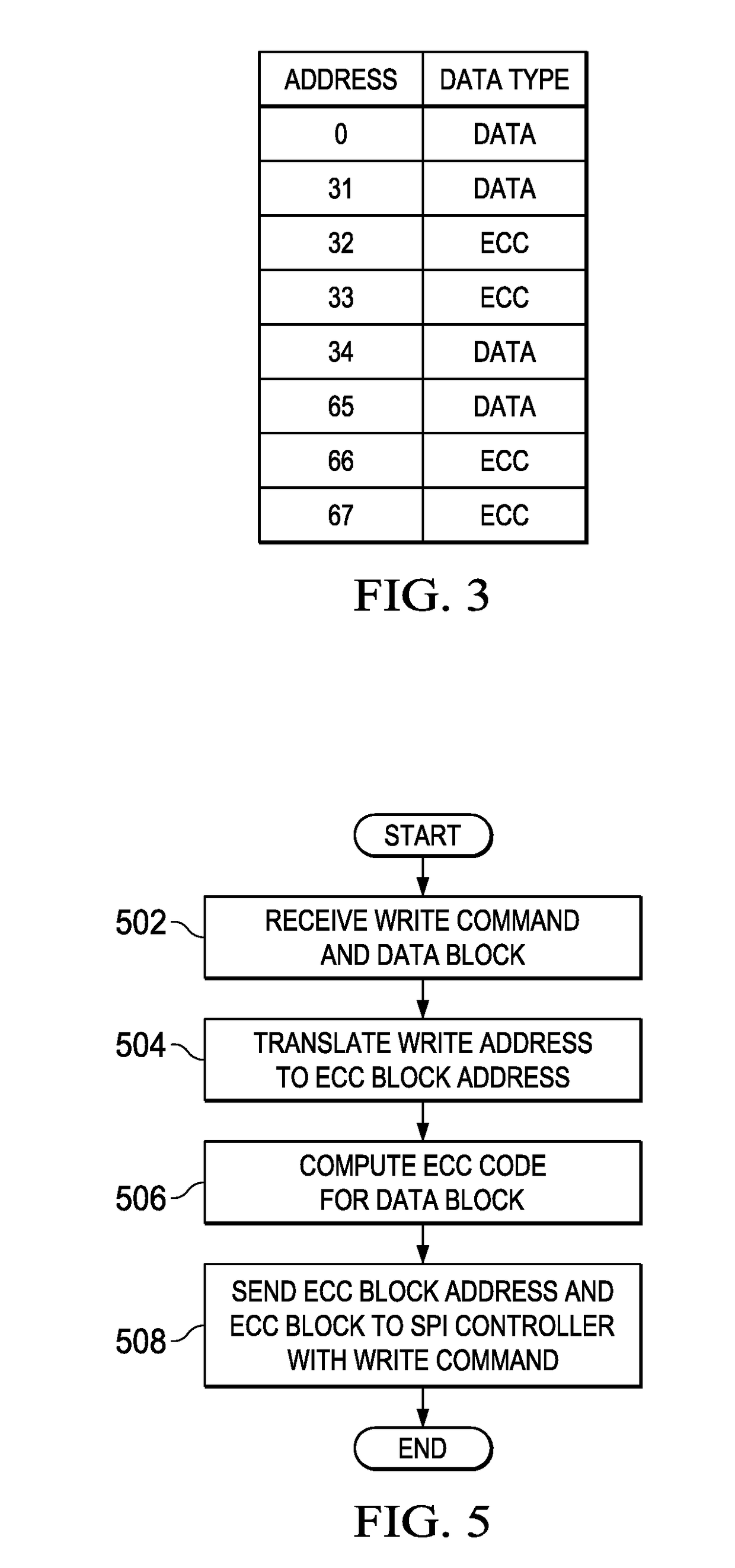
  • Figure 3
    Figure 3
Patent Text Reader

Abstract

A device is provided that includes a processor, a flash memory configured to store error correcting code (ECC) blocks for execution in place (XIP) processing by the processor, wherein an ECC block includes a data block and an ECC code for the data block, a flash interface controller coupled to the flash memory, and an error correcting code (ECC) engine coupled between the processor and the flash interface controller, wherein the ECC engine is configured to receive a read command for the flash memory from the processor, to translate a read address to an ECC block address, to read the ECC block at the ECC block address from the flash memory via the flash interface controller, and to verify the ECC code in the read ECC block.
Need to check novelty before this filing date? Find Prior Art

Description

BACKGROUND OF THE DISCLOSUREField of the Disclosure

[0001] Embodiments of the present disclosure generally relate to execution in place (XIP), and more specifically relate to XIP from flash memory.Description of the Related Art

[0002] For cost and size constrained devices such as the systems-on-a-chip (SOCs) used in advanced driver assistance systems (ADAS), the ability to directly execute program code from non-volatile memory such as flash memory, commonly referred to as execute in place (XIP), may be important. Driver assistance systems are required to meet the functional safety specifications of International Standard 26262 (ISO 26262) titled “Road Vehicles—Functional Safety.” Meeting these requirements may necessitate the inclusion of various protection mechanisms in the systems that detect, minimize or eliminate failures due to malfunction of components such as, for example, any processors, digital logic, and memory incorporated in the system. Current flash devices do not cost effe...

Examples

Embodiment Construction

[0011]Specific embodiments of the disclosure will now be described in detail with reference to the accompanying figures. Like elements in the various figures are denoted by like reference numerals for consistency.

[0012]Execution in place (XIP) of program code stored in non-volatile memory such as flash memory is desirable for cost and size constrained devices such as the systems-on-a-chip (SOCs) used in advanced driver assistance systems (ADAS). Further, the functional safety requirements for use of embedded systems in automotive applications may necessitate the incorporation of protection mechanisms for various components of the system. Flash memory incorporated in such a system is one of the components that may need an effective protection mechanism. Soft errors, which change the value of one or more bits in a memory location, may occur. Soft errors may be caused by radiation or radioactive particles striking a memory cell causing the cell to change state, i.e., a ‘1’ changes to a...