

Production of a canine beta cell line from an immature pancreas
a technology of immature pancreas and canine beta cells, which is applied in the field of production of canine beta cells from immature pancreas, can solve the problems of significant financial burden, significant deterioration in the quality of life, and the inability to apply stem cell-based therapies to diabetes and other endocrine disorders
- Summary
- Abstract
- Description
- Claims
- Application Information
AI Technical Summary
Problems solved by technology
Method used
Image

Examples
Embodiment Construction
A) Material and Methods
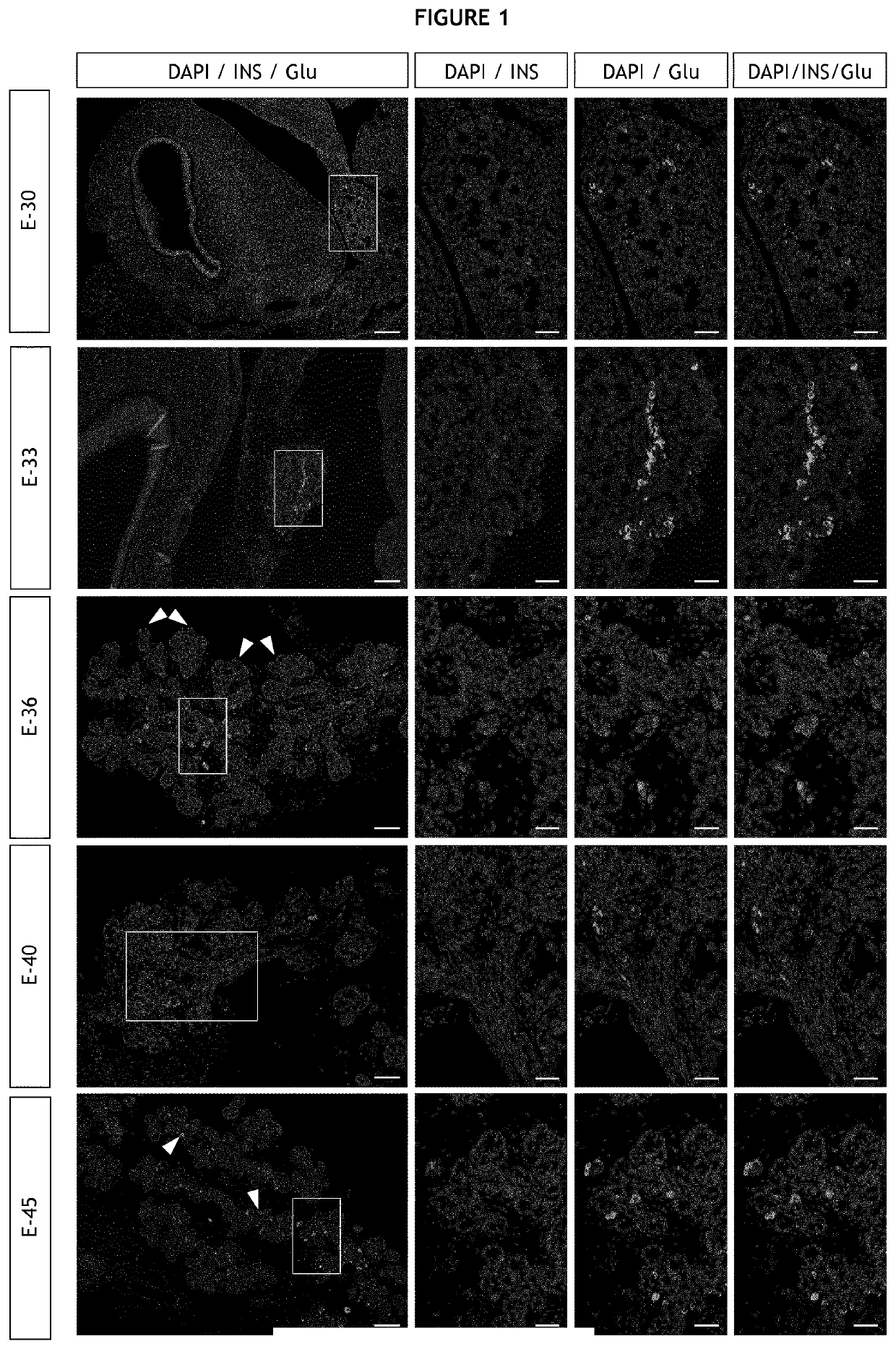
[0113]A.1. Source of Canine Pancreatic Tissue and Collection Procedure
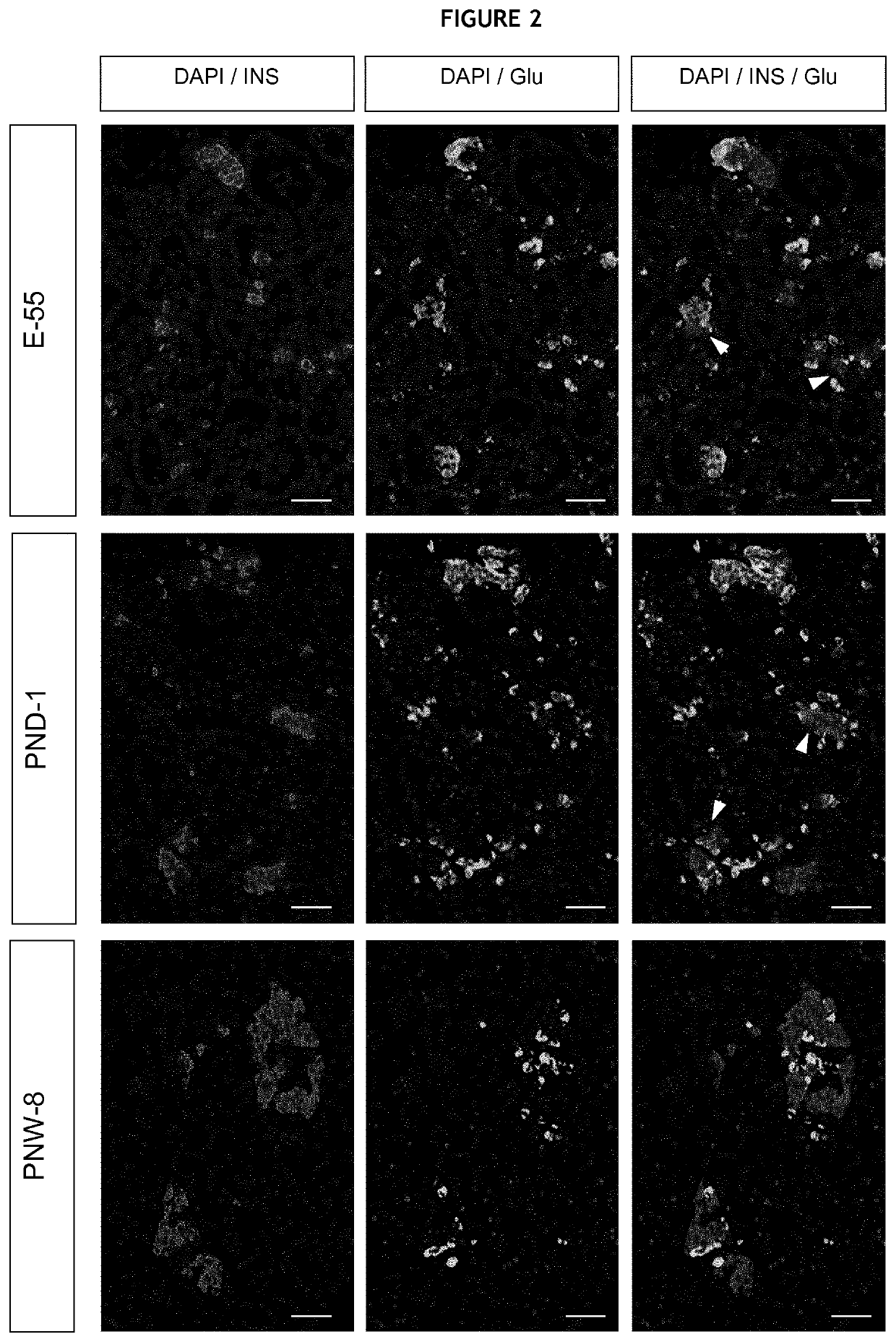
[0114]As shown in Table 1, six developmental stages of the foetal dog pancreas were selected, at day 30, 33, 36, 40, 45 and 55 days post conception (pc). The study focused on one single strain of Beagle dogs, a strain raised in the housing facilities of Maison-Alfort Veterinary School except for the foetal pancreas studied at 55 days pc. The mother of this foetus obtained at 55 pc was not raised in the Veterinary school of and its foetus obtained at 55 pc was of an unknown breed. Its mother's stature was equivalent to a beagle.
[0115]All foetal samples were obtained by elective caesarean section. The foetal age was determined according to the ovulation identified by the plasma progesterone surge (except for the 55 days old foetus).
[0116]In addition, pancreases were also obtained from two Beagle dogs that died during hospitalization either during the early neonatal period at 1 day post-deliver...
PUM
 Login to View More
 Abstract
Description
Claims
Application Information
 Login to View More