Bicycle Frame Joints With Internal Cabling Passages

US20200010140A1Active Publication Date: 2020-01-09POOLE WAYNE GERARD
0 Cites 1 Cited by

Patent Information

Authority / Receiving Office
US · United States
Current Assignee / Owner
Publication Date
2020-01-09

Smart Images

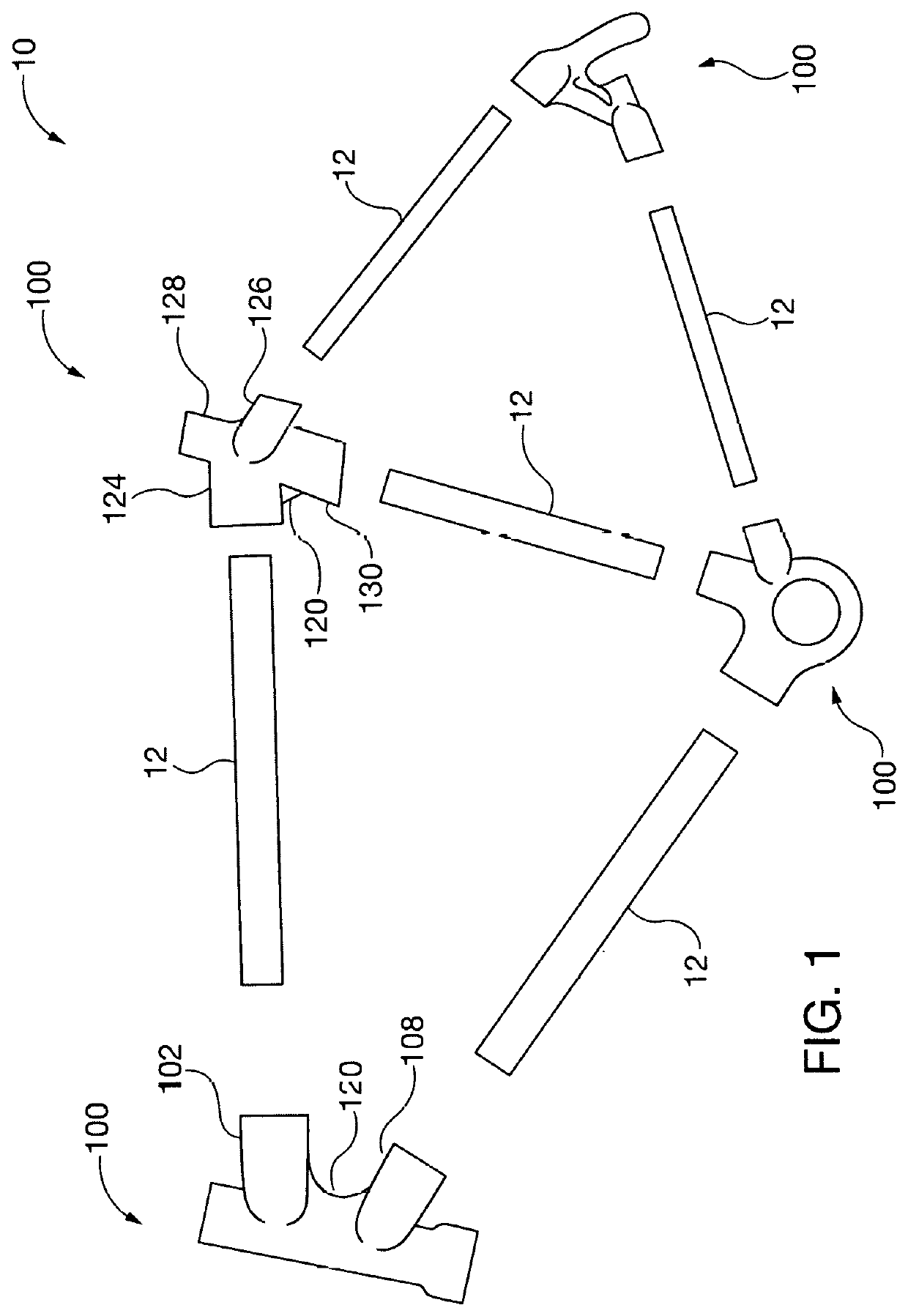
  • Figure 1
    Figure 1
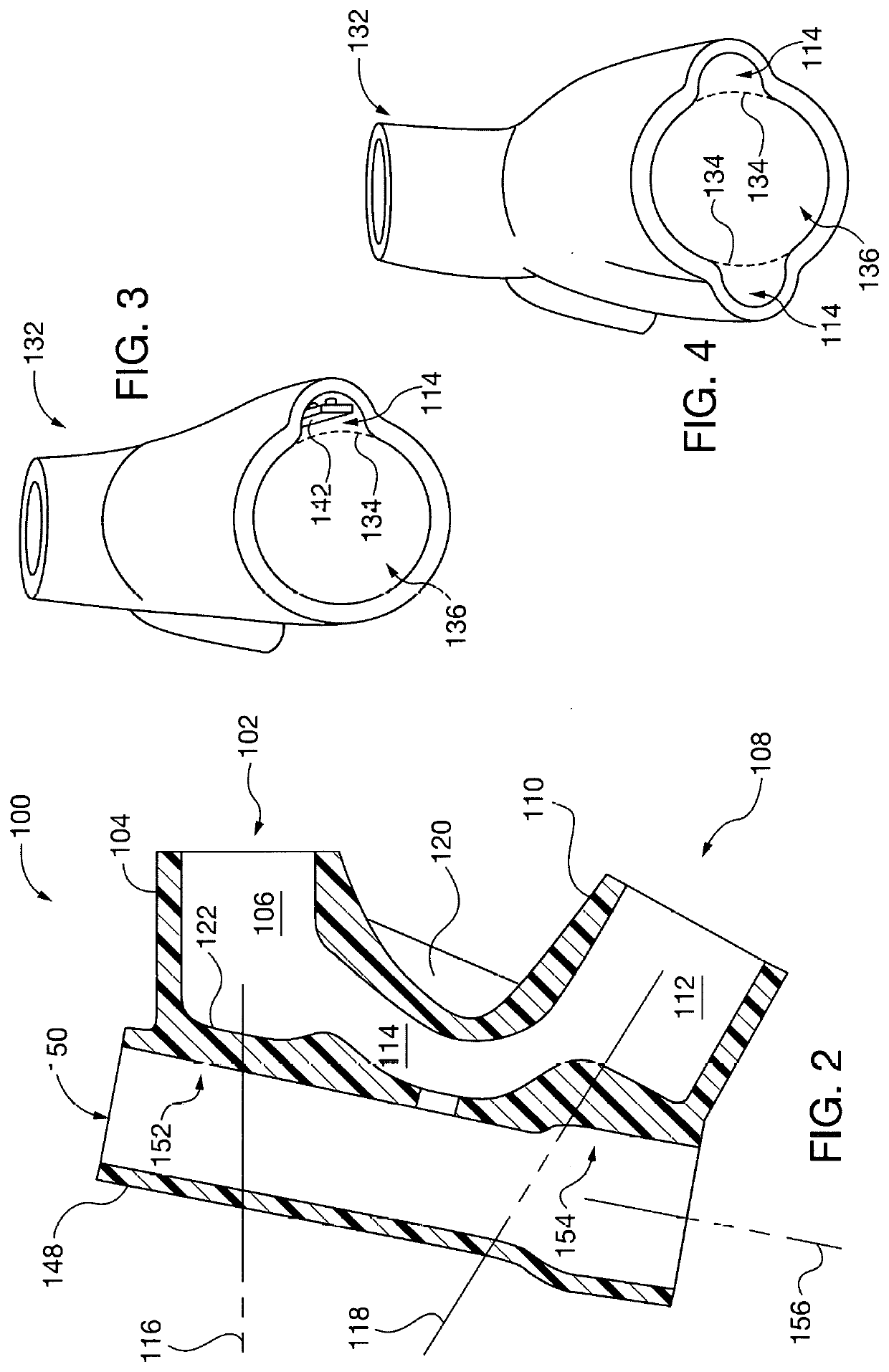
  • Figure 2
    Figure 2
  • Figure 3
    Figure 3
Patent Text Reader

Abstract

A bicycle frame joint accommodating internal cabling is shown and described. The joint includes an internal passage joining at least two frame tube receiving sockets. The internal passage can receive cables and lighting strips, enabling a circuit or lighting strip to extend along a plurality of frame tubes, and to pass through joints between adjacent frame tubes, to promote circuit continuity. Some bicycle frame joints may have internal passages bypassing some sockets, enabling a continuous circuit to bypass an intervening frame tube.
Need to check novelty before this filing date? Find Prior Art

Description

REFERENCE TO RELATED APPLICATION

[0001] This application claims priority of Application No. 62 / 603,027, filed May 16, 2017.FIELD OF THE INVENTION

[0002] The present invention relates to bicycle frames, and more particularly, to bicycles carrying cabling internally within frame members.BACKGROUND OF THE INVENTION

[0003] A bicycle can be made with internal power and signaling cables, flexible lighting strips, and other flexible elongated members passing through hollow tubing of the frame of the bicycle. If continuity of the flexible elongated members is desired throughout more than one tube of the frame, accommodation must be made to conduct the flexible elongated members through joints of the frame where one tube intersects another tube at an oblique angle. One problem of routing cables through joints is potentially sharp bends which must be made in one or more cables. It may not be possible to feed a cable through the joint during assembly.

[0004] Alternatively, a cable such as a cable bear...

Examples

Embodiment Construction

[0024]Referring first to FIG. 1, there is shown a bicycle frame 10 of the type including tubes 12 to be anchored in frame joints (e.g., a frame joint IOU, shown in greater detail in FIG. 2). Tubes 12 will be understood to encompass seat stays and chain stays. Tubes 12 may be of a synthetic polymeric material, such as a polycarbonate for example. Tubes 12 are inserted into sockets (e.g., a socket 102, 108, 124, or 126) of frame joints and suitably secured by heat or ultrasonic welding, adhesive, or in any other suitable way.

[0025]A head tube joint 100 is shown in FIG. 2. Each one of the bicycle frame joints such as bicycle frame joint 100 comprises at least a first socket 102 for receiving a frame tube 12 of a bicycle (not shown in its entirety). First socket 102 has a first outer wall 104 surrounding a first open cavity 106, first open cavity 106 dimensioned and configured to receive frame tube 12. Each one of the bicycle frame joints comprises at least a second socket 108 for recei...