
Permanent magnet three phase machine for high speed applications having low vibration and low resistive losses
a permanent magnet, three-phase technology, applied in the direction of rotating magnets, synchronous machines with stationary armatures, dynamo-electric machines, etc., can solve the problem of insignificant resultant impedance increase, and achieve the effect of minimizing the volume of coil wires, minimizing the magnitude of reluctance torque, and maximizing the frequency per revolution
- Summary
- Abstract
- Description
- Claims
- Application Information
AI Technical Summary
Benefits of technology
Problems solved by technology
Method used
Image

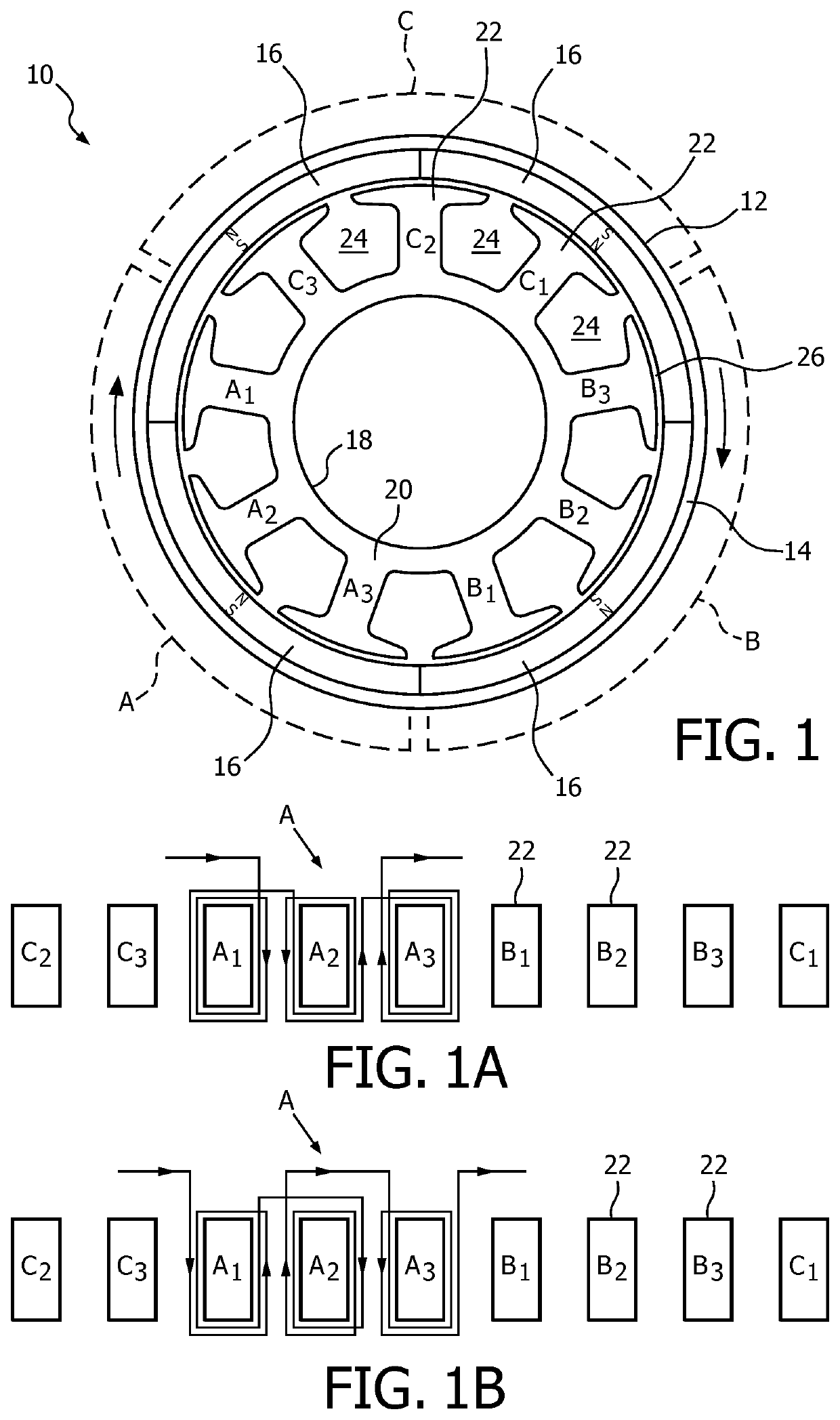
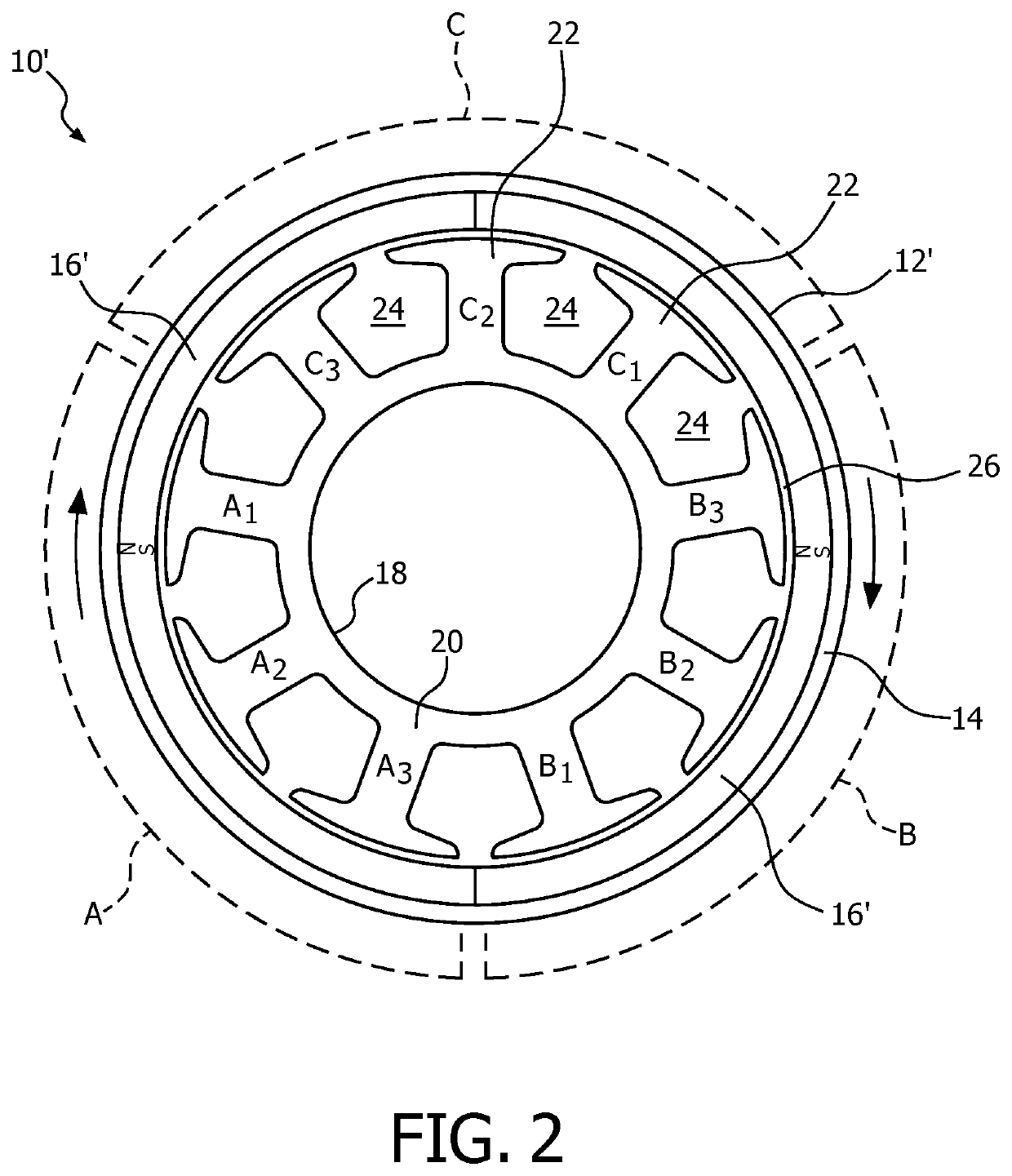
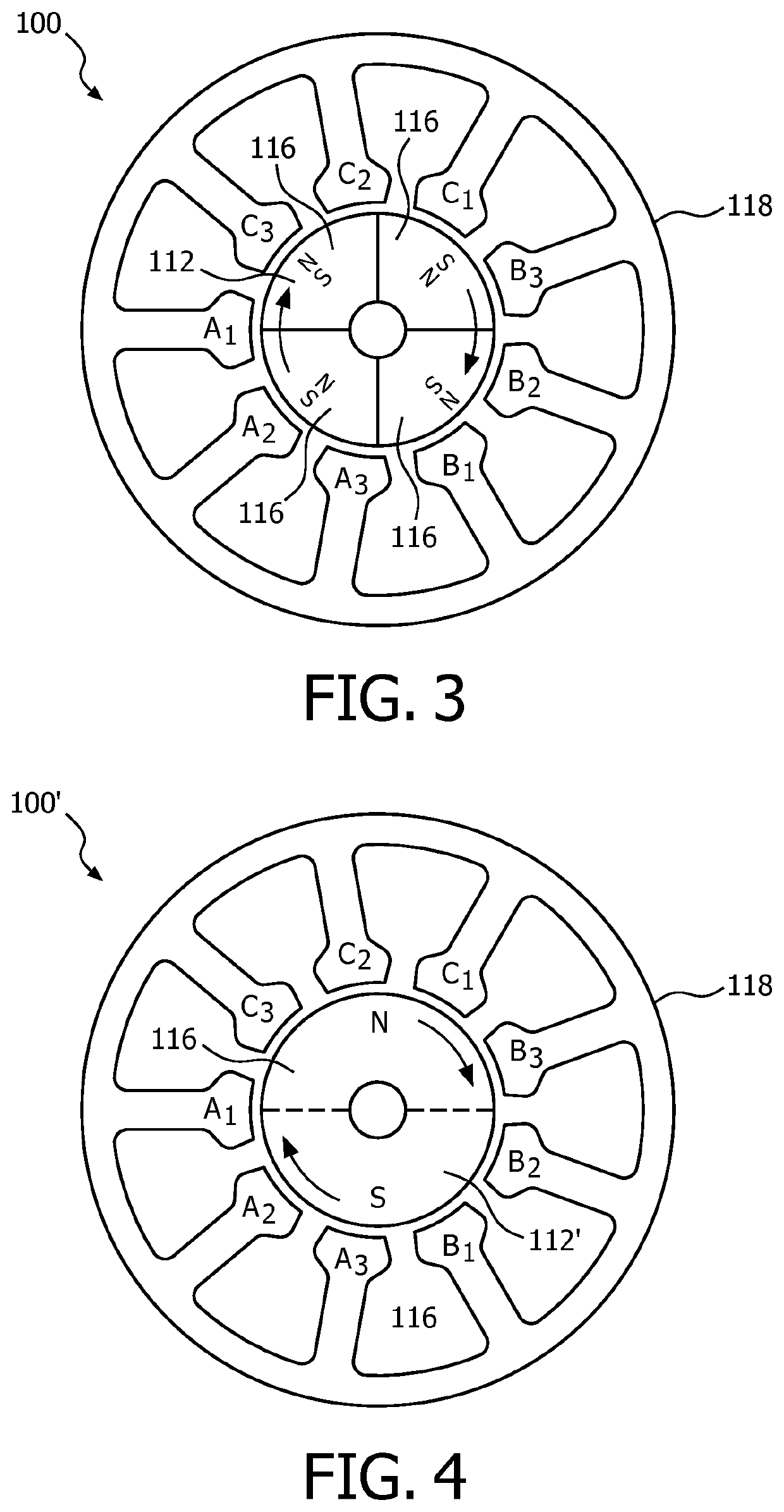
Examples
Embodiment Construction
[0023]As used herein, the singular form of “a”, “an”, and “the” include plural references unless the context clearly dictates otherwise. As used herein, the statement that two or more parts or components are “coupled” shall mean that the parts are joined or operate together either directly or indirectly, i.e., through one or more intermediate parts or components, so long as a link occurs. As used herein, “directly coupled” means that two elements are directly in contact with each other. As used herein, “fixedly coupled” or “fixed” means that two components are coupled so as to move as one while maintaining a constant orientation relative to each other.
[0024]As used herein, the word “unitary” means a component is created as a single piece or unit. That is, a component that includes pieces that are created separately and then coupled together as a unit is not a “unitary” component or body. As employed herein, the statement that two or more parts or components “engage” one another shal...
PUM
 Login to View More
 Abstract
Description
Claims
Application Information
 Login to View More