

Optical cable installation with cable lubricator
a technology of optical cable and lubricator, which is applied in the direction of cables, cables, instruments, etc., can solve the problems of high installation cost, time-consuming splicing, and inability to have a large number of splice joints, and achieve the effect of less stiffness
- Summary
- Abstract
- Description
- Claims
- Application Information
AI Technical Summary
Benefits of technology
Problems solved by technology
Method used
Image

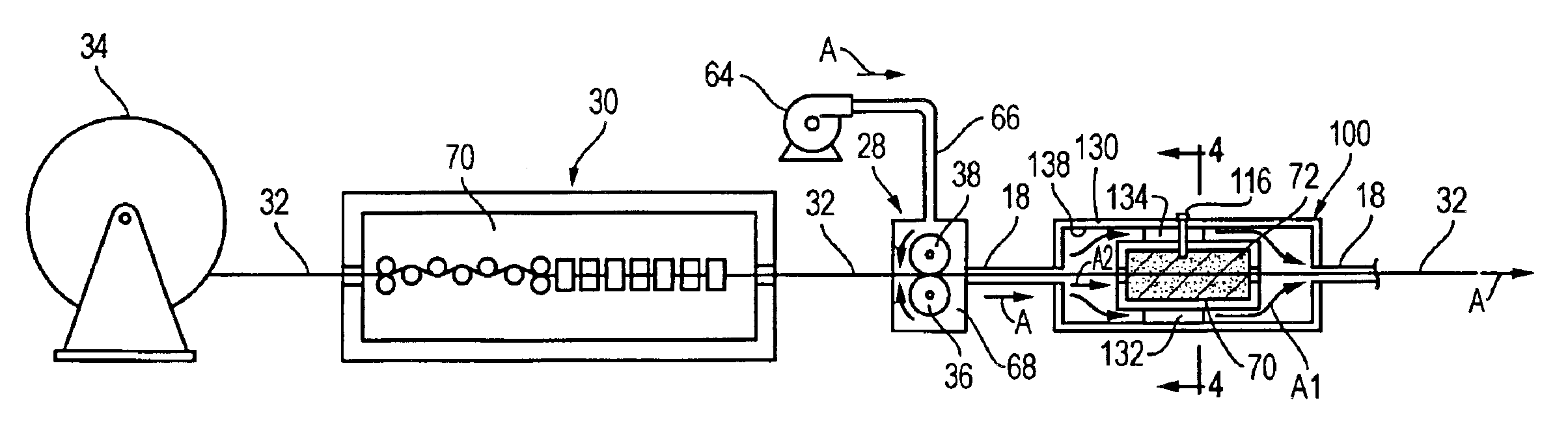
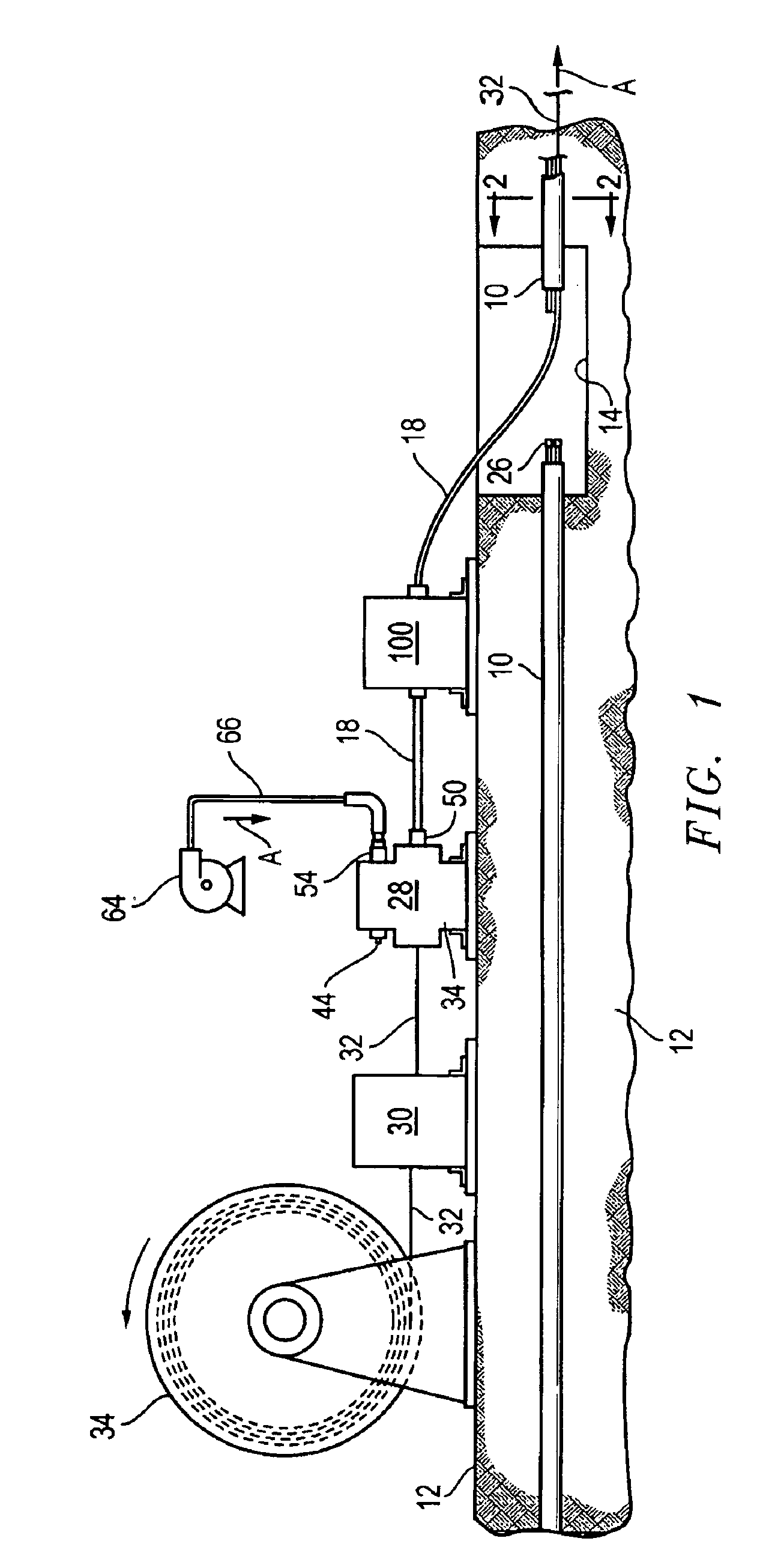
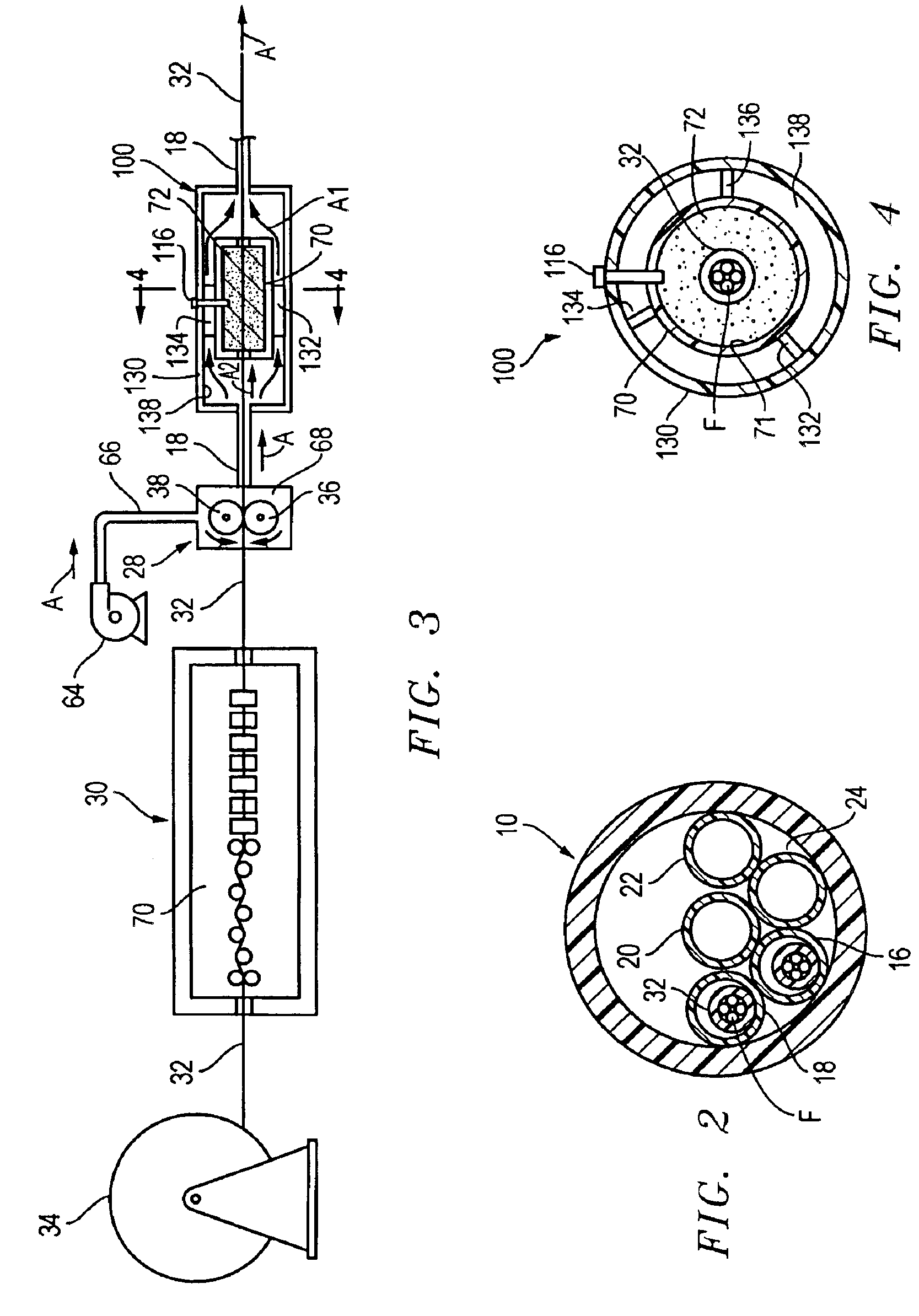
Examples
example 1
PBTP 2.0 mm Cable in Un-Lubricated Ribbed 4 mm Tube
First attempt: Un-lubricated installation. Blowing transport of cable started with a rate of advance of 35 m / min but stopped because of frictional resistance after reaching only 50 m in the duct trajectory.Second attempt: Lubricating the tube with water-based lubricant and a foam-plug blown through. Blowing transport of cable started with a rate of advance of 35 m / min and the speed had dropped to 7 m / min after reaching 225 m in the duct trajectory.Third attempt: Using the cable lubricator (and another unlubricated tube). Blowing started with 35 m / min and the speed had dropped to 8 m / min after reaching 500 m in the duct trajectory.
example 2
Nylon 1.8 mm Cable in Pre-Lubricated Ribbed 4 mm Tube
First attempt: Installation with no further lubricating. Blowing started with 35 m / min and the speed dropped to 5 m / min at reaching 235 m in the duct trajectory.Second attempt: Using the cable lubricator (and another unlubricated tube). Blowing started with 35 m / min and the speed was still the same upon reaching 585 m in the duct trajectory while the pressure was only 7 bars.
The effect of post-launch lubrication with the pressurized cable lubricator 100 is an improvement by a factor of 10 or more in blowing length with respect to the non-lubricated case. Moreover the blowing results reproduce better when using the cable lubricator. The blowing distance improvement of the cable lubricator is also much more striking than the improvement of lubricating the guide tubes alone (or using pre-lubricated tubes), which was an unexpected and surprising improvement.
For the sake of completeness, it is further noted that the lubrication method ...
PUM
 Login to View More
 Abstract
Description
Claims
Application Information
 Login to View More