
Data packet congestion management technique
a data packet and management technique technology, applied in data switching networks, instruments, frequency-division multiplexes, etc., can solve problems such as large congestion window, data packet congestion avoidance is not performed, and problems are bound to occur
- Summary
- Abstract
- Description
- Claims
- Application Information
AI Technical Summary
Benefits of technology
Problems solved by technology
Method used
Image

Examples
Embodiment Construction
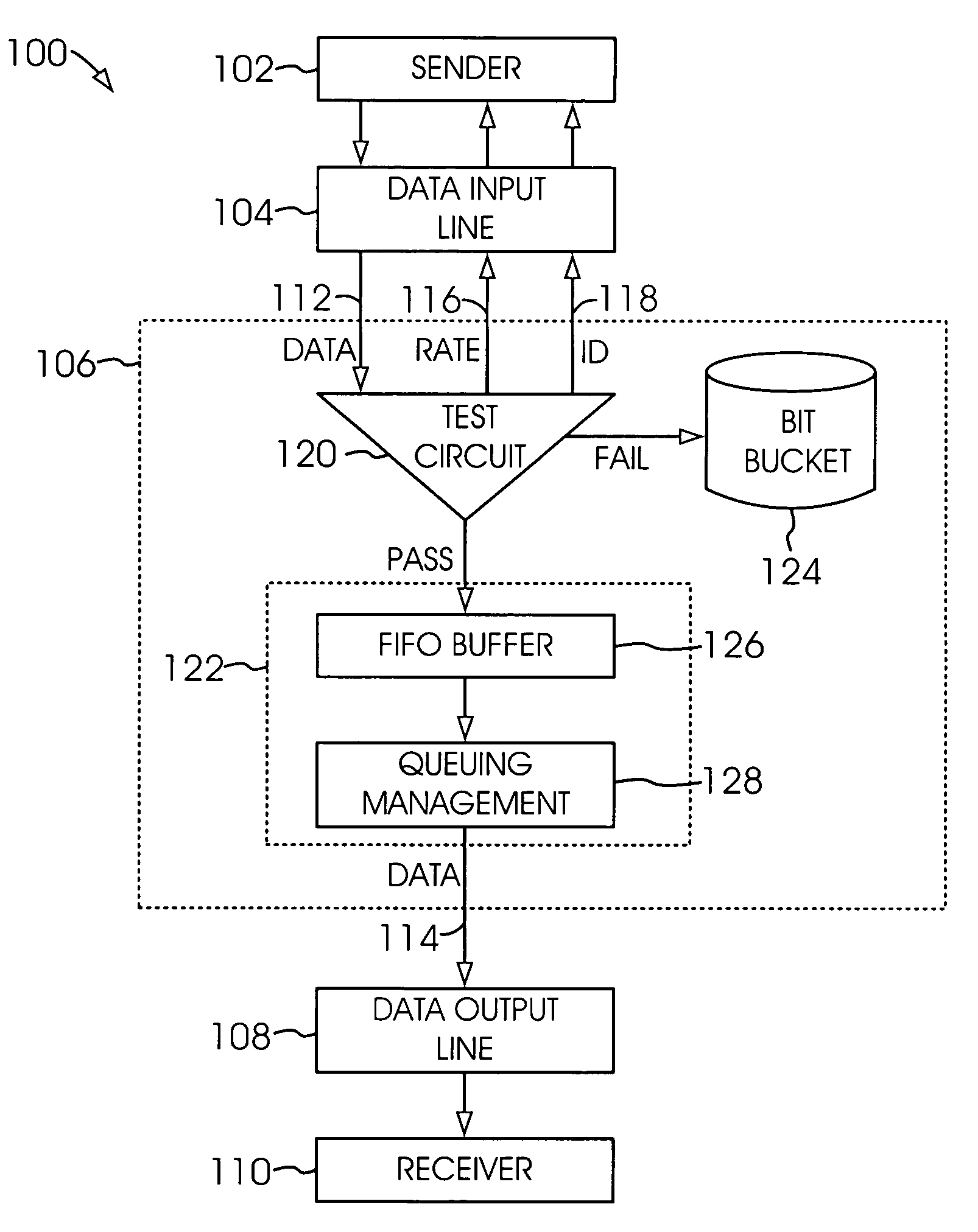
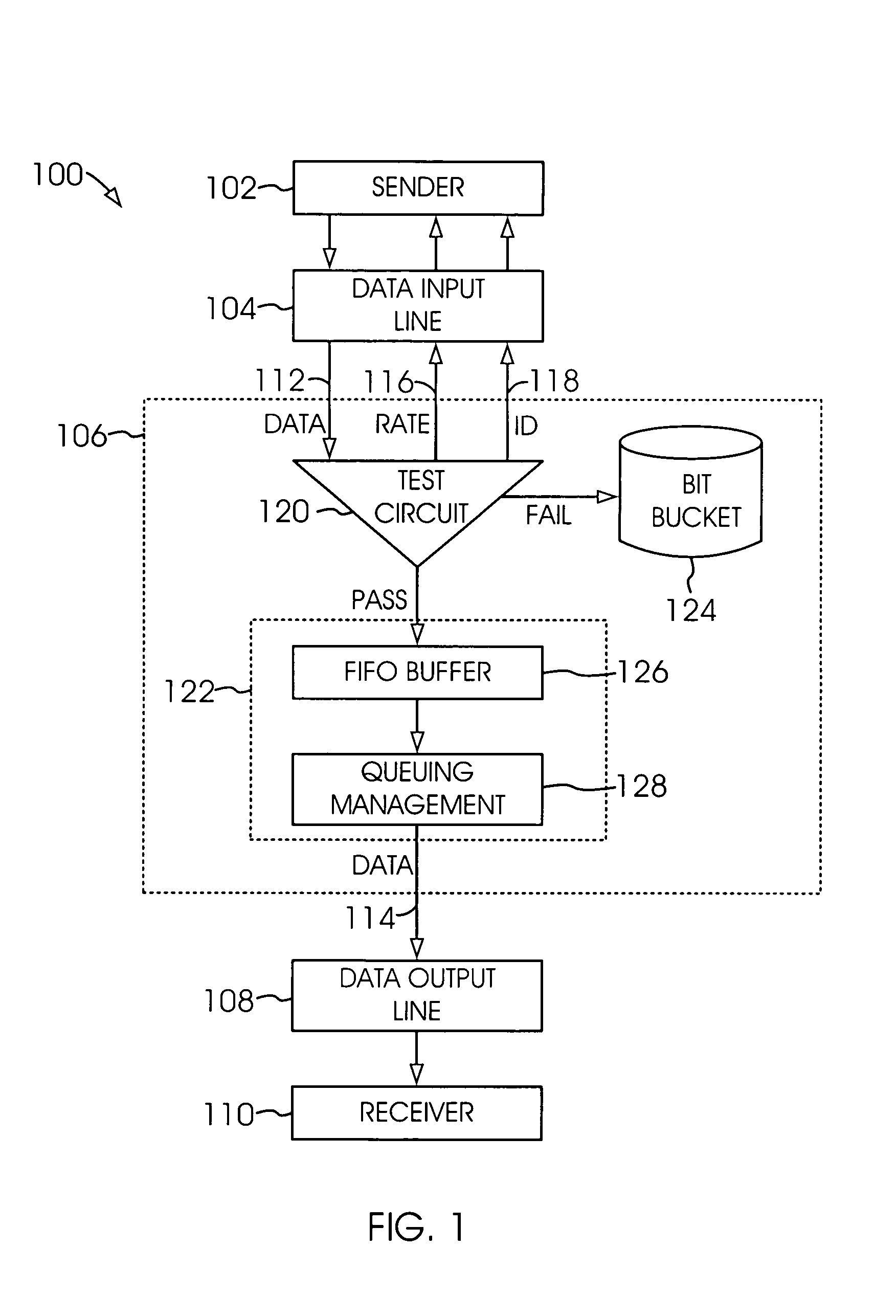
[0013]Referring to FIG. 1, a block diagram of a system 100 is shown in accordance with a preferred embodiment of the present invention. The system 100 may provide an improved transmission control protocol (TCP) flow by using a data packet congestion management technique. The data packet congestion management technique may detect symptoms of congestion prior to the data packets reaching a first-in-first-out (FIFO) buffer resource.
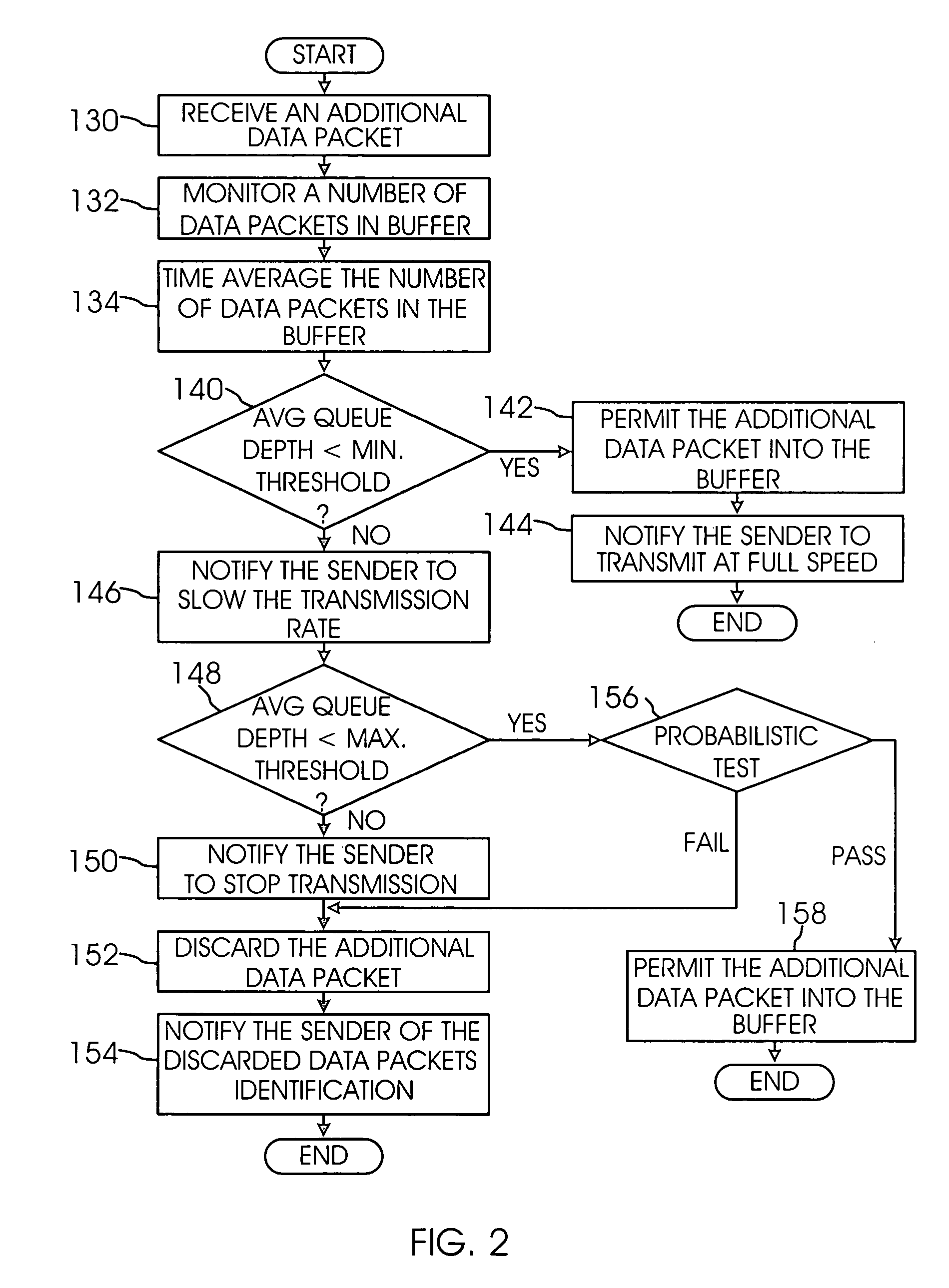
[0014]The data packet congestion management technique may begin to discard data packets according to a probabilistically predetermined method. A signal may be simultaneously presented to a sender of the data packets through an appropriate improved TCP flow to indicate that the sender should slow a transmission rate of the data packets. Another signal may also indicate which discarded data packets should be resent. Once the FIFO buffer resource is generally in a stable state, then the sender may be informed to increase the transmission rate to an allocated ba...
PUM
 Login to View More
 Abstract
Description
Claims
Application Information
 Login to View More