

Light-triggered tattoo process
a tattoo and light-triggered technology, applied in the field of light-triggered tattooing process, can solve the problem of far more extensive use, and achieve the effect of high-quality tattooing patterns, rapid removal, and increased power density
- Summary
- Abstract
- Description
- Claims
- Application Information
AI Technical Summary
Benefits of technology
Problems solved by technology
Method used
Image

Examples
first embodiment
n
[0027]A first preferred embodiment of the present invention can be described by reference to FIGS. 2 through 8.
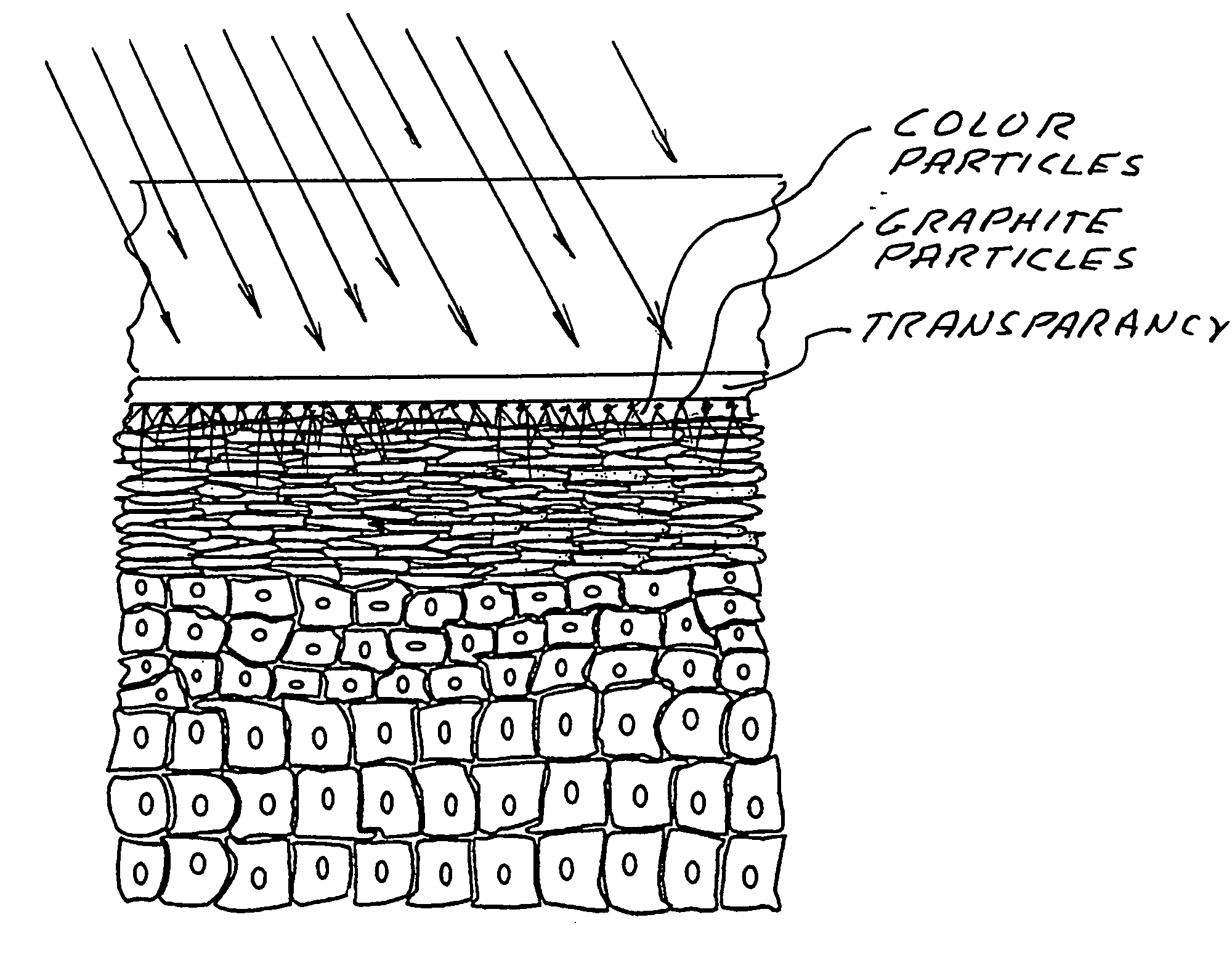
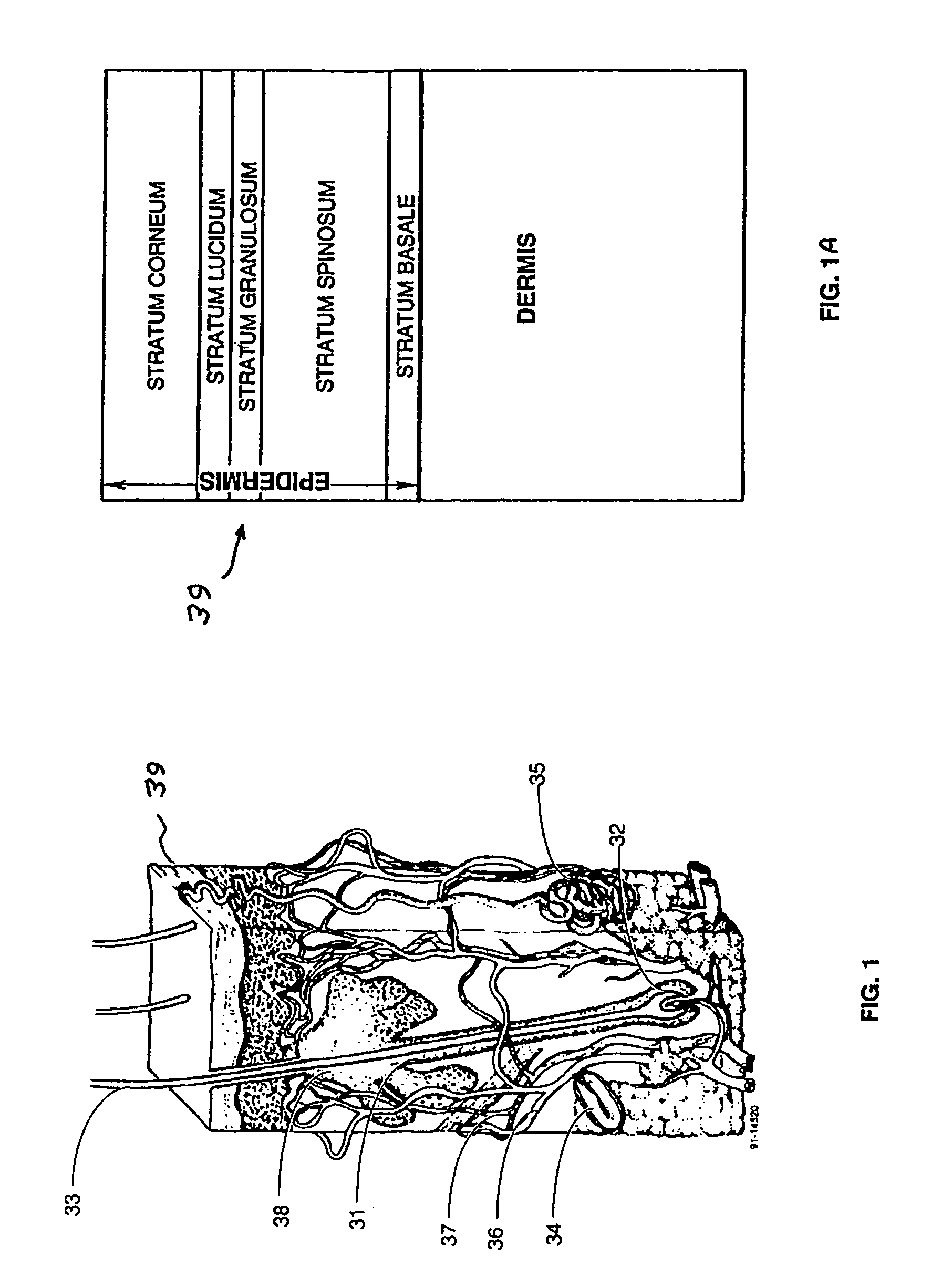
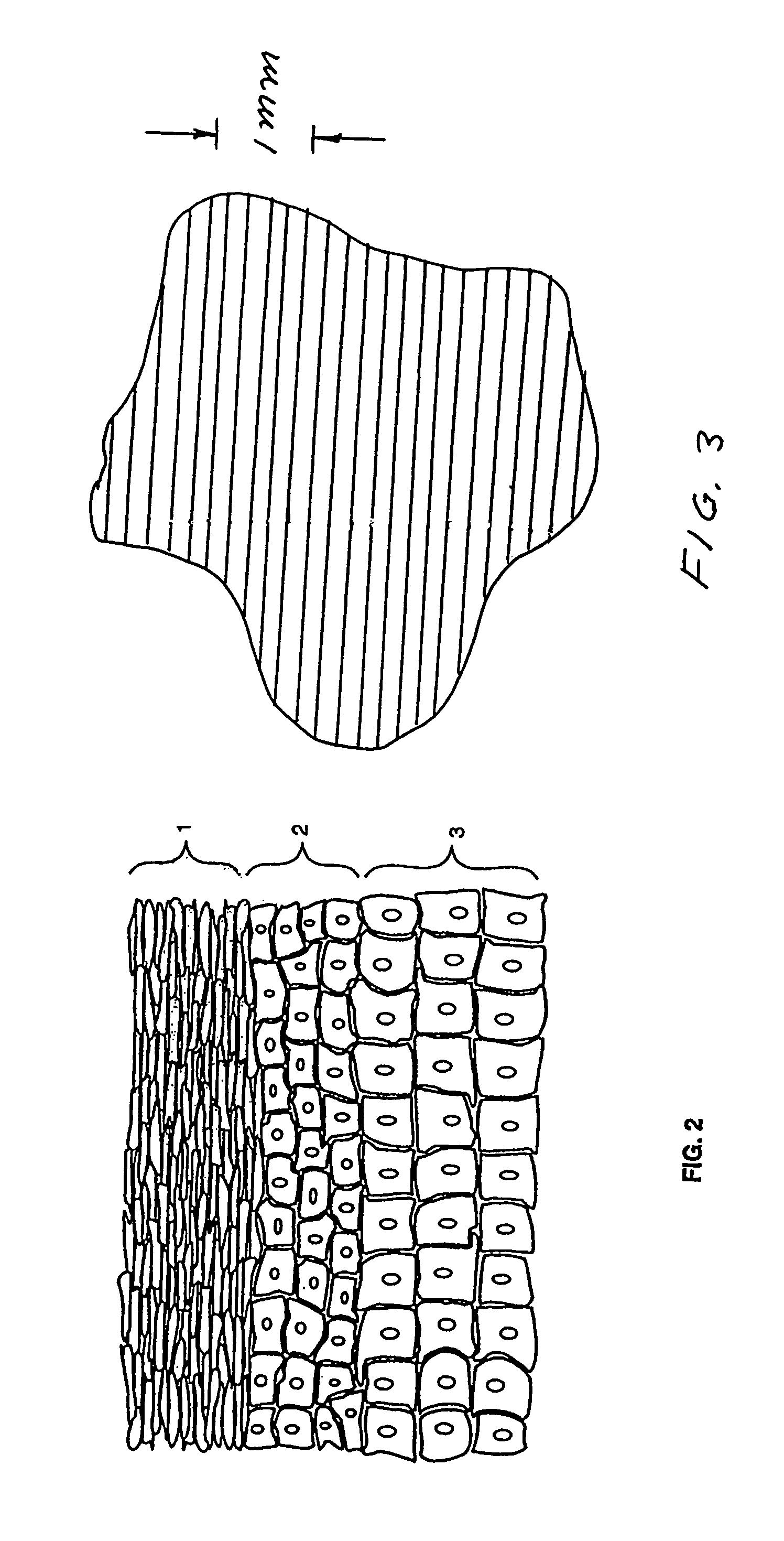
[0028]FIG. 2 shows layers of the epidermis as discussed in the Background section. The epidermis is typically a few hundred microns thick. The purpose of the present invention is to deposit beautiful color patterns in the epidermis region of the skin quickly and painlessly using lasers to produce micro explosions to drive the tattoo ink into this region of the skin.
[0029]In this embodiment a color printer / copier is used to prepare a color tattoo pattern. FIG. 3 shows how black ink (comprised of graphite particles) is applied to a transparency (such as Xerox laser / copier transparencies, Model 3R3108) by a modern color printer to produce a gray color. In a modern color printer / copier such as the Xerox Docucolor 12, colors are laid down in rows as shown in FIG. 3. Applicants count 5 rows per millimeter, so that the rows are on 200 micron centers. Dark to light control is prod...
second embodiment
[0030]A second technique for producing black tattoo patterns is shown with FIGS. 8 through 10. In this embodiment, relatively thick black lines are printed on transparencies using the same equipment as described above. The normal settings of the printer / copier provide adequate results. The cross section of a single line, such as the cross section of an “I” that is about 1 mm wide and maybe 50 graphite particle high is shown in FIG. 8. The tattoo could be a short phrase such as “NANCY MY LOVE” or a black outline pattern. The mirror image of the letters should be printed on the transparency. FIG. 9A shows the illumination step that is the same as above. In this case some of the graphite particles explode driving other particle into the skin. Excellent tattoos were produced with particles driven about 150 microns into the skin.
Explosive Graphite
[0031]Graphite is very absorptive of laser energy at the 1.06 micron wavelength. The latent heat of vaporization is about 105 J / cm3 for cold so...
PUM
 Login to View More
 Abstract
Description
Claims
Application Information
 Login to View More