
Dynamic load fixture for application of torsion loads for rotary mechanical systems
a technology of rotating mechanical systems and load fixtures, which is applied in the field of test fixtures, can solve the problems of insufficient response of conventional servo controllers such as pid feedback, and not provide optimal response, and achieve the effect of high response bandwidth and effective reproduction
- Summary
- Abstract
- Description
- Claims
- Application Information
AI Technical Summary
Benefits of technology
Problems solved by technology
Method used
Image

Examples
Embodiment Construction
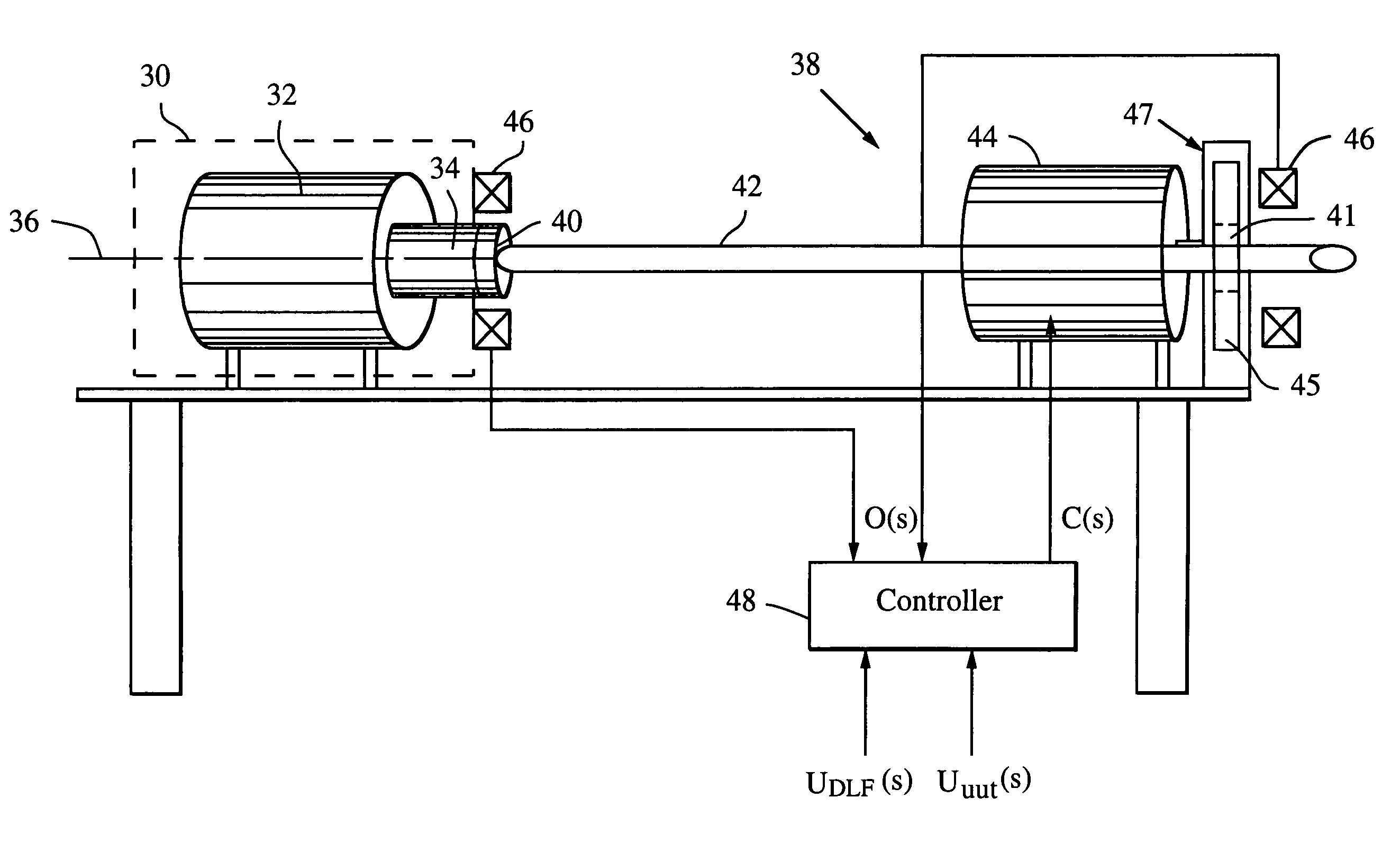
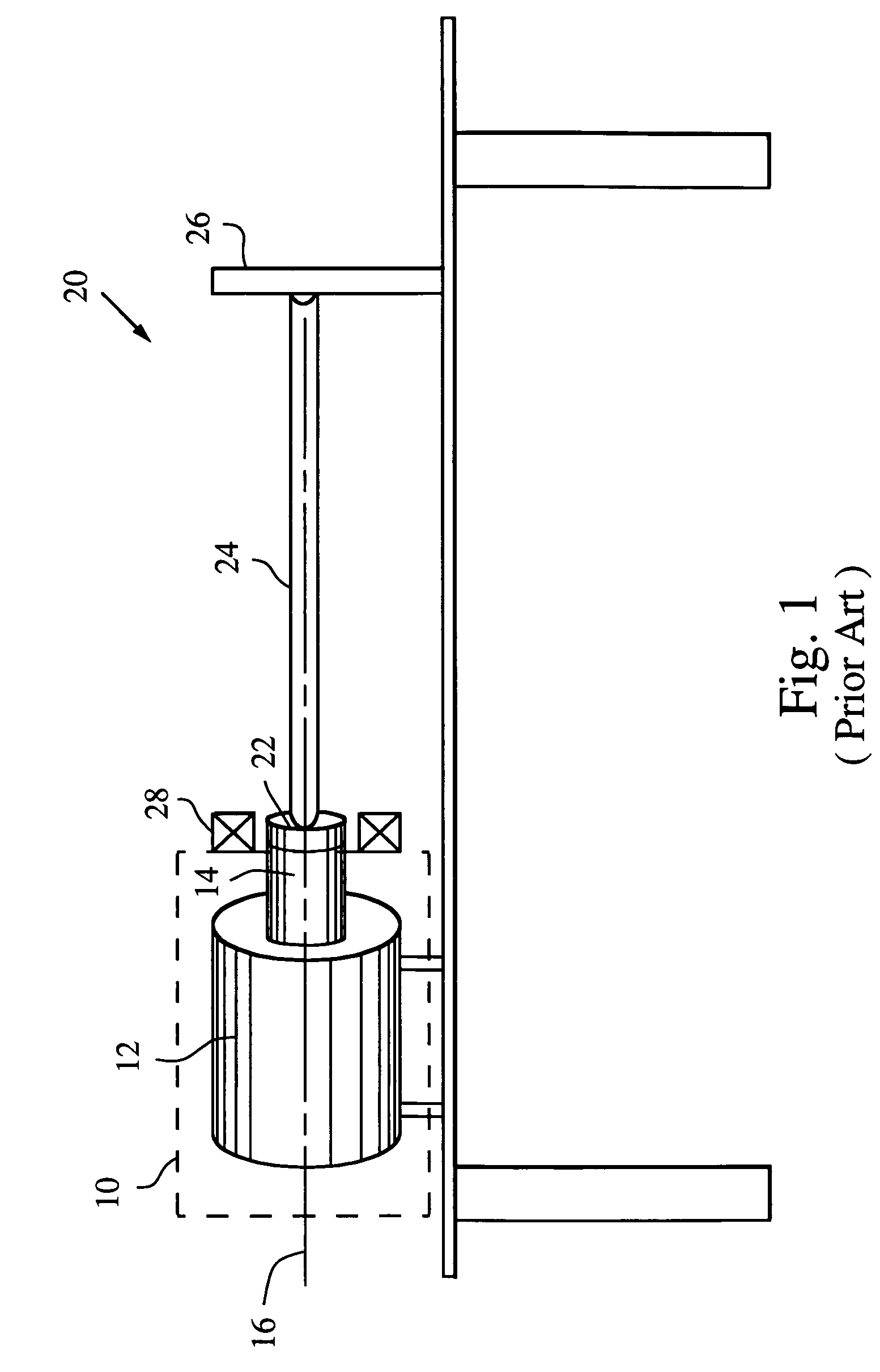
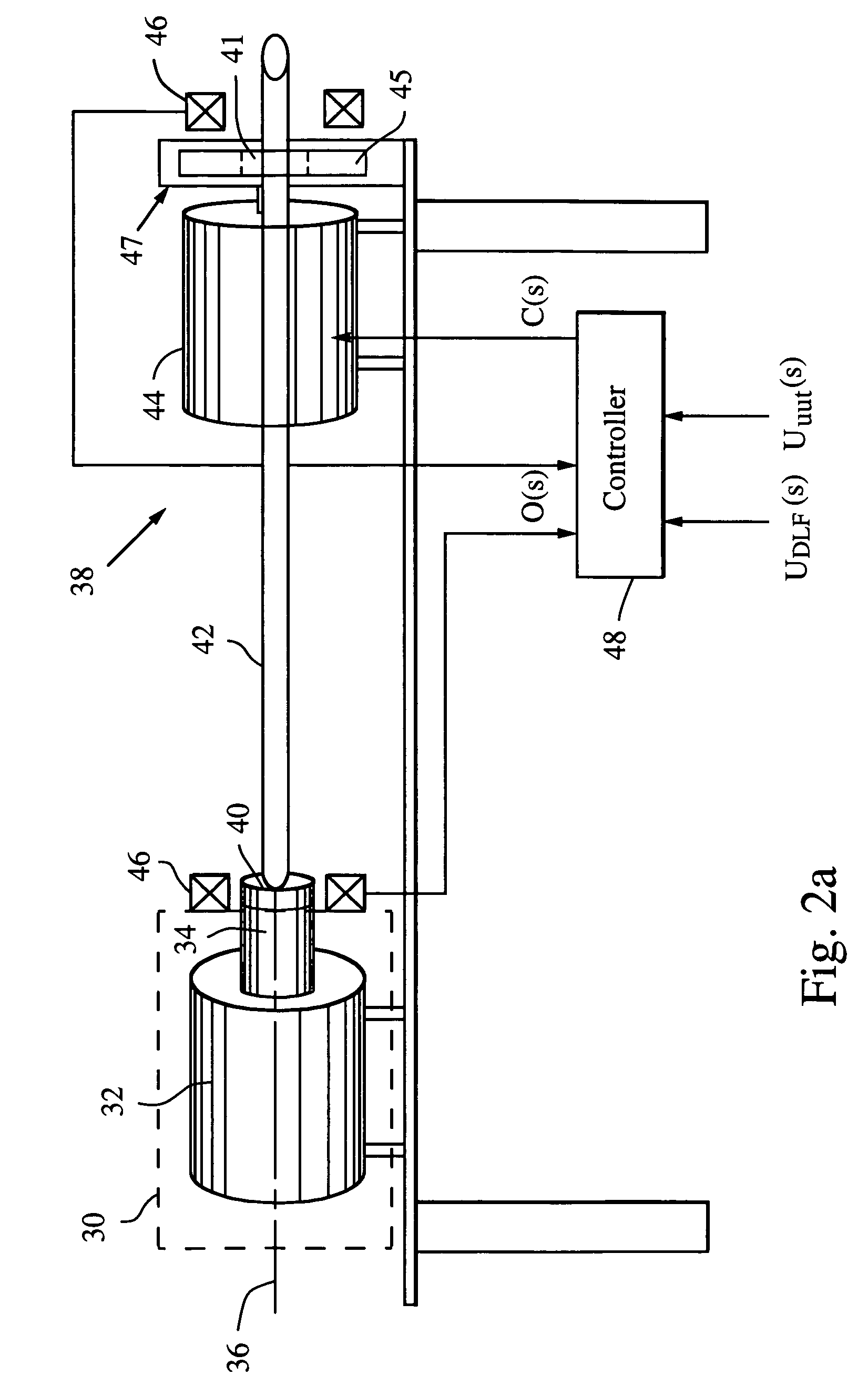
[0024]The present invention provides a dynamic load fixture (DLF) for applying a dynamic torsion load to a rotary mechanical system to achieve the demanding aerodynamic load exposures encountered by a control actuation system (CAS) in flight. Instead of fixing the end of the torsion bar, the DLF controls the application of torque to the torsion bar, hence the UUT via a DLF motor. Consequently the dynamic load can be independent of the angular rotation of the CAS unit under test (UUT), which allows the DLF to more effectively reproduce desired acceptance tests such as torque-at-rate and nonlinear loads. To provide the high response bandwidth needed to effectively test the UUT, the DLF employs classical phase lead or modern state space control, which is suitably augmented with a priori characterization information of the UUT. The DLF is particularly well suited for rotary mechanical systems that exhibit a limited range of motion and high frequency content such as control actuation sys...
PUM
| Property | Measurement | Unit |
|---|---|---|
| time | aaaaa | aaaaa |
| frequencies | aaaaa | aaaaa |
| torque | aaaaa | aaaaa |
Abstract
Description
Claims
Application Information
 Login to View More