Method and apparatus for adaptively classifying network traffic

US7203963B1Active Publication Date: 2007-04-10MCAFEE LLC

Patent Information

Authority / Receiving Office
US ยท United States
Current Assignee / Owner
MCAFEE LLC
Publication Date
2007-04-10

Smart Images

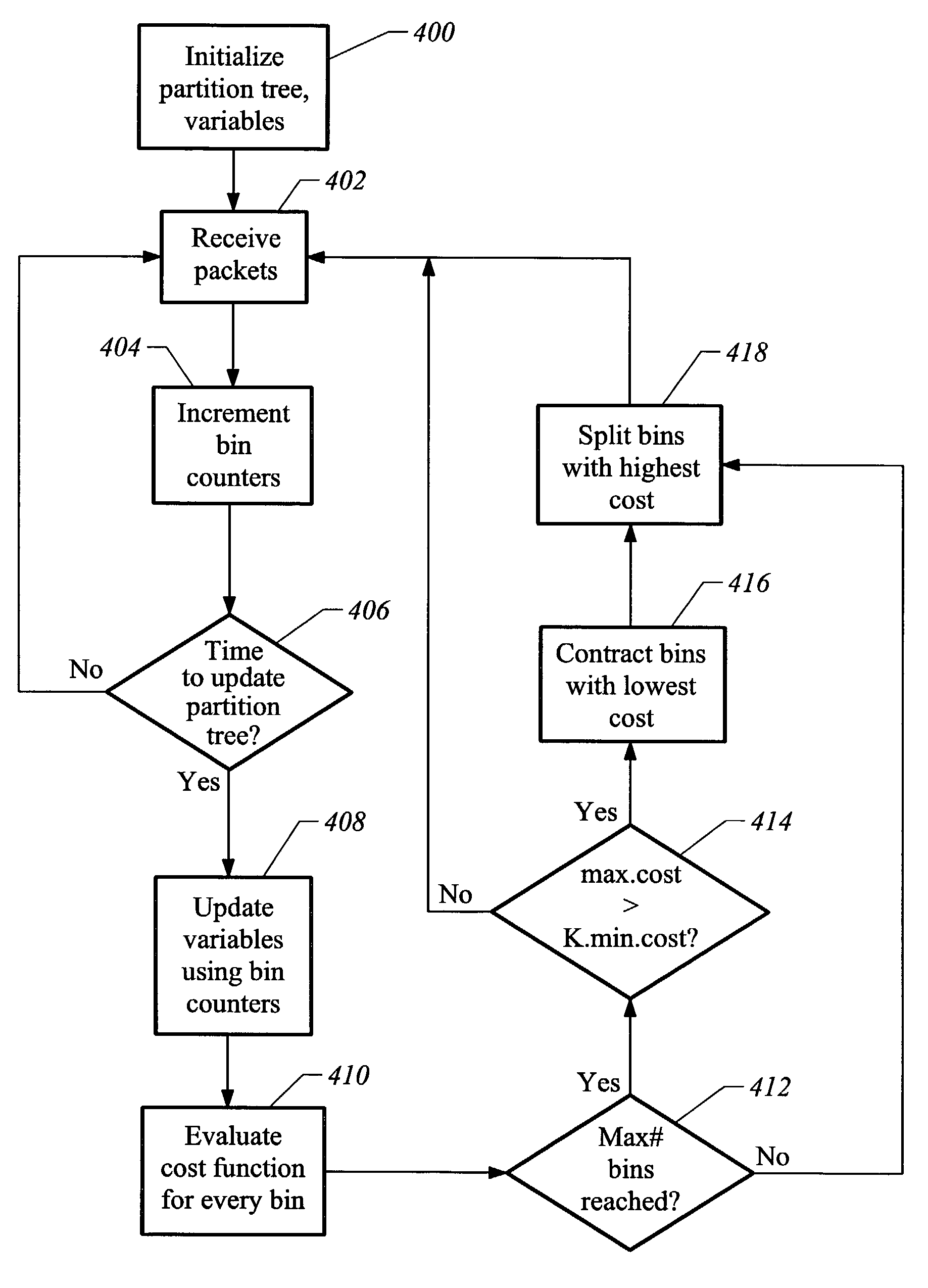
  • Figure 1
    Figure 1
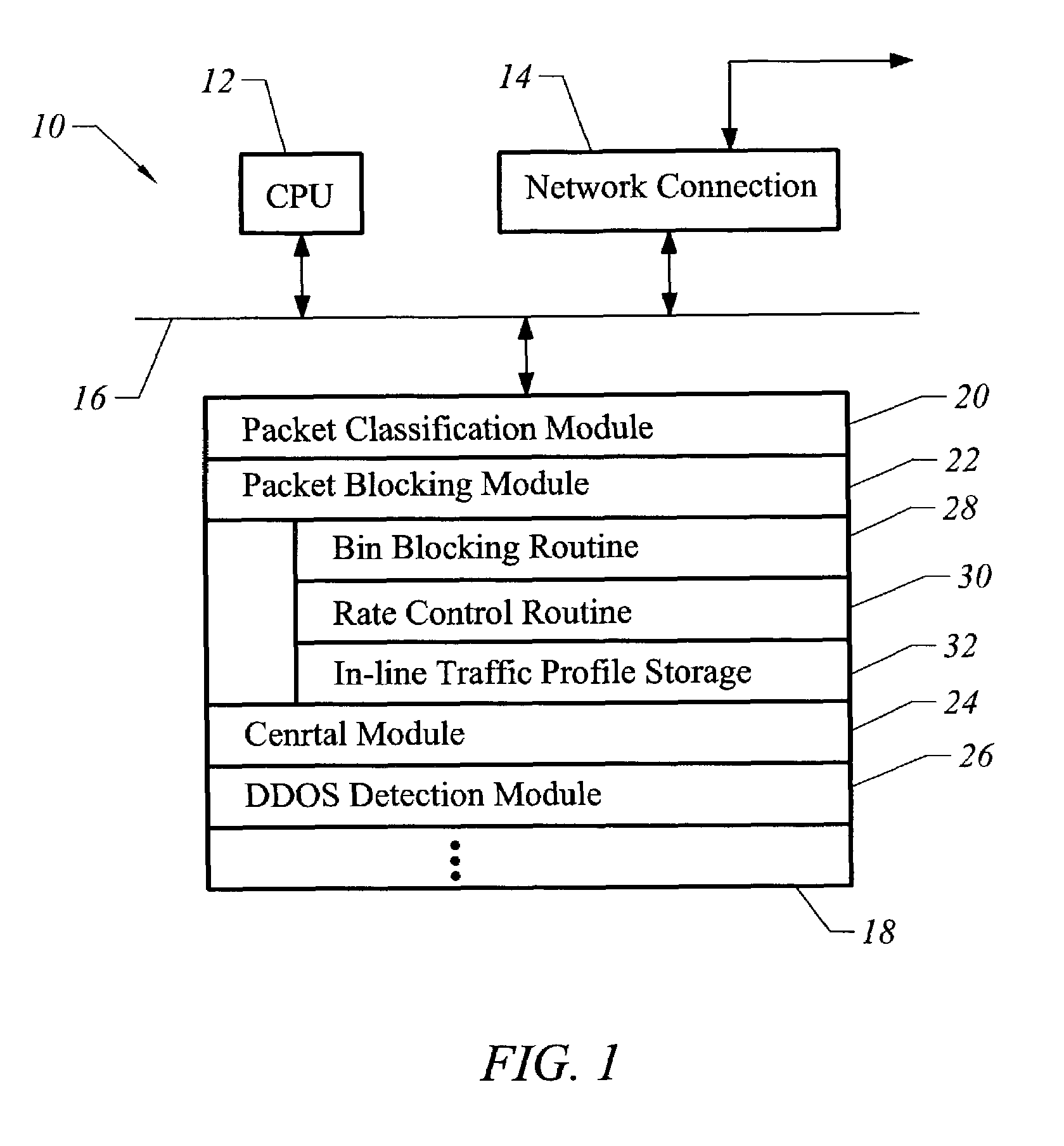
  • Figure 2
    Figure 2
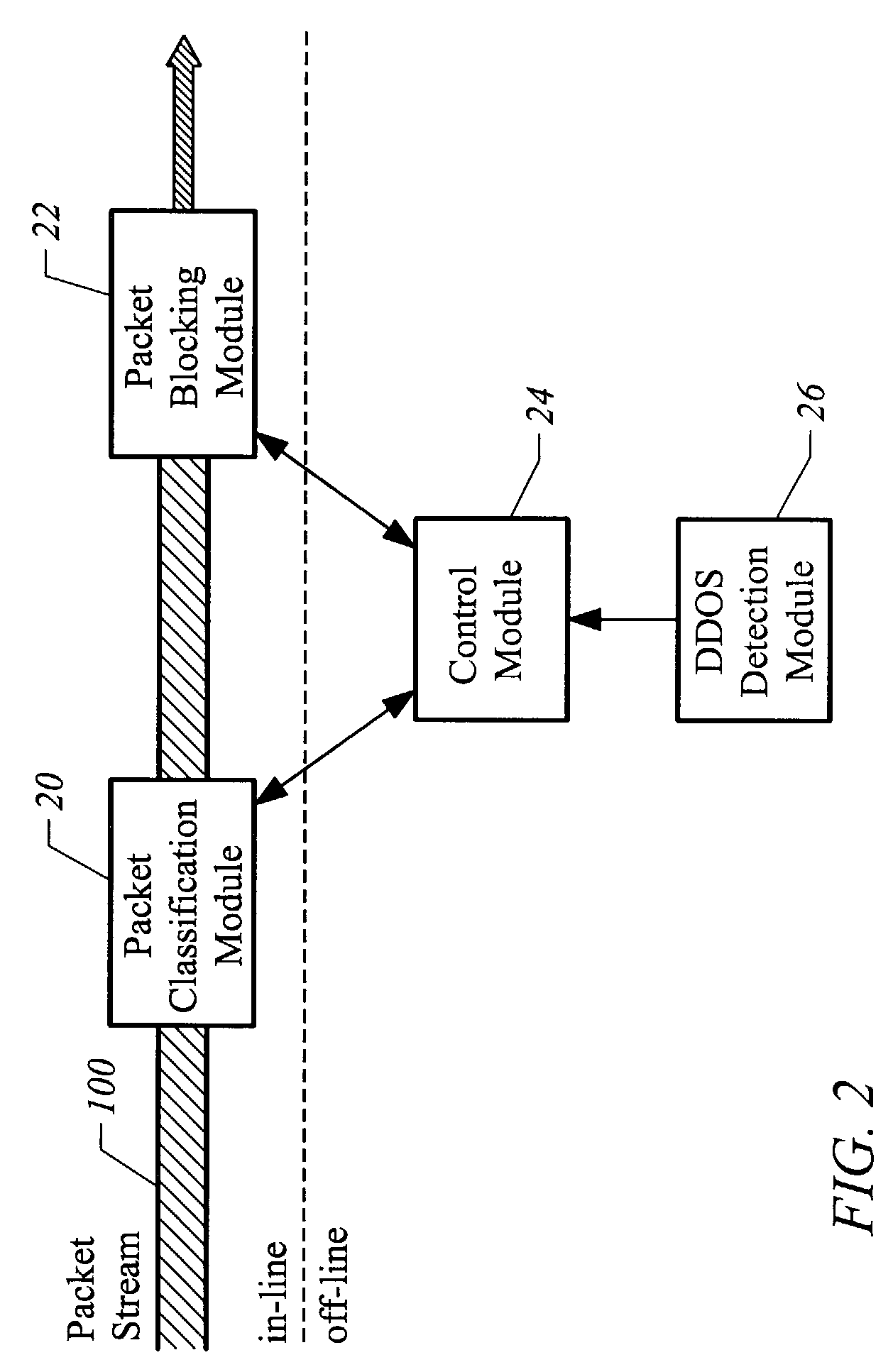
  • Figure 3
    Figure 3
Patent Text Reader

Abstract

A method of adaptively classifying information using a binary tree comprises establishing a binary tree including a set of binary sequences each representing one or more network addresses. Once network traffic is received having identifiers describing network traffic sources, the identifiers are correlated to binary sequences within the binary tree. A revision metric is formed based on this correlating, and the binary tree is then revised according to this revision metric.A method of blocking a DDOS attack comprises establishing a binary tree including a set of binary sequences, each of these binary sequences representing one or more network addresses. When network traffic is received having identifiers describing network traffic sources, the identifiers are correlated to binary sequences within the binary tree. Once a DDOS attack notification signal is received, a selected binary tree path within the binary tree is identified as a low cost blocking path within the binary tree. Network traffic correlated to a binary sequence corresponding to the selected binary tree path is blocked.
Need to check novelty before this filing date? Find Prior Art

Description

BRIEF DESCRIPTION OF THE INVENTION

[0001] This invention relates to computer network security. More specifically, this invention relates to a method and apparatus for adaptively partitioning information received from a network.BACKGROUND OF THE INVENTION

[0002] Many networked computational resources such as computers, storage devices, switches, routers, and the like are vulnerable to distributed denial of service (DDOS) attacks. Such an attack typically involves a large number of remotely controlled computers that are used to deluge a target computer with an excessive amount of information. This information usually takes the form of specially crafted Internet Protocol (IP) packets that trigger a flood of packets at the target. The sheer number of such requests overwhelms the target's ability to respond, effectively removing it from service by preventing it from doing anything else. Compounding this problem is the fact that damage from such DDOS attacks is not limited to the target itsel...

Claims

the structure of the environmentally friendly knitted fabric provided by the present invention; figure 2 Flow chart of the yarn wrapping machine for environmentally friendly knitted fabrics and storage devices; image 3 Is the parameter map of the yarn covering machine
Login to View More