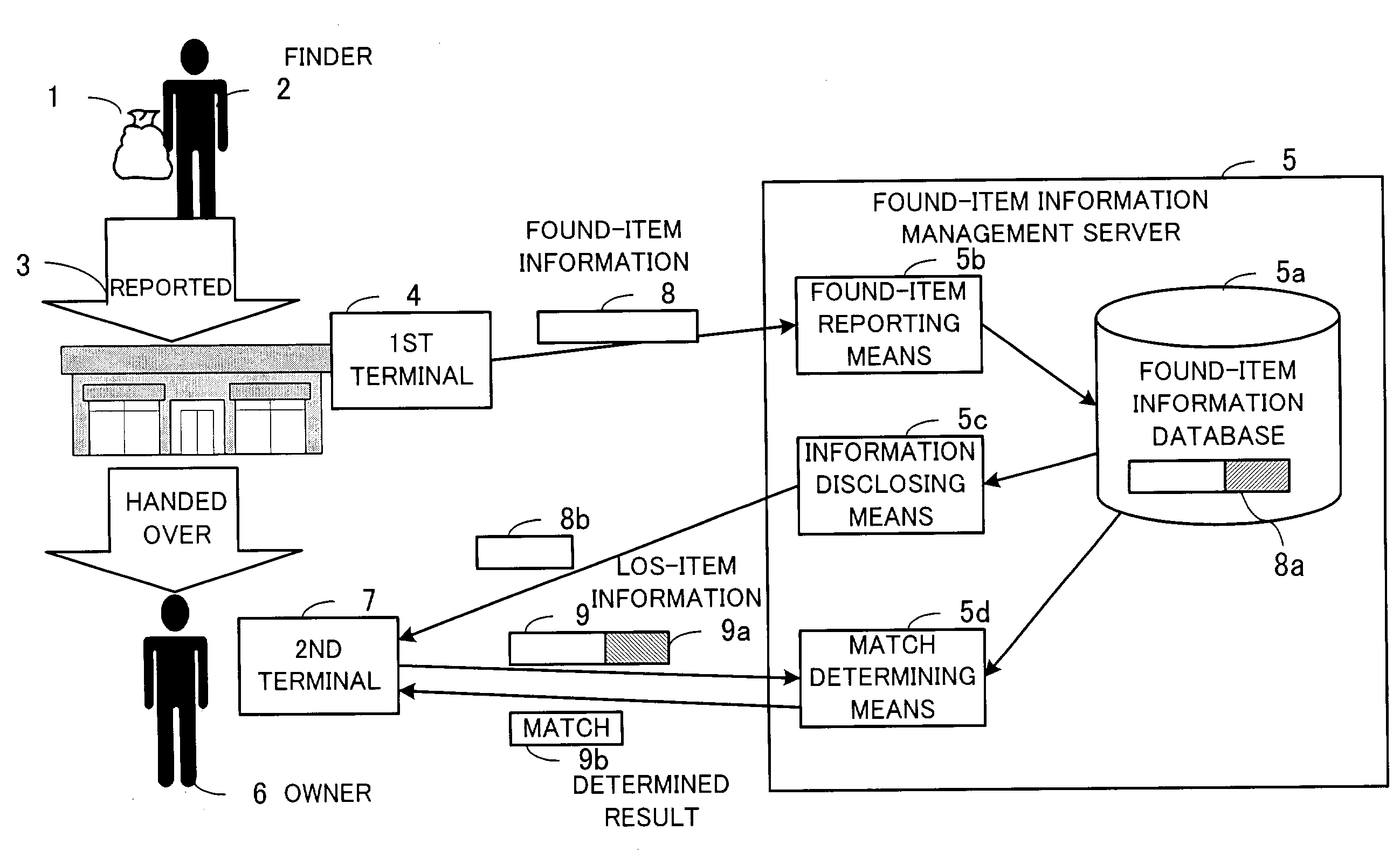
When a person finds a lost item in town, it is difficult for the finder to directly search for the owner of the found property and hand the found item over to the owner unless the found item carries some kind of description of the owner.
If the finder finds the lost item at a location far away from a police box or does not know where a nearby police box is because the finder is a stranger around there, then the finder may find it highly troublesome to report to the authority.
However, if there are available a plurality of places that a finder can report the lost item to, then the owner of the property cannot determine which one of those places the owner should ask for the lost item.
Generally, when the owner of a lost item asks a place which is different from the place which the lost item has actually been reported to, the owner is unable to confirm that the lost property has been reported as a found item to the other place.
Private facilities, typically, department stores which have corners for temporarily keeping lost properties find those
temporary storage offices lacking direct merits because keeping lost items and answering inquiries from owners is a labor-intensive task.
At present, therefore, the facilities capable of sharing a database of information about found properties and providing a service of storing found properties are limited to public facilities such as
train stations and some large private organizations such as large department stores which need to differentiate their services from other department stores.
However, the information about found properties available to anyone who has access to the
wide area network tends to suffer the problem of poor security against unlawful actions.
If there are a smaller number organizations available for accepting found items, then finders find it more troublesome to report the found property to one of those organizations.
As a result, actions to report lost items are liable to be slow.
The procedure that a finder must follow in reporting the found-item to an organization (e.g., a police box) is time-consuming because the finder is usually interviewed by a person (e.g., a police officer) in charge in the organization.
Consequently, when a passerby who does not want to be bothered finds a lost property, they tend to walk away without picking up and reporting the lost item.
Heretofore, the percentage of found items that are reported is low and the
recovery of lost-items by the owners is slow because, as described above, the information about found items should not be made available on a
wide area network for the purpose of preventing owner masquerading, the finders of lost items need to take a lot of trouble in reporting those items, and the availability of facilities which accept and store found properties is restricted.
As a consequence, the owners of lost items either cannot found their properties or take a long period of time before recovering their properties.


 Login to View More
  Login to View More